
Pellet stoves are a rare find in Pinellas Park, and that's by design.
With average winter lows near 52°F and only about 446 heating degree days a year, most Pinellas Park homes never need solid-fuel heat—but if you want the ambiance of a pellet stove, or one for a second home up north, we'll help you figure out what's realistic and connect you with a local dealer.
Every Project Starts From One of These Five Situations
A subtropical climate that rarely needs supplemental heat.
Pinellas Park sits at just 13 feet of elevation on the Pinellas peninsula in the Tampa Bay area, in climate zone 2A. The average winter low is around 52°F, and the city logs only about 446 heating degree days a year—more than twenty times fewer than a place like Duluth, Minnesota, which averages over 9,000. A handful of cold fronts each winter can push overnight temperatures into the 30s, occasionally the upper 20s, but sustained cold that would justify a household heating appliance simply doesn't happen here. Most homes in Pinellas Park, including newer construction throughout the 33781, 33782, and 33773 zip codes, are built with no solid-fuel heating infrastructure at all—no chimney, no hearth pad, nothing to retrofit around.
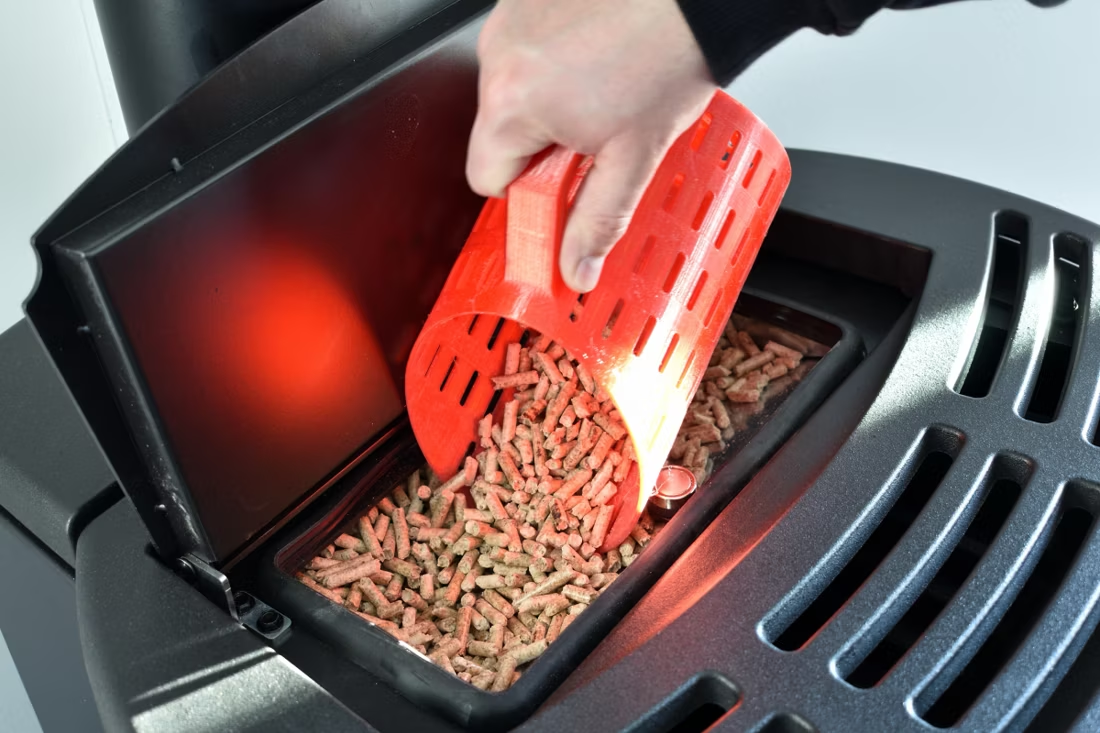
That's why pellet fuel is flagged as not applicable for this market: it's not that pellet stoves don't exist here, it's that almost nobody needs one for actual heat. The rare local installs tend to fall into two categories—a glass-front pellet stove added to a Florida room or lanai purely for ambiance on the few genuinely chilly nights, or a stove bought by someone who splits time between Pinellas Park and a colder second home where pellet heat actually earns its keep. If that's you, regional suppliers like Lignetics, Hamer Pellet Fuel, and Greenway Renewable Energy do distribute pellets into Florida, though retail selection is thinner than you'd find in a heating-dominant state. For homes that just want real, reliable heat and ambiance, a gas or electric fireplace is almost always the more practical route in this climate—worth comparing before committing to pellet.
Three steps. No salesperson until you're ready.
Tell us about your project
Your zip code, your situation, and the fuel you're leaning toward—or let the answers point you to one.
See what's actually available
The brands dealers within 100 miles genuinely carry—real options, never a catalog mirage.
Get your dealer & Project Guide
A trusted local dealer, plus the free Project Guide & Parts List that names every component of the job.
Frequently Asked Questions
Does a pellet stove actually make sense for a home in Pinellas Park?
For most homes, no—not as a heat source. With only about 446 heating degree days a year and average winter lows around 52°F, a pellet stove would sit unused nearly all year. Where it can make sense is purely aesthetic: a stove installed for the glass-front flame view, used on the occasional cold front night, or installed in a home where the owner also maintains a colder second property. If your goal is warmth and ambiance for regular use, a gas or electric fireplace will get far more use out of the investment in this climate.
What does a pellet stove installation cost in Pinellas Park?
Because pellet stoves are uncommon locally, there isn't a well-established local price benchmark the way there is in colder markets—few Tampa Bay area dealers stock them, and costs depend heavily on venting requirements and whether the installer has to special-order the unit. Nationally, comparable pellet stove installations often run in the thousands rather than the tens of thousands, but the honest answer for Pinellas Park is that you'll want a firm quote from a dealer who actually handles pellet equipment rather than relying on a generalized estimate—availability, not just price, is the constraint here.
Will a pellet stove help during a hurricane-season power outage?
Not really. Pellet stoves rely on an electric auger and blower to feed fuel and circulate heat, so they shut down the moment power drops—the same moment a Florida household is most likely to lose electricity. If backup heat or backup ambiance during outages is the goal, a battery-backed gas fireplace or a propane unit with a standing pilot will actually function without utility power. For Pinellas Park, that makes gas the more sensible choice for storm-season resilience.
Can I even buy pellet fuel near Pinellas Park?
It's available, but you'll likely need to plan ahead rather than pick some up on a whim. Regional producers like Lignetics, Hamer Pellet Fuel, and Greenway Renewable Energy supply bags into Florida through farm-supply retailers and a small number of specialty dealers, but because demand is low in a market with only 446 heating degree days a year, you won't find the shelf stock or seasonal delivery programs common in colder states. Buying a season's worth in one trip is the more realistic approach than restocking bag by bag.
Does Tampa Bay humidity cause problems for stored pellets?
Yes, and it's a bigger practical issue here than the cold ever is. Wood pellets are compressed sawdust with no binder, so they absorb ambient moisture readily—and Pinellas Park's year-round humidity will cause bagged pellets to swell, crumble, and clog an auger if they're stored in a garage or shed without climate control. If you do go the pellet route, plan on airtight bins in a dehumidified space rather than open bags on a shelf.
What should I install instead of a pellet stove in Pinellas Park?
Most homeowners here end up happier with a gas or electric fireplace. Gas units (natural gas or propane) deliver real, instant heat for the handful of chilly nights each winter without any fuel storage or humidity concerns. Electric fireplaces are simpler still—a 1,500-watt unit running through Duke Energy Florida at the residential rate of about 16.6 cents per kWh costs roughly 25 cents an hour to run, with zero venting, zero fuel deliveries, and no moving parts to fail in humid storage. For a climate this mild, either option typically outperforms a pellet stove on both usability and cost.
Do I need a permit to install a pellet stove in Pinellas Park?
Yes—even though installations are rare, any vented heating appliance still falls under Pinellas County Building & Development Review Services (or the city's building division, depending on jurisdiction), and a permit is required for the unit and its venting run. Because so few local contractors regularly pull pellet permits here, it's worth confirming your installer has actually done one before—the process is more familiar to them for gas work than for pellet.
Pellet vs. gas vs. electric—which is right for a Pinellas Park home?
Pellet stoves offer a real flame and the most authentic burning experience, but they need electricity to run, need dry storage in a humid climate, and are hard to source parts and fuel for locally. Gas fireplaces give instant, reliable heat with far better local support and can run during outages with battery-backed ignition. Electric fireplaces are the simplest and cheapest to install, run on Duke Energy Florida power at a low per-hour cost, and need no fuel or venting at all. For a city averaging 446 heating degree days a year, gas or electric almost always makes more practical sense than pellet—pellet is really a choice for the small number of buyers who specifically want that fuel type regardless of climate fit.
I moved to Pinellas Park from a colder state and already own a pellet stove—can I bring it?
You can, and a fair number of transplants to the Tampa Bay area do exactly this. The main things to check with a local installer are whether your existing unit meets current code for Pinellas County permitting, whether the venting configuration works with your new home's layout, and whether you're comfortable with the limited local pellet fuel supply compared to wherever you moved from. Many transplants end up using the stove sparingly for ambiance on cold fronts rather than as regular heat, which is a fine way to get use out of equipment you already own.
How often does a pellet stove need cleaning?
A clean pellet stove is a happy pellet stove. Plan on cleaning the burn pot about once a week when you're burning regularly—ash and clinkers gum up the air holes just like a pellet barbecue. Most pellet stove problems trace back to skipped cleaning that nobody explained up front. Some designs make it easy with a trapdoor burn pot: pull a lever and the gunk drops into the ash pan.
Why is my open fireplace making my house colder?
Open fireplaces suck—literally. As the fire burns, it consumes air your furnace already paid to heat and pulls it out through the chimney, so the house is actually colder after the fire goes out than before you lit it. An insert fixes this: it seals the chimney, puts fixed glass across the front, and turns that hole in your house into a real heat source.
Can a fireplace actually lower my heating bill?
Yes—by creating a comfort zone. A furnace heats every square foot of the house just to warm the one room you're in; a gas fireplace on low burns roughly a sixth of the gas a typical furnace does. Set the furnace around 55–60 degrees as a baseline, then heat the rooms your family actually uses. Families who heat this way commonly save $20–$60 a month.
Does a fireplace add value to my home?
On average, a fireplace adds back to the home about the same amount you spent installing it. Add the monthly savings from heating the rooms you actually use instead of the whole house—often hundreds of dollars a year—and the value case is strong before you even count what a fire does for how your family uses the room.
Nearby Dealers
Hearth shops serving Pinellas Park and the surrounding area.
Urban Concepts Modern Hearth & Outdoor
Urban Concepts Modern Patio And Fireplace
Pellet Brands Stocked Around Pinellas Park
Manufacturers will point you to the nearest stocking dealer.
See what's realistic for pellet heat in Pinellas Park.
Tell us about your home and we'll send a free Project Guide & Parts List—an honest look at whether pellet, gas, or electric makes the most sense for your situation, plus a match with a trusted local dealer who can actually source and install it.
Find Your Fireplace →