
Bring easy, on-demand warmth to your Pinellas Park home.
No chimney, no venting, no gas line—just flip a switch. Find the right electric fireplace for your home and connect with a trusted local dealer.
Every Project Starts From One of These Five Situations
Electric heat built for Gulf Coast winters.
Pinellas Park sits at 13 feet of elevation on the Pinellas peninsula between Tampa and St. Petersburg, in climate zone 2A where the average winter low is 52°F and the whole winter is barely cool enough to notice—compare that to a place like Duluth, MN, which endures a long, brutal winter by comparison. Wood and pellet stoves are essentially nonexistent here for good reason: there's rarely enough sustained cold to justify a chimney, a hearth pad, or a cord of oak. Electric fireplaces fill a different need entirely.
In Pinellas County, electric fireplaces are popular for ambiance in living rooms and primary bedrooms, as supplemental zone heat during the occasional January cold snap when temperatures dip into the 30s and 40s, and as a permit-friendly upgrade for condos and HOA communities where open-flame appliances are restricted or prohibited outright. With Duke Energy Florida serving the area at roughly $0.1663 per kWh, running an electric unit for a few hours on a cool evening costs a fraction of what a gas or wood system would require to install—and there's no flue, no combustion byproducts, and nothing to inspect for creosote.
Three steps. No salesperson until you're ready.
Tell us about your project
Your zip code, your situation, and the fuel you're leaning toward—or let the answers point you to one.
See what's actually available
The brands dealers within 100 miles genuinely carry—real options, never a catalog mirage.
Get your dealer & Project Guide
A trusted local dealer, plus the free Project Guide & Parts List that names every component of the job.
Frequently Asked Questions
How much does it cost to install an electric fireplace in Pinellas Park?
A plug-in freestanding or wall-mount electric fireplace can run $150 to $1,500 for the unit alone, with no installation cost beyond hanging it and plugging it into an existing outlet. A built-in electric fireplace or insert set into a wall, media console cutout, or existing masonry opening typically runs $2,000 to $5,000 once you factor in framing, trim, and an electrician running a dedicated 120V or 240V circuit—which is common in Pinellas Park's block and stucco construction where a chase or wall cavity needs to be opened up. Local retailers can quote a firm number after seeing your wall and outlet situation.
Do I need a permit to install an electric fireplace in Pinellas Park?
Usually not for a freestanding or plug-in unit—it's treated like any other appliance you plug into the wall. If you're having a built-in unit wired into a new dedicated circuit or your electrician is opening up a wall for a recessed installation, that electrical work typically does require a permit through the City of Pinellas Park Building Division. A licensed electrician pulling the permit as part of the install is the norm, so it's rarely something you have to coordinate yourself.
What's the best type of electric fireplace for a Florida home?
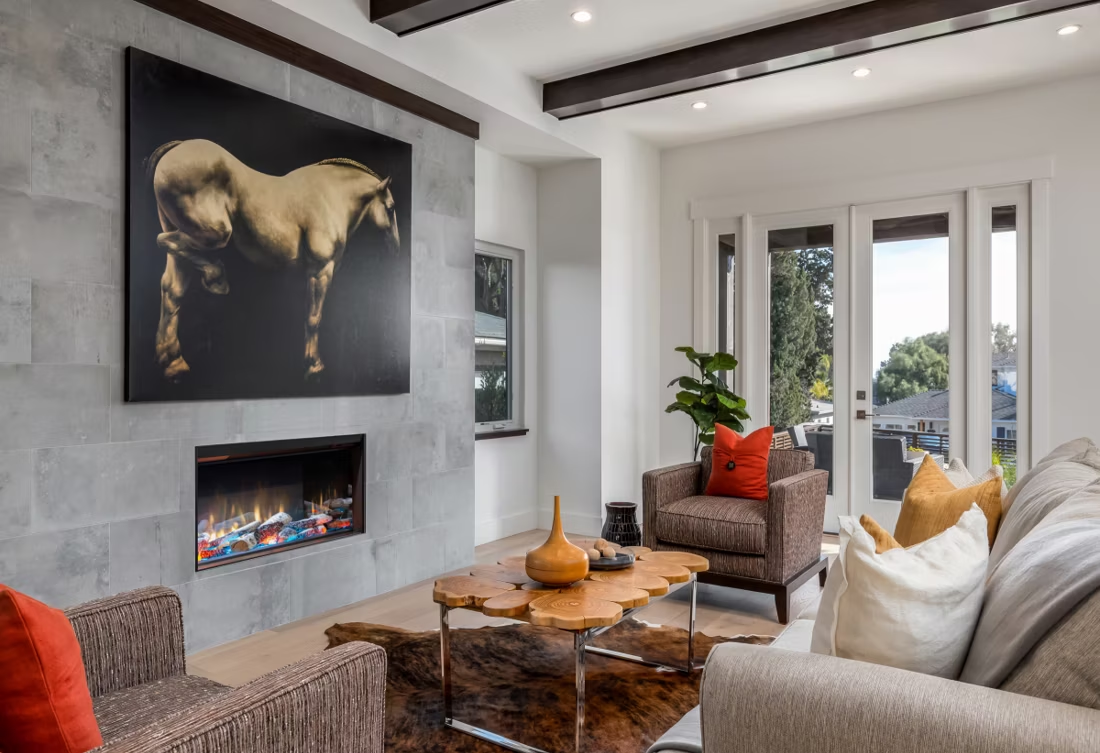
For most Pinellas Park homes, a recessed wall-mount or linear built-in unit is the most popular choice—it reads as a real architectural feature rather than a space heater, and since Florida's mild climate means the unit is doing more visual and ambiance work than actual heating, appearance matters more here than in a cold-climate install. Freestanding stove-style units and mantel packages are common in condos and rentals where a permanent wall installation isn't practical. Look for models with a heater you can turn off independently of the flame effect, since most nights in Pinellas Park you'll want the look without the extra 1,500 watts.
How much does it cost to run an electric fireplace with Duke Energy rates?
Duke Energy Florida's residential rate in the Pinellas Park area runs around $0.1663 per kWh. A typical electric fireplace heater draws about 1,500 watts on high, so running the heat function for an hour costs roughly 25 cents. Running just the flame effect with the heater off, which is common for most of the year here, draws only 50 to 100 watts and costs a fraction of a cent per hour. Compared to central HVAC, using an electric fireplace to zone-heat one room during a cold snap is usually the cheaper option for the occasional chilly evening.
Can an electric fireplace replace my central heat during a cold snap?
Not as a whole-home solution, but that's rarely the goal in Pinellas Park. With such a mild winter overall and true cold snaps limited to a handful of nights each winter when temperatures drop into the 30s and 40s, most homeowners use an electric fireplace as supplemental zone heat in the room they're actually using—a living room or primary bedroom—rather than running central HVAC for the whole house on a night when it's only truly cold for a few hours after sunset.
Electric vs. gas fireplace—which is right for my Pinellas Park home?
Gas is a legitimate option here too, typically run on propane since natural gas service is limited across much of Pinellas County, and it delivers more real heat output for homes that want a fireplace that can genuinely warm a room. Electric wins on simplicity: no gas line, no propane tank, no annual gas appliance service, and no combustion byproducts to vent—which is exactly why electric is the default choice in condos, townhomes, and HOA communities around Pinellas Park where open-flame appliances are restricted. If you want real radiant heat for the occasional cold night, ask a local dealer about gas. If you want low-maintenance ambiance with occasional supplemental warmth, electric is usually the simpler, cheaper path.
Where can an electric fireplace be installed in my home?
Because electric units don't require venting, a chimney, or combustion air, they can go almost anywhere with access to power—a bedroom, a home office, an interior wall with no chimney chase, or a media wall in a great room. This is particularly useful in Pinellas Park, where many homes are single-story concrete block or stucco construction built without a masonry fireplace to begin with. A local dealer can walk your space and tell you whether a plug-in unit or a wired-in built-in makes more sense for the wall you have in mind.
Are electric fireplaces a good option for condos and rentals in Pinellas County?
Yes—this is one of the most common reasons homeowners in the Pinellas Park area choose electric. Many condo associations and rental agreements prohibit wood-burning or gas appliances due to fire codes and insurance requirements, but electric units are generally allowed since there's no open flame or combustion involved. A freestanding or wall-mount unit can usually be installed without any HOA approval process, and it can move with you if you relocate, which isn't true of a built-in gas or wood installation.
Will my electric fireplace still work during a hurricane power outage?
No—electric fireplaces require utility power to run, so during a hurricane-related outage with Duke Energy Florida, the unit won't operate until power is restored. This is worth knowing for Pinellas Park homeowners who think of a fireplace as backup heat: electric is the least resilient option during outages, while a gas unit with a standing pilot can sometimes still function. Given how mild winters are here, most homeowners accept that trade-off in exchange for electric's simplicity and treat backup heat as a non-issue for a climate that rarely needs it in the first place.
Can I put a TV above my fireplace?
Yes—with an asterisk. Fireplaces are hot and TVs don't like heat. Either put a mantel between them to deflect rising warmth, or choose a fireplace with heat-management technology that creates a cool zone on the wall above—the wall stays around 125 degrees, barely warm, while the room still gets full heat. If you like clean lines and don't want a mantel, heat management is the answer.
Does an electric fireplace need a vent or chimney?
No—that's its superpower. An electric fireplace needs a wall and an outlet, period. No vent pipe, no gas line, no clearances to design around, which is why it works in bedrooms, offices, apartments, and walls where venting a gas or wood unit would be impractical or impossible. Installation is typically the simplest and least expensive of any fireplace type.
How much should I budget for a fireplace?
For an average home—covering the fireplace, the vent pipe, and basic installation—a budget between $3,900 and $5,500 gives you a lot of options across wood, gas, and pellet. By the time you add finish work, gas line, and electrical, the average complete installation lands between $5,000 and $12,000 all-in. In a remodel or new build, a good rule is to put about 2.5% of the total project cost toward the fireplace.
What is an in-home preview and do I need one?
It's a visit where a hearth professional measures your space, confirms the model you picked actually works in your home, and walks the specs—framing, gas line, venting, finish work—before anything is ordered. Some details you just can't know until you see the house. Never make a down payment without one; it's the single most-skipped step that burns buyers.
Nearby Dealers
Hearth shops serving Pinellas Park and the surrounding area.
Urban Concepts Modern Hearth & Outdoor
Urban Concepts Modern Patio And Fireplace
Electric Service in Pinellas Park
An electric fireplace's heater draws about 1,500 watts—pennies per hour at local rates.
Duke Energy Florida, LLC
Find your electric fireplace in Pinellas Park.
Tell us a bit about your home and we'll match you with the right electric fireplace or insert—and connect you with a trusted local dealer who can handle the wiring and install.
Find Your Fireplace →