
Keep Your Family Warm and Safe—No Matter What
With winter lows averaging 49°F and only a very short, mild heating season each year, almost nobody in Pine Hills needs wood heat to stay warm. If you still want the look and feel of a real fire, we'll connect you with a local dealer who can tell you what's actually realistic.
Every Project Starts From One of These Five Situations
A climate that just doesn't call for it.
Pine Hills sits in climate zone 2A at just 95 feet of elevation, with average winter lows around 49°F and only a very short, mild heating season each year—a tiny fraction of what a place like Duluth, MN or International Falls, MN sees in a single hard January week. There's no meaningful cold season here that would push a household toward wood as a heat source, and there are no winter air quality advisories or wood-smoke restrictions the way there are in colder, smokier regions.
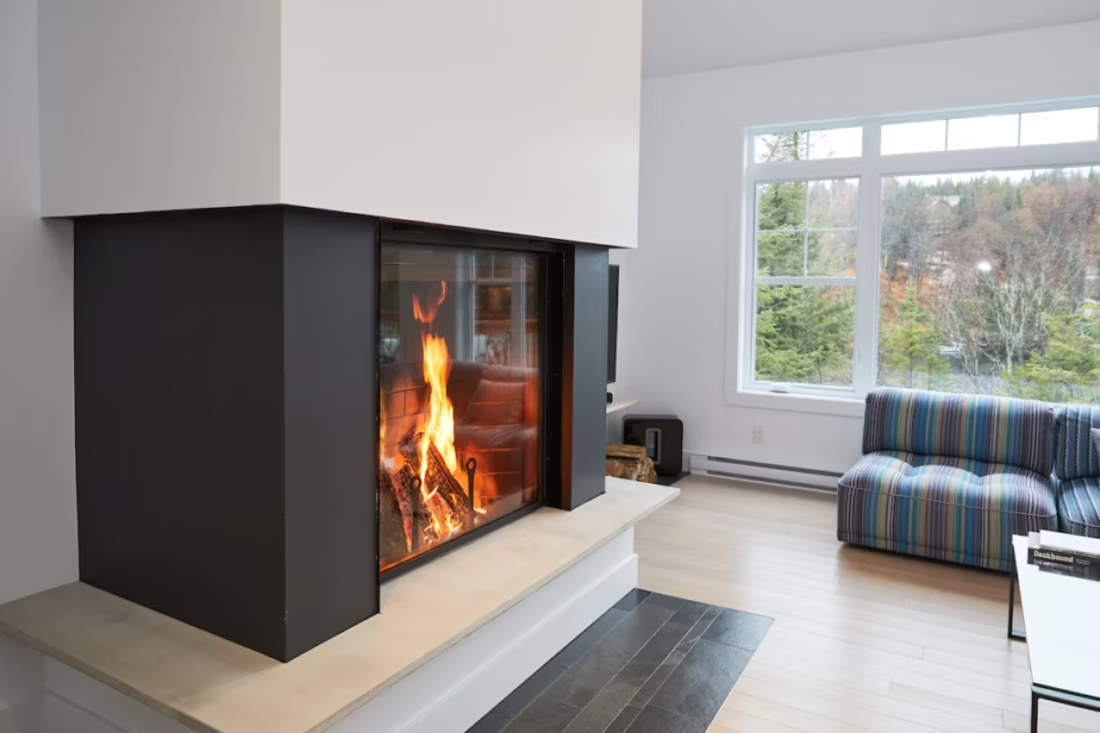
That said, a wood-burning fireplace or stove isn't off the table entirely. Some Pine Hills homeowners install one for the ambiance of a real fire on the handful of genuinely chilly nights each winter, for a vacation or second property in a colder state, or simply because they grew up with one and want that experience in a new home. Local oak, mahogany, and pine are all available regionally, though most residents here treat wood heat as a novelty rather than a necessity—which is worth knowing before you invest in a full installation.
Three steps. No salesperson until you're ready.
Tell us about your project
Your zip code, your situation, and the fuel you're leaning toward—or let the answers point you to one.
See what's actually available
The brands dealers within 100 miles genuinely carry—real options, never a catalog mirage.
Get your dealer & Project Guide
A trusted local dealer, plus the free Project Guide & Parts List that names every component of the job.
Frequently Asked Questions
Does anyone actually install wood-burning fireplaces in Pine Hills?
Some do, but it's uncommon. With winter lows averaging 49°F and a heating season that barely registers over the year, wood isn't functioning as real heat for most Pine Hills households—it's closer to an occasional-use amenity. The homeowners who install one are usually doing it for ambiance, resale appeal, or because they have a strong personal preference for a real wood fire over gas or electric. If that's you, a local hearth dealer can walk you through what's realistic for a Central Florida home rather than a mountain cabin.
How much does a wood fireplace installation cost in Pine Hills?
Costs run similar to national averages for a freestanding stove or zero-clearance wood fireplace—typically $4,500 to $9,000 depending on the unit, chimney work, and whether you're building new or retrofitting. Because so few homes in the Orlando area already have masonry chimneys, most Pine Hills installations require a full Class A chimney system built from scratch, which pushes many projects toward the higher end of that range. A local dealer can give you a firm number after seeing your home.
Would gas or electric make more sense for my home instead?
For most Pine Hills homeowners, yes. Gas fireplace relevance is standard here, and with Duke Energy Florida and Reedy Creek Improvement District both serving the area at a residential rate around 16.6 cents per kWh, electric fireplaces are also a straightforward, low-maintenance option. Both give you the visual of a fire without hauling firewood, cleaning ash, or building a chimney system in a climate that rarely needs the heat output. Wood still has its fans for the authentic experience, but it's worth comparing all three with a local dealer before committing.
What wood species are available locally if I do install a wood stove?
Oak, mahogany, and pine are the common regional species around Orange County. Oak is the standout choice for anyone burning wood in Pine Hills—it's dense, burns long, and is widely available from regional suppliers. Pine is easier to find but burns faster and produces more resin buildup, so it's better as a supplemental fuel than a primary one. Mahogany shows up less often but is prized when available. None of this changes the climate math, but it's useful to know if you go forward with a wood-burning install.
Are there permit or air quality restrictions on wood stoves in Pine Hills?
Orange County has no winter air quality advisories or wood-smoke curtailment periods like you'd find in a non-attainment area out West, since Central Florida doesn't experience the winter inversion conditions that trap smoke. You'll still need a standard building permit through Orange County or the applicable local jurisdiction for a new wood-burning appliance and chimney, and the unit itself should meet current EPA emissions standards, but there's no seasonal burn-ban framework to navigate here.
Is a wood stove a good idea for backup heat during a power outage?
It's rarely a practical reason to install one in Pine Hills. Florida power outages are more commonly tied to hurricanes in warm months than winter storms, and even in a worst-case outage, average lows near 49°F don't typically create an emergency heating need. If backup heat is your main concern, a smaller electric space heater or a battery-backed gas unit is usually a more efficient answer than a full wood-burning installation.
Can I convert an existing fireplace to burn wood, or do I need new construction?
Most homes in Pine Hills were built without a masonry fireplace at all, since gas and electric have long been the default here. If your home does have an existing fireplace, a local dealer can assess whether it's suited for a wood insert. If not, a new wood-burning install typically means adding a freestanding stove with full Class A chimney venting, which is the bigger-ticket version of the project—a local dealer can walk you through both paths.
How do I find a firewood supplier near Pine Hills?
Firewood suppliers are less common in Central Florida than in colder states, but a handful of regional sellers around Orange County deliver seasoned oak and pine by the truckload or bundle, often marketed toward campfire and outdoor-fireplace use rather than whole-winter heating supply. Expect pricing and availability to vary more than you'd see in a place where wood heat is a daily necessity—it's worth calling ahead rather than assuming year-round stock.
Wood vs. gas vs. electric—what actually fits a Pine Hills home?
Given the climate, gas and electric are the more practical choices for most Pine Hills homeowners. Gas offers instant, adjustable heat and works well with Duke Energy's or Reedy Creek's service areas providing electricity for ignition components; electric fireplaces are the simplest and cheapest to install, often $400 to $1,200, with no venting or fuel storage required. Wood makes sense mainly for homeowners chasing the authentic fire experience or planning ahead for a colder second home. A local dealer can help you weigh the real trade-offs for your specific house.
Why is my open fireplace making my house colder?
Open fireplaces suck—literally. As the fire burns, it consumes air your furnace already paid to heat and pulls it out through the chimney, so the house is actually colder after the fire goes out than before you lit it. An insert fixes this: it seals the chimney, puts fixed glass across the front, and turns that hole in your house into a real heat source.
What's the difference between an insert and a zero-clearance fireplace?
An insert is a fireplace that slides into a pre-existing wood-burning fireplace—if you don't have one, there's nothing to insert it into. A zero-clearance fireplace is built into a framed wall, which makes it the answer for remodels and new construction. Simple test: existing masonry fireplace means insert; blank or framed wall means zero-clearance.
Can a fireplace actually lower my heating bill?
Yes—by creating a comfort zone. A furnace heats every square foot of the house just to warm the one room you're in; a gas fireplace on low burns roughly a sixth of the gas a typical furnace does. Set the furnace around 55–60 degrees as a baseline, then heat the rooms your family actually uses. Families who heat this way commonly save $20–$60 a month.
Does a fireplace add value to my home?
On average, a fireplace adds back to the home about the same amount you spent installing it. Add the monthly savings from heating the rooms you actually use instead of the whole house—often hundreds of dollars a year—and the value case is strong before you even count what a fire does for how your family uses the room.
Nearby Dealers
Hearth shops serving Pine Hills and the surrounding area.
Get your Pine Hills wood fireplace plan.
Tell us about your home and, even in a climate where wood heat is the exception, we'll match you with a trusted local dealer and send over a free Project Guide & Parts List—the right unit, the venting it actually needs, and a straight answer on whether wood makes sense for your house.
Find Your Fireplace →