
Pellet heat is uncommon in Pine Hills—here's when it still makes sense.
With only a light, short winter heating season each year and winter lows averaging 49°F, Pine Hills doesn't need pellet heat to survive winter. But a small number of homeowners still want one—and we'll connect you with a local dealer who installs them correctly.
Every Project Starts From One of These Five Situations
Why pellet stoves are the exception, not the rule, in Pine Hills.
Pine Hills sits in climate zone 2A at just 95 feet of elevation, where the average winter low hovers around 49°F and the whole winter adds up to a light, short heating season. Compare that to a cold-climate city like Duluth, MN, which sees more winter heating need in a single January than Pine Hills sees all year, and it's clear why pellet stoves never became a mainstream appliance here. They're not something most Pine Hills homeowners need for warmth.
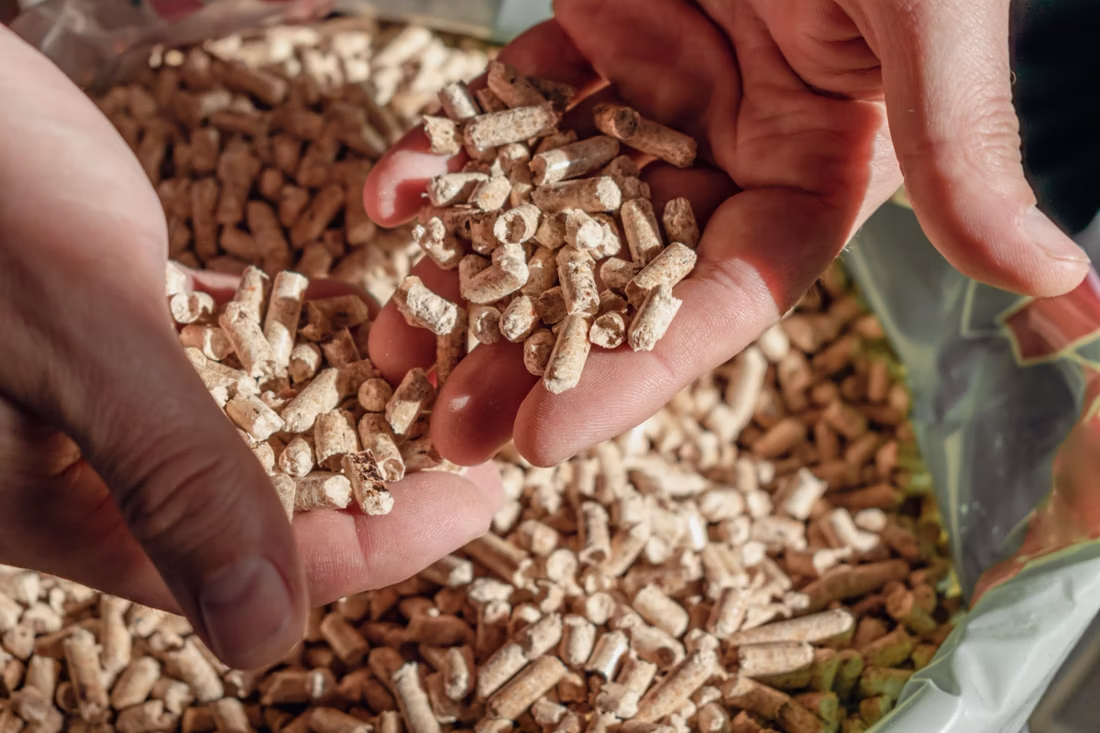
That said, a handful of local homeowners still pursue a pellet install—usually for ambiance in a den or Florida room, supplemental heat in a garage workshop, or because they split time with a cabin or second home up in the Carolinas or Georgia mountains and want the same fire experience at both properties. Regional pellet brands like Lignetics, Hamer Pellet Fuel, and Greenway Renewable Energy do circulate through Central Florida, though retail density is thin compared to colder states—most buyers plan ahead and order pallets rather than expecting a full aisle at a local hardware store. If your goal is genuinely reliable winter heat, gas and electric are the standard, better-supported fuels in Pine Hills. If you specifically want the pellet-burning experience, a trusted local dealer can still make it work, correctly vented and permitted.
Three steps. No salesperson until you're ready.
Tell us about your project
Your zip code, your situation, and the fuel you're leaning toward—or let the answers point you to one.
See what's actually available
The brands dealers within 100 miles genuinely carry—real options, never a catalog mirage.
Get your dealer & Project Guide
A trusted local dealer, plus the free Project Guide & Parts List that names every component of the job.
Frequently Asked Questions
Are pellet stoves actually installed in Pine Hills homes?
Some, but not many. With average winter lows around 49°F and only a light, short winter heating season each year, most Pine Hills homes have no real heating need to justify a pellet stove. The installs that do happen tend to be for ambiance in a living room or den, occasional use during Central Florida's rare cold snaps, or supplemental heat in a garage or workshop. It's a legitimate project—just not a common one, and a local dealer will likely ask what you're actually trying to solve before recommending a unit.
Why would anyone want a pellet stove in a climate this warm?
The most common reasons in Pine Hills are ambiance and specific-use heat rather than whole-home warmth. Central Florida does get occasional freeze warnings in January that push citrus growers into protection mode, and a pellet stove can take the edge off a cold snap in a den or bonus room. Others want one because they own a second home up north and like the consistency of running the same fuel type in both places. A local dealer can help you figure out whether a small pellet stove or a different appliance altogether fits what you're picturing.
What does a pellet stove installation cost in Pine Hills?
Because pellet stoves are a niche request here, pricing is more variable than in a state with dense pellet-stove competition. Nationally, a typical pellet stove installation—unit, venting kit, and labor—runs roughly $3,000 to $6,000, and Pine Hills installs generally fall in that range since most homes are slab-built without an existing masonry chimney, meaning the vent kit routes straight through an exterior wall. With fewer local installers specializing in pellet appliances, it's worth getting more than one quote before committing.
Will a pellet stove keep my home warm during a hurricane power outage?
No—and this is worth knowing before you buy. Pellet stoves rely on an electric auger to feed fuel, an electric igniter to start combustion, and an electric blower to distribute heat, so when Duke Energy Florida or Reedy Creek Improvement District service goes down during hurricane season, the stove goes down with it. If backup heat or backup power resilience is your goal, a propane appliance or a battery-backed gas unit is a more realistic fit for Pine Hills than pellet.
Where can I buy pellet fuel near Pine Hills?
Supply is thinner here than in states with real pellet-heating demand. Brands like Lignetics, Hamer Pellet Fuel, and Greenway Renewable Energy do move through Central Florida distribution, but you're more likely to find bags at a farm-and-feed store or order pallets ahead of the season than to grab a bag on a whim at a big-box store. Most owners buy in bulk during the fall before local stock gets thin, since Pine Hills demand doesn't support the kind of year-round retail turnover you'd see up north.
Do I need a permit to install a pellet stove in Pine Hills?
Yes—a building permit through the Orange County Building Safety Division is typically required for the wall penetration and venting, and an electrical permit may apply depending on how the unit is wired. Because most Pine Hills homes are slab-built ranch or single-story construction without an existing masonry fireplace, the pellet stove usually vents through an exterior wall rather than into an old chimney, which changes what the inspector is checking. A local installer familiar with Orange County code will typically pull this for you.
Pellet vs. gas—which fits a Pine Hills home better?
For most Pine Hills homeowners, gas is the more practical choice—it's flagged as a standard, well-supported fuel in this area, offers instant on-off convenience, and doesn't require sourcing and storing bags of pellets in a climate where you rarely need sustained heat. Pellet stoves make sense specifically for homeowners who want that live-flame, hopper-fed pellet experience for its own sake, or who are replicating a setup they already run at a colder second home. If you're undecided, a local dealer can walk you through both side by side.
What size pellet stove makes sense for a Pine Hills home?
Because the goal here is almost never whole-home heat, sizing looks different than it would in a cold climate. A small unit in the 40,000 to 50,000 BTU range is more than enough for a den, Florida room, or garage workshop—the kind of spaces where Pine Hills pellet installs typically go. Oversizing is a real risk: a stove sized for a Minneapolis winter will run far hotter than Pine Hills' mild, brief winters ever call for, wasting pellets and forcing you to run it at a low, less efficient setting most of the time.
Pellet vs. electric—which is right for my Pine Hills home?
Electric is the simpler answer for most Pine Hills homeowners: no venting, no fuel deliveries, no bag storage, and it runs directly off Duke Energy Florida or Reedy Creek Improvement District service at the local residential rate of about 16.6 cents per kWh. Pellet stoves require sourcing fuel from a thinner regional supply chain and produce real ash and maintenance needs that electric units don't. Pellet still wins for homeowners who specifically want a live fire and the pellet-burning ritual—electric wins for anyone who just wants supplemental warmth or ambiance with the least hassle.
What's the difference between an insert and a zero-clearance fireplace?
An insert is a fireplace that slides into a pre-existing wood-burning fireplace—if you don't have one, there's nothing to insert it into. A zero-clearance fireplace is built into a framed wall, which makes it the answer for remodels and new construction. Simple test: existing masonry fireplace means insert; blank or framed wall means zero-clearance.
Why is my open fireplace making my house colder?
Open fireplaces suck—literally. As the fire burns, it consumes air your furnace already paid to heat and pulls it out through the chimney, so the house is actually colder after the fire goes out than before you lit it. An insert fixes this: it seals the chimney, puts fixed glass across the front, and turns that hole in your house into a real heat source.
Can a fireplace actually lower my heating bill?
Yes—by creating a comfort zone. A furnace heats every square foot of the house just to warm the one room you're in; a gas fireplace on low burns roughly a sixth of the gas a typical furnace does. Set the furnace around 55–60 degrees as a baseline, then heat the rooms your family actually uses. Families who heat this way commonly save $20–$60 a month.
Does a fireplace add value to my home?
On average, a fireplace adds back to the home about the same amount you spent installing it. Add the monthly savings from heating the rooms you actually use instead of the whole house—often hundreds of dollars a year—and the value case is strong before you even count what a fire does for how your family uses the room.
Nearby Dealers
Hearth shops serving Pine Hills and the surrounding area.
Pellet Brands Stocked Around Pine Hills
Manufacturers will point you to the nearest stocking dealer.
Find your pellet stove in Pine Hills.
Tell us about your home and we'll match you with a trusted local dealer who can tell you honestly whether a pellet stove makes sense for your Pine Hills space—plus a free Project Guide & Parts List with the exact vent kit and parts you'll need.
Find Your Fireplace →