
Keep Your Family Warm and Safe—No Matter What
Palmetto Bay rarely dips below 60°F, so a wood-burning fireplace here is about atmosphere and the occasional cold night, not heat. We'll help you find a local dealer who can install one correctly, hurricane codes and all.
Every Project Starts From One of These Five Situations
Ambiance over necessity in the subtropics.
Palmetto Bay sits at about 10 feet above sea level in Miami-Dade County, squarely in ASHRAE climate zone 1A, the warmest zone on the map. The average winter low here is 64°F, and the entire heating season is so mild it barely registers compared to colder cities. For comparison, Duluth, Minnesota has a heating season many times longer and far more demanding in a typical winter. Most years in Palmetto Bay don't produce more than a handful of nights where anyone would actually need a fire for warmth.
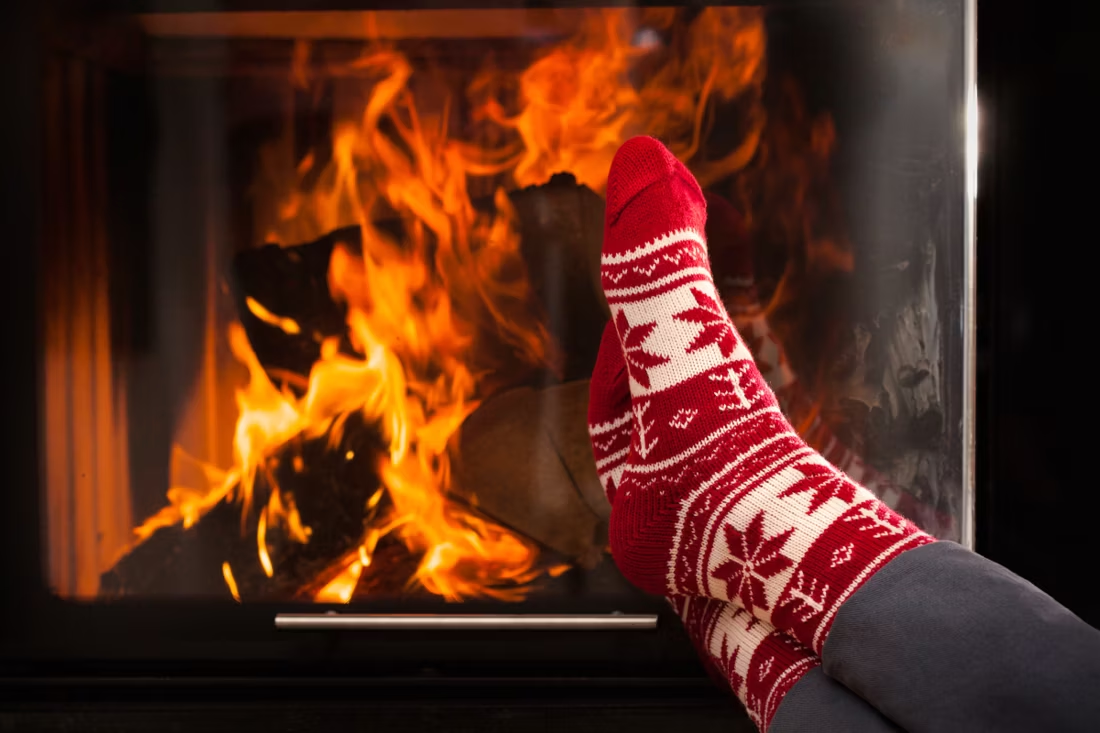
That's reflected honestly in our data—wood fuel relevance for Palmetto Bay is rated not-applicable, and there's no reason to dress that up. There's also no wood-smoke air quality concern on the books here: no non-attainment designation, no winter inversion, no curtailment periods to plan around. Still, a small number of homeowners install a wood-burning fireplace or stove anyway, usually for ambiance during entertaining, as a design feature in a renovated home, or because they split time with a mountain or northern property where wood heat is a real necessity. For that group, local oak—often salvaged from storm-felled trees after hurricane season—and pine trucked down from North Florida are the most workable fuel sources; mahogany occasionally shows up from removed landscape trees, but it burns fast and hot and isn't used as primary firewood anywhere in the region.
Three steps. No salesperson until you're ready.
Tell us about your project
Your zip code, your situation, and the fuel you're leaning toward—or let the answers point you to one.
See what's actually available
The brands dealers within 100 miles genuinely carry—real options, never a catalog mirage.
Get your dealer & Project Guide
A trusted local dealer, plus the free Project Guide & Parts List that names every component of the job.
Frequently Asked Questions
Does a wood-burning fireplace actually make sense in Palmetto Bay's climate?
Not for heat, no. With an average winter low of 64°F and a heating season so short it barely counts—compared to a place like Burlington, VT, which faces a long, demanding winter heating season—a wood fireplace here almost never gets used to keep a room warm. Where it does make sense is aesthetics: a real masonry fireplace or wood-burning insert as a focal point for entertaining, a nod to a second home up north, or a feature that helps a renovated or custom-built house stand out. Go in expecting a design decision, not a heating decision, and you'll be happy with it.
How much does it cost to install a wood fireplace in Palmetto Bay?
There isn't a deep bench of installers who specialize in wood-burning equipment this far south, which makes pricing less predictable than in a wood-heavy market. As a ballpark, a masonry fireplace conversion or freestanding stove with Class A chimney typically runs $4,500 to $10,000 elsewhere in the country, and Palmetto Bay projects tend to land toward the higher end because of specialty labor and hurricane-rated venting components that have to be sourced and engineered for local code. Get at least two quotes from installers who can show you completed wood installs in Miami-Dade specifically, not just gas or electric work.
What permits do I need to install a wood stove or fireplace here?
You'll go through the Miami-Dade County Building Department, and the review is stricter than in most of the country because Palmetto Bay falls inside the High-Velocity Hurricane Zone (HVHZ). Any chimney chase or roof-penetrating Class A flue has to meet HVHZ wind-load and impact standards adopted after Hurricane Andrew, which usually means an engineer's letter for the roof penetration and wind-rated flashing details a standard installer in a milder-wind region wouldn't need to worry about. Budget extra time and cost for that engineering step.
Are there any wood-burning restrictions or air quality rules in Palmetto Bay?
None from the county or state—Miami-Dade has no wood-smoke non-attainment designation and no seasonal curtailment periods to work around. The restriction more likely to trip you up is your own HOA. Palmetto Bay has a fair number of gated and deed-restricted communities, and some covenants limit or prohibit exterior chimneys or wood-burning appliances for insurance or aesthetic reasons. Check your HOA documents before you get too far into planning.
Where can I actually buy firewood in Palmetto Bay?
Don't expect a Forest Service cutting permit system like you'd find out west—there's no public timberland program in Miami-Dade. Most firewood sold locally comes bundled at grocery stores and home improvement retailers, intended for backyard fire pits, and oak is the most common species you'll find. Homeowners who actually burn regularly usually order kiln-dried oak or hickory by the pallet from Central Florida suppliers and have it trucked in, since local cut-your-own options don't really exist.
Wood vs. gas vs. electric—what do most Palmetto Bay homeowners actually choose?
Gas and electric are both rated standard here, and that's where the real demand sits. Florida Power & Light serves the area at roughly 13.7 cents per kWh, making an electric insert or built-in a low-cost, no-permit-hassle option, and gas fireplaces give that instant-on, no-maintenance experience that fits how most South Florida homes are actually lived in. Wood is the choice almost exclusively for homeowners who want the specific look, smell, and crackle of a real fire and are willing to accept that it's décor first, heat source a distant second.
Is a wood fireplace useful during hurricane season power outages?
Not for warmth—nobody in Palmetto Bay needs heat after a storm. But it's worth naming the one scenario where homeowners genuinely bring this up: if both the grid and gas service are down after a major hurricane, a working wood-burning fireplace can serve as an emergency cooking source, and storm-downed oak and pine limbs from your own yard can supply the fuel. It's a niche, honest reason some people keep one operational rather than purely decorative.
How often should a rarely-used wood fireplace be inspected?
Once a year, same as anywhere else—arguably more important here, not less. A flue that sits unused for months at a time in South Florida's heat and humidity is an open invitation for palm rats, bees, and birds to nest inside it, and masonry joints can hold moisture and develop mold between uses. Have a CSIA-certified sweep run a Level 1 inspection before the rare cold snap actually hits, not after you've already lit a fire into a blocked flue.
How do I find someone in Palmetto Bay who installs wood fireplaces?
Because demand is so low this far south, most of the installers who serve Palmetto Bay are based in greater Miami and handle wood as a small part of a business built mostly around gas and electric units. That's fine, but it means you want a dealer who can show you actual completed wood installs under HVHZ code, not just a showroom full of gas logs. We match you with a trusted local pro who's done the work here specifically, rather than leaving you to vet hurricane-code venting requirements on your own.
Why won't my new wood stove get going like my old one?
New wood stoves are 70%+ efficient, so far less heat goes up the flue—which also means less draft to get a fire established. The rule: build a genuinely hot fire for about 45 minutes before you choke it down. Skip that and you get smoke in the room, creosote in the chimney, and a fire that never takes off. Most performance complaints trace straight back to this.
What's the difference between an insert and a zero-clearance fireplace?
An insert is a fireplace that slides into a pre-existing wood-burning fireplace—if you don't have one, there's nothing to insert it into. A zero-clearance fireplace is built into a framed wall, which makes it the answer for remodels and new construction. Simple test: existing masonry fireplace means insert; blank or framed wall means zero-clearance.
Does a fireplace add value to my home?
On average, a fireplace adds back to the home about the same amount you spent installing it. Add the monthly savings from heating the rooms you actually use instead of the whole house—often hundreds of dollars a year—and the value case is strong before you even count what a fire does for how your family uses the room.
How much should I budget for a fireplace?
For an average home—covering the fireplace, the vent pipe, and basic installation—a budget between $3,900 and $5,500 gives you a lot of options across wood, gas, and pellet. By the time you add finish work, gas line, and electrical, the average complete installation lands between $5,000 and $12,000 all-in. In a remodel or new build, a good rule is to put about 2.5% of the total project cost toward the fireplace.
Nearby Dealers
Hearth shops serving Palmetto Bay and the surrounding area.
Find your wood fireplace in Palmetto Bay.
Tell us about your home and why you want a wood fire in a place that rarely needs one for heat, and we'll match you with a trusted local dealer plus a free Project Guide & Parts List—the exact parts, HVHZ-compliant vent kit, and installer recommendation for your Palmetto Bay project.
Find Your Fireplace →