
Keep Your Family Warm and Safe—No Matter What
Okeechobee County barely needs any heating over the course of a year—a fraction of what a place like Duluth, Minnesota sees in a single hard month. Wood heat isn't standard here, but a small number of ranch and lakefront homeowners still want the ambiance, the hunting-camp tradition, or a hurricane-season backup. If that's you, I'll connect you with a real local dealer who knows how to do it right.
Every Project Starts From One of These Five Situations
The climate here doesn't ask for wood heat—but some homes still want it.
Okeechobee County sits in climate zone 2A, with an average winter low around 52°F and just a token amount of heating needed each year. For comparison, a cold-climate city like Fargo, North Dakota needs to run the heat for a huge chunk of the year—Okeechobee's entire heating season is a rounding error by that standard. With around 11,345 residents spread across cattle ranches, citrus groves, and the shoreline of Lake Okeechobee itself, most homes here are built and insulated for cooling, not for holding a fire through a long winter night.
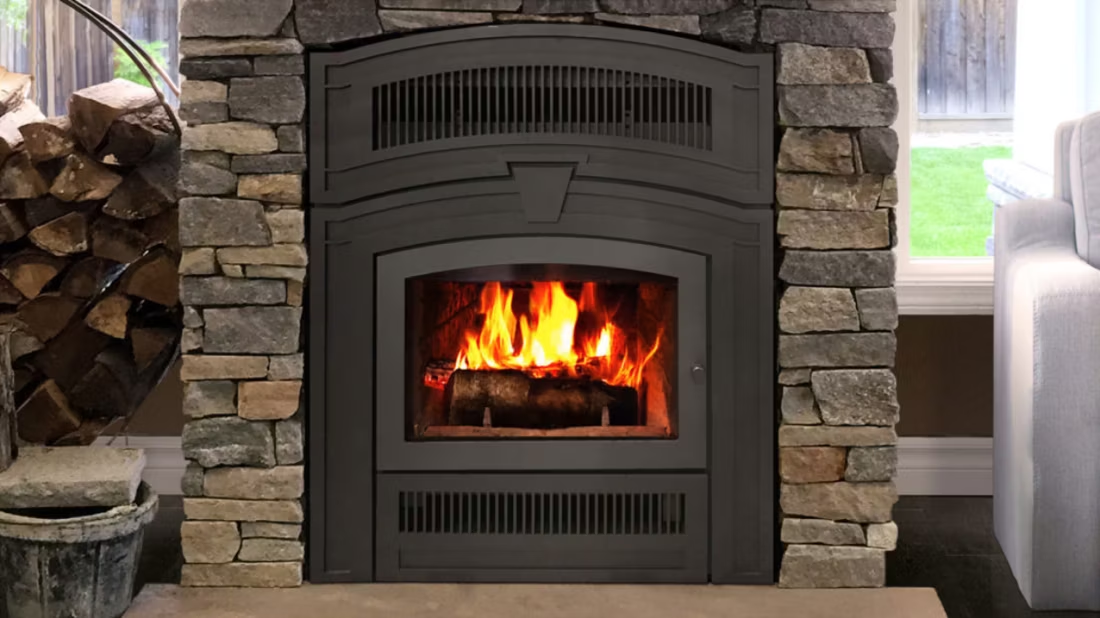
That said, wood stoves and fireplaces do show up here—usually for reasons other than raw heat output. Ranch houses and hunting camps around the lake sometimes want a real wood-burning hearth for atmosphere on the handful of genuinely cool nights each winter. Others install one as backup heat and cooking capability for hurricane season, when the grid can be down for days and a wood stove doesn't care whether the power's out. Local hardwoods like oak and pine (and, less commonly, mahogany on older properties) are available for anyone going this route, even if there's no commercial firewood industry built around year-round heating demand the way there is farther north.
Three steps. No salesperson until you're ready.
Tell us about your project
Your zip code, your situation, and the fuel you're leaning toward—or let the answers point you to one.
See what's actually available
The brands dealers within 100 miles genuinely carry—real options, never a catalog mirage.
Get your dealer & Project Guide
A trusted local dealer, plus the free Project Guide & Parts List that names every component of the job.
Frequently Asked Questions
How much does a wood stove installation cost in Okeechobee County?
There's no well-established local price range here, simply because so few wood stoves get installed in a climate zone 2A county with a 52°F average winter low—installers aren't running enough of these jobs to set a standard local rate the way they would in a cold-climate market. Nationally, a straightforward wood stove installation with a Class A chimney typically runs in the mid-thousands, more if new chimney work or a hearth pad rebuild is involved. Because jobs are infrequent here, get a firm in-home quote from a trusted local dealer rather than assuming a number—the site conditions on a Florida ranch or lakefront home (slab foundation, no existing masonry chimney) often drive cost more than the stove itself.
What size wood stove do I need in Okeechobee County?
Almost nobody here needs a stove sized to carry a whole house through winter, since the heating load barely exists. Most Okeechobee County installations are small to mid-size units chosen for ambiance in a great room or den, or as a hunting-camp centerpiece—not for BTU output. If your goal is hurricane-season backup heat and cooking capability rather than daily use, a smaller freestanding stove is usually plenty, and it's easier to keep clearances reasonable in a Florida-built home that wasn't designed around a masonry chimney. A local dealer can look at your specific room and tell you honestly whether you even need to go up a size.
Where can I find a wood stove installer near me in Okeechobee County?
Because wood-burning installations are uncommon this far south, you may not find a dedicated hearth shop physically based in Okeechobee itself—dealers serving this area often cover a wider swath of central and south-central Florida, including the Sebring and Fort Pierce corridors. Look for NFI-certified installers regardless of how far they're based; certification matters more here, not less, since fewer local contractors have hands-on experience with solid-fuel venting in a warm-climate build. A trusted dealer will also know how to route Class A pipe through a Florida roof assembly, which looks different than a snow-load roof up north.
What's the difference between a wood stove and a wood-burning fireplace insert?
A wood stove is a freestanding unit on its own hearth pad, vented through a straight run of Class A chimney pipe—it can go almost anywhere with proper clearances, including a great room with no existing masonry. A wood insert drops into an existing masonry fireplace opening and uses that chimney as its vent path. Existing masonry wood fireplaces are less common in Okeechobee County than in older northern housing stock, so most local projects end up being freestanding stoves rather than insert conversions, simply because there's often no existing fireplace to convert.
Do I need a permit to install a wood stove in Okeechobee County?
Yes. Solid-fuel appliance installations still require a building permit through the Okeechobee County building department (or the applicable municipal office if you're inside city limits), and the unit needs to be UL-listed and installed to its listed clearances regardless of how rarely it gets used. A reputable local installer will pull the permit as part of the job. Given how infrequently these permits get requested in this climate, it's worth confirming with the dealer up front that they've handled a solid-fuel install here before rather than assuming any general contractor knows the code specifics for wood-burning clearances.
What's the best wood stove for a climate like Okeechobee County's?
You don't need the long, slow-burning catalytic stoves that cold-climate homes rely on for overnight single-digit lows—that's overkill here. A smaller, EPA-certified non-catalytic stove from a mainstream maker like Pacific Energy or Lopi is generally the better fit: easier to run occasionally, less prone to overheating a room that was built to shed heat rather than hold it, and simpler to size for a hunting camp or hurricane-backup role rather than daily whole-house heating. Ask your dealer specifically about heat output on the low end of the stove's range, since that's the setting you'll actually use most.
How often should a wood stove be inspected in Okeechobee County if I barely use it?
Even light, occasional use still warrants an annual inspection—the CSIA recommendation doesn't change just because you're only lighting a fire a handful of times a year. If your stove's real job is hurricane-season backup, the smart move is scheduling that inspection every spring, before hurricane season starts in June, so the appliance and chimney are ready to go the one week a year you might actually need it. Infrequent use can actually let creosote and moisture sit longer between burns, so don't skip the sweep just because the stove sees light duty.
Where can I get firewood in Okeechobee County?
There's no large commercial firewood delivery industry here the way there is in colder markets, since year-round heating demand doesn't exist to support one. Most wood-burning households on ranch and rural properties around the county self-source from local oak and pine, both of which are common on cattle land and in the surrounding flatwoods; mahogany shows up occasionally on older established properties but isn't a primary local heating wood. If you want delivered firewood rather than sourcing your own, expect to work with a small local supplier or a landscaping operation rather than a dedicated firewood business.
Wood stove vs. pellet stove—which makes more sense in Okeechobee County?
Neither is a mainstream heating choice here, but if you're installing one for hurricane-season backup specifically, wood has a real edge: it needs no electricity to produce heat, while a pellet stove's auger and blower stop working the moment the power goes out—which is exactly when a lot of Okeechobee County households need backup heat and cooking capability most. Pellets are available regionally through brands like Lignetics, Hamer Pellet Fuel, and Greenway Renewable Energy, and pellet stoves do offer cleaner, more convenient operation for the rare cool night. But for true grid-down resilience during hurricane season, wood is the more dependable pick.
What's the difference between an insert and a zero-clearance fireplace?
An insert is a fireplace that slides into a pre-existing wood-burning fireplace—if you don't have one, there's nothing to insert it into. A zero-clearance fireplace is built into a framed wall, which makes it the answer for remodels and new construction. Simple test: existing masonry fireplace means insert; blank or framed wall means zero-clearance.
What does it take to replace an existing fireplace?
Fireplaces are like icebergs—bigger behind the wall than in front of it. Replacement means removing the surrounding tile or stone (the finish material laps onto the fireplace face), pulling the old unit, setting the new one in the same enclosure, and re-finishing the wall. A hearth professional can determine what's behind your wall without demolition during an in-home preview.
Can a fireplace actually lower my heating bill?
Yes—by creating a comfort zone. A furnace heats every square foot of the house just to warm the one room you're in; a gas fireplace on low burns roughly a sixth of the gas a typical furnace does. Set the furnace around 55–60 degrees as a baseline, then heat the rooms your family actually uses. Families who heat this way commonly save $20–$60 a month.
Does a fireplace add value to my home?
On average, a fireplace adds back to the home about the same amount you spent installing it. Add the monthly savings from heating the rooms you actually use instead of the whole house—often hundreds of dollars a year—and the value case is strong before you even count what a fire does for how your family uses the room.
Find your wood stove in Okeechobee County.
Wood heat is a niche choice here, not the default—so getting matched with a dealer who's actually installed one in a Florida climate matters. Tell me a little about your home and how you'd use it, and I'll send you a free Project Guide & Parts List with the right stove, vent kit, and a trusted local dealer who can install it correctly.
Find Your Fireplace →