
Pellet heat is rare in Okeechobee County—but not impossible.
With just 364 heating degree days a year and winter lows averaging 52°F, most Okeechobee County homes never need supplemental heat. But for hunting camps, tack rooms, cold-snap backup, or a cabin owned up north, a pellet stove can still make sense—and we'll help you figure out if yours is one of those cases.
Every Project Starts From One of These Five Situations
A climate that rarely asks for it.
Okeechobee County sits in ASHRAE climate zone 2A—hot and humid, with only 364 heating degree days a year. Compare that to a cold-climate market like Duluth, Minnesota, which racks up close to 10,000 HDD annually, and it's clear why pellet stoves never became part of how homes here are built or heated. Winter lows in Okeechobee average 52°F, with the occasional cold front dropping temperatures into the 30s for a night or two—enough to worry cattle ranchers and citrus growers about frost, but rarely enough to justify a dedicated wood-pellet heating appliance running electricity through an auger and combustion blower.
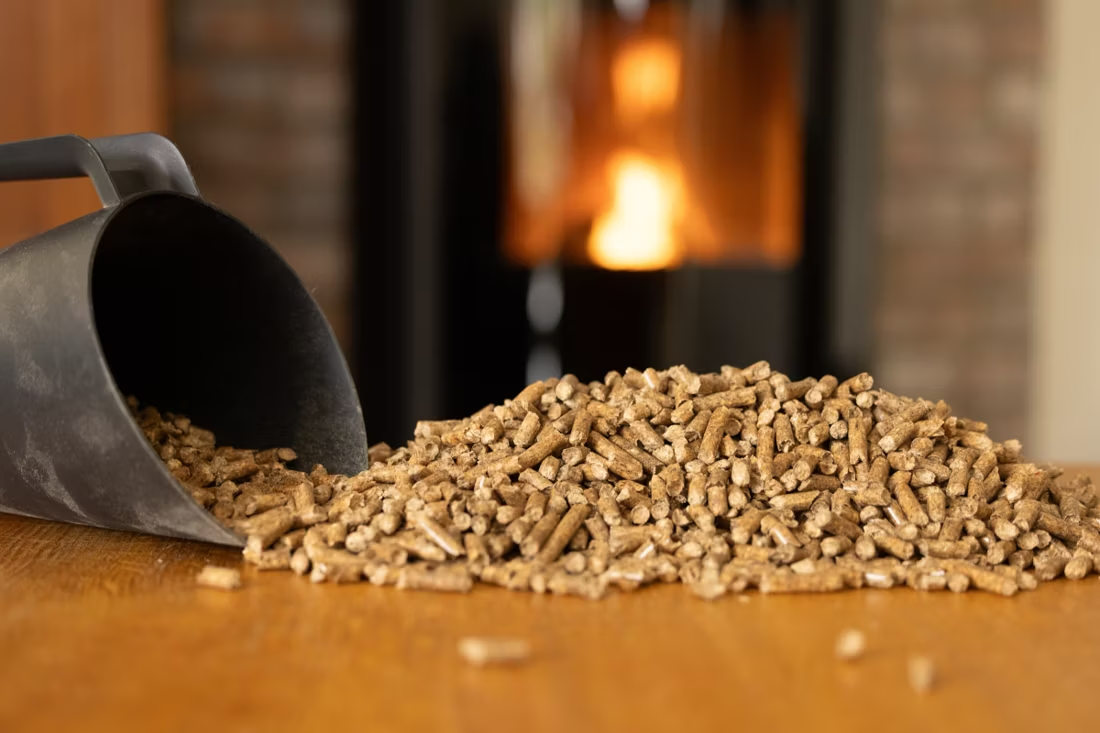
You will find pellets sold locally under brands like Lignetics, Hamer Pellet Fuel, and Greenway Renewable Energy—but around Okeechobee, that supply chain is driven far more by pellet grills and smokers, a real fixture of cattle country cooking, than by home heating stoves. If you're shopping for a heating-grade pellet stove insert, it's worth confirming with a dealer that you're getting a certified heating appliance and heating-grade fuel, not repurposing cooking pellets meant for a Traeger. For the rare homeowner here who genuinely wants pellet heat—a camp house, a second property up north, or a specific cold-weather use case—Find My Fireplace can still match you with a trusted local dealer who will size the unit correctly and handle the venting and permitting the right way.
Three steps. No salesperson until you're ready.
Tell us about your project
Your zip code, your situation, and the fuel you're leaning toward—or let the answers point you to one.
See what's actually available
The brands dealers within 100 miles genuinely carry—real options, never a catalog mirage.
Get your dealer & Project Guide
A trusted local dealer, plus the free Project Guide & Parts List that names every component of the job.
Frequently Asked Questions
Does anyone in Okeechobee County actually heat with a pellet stove?
Very few. With 364 heating degree days and an average winter low of 52°F, most Okeechobee County homes rely on air conditioning for the vast majority of the year and never install a dedicated solid-fuel heating appliance. The exceptions tend to be specific: a barn or tack room on a cattle operation that wants a little dry heat during a hard frost, a hunting camp near the lake, or a homeowner who splits time between Okeechobee and a colder property elsewhere. If that describes you, a pellet stove can still be the right call—it just isn't a common household fixture here the way it is in northern climates.
Why don't more homes in Okeechobee County have pellet stoves?
It comes down to climate math. Okeechobee County sits in zone 2A with only 364 heating degree days annually, versus a place like Bozeman, Montana, which sees roughly 7,500 HDD in a typical year. A pellet stove is a real investment—the appliance, venting, hearth pad, and installation labor—and in a county where winter lows average 52°F, that investment rarely pays back in comfort or fuel savings the way it does in a genuinely cold climate. Most local heating dollars go toward AC efficiency and occasional space heaters for the handful of cold nights each winter, not a standing pellet appliance.
If I still want a pellet stove, what should I expect to pay?
Because pellet heating isn't a tracked local need in Okeechobee County the way it is in colder markets, we don't have a deep local cost benchmark to point to. Nationally, a pellet stove installation—unit, venting, hearth pad, and labor—typically runs $3,000 to $6,000, with inserts into an existing masonry fireplace often landing at the lower end. In Okeechobee County specifically, expect costs to skew a bit higher simply because fewer local dealers stock and install pellet appliances regularly, so travel and special-order parts can factor in. A trusted local dealer can give you a firm number once they know your space and venting path.
Do I need a permit to install a pellet stove in Okeechobee County?
Yes—a pellet stove is a fuel-burning appliance, so it requires a building permit through the Okeechobee County Building Department, same as any wood or gas hearth appliance would. The permit covers the venting path (pellet stoves vent through a wall or roof, similar to a direct-vent gas unit) and confirms proper clearances to combustibles. Because installations are uncommon here, it's worth confirming your dealer has actually pulled hearth-appliance permits with the county before—not every local contractor has, simply due to low demand.
Are heating pellets even available locally in Okeechobee County?
You'll find pellet bags on shelves under brands like Lignetics, Hamer Pellet Fuel, and Greenway Renewable Energy, but a lot of that local demand is driven by pellet grills and smokers rather than home heating—Okeechobee is cattle country, and pellet cooking is popular. If you install a heating-grade pellet stove, make sure you're buying premium hardwood heating pellets rated for stove use, not flavored cooking pellets meant for a smoker—they're not interchangeable, and cooking pellets can produce excess ash and clinkers in a heating appliance.
Would a pellet stove work as backup heat during a power outage?
Not well. Pellet stoves rely on an electric auger to feed fuel and a blower to distribute heat and exhaust—no power, no fire. In Okeechobee County, the bigger real-world outage risk is hurricane season, not winter cold, and a pellet stove won't help during either kind of outage unless you're running a generator to keep it going. If backup heat during a power outage is actually your goal, a wood-burning appliance or a battery-backed gas unit is a more reliable choice than pellet.
What about installing a pellet stove for a hunting camp or cabin I own elsewhere?
This is actually one of the more common reasons Okeechobee County residents ask about pellet stoves—not for the primary home here, but for a camp house near the lake or a cabin owned up north where winters are real. If that's your situation, tell us where the appliance is actually going. Find My Fireplace can match you with a trusted dealer near that property, since sizing, venting, and permit rules for a genuinely cold-climate cabin look very different than anything relevant to a 52°F Okeechobee winter.
Would a gas or electric fireplace make more sense for my Okeechobee home?
For most Okeechobee County homes, yes. Both gas and electric fireplace options are considered a standard, sensible fit for this climate—gas for the occasional cold front or ambiance in a living room, electric for a low-cost, no-venting-required supplemental option in a bedroom or den. Given that Okeechobee sees only 364 heating degree days a year, either of those tends to be a more practical match than a pellet appliance sized for sustained cold-weather heating that this climate rarely delivers.
If pellet isn't a great fit, how does Find My Fireplace actually help?
We're not a manufacturer or a retailer—we're a neutral matchmaker. If you tell us your situation and a pellet stove genuinely fits (a camp house, a barn, a property up north, a specific cold-weather need), we'll match you with a trusted local dealer and put together a free Project Guide & Parts List with the correct unit, vent kit, and installation plan for your project in Okeechobee County. And if pellet isn't actually the right tool for what you're trying to do, we'll say so and point you toward the gas or electric option that fits your climate better. We don't take manufacturer money to push a brand—the goal is getting you the right answer, not a sale.
How often does a pellet stove need cleaning?
A clean pellet stove is a happy pellet stove. Plan on cleaning the burn pot about once a week when you're burning regularly—ash and clinkers gum up the air holes just like a pellet barbecue. Most pellet stove problems trace back to skipped cleaning that nobody explained up front. Some designs make it easy with a trapdoor burn pot: pull a lever and the gunk drops into the ash pan.
Why is my open fireplace making my house colder?
Open fireplaces suck—literally. As the fire burns, it consumes air your furnace already paid to heat and pulls it out through the chimney, so the house is actually colder after the fire goes out than before you lit it. An insert fixes this: it seals the chimney, puts fixed glass across the front, and turns that hole in your house into a real heat source.
Does a fireplace add value to my home?
On average, a fireplace adds back to the home about the same amount you spent installing it. Add the monthly savings from heating the rooms you actually use instead of the whole house—often hundreds of dollars a year—and the value case is strong before you even count what a fire does for how your family uses the room.
Can a fireplace actually lower my heating bill?
Yes—by creating a comfort zone. A furnace heats every square foot of the house just to warm the one room you're in; a gas fireplace on low burns roughly a sixth of the gas a typical furnace does. Set the furnace around 55–60 degrees as a baseline, then heat the rooms your family actually uses. Families who heat this way commonly save $20–$60 a month.
Pellet Brands Stocked Around Okeechobee County
Manufacturers will point you to the nearest stocking dealer.
Find out if a pellet stove is right for your Okeechobee County home.
Tell us about your situation—a camp house, a barn, a second property up north, or genuine curiosity—and we'll give you a straight answer. If pellet fits, we'll match you with a trusted local dealer and send a free Project Guide & Parts List for your project.
Find Your Fireplace →