
A gas fireplace built for island living, not winter.
With winter lows averaging 63°F and next to no need for heat all year, nobody in the Keys needs a gas fireplace to stay warm—they want one for the look, the glow, and the resale value. Find the right unit and connect with a local dealer who builds for salt air, flood zones, and hurricane code.
Every Project Starts From One of These Five Situations
Ambiance matters more than heat here.
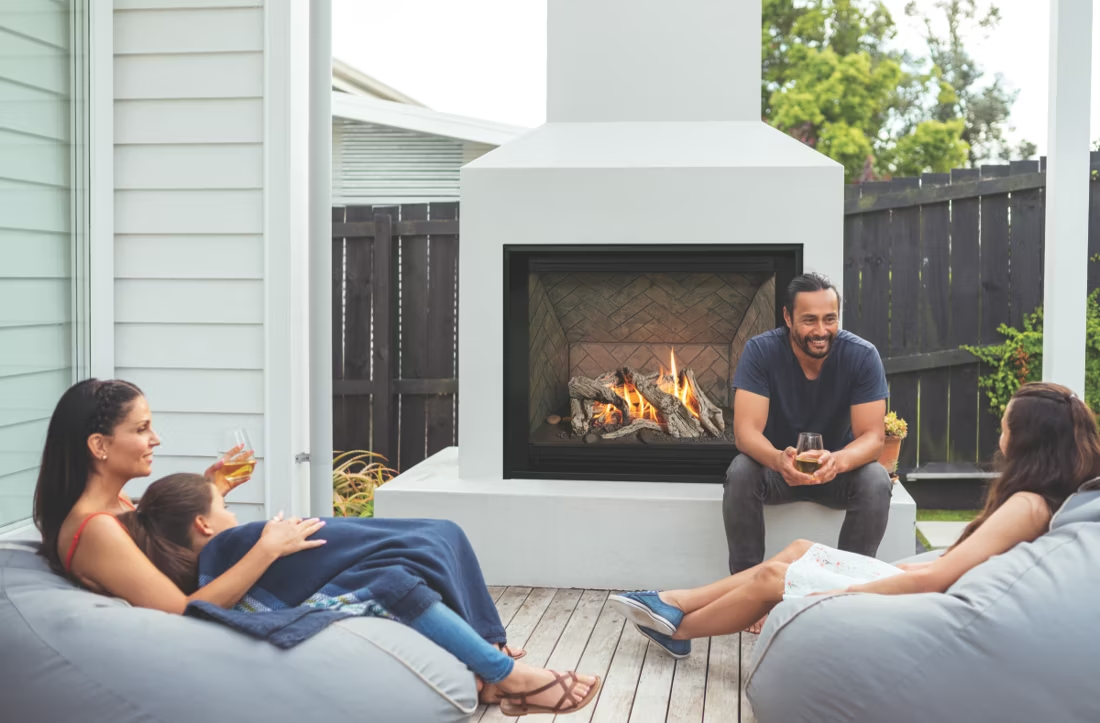
Monroe County stretches roughly 120 miles from Key Largo to Key West, almost entirely at sea level, with a tropical climate that has almost no need for heat all year—for comparison, Duluth, Minnesota has a long, brutal winter heating season. There's essentially no heating load here, which is why wood stoves and pellet stoves are all but absent from the county. Gas fireplaces, by contrast, are genuinely common in Keys homes—not for warmth, but as a design feature: a linear fire feature under a TV wall, a decorative unit on a lanai, or a small direct-vent box in a condo remodel.
Natural gas infrastructure is limited across most of the island chain, so propane is the standard fuel for the fireplaces that do go in, typically fed from a small exterior tank. Installation in Monroe County also has to account for things a mainland installer might never think about: homes built on stilts or elevated slabs per FEMA flood requirements, venting materials rated for constant salt-air exposure, and wind-load anchoring for anything mounted near an exterior wall. A trusted local dealer who's done Keys installs before will already know how to route venting through an elevated floor system and which stainless components hold up against the salt air—a big-box installer usually doesn't.
Three steps. No salesperson until you're ready.
Tell us about your project
Your zip code, your situation, and the fuel you're leaning toward—or let the answers point you to one.
See what's actually available
The brands dealers within 100 miles genuinely carry—real options, never a catalog mirage.
Get your dealer & Project Guide
A trusted local dealer, plus the free Project Guide & Parts List that names every component of the job.
Frequently Asked Questions
How much does a gas fireplace installation cost in Monroe County?
A typical direct-vent gas fireplace or linear fire feature in the Keys runs roughly $3,500 to $8,500 installed, including a small propane tank hookup. Costs skew toward the higher end on elevated or stilt-built homes, where venting has to be run through a raised floor system, and on any install requiring stainless or corrosion-resistant components to withstand constant salt air—a real consideration this close to the water. Vent-free units on the low end can run closer to $2,000-$3,500 but come with the room-sizing and ventilation restrictions common to that category. A local dealer can give you a firm number after seeing your specific structure.
Do I actually need heat from a gas fireplace in the Florida Keys?
No—and it's worth saying plainly. With an average winter low around 63°F and next to no need for heat all year, Monroe County has essentially no heating demand. The gas fireplaces installed here are almost entirely about ambiance: a focal point in a great room, a linear feature framing a TV, or a small decorative unit that gets used on the rare cool front that drops nighttime temps into the 40s. If warmth is genuinely the goal, most local dealers will point you toward central AC/heat rather than a fireplace as the primary solution.
Is my Monroe County home on natural gas or propane?
Most of the island chain runs on propane rather than piped natural gas, since natural gas infrastructure is limited across the Keys. If you're building a fireplace project from scratch, budget for a propane tank—either a small exterior tank shared with a grill or pool heater, or a dedicated tank sized for the fireplace alone. Nearly every gas fireplace model sold by local dealers can be configured for propane, so fuel type isn't a limiting factor when picking a unit—it just determines the tank setup your installer plans around.
What permits does Monroe County require for a gas fireplace?
New gas fireplace installations require both a building permit and a gas line/propane permit through Monroe County, and installations in unincorporated areas or the Lower, Middle, and Upper Keys may also trigger a flood-zone or elevation review given the county's FEMA compliance rules. Most established local dealers handle this paperwork as part of the install and are familiar with the added scrutiny that comes with building on stilts or fill in a flood zone—something an out-of-area installer may not be set up to navigate.
Will a gas fireplace still work if a storm knocks out power?
Often, yes—which matters more in the Keys than almost anywhere else, given hurricane season power outages. Units with intermittent pilot ignition (IPI) run on battery backup and light on demand without house power. Valor fireplaces go a step further: their pilot generates its own electricity through the thermocouple, so there's no battery to remember or replace. For a hurricane-prone county where outages can stretch for days, ask your local dealer specifically about the ignition system before you buy.
Vented vs. vent-free gas fireplaces—which makes sense in the Keys?
Vented (direct-vent) units draw combustion air from outside and exhaust it back outside through sealed venting—the safer, code-compliant choice everywhere, including Monroe County. Vent-free units burn fuel directly into the room and release some byproducts, including water vapor, into indoor air—a real concern in a climate this humid, where extra moisture can aggravate mold and mildew issues that Keys homeowners already fight year-round. For that reason, most local dealers steer island customers toward vented, direct-vent units rather than vent-free models, even though vent-free is technically legal in Florida.
Can I convert an existing fireplace to gas in an older Keys home?
It's possible, though less common here than on the mainland since older masonry wood fireplaces are relatively rare in Monroe County to begin with—most historic Key West and Keys homes were built without them, given the climate. When an older home does have one, a gas insert can usually be installed using the existing flue with a stainless liner, similar to a mainland conversion, and running $4,000 to $7,500 depending on propane line work. A local dealer will need to inspect the existing chimney for salt-air corrosion before quoting the job.
How often should a gas fireplace be serviced in a coastal climate like Monroe County's?
Annual service is recommended everywhere, but it matters more here: the combination of salt air, high humidity, and near-constant AC cycling can accelerate corrosion on venting components and burner assemblies faster than in drier inland climates. A yearly inspection—checking the burner, pilot or ignition system, venting, and gas connections—typically runs $150 to $250 and catches corrosion issues before they become a bigger repair. Ask your dealer whether your specific unit uses stainless or coated components rated for coastal exposure.
Why don't people install wood or pellet stoves in Monroe County?
Wood is technically available locally—oak, mahogany, and pine all grow in the Keys—but wood and pellet stoves are essentially absent here, and for good reason: with next to no need for heat all year and winter lows averaging 63°F, there's no functional need for a solid-fuel heat source. The rare wood-burning fireplace that does exist in an older home is used a handful of nights a year, if at all, purely for ambiance. Gas is the practical choice islandwide because it delivers the visual and emotional payoff of a fire without asking a homeowner to store cordwood or pellets in a climate that never calls for heat.
Is my gas fireplace wasting gas?
If it was installed more than 15 years ago, probably. Older gas fireplaces keep a standing pilot light burning all the time, and that little flame can cost a couple hundred dollars a year. Newer models use pilot-on-demand ignition—the pilot lights only when you use the fireplace and goes out when you turn it off.
Why is a fireplace insert so efficient?
An insert does two things: it seals the chimney completely, so you stop losing air you already paid to heat, and it radiates warmth into the room through the firebox and glass. Most add a heat-exchange fan that pulls cool room air underneath, wraps it around the hot firebox, and pushes it back out warm. Your home is more efficient before you've even lit the first fire.
Does a fireplace add value to my home?
On average, a fireplace adds back to the home about the same amount you spent installing it. Add the monthly savings from heating the rooms you actually use instead of the whole house—often hundreds of dollars a year—and the value case is strong before you even count what a fire does for how your family uses the room.
What is an in-home preview and do I need one?
It's a visit where a hearth professional measures your space, confirms the model you picked actually works in your home, and walks the specs—framing, gas line, venting, finish work—before anything is ordered. Some details you just can't know until you see the house. Never make a down payment without one; it's the single most-skipped step that burns buyers.
Stove and Fireplace Dealers in Monroe County
Find your gas fireplace in Monroe County.
Tell us about your home—including whether it's elevated, on a slab, or in a flood zone—and we'll send you a free Project Guide & Parts List with the right unit, vent kit, and a trusted local dealer who builds for the Keys.
Find Your Fireplace →