
Cozy up the Keys—no chimney required.
From Key Largo to Key West, electric is the fireplace fuel that actually fits stilt homes, flood-zone construction, and historic Old Town cottages. Find the right unit and connect with a trusted local dealer.
Every Project Starts From One of These Five Situations
Ambiance first, heat second—and that's fine here.
Monroe County is a 120-mile string of barrier islands running from Key Largo down through Islamorada, Marathon, Big Pine Key, and Key West, home to roughly 74,481 year-round residents. Climate zone 1A means hot, humid weather nearly year-round, and the numbers back it up: an average winter low around 63°F and only a handful of nights all year that would even call for any heat at all. Compare that to a place like Duluth, MN, which sees more need for heat in a single January than Monroe County sees all year, and it's clear why a wood stove or pellet appliance simply doesn't have a job to do here. A handful of nights a year, a cold front drops lows into the 40s, and that's about the extent of the 'heating season.'
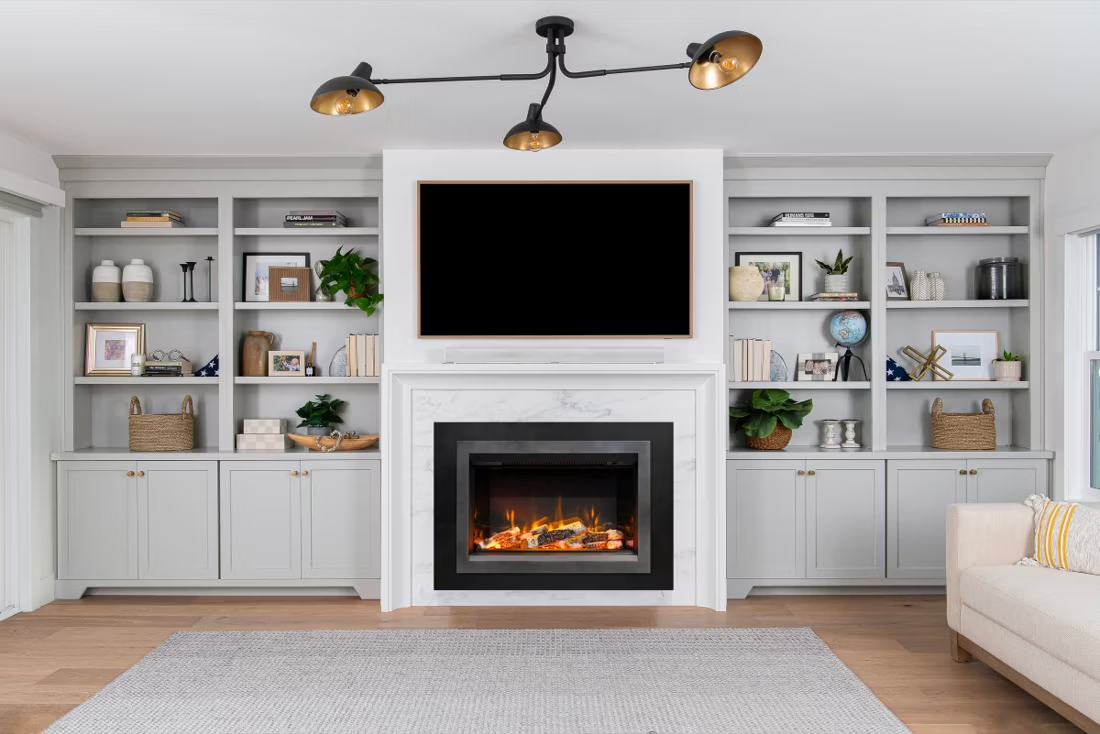
That's exactly why electric fireplaces have found a real niche in the Keys—not as a heat source, but as ambiance that works within the realities of local construction. Many homes here are elevated on pilings to meet FEMA base flood elevation requirements, which makes running a masonry chimney or gas line impractical. Historic Key West properties inside the district overseen by the Historic Architectural Review Commission (HARC) can't alter their exterior profile for venting, but a ventless electric unit changes nothing about the outside of the house. Condos and vacation rentals throughout Marathon and Islamorada favor electric inserts for the same reason: no combustion byproducts, no makeup air requirements, and no chimney to maintain in a salt-air environment that's brutal on masonry. Local wood species like oak, mahogany, and pine show up plenty in this region—just usually as cabinetry and mantel material rather than fuel.
Three steps. No salesperson until you're ready.
Tell us about your project
Your zip code, your situation, and the fuel you're leaning toward—or let the answers point you to one.
See what's actually available
The brands dealers within 100 miles genuinely carry—real options, never a catalog mirage.
Get your dealer & Project Guide
A trusted local dealer, plus the free Project Guide & Parts List that names every component of the job.
Frequently Asked Questions
How much does an electric fireplace installation cost in Monroe County?
Plug-in electric fireplace inserts that drop into an existing mantel or built-in surround start around $300–$800 and need nothing more than a standard outlet. Built-in wall units and linear electric fireplaces that require a dedicated 20-amp circuit run higher, typically $800–$2,000 installed, once you factor in an electrician's time to run new wiring—which is often the bigger cost driver in older Key West homes with dated panels than the unit itself. Homes on pilings sometimes add a modest surcharge if wiring has to be routed to stay above the flood elevation line rather than through a slab.
Why would I choose electric over gas or wood in the Keys?
With only a handful of nights a year cold enough to need heat, and winter lows averaging 63°F, wood and pellet heat simply aren't functional fuels here—they're built for climates that need sustained BTU output, which Monroe County rarely does. Gas is available via propane and works fine for homeowners who want a real flame, but it means a tank, a gas line, and venting considerations. Electric skips all of that: no chimney, no gas line, no combustion air requirements, and it installs cleanly in elevated stilt homes, sealed condo units, and HARC-regulated historic cottages where altering the exterior for venting isn't an option.
Do I need a permit to install an electric fireplace in Monroe County?
A simple plug-in insert generally doesn't require a permit. A built-in unit wired to a dedicated circuit typically needs an electrical permit through the Monroe County Building Department, or the City of Key West Building Department if the property is within city limits. If the home sits in the Old Town Key West historic district, HARC approval may be needed if the installation changes any visible exterior element—though most electric fireplace installs, being fully interior, clear that bar easily. Your dealer's installer will usually tell you up front whether your specific project needs a permit.
Does an electric fireplace need a chimney or outside venting?
No. Electric fireplaces produce no combustion byproducts, so there's no flue, no chimney, and no exterior vent termination to worry about. That matters a lot in the Keys, where homes are frequently elevated on pilings, built to strict Florida Building Code wind and flood standards, or located in historic districts where you can't cut a new vent through a protected facade. An electric unit installs entirely inside the wall or cabinetry with just a power connection.
Will my electric fireplace still work if the power goes out during a storm?
No—electric fireplaces require power to run, so during a hurricane-related outage the unit will be offline along with everything else on the grid, whether you're served by Keys Energy Services in Key West and Stock Island or the Florida Keys Electric Cooperative (FKEC) across the rest of the county. If you want fireplace ambiance to survive an outage, pair it with a home battery backup or generator setup. Realistically, most homeowners here treat the electric fireplace as a comfort feature for the handful of cool evenings a year, not as emergency heat.
What type of electric fireplace makes sense for my home?
For an existing masonry fireplace opening—common in some of the older Key West cottages that were built with a fireplace more for architectural charm than actual heating—an electric insert that slides into the opening is usually the simplest upgrade. For newer construction or condos without an existing fireplace, a linear wall-mounted unit or a built-in cassette gives a clean, modern look without adding depth to the room. Freestanding stove-style electric units work well in smaller spaces like a den or Florida room where a fixed installation isn't practical. A local dealer can walk you through options from brands like Dimplex, Napoleon, and Touchstone based on your specific opening and wall construction.
What's the difference between a plug-in unit and a hardwired built-in?
A plug-in electric fireplace runs off a standard 120V outlet and can be installed by nearly anyone in an afternoon—no electrician required. A hardwired built-in, especially larger linear units drawing 1,500 watts or more, typically needs its own dedicated circuit to run safely and avoid tripping breakers shared with other appliances. In older Keys homes with original electrical panels, that often means panel work in addition to the fireplace installation itself, which is worth budgeting for before you fall in love with a particular unit.
How much maintenance does an electric fireplace need?
Very little. There's no ash, no soot, no annual chimney sweep, and no combustion components to service. Maintenance is mostly occasional dusting of the vents and glass, and eventually replacing the LED light strip that creates the flame effect—usually a straightforward swap rather than a service call. In the salt-air environment of the Keys, that low-maintenance profile is a real advantage over masonry or metal chimney systems, which corrode faster here than almost anywhere else in Florida.
Electric vs. gas—which is right for my home?
Gas fireplaces in Monroe County run on propane, since natural gas infrastructure isn't available across the Keys, which means a tank, delivery service, and a vented or carefully-sized vent-free installation. Gas gives you a real flame and genuine (if modest) heat output. Electric gives up the real flame for a realistic LED equivalent, but installs faster, costs less upfront, and sidesteps venting, tank placement, and flood-elevation wiring concerns entirely. For most primary residences and vacation rentals here where the fireplace is about atmosphere rather than warmth, electric is the simpler, lower-maintenance choice—though homeowners who want the authentic experience for occasional cold fronts often still choose gas.
Can I put a TV above my fireplace?
Yes—with an asterisk. Fireplaces are hot and TVs don't like heat. Either put a mantel between them to deflect rising warmth, or choose a fireplace with heat-management technology that creates a cool zone on the wall above—the wall stays around 125 degrees, barely warm, while the room still gets full heat. If you like clean lines and don't want a mantel, heat management is the answer.
How much does an electric fireplace cost to run?
With the heater on, a typical unit draws about 1,500 watts—at average electric rates that's roughly 20 cents an hour. Run the flame effect alone and it costs pennies; the flames are LED-driven and use about as much power as a light bulb. There's no pilot light, no fuel delivery, and essentially no maintenance.
Can a fireplace actually lower my heating bill?
Yes—by creating a comfort zone. A furnace heats every square foot of the house just to warm the one room you're in; a gas fireplace on low burns roughly a sixth of the gas a typical furnace does. Set the furnace around 55–60 degrees as a baseline, then heat the rooms your family actually uses. Families who heat this way commonly save $20–$60 a month.
How much should I budget for a fireplace?
For an average home—covering the fireplace, the vent pipe, and basic installation—a budget between $3,900 and $5,500 gives you a lot of options across wood, gas, and pellet. By the time you add finish work, gas line, and electrical, the average complete installation lands between $5,000 and $12,000 all-in. In a remodel or new build, a good rule is to put about 2.5% of the total project cost toward the fireplace.
Stove and Fireplace Dealers in Monroe County
Find your electric fireplace in Monroe County.
Tell us a bit about your home and we'll match you with the right electric fireplace or insert—and connect you with a trusted local dealer serving the Keys.
Find Your Fireplace →