
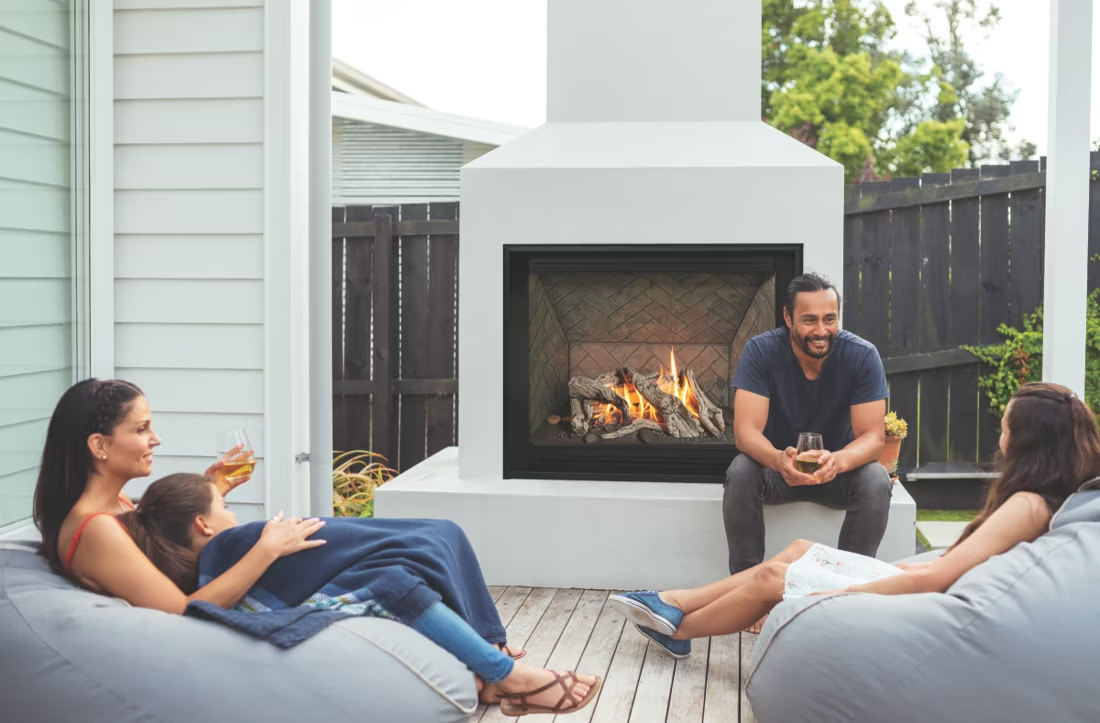
Instant ambiance for Silver Springs Shores evenings.
Central Florida winters rarely demand heat, but a propane fireplace still earns its keep on the occasional 30-degree night and every evening in between. Find the right unit and connect with a trusted local dealer.
Every Project Starts From One of These Five Situations
Built for ambiance, ready for a cold snap.
Silver Springs Shores sits in climate zone 2A at just 94 feet elevation, with an average winter low near 46 degrees and only about 791 heating degree days a year—a fraction of what a place like Fargo, ND or Duluth, MN racks up before Thanksgiving. Heating isn't a survival issue here the way it is up north. But Marion County still sees hard freezes most winters, the kind that send horse farm owners and citrus growers scrambling to cover plants and check water lines. A gas fireplace fits that reality: it's mostly about ambiance and entertaining, but it's genuinely useful the handful of nights a year when temperatures drop into the 30s.
There's no piped natural gas utility serving this part of unincorporated Marion County, so nearly every gas fireplace or insert installed in Silver Springs Shores runs on propane, typically fed by a small buried or above-ground tank from a local propane supplier. Electric service comes from Duke Energy Florida or the City of Ocala's municipal utility depending on exactly where you sit, and either can factor into your decision if you're weighing gas against an electric unit. One real advantage worth noting: central Florida sits squarely in hurricane country, and a propane fireplace with battery-backup ignition keeps working when the grid doesn't.
Three steps. No salesperson until you're ready.
Tell us about your project
Your zip code, your situation, and the fuel you're leaning toward—or let the answers point you to one.
See what's actually available
The brands dealers within 100 miles genuinely carry—real options, never a catalog mirage.
Get your dealer & Project Guide
A trusted local dealer, plus the free Project Guide & Parts List that names every component of the job.
Frequently Asked Questions
How much does a gas fireplace installation cost in Silver Springs Shores?
Most propane fireplace and insert installations in this part of Marion County run somewhere between $3,000 and $8,000, depending on the unit, whether you're converting an existing masonry fireplace or building new, and how much line work is involved between the tank and the appliance. If you don't already have a propane tank on the property, budget an additional $200 to $600 for a tank setup, or ask about a lease arrangement with a local propane supplier, which is common in this area and keeps upfront cost down.
Can I convert my existing wood-burning fireplace to gas?
Yes, and it's a common upgrade in the older block homes around Silver Springs Shores that were built with a traditional masonry fireplace and chimney. A propane insert slides into that existing firebox and uses a liner run up the current chimney, so you keep the look of the fireplace without the ash, the humidity-related draft issues, or the need to source wood in a climate where firewood isn't exactly a local staple. Most conversions in this area land in the $3,500 to $7,000 range depending on the insert and how much of the existing chimney can be reused.
Should I get a natural gas or propane fireplace?
Propane is really the only practical option for most homes in Silver Springs Shores—there's no natural gas main serving this part of unincorporated Marion County, unlike closer-in Ocala neighborhoods that sometimes have it. That's not a downside so much as a fact to plan around: your installer will set the fireplace up for propane from the start, and you'll either buy or lease a tank from a local supplier. If you're near the edge of a natural gas service territory, ask your dealer to confirm before you commit to a unit, since swapping fuel types after installation means replacing orifices and regulators.
Will my gas fireplace still work during a power outage?
This matters more here than in most places, given how often Marion County sits in the path of tropical storms and hurricanes. Most modern propane fireplaces with IPI (intermittent pilot ignition) run on battery backup and will light on demand even with the grid down, as long as the batteries inside the unit are fresh. Valor fireplaces go a step further—their pilot assembly generates its own electricity through a thermocouple, so there's no battery to remember or replace. For a household that wants heat and light on hand after a storm knocks out Duke Energy or City of Ocala service, that's worth asking about specifically.
What's the difference between a gas fireplace, gas insert, and gas stove?
A gas fireplace is a built-in unit framed into a wall, typically chosen for new construction or a remodel where there's no existing fireplace opening—common in the newer stucco-and-block homes around Silver Springs Shores. A gas insert drops into an existing masonry firebox and uses the chimney as a vent path, which is the usual route for older homes with a wood-burning fireplace already in place. A gas stove is a freestanding cabinet-style unit that doesn't require an existing fireplace at all. Given how few homes here were built with a fireplace to begin with, built-in units and freestanding stoves are both common; inserts show up mainly in the older housing stock closer to Silver Springs itself.
Do I need a permit to install a gas fireplace in Silver Springs Shores?
Yes—installations in unincorporated Marion County go through the Marion County Building Department, and the propane line work needs to be handled by a licensed gas contractor. A reputable local hearth dealer will pull the permit and coordinate the propane supplier as part of the job, so you're not managing separate trades yourself. Given how rarely these units get used for real heat here, most of the inspection focus is on the gas line and clearances rather than anything climate-related.
Vented vs. vent-free gas fireplaces—which makes sense for a Florida home?
Vented (direct-vent) units draw combustion air from outside and exhaust it back outside, which makes them the safer, more universally recommended choice and the one most local dealers will steer you toward for a primary living space. Vent-free propane units are legal in Florida and do show up in smaller Silver Springs Shores homes and additions where running venting is impractical, but they come with strict room-size minimums and require an oxygen depletion sensor. Given how mild winters are here, the heat output tradeoff of vent-free rarely matters—most homeowners choose based on installation flexibility rather than BTU need.
How often should my gas fireplace be serviced?
An annual check is worth doing even in a climate like this one, ideally in the fall before the first cold front rolls through and the unit gets used for the first time in months. A technician will check the pilot, burner, gas connections, and battery backup system, and clean the glass. Because these units often sit unused for most of the year in central Florida, a quick pre-season inspection catches spider nests in the burner or a dead backup battery before you're relying on it during a cold snap or storm outage.
Gas vs. wood vs. electric—what actually makes sense in Silver Springs Shores?
Wood-burning stoves and fireplaces are uncommon here—with only about 791 heating degree days a year and average winter lows in the mid-40s, there's little practical need for wood heat, and the humidity makes seasoned firewood harder to store than in drier climates. Electric fireplaces are a genuine alternative: no venting, no propane tank, and lower upfront cost, though they're more about visual ambiance than real heat output. Propane gas fireplaces sit in the middle—real flame, real (if occasional) heat, and the ability to run during a hurricane-related power outage. For most homes here, that combination of ambiance plus storm resilience is what tips the decision toward gas.
Why is my open fireplace making my house colder?
Open fireplaces suck—literally. As the fire burns, it consumes air your furnace already paid to heat and pulls it out through the chimney, so the house is actually colder after the fire goes out than before you lit it. An insert fixes this: it seals the chimney, puts fixed glass across the front, and turns that hole in your house into a real heat source.
What's the difference between an insert and a zero-clearance fireplace?
An insert is a fireplace that slides into a pre-existing wood-burning fireplace—if you don't have one, there's nothing to insert it into. A zero-clearance fireplace is built into a framed wall, which makes it the answer for remodels and new construction. Simple test: existing masonry fireplace means insert; blank or framed wall means zero-clearance.
Can I install a fireplace myself?
If you're putting a fire in your house on purpose, it's best to work with an expert. Unless you're genuinely experienced in framing, gas line, vent pipe, and the national code on clearances to combustibles, have a professional do it—and ideally the same company that sells you the fireplace, so warranty, service, and liability all live under one roof.
How much should I budget for a fireplace?
For an average home—covering the fireplace, the vent pipe, and basic installation—a budget between $3,900 and $5,500 gives you a lot of options across wood, gas, and pellet. By the time you add finish work, gas line, and electrical, the average complete installation lands between $5,000 and $12,000 all-in. In a remodel or new build, a good rule is to put about 2.5% of the total project cost toward the fireplace.
Nearby Dealers
Hearth shops serving Silver Springs Shores and the surrounding area.
Find your gas fireplace in Silver Springs Shores.
Tell us a bit about your home and we'll put together a free Project Guide & Parts List—the right propane fireplace or insert, the vent kit and parts your install needs, and a trusted local dealer to put it in.
Find Your Fireplace →