
Keep Your Family Warm and Safe—No Matter What
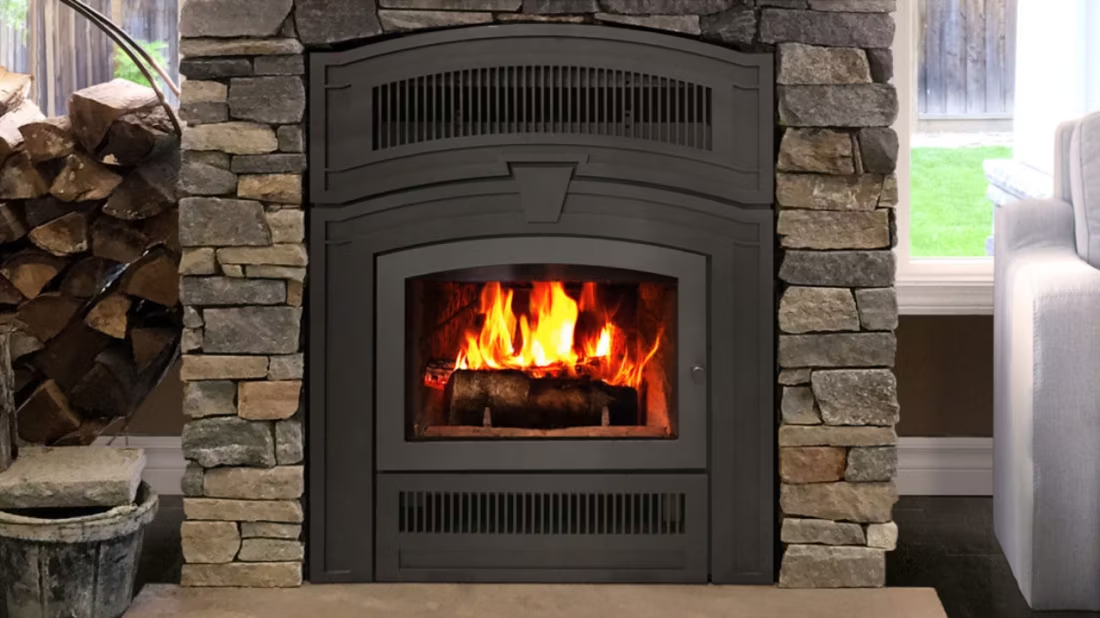
Wood heat isn't a necessity in Leisure City the way it is up north, but a real wood fire still has a place here—for ambiance, for the handful of genuinely cold nights each winter, and for homeowners who just want the real thing.
Every Project Starts From One of These Five Situations
Ambiance first, heat second.
Leisure City sits at about 10 feet of elevation in southern Miami-Dade County, near Homestead, in climate zone 1A—hot and humid nearly year-round. The area has an extremely light heating need, with a winter heating load only a tiny fraction of a place like Duluth, Minnesota. Winter lows average around 55°F, and most years bring only a handful of nights that dip into the 40s or, rarely, the 30s during an arctic outbreak. Wood heat simply isn't doing the load-bearing work here that it does in a northern climate.
That doesn't mean a wood fireplace is off the table—it means the reason for wanting one is different. Homeowners here tend to want a real wood fire for the atmosphere, the occasional genuinely chilly evening, or a second home or rental property where a masonry fireplace already exists. Local hardwoods like oak and mahogany (much of it salvaged from storm-felled trees after hurricanes) and regionally available pine give South Florida burners options, even without the cutting culture you'd find near national forest land out west. There's no wood smoke non-attainment issue in Miami-Dade the way there is in western wildfire-prone basins, so regulation isn't the obstacle—practicality and installer availability are.
Three steps. No salesperson until you're ready.
Tell us about your project
Your zip code, your situation, and the fuel you're leaning toward—or let the answers point you to one.
See what's actually available
The brands dealers within 100 miles genuinely carry—real options, never a catalog mirage.
Get your dealer & Project Guide
A trusted local dealer, plus the free Project Guide & Parts List that names every component of the job.
Frequently Asked Questions
Does a wood-burning fireplace actually make sense in Leisure City?
For most homes here, no—not as a heat source. With such a light winter heating need and winter lows averaging in the mid-50s, a wood stove or fireplace won't carry any real heating load the way it would in a colder region. Where it does make sense is ambiance: a real wood fire on one of the handful of nights a year that drop into the 40s, or as a feature in an outdoor living space or a second home. If your goal is genuine supplemental heat for South Florida's mild winters, a smaller electric or gas unit is usually the more practical call—but if you want the real thing, wood is still installable here.
How much does a wood fireplace or stove installation cost in Leisure City?
Because wood-burning installs are uncommon in Miami-Dade County compared to gas or electric, expect a range in the $5,000-$11,000 territory for a factory-built, code-compliant wood fireplace or freestanding stove with proper Class A chimney venting through a hurricane-rated roof penetration. Costs run higher than in wood-heavy climates partly because fewer local installers specialize in wood, and hurricane wind-load requirements on the chimney cap and flashing add labor. A trusted local dealer can give you a firm number once they've seen your roofline and existing structure.
What wood species are realistic to burn in Leisure City?
Oak is the standout choice locally—dense, long-burning, and available from South Florida tree services and firewood suppliers. Mahogany shows up regularly too, often salvaged from storm-damaged or hurricane-felled trees rather than harvested specifically for firewood, and it burns hot with a pleasant scent. Pine is also common and easy to find, but it's resinous and burns fast with more creosote buildup, so it's better suited to occasional ambiance fires than for anyone trying to get long burn times out of a load.
Do I need a permit to install a wood-burning fireplace in Leisure City?
Yes. Building permits for wood-burning fireplaces and stoves in Leisure City go through Miami-Dade County's Regulatory and Economic Resources (RER) Department. Because the county is under the Florida Building Code's high-velocity hurricane zone (HVHZ) provisions, chimney caps, flashing, and roof penetrations typically need products with a valid Miami-Dade Notice of Acceptance (NOA) rated for wind uplift—a step installers in most other states don't have to think about. A local dealer familiar with HVHZ requirements will handle sourcing NOA-rated venting components and pulling the permit.
Are there any air quality or burn restrictions on wood fireplaces here?
No—Leisure City and Miami-Dade County have no air quality non-attainment designation and no winter inversion issues like you'd find in mountain basins out west, so there are no seasonal burn bans or curtailment periods tied to smoke. The practical consideration is neighborhood density: Leisure City is a fairly built-up residential community, so smoke drifting toward neighboring homes is more of a courtesy issue than a regulatory one. A well-installed, properly seasoned-wood setup minimizes this.
Wood stove or a built-in wood fireplace—which fits a Leisure City home better?
Most homes here don't have an existing masonry fireplace to retrofit, so the more common project is a new factory-built, zero-clearance wood fireplace framed into a wall, or a freestanding stove on a hearth pad. A freestanding stove is simpler to install and vent, and works well in a lanai, den, or outdoor-adjacent living space. A built-in fireplace looks more traditional and can be designed into a new construction or major remodel, but it's a bigger project given the framing and hurricane-rated venting involved. A local dealer can walk you through which fits your floor plan and budget.
Wood vs. electric fireplace—which makes more sense for a Leisure City home?
For pure practicality, electric usually wins here. Florida Power & Light serves the area at roughly $0.1371 per kWh, and an electric fireplace insert or built-in unit typically installs for a few hundred to just over a thousand dollars—no venting, no chimney, no HVHZ product-approval hurdle. Electric also produces zero smoke and zero real heat load concerns in a hot climate. Wood wins if what you actually want is a real, wood-fed flame—the crackle, the smell, the physical fire—rather than a heat source. Many homeowners here choose electric for convenience and add wood only if the fireplace itself is a design centerpiece they care about.
Where can I source firewood near Leisure City?
There's no national forest land in Miami-Dade County, so firewood here doesn't come from Forest Service cutting permits the way it does out west—it comes from local tree services, landscaping companies, and firewood vendors, often selling oak, mahogany, and pine cleared during routine trimming or after storm damage. Prices vary by vendor and season, and supply can tighten after a hurricane clears a lot of large hardwoods at once (which, ironically, is often when local mahogany and oak firewood is most available). Ask your local dealer for a supplier recommendation when they install your unit.
Wood vs. gas—what should I weigh for a Leisure City installation?
Gas fireplaces are far more common in South Florida than wood-burning ones, mainly because they deliver instant, controllable flame without any fuel storage or ash cleanup—a real advantage in a hot, humid climate where nobody's stacking cordwood to survive winter. Wood requires sourcing and storing fuel in a climate where termites and humidity make wood storage a bigger hassle than it is up north, plus more maintenance (chimney sweeping, ash removal). The tradeoff is that wood gives you a genuine, self-sufficient flame with no gas line or propane tank needed—useful for a detached space or a homeowner who just wants the authentic experience. If convenience is the priority, gas is the more common local choice; if the real-fire experience is the point, wood remains a legitimate, if less typical, option here.
Why is a fireplace insert so efficient?
An insert does two things: it seals the chimney completely, so you stop losing air you already paid to heat, and it radiates warmth into the room through the firebox and glass. Most add a heat-exchange fan that pulls cool room air underneath, wraps it around the hot firebox, and pushes it back out warm. Your home is more efficient before you've even lit the first fire.
What's the difference between an insert and a zero-clearance fireplace?
An insert is a fireplace that slides into a pre-existing wood-burning fireplace—if you don't have one, there's nothing to insert it into. A zero-clearance fireplace is built into a framed wall, which makes it the answer for remodels and new construction. Simple test: existing masonry fireplace means insert; blank or framed wall means zero-clearance.
Can a fireplace actually lower my heating bill?
Yes—by creating a comfort zone. A furnace heats every square foot of the house just to warm the one room you're in; a gas fireplace on low burns roughly a sixth of the gas a typical furnace does. Set the furnace around 55–60 degrees as a baseline, then heat the rooms your family actually uses. Families who heat this way commonly save $20–$60 a month.
Does a fireplace add value to my home?
On average, a fireplace adds back to the home about the same amount you spent installing it. Add the monthly savings from heating the rooms you actually use instead of the whole house—often hundreds of dollars a year—and the value case is strong before you even count what a fire does for how your family uses the room.
Nearby Dealers
Hearth shops serving Leisure City and the surrounding area.
Find your wood fireplace in Leisure City.
Tell us a bit about your home and we'll put together a free Project Guide & Parts List—the exact parts, including hurricane-rated venting, and a trusted local Leisure City dealer who can install it correctly.
Find Your Fireplace →