
Keep Your Family Warm and Safe—No Matter What
With winter lows averaging 58°F and almost no heating demand, wood-burning units in Kendale Lakes are chosen for ambiance and character, not warmth. We'll help you find a local dealer who installs them correctly anyway.
Every Project Starts From One of These Five Situations
Kendale Lakes doesn't need wood heat—but some homes still want the fire.
Kendale Lakes sits at 8 feet of elevation in climate zone 1A, with a heating season so light it barely registers. For comparison, a cold-climate city like Duluth, Minnesota faces a winter heating load many times greater—meaning the entire concept of "heating season" barely applies here. Winter lows average 58°F, and the handful of nights that dip into the 40s don't create the kind of sustained cold that makes a wood stove or fireplace a practical heat source. That's the honest starting point for anyone searching for wood heat in this part of Miami-Dade County.
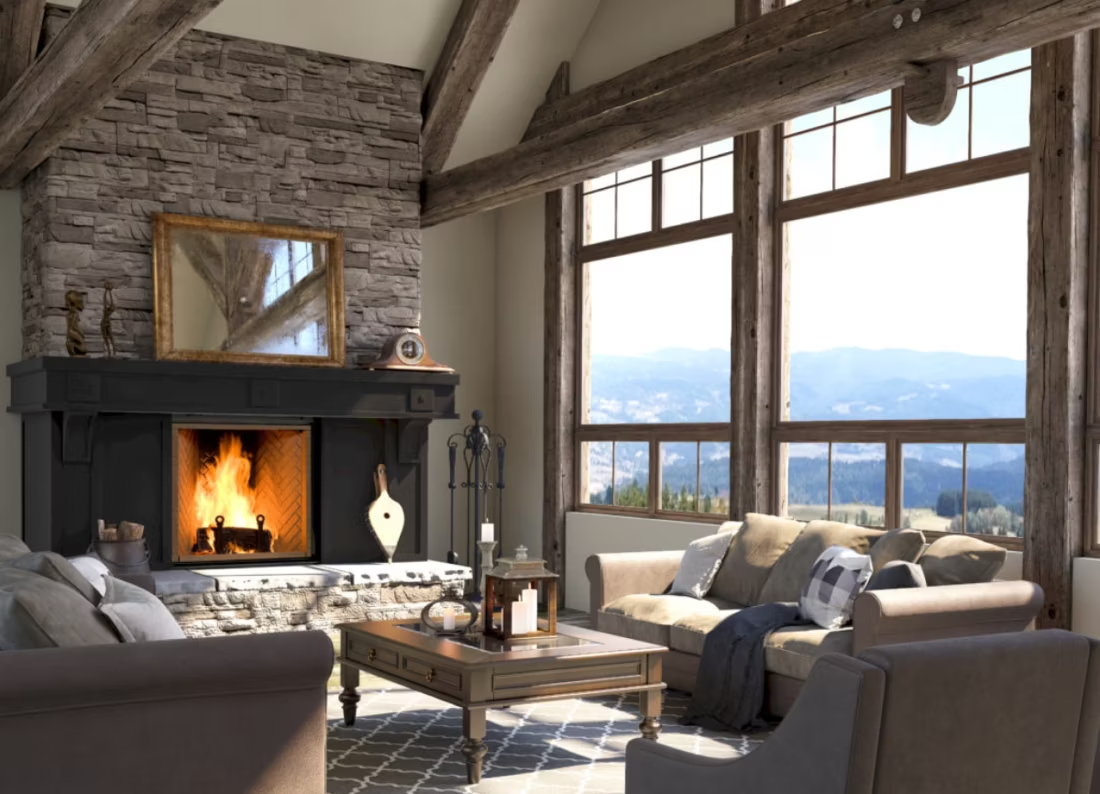
That said, a small number of Kendale Lakes homeowners still install wood-burning fireplaces or stoves—usually for the look and ritual of a real fire on the rare cool evening, in a formal living room, or as a design centerpiece in a newer build. Local landscaping species like oak, mahogany, and pine are common in the region, but they aren't typically seasoned or sold as firewood locally the way they would be in a cold-climate market, so most homeowners who go this route source kiln-dried, properly seasoned wood from a supplier rather than cutting their own. If you're set on real wood, a local hearth dealer can walk you through what's realistic for a South Florida home—including Florida Building Code wind-load requirements for any chimney structure, since Kendale Lakes falls within a hurricane-rated wind zone.
Three steps. No salesperson until you're ready.
Tell us about your project
Your zip code, your situation, and the fuel you're leaning toward—or let the answers point you to one.
See what's actually available
The brands dealers within 100 miles genuinely carry—real options, never a catalog mirage.
Get your dealer & Project Guide
A trusted local dealer, plus the free Project Guide & Parts List that names every component of the job.
Frequently Asked Questions
Is a wood-burning fireplace even a good idea in Kendale Lakes?
For heating purposes, no—with a heating season so light it barely registers and winter lows averaging 58°F, a wood stove or fireplace will almost never be needed to keep a Kendale Lakes home warm. Homeowners who install one anyway are usually after the visual and experiential appeal of a real fire rather than a heating solution. If you want warmth on the rare cold snap, a gas or electric fireplace will do the job more reliably and with far less maintenance. If you specifically want the crackle and smell of real wood, that's a legitimate reason to move forward—just go in knowing it's a lifestyle choice, not a heating upgrade.
How much does a wood fireplace or stove installation cost in Kendale Lakes?
Because wood-burning installs are uncommon in Miami-Dade County, there isn't a well-established local price benchmark the way there is for gas conversions. In practice, costs run comparable to national averages for a masonry or factory-built wood fireplace—often $5,000 to $12,000 depending on whether you're building a new chase, running Class A chimney pipe through a roof designed for hurricane wind loads, and finishing the surround. Get a firm number from a local dealer after an in-home visit, since freight on the unit itself and the structural work tend to be the biggest variables here.
Do I need a permit to install a wood-burning fireplace in Kendale Lakes?
Yes. Any new wood-burning appliance or chimney structure requires a building permit through Miami-Dade County, and because Kendale Lakes sits in a High-Velocity Hurricane Zone, chimney and roof penetration work has to meet Florida Building Code wind-resistance standards—stricter than what you'd see in most of the country. This is one of the biggest reasons to work with a local hearth dealer rather than a general contractor unfamiliar with the county's wind-load requirements; they'll handle both the appliance install and the code-compliant venting together.
What kind of firewood do people use in Kendale Lakes?
Oak, mahogany, and pine grow throughout the region as landscaping and shade trees, but they aren't commonly harvested, seasoned, and sold as firewood the way they would be in a colder market—South Florida's humidity makes properly drying wood at home slow and inconsistent. Most homeowners who install a wood-burning unit here buy kiln-dried, bundled firewood from a hearth retailer or home improvement store rather than sourcing and seasoning their own. It costs more per load than cutting your own in a forested region, but it burns cleaner and avoids the mold and moisture issues green wood develops in this climate.
Will HOA rules or air quality concerns affect a wood fireplace here?
Kendale Lakes has no formal wood smoke or air quality restrictions at the county level, but many communities in this area are governed by homeowners associations with their own rules on exterior structures, chimneys, and rooflines—especially relevant since any wood-burning install typically requires a visible chimney chase. Check your HOA's architectural guidelines before committing to a design, and loop in your dealer early since they can often submit the paperwork the HOA wants to see alongside the county permit.
Would gas or electric make more sense than wood for my home?
For most Kendale Lakes homes, yes. Gas fireplaces are standard here and give you instant, controllable heat with none of the smoke, ash, or firewood sourcing headaches—a real advantage in a climate where you might only want a fire a handful of nights a year. Electric fireplaces are even simpler: no venting, no gas line, and Florida Power & Light's residential rate of about $0.137/kWh makes occasional use inexpensive. Wood remains the right call only if the authentic fire experience matters more to you than convenience or cost—it's a valid choice, just a deliberate one in this climate.
Are pellet stoves a better fit than wood in Kendale Lakes?
Not really—pellet stoves face the same fundamental mismatch as wood-burning units here: they're built to provide sustained heat output that Kendale Lakes homes rarely need, given the near-total absence of a real heating season. They also require electricity to run the auger and blower, so you lose the "works during an outage" advantage that makes wood appealing in cold climates. If you want ambiance without heat output being the point, a vented gas log set or electric unit will generally serve you better than either wood or pellets in this market.
Can I convert an existing wood-burning fireplace to gas instead?
Yes, and it's a common project for older Kendale Lakes homes built with a traditional masonry fireplace that rarely gets used for real wood fires. A gas insert or vented log set can be installed into the existing firebox, often using the existing chimney with a liner, giving you instant on/off flame without the smoke, ash, or firewood sourcing that comes with keeping the fireplace wood-burning. A local hearth dealer can evaluate your existing chimney and tell you whether conversion or a full gas fireplace replacement makes more sense for your setup.
If I still want a real wood fire, what should I look for in a local dealer?
Look for a dealer who's upfront about the tradeoffs rather than one who oversells wood heat's practicality in a subtropical climate. They should understand Miami-Dade's High-Velocity Hurricane Zone requirements for chimney structures, be able to source properly kiln-dried wood or point you to a reliable local supplier, and size the unit for occasional ambiance use rather than sustained heating. A dealer who asks about your HOA rules and roofline before quoting a chimney chase is one who's done this before in a market where wood-burning installs are the exception, not the rule.
What's the difference between an insert and a zero-clearance fireplace?
An insert is a fireplace that slides into a pre-existing wood-burning fireplace—if you don't have one, there's nothing to insert it into. A zero-clearance fireplace is built into a framed wall, which makes it the answer for remodels and new construction. Simple test: existing masonry fireplace means insert; blank or framed wall means zero-clearance.
Why is my open fireplace making my house colder?
Open fireplaces suck—literally. As the fire burns, it consumes air your furnace already paid to heat and pulls it out through the chimney, so the house is actually colder after the fire goes out than before you lit it. An insert fixes this: it seals the chimney, puts fixed glass across the front, and turns that hole in your house into a real heat source.
Can a fireplace actually lower my heating bill?
Yes—by creating a comfort zone. A furnace heats every square foot of the house just to warm the one room you're in; a gas fireplace on low burns roughly a sixth of the gas a typical furnace does. Set the furnace around 55–60 degrees as a baseline, then heat the rooms your family actually uses. Families who heat this way commonly save $20–$60 a month.
Can I install a fireplace myself?
If you're putting a fire in your house on purpose, it's best to work with an expert. Unless you're genuinely experienced in framing, gas line, vent pipe, and the national code on clearances to combustibles, have a professional do it—and ideally the same company that sells you the fireplace, so warranty, service, and liability all live under one roof.
Nearby Dealers
Hearth shops serving Kendale Lakes and the surrounding area.
Get your Project Guide & Parts List for a wood fireplace in Kendale Lakes.
Tell us a bit about your home and we'll match you with a trusted local dealer who understands hurricane-zone chimney requirements—plus a free Project Guide & Parts List with the exact components, including the vent kit, for your project.
Find Your Fireplace →