
Keep Your Family Warm and Safe—No Matter What
With only a light, short winter heating need each year and winter lows averaging 49°F, most homes here don't need wood heat. But for beach cottages with existing masonry fireplaces, ambiance-driven remodels, or backup heat during hurricane-season outages, it can still make sense—with the right local guidance.
Every Project Starts From One of These Five Situations
A coastal climate that rarely needs it.
Jacksonville Beach sits at 17 feet of elevation on Florida's Atlantic coast, in climate zone 2A—hot and humid, with only a light, short winter heating need each year. Winter lows average 49°F, and a hard freeze is a rare event, not a seasonal expectation. Beaches Energy Services electric heat pumps handle nearly all residential heating here, cycling on for a handful of cool nights each winter rather than running a full heating season. This is a fundamentally different climate than the wood-heat regions of the upper Midwest or northern Rockies, where a stove is load-bearing infrastructure for surviving winter.
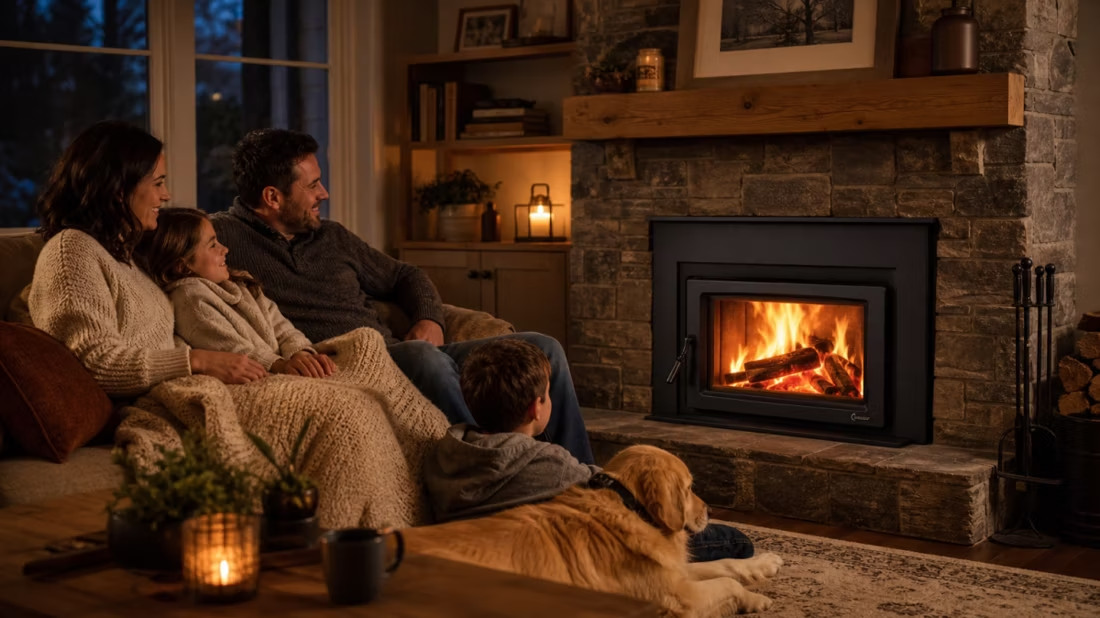
That said, wood-burning fireplaces aren't extinct here. A number of the older beach bungalows and homes built in the 1960s-1980s around 32250 and 32240 have existing masonry fireplaces, originally built for ambiance rather than heat, and some owners keep them wood-burning rather than converting. Others want the look and feel of a real fire for the handful of genuinely chilly evenings each January. Local firewood tends to come from yard trimmings and tree services rather than public land permits—oak, mahogany, and pine are the common species removed from area lots—and coastal humidity means seasoning and storing wood correctly matters more here than in drier climates, since damp, under-seasoned wood smokes heavily and stacked wood left too long can attract termites.
Three steps. No salesperson until you're ready.
Tell us about your project
Your zip code, your situation, and the fuel you're leaning toward—or let the answers point you to one.
See what's actually available
The brands dealers within 100 miles genuinely carry—real options, never a catalog mirage.
Get your dealer & Project Guide
A trusted local dealer, plus the free Project Guide & Parts List that names every component of the job.
Frequently Asked Questions
Does a wood stove actually make sense for a home in Jacksonville Beach?
For most homes, no—not as a primary heat source. With only a light, short winter heating need each year and winter lows averaging 49°F, the electric heat pumps that most Jacksonville Beach homes already run through Beaches Energy Services cover the handful of cool nights the coast sees each winter without any supplemental heat needed. Where wood does make sense is ambiance: an existing masonry fireplace you want to keep functional, a beach cottage renovation where a wood-burning look matters more than heat output, or a second home where the owners already burn wood at a colder property and want the same experience here. If your goal is genuine heat, gas or electric options are almost always the more practical fit for this climate.
How much does it cost to install a wood stove or fireplace in Jacksonville Beach?
Because wood-burning installs are uncommon this far south, there isn't a deep bench of wood-stove specialists in town the way there is in colder states—most local hearth retailers focus primarily on gas and electric units and handle wood as a secondary line. Nationally, a freestanding EPA-certified wood stove with venting typically runs $3,500 to $8,000 installed, and a wood insert into an existing masonry fireplace often lands in a similar range. Homes without an existing chimney will run higher once Class A pipe and roof penetration are factored in. Get a firm quote from a local retailer who also carries gas and electric—they can tell you honestly whether wood is worth the added cost here versus a gas or electric alternative.
Do I need a permit to install a wood-burning fireplace in Jacksonville Beach?
Yes. New wood-burning installations require a building permit through the City of Jacksonville Beach or Duval County, depending on your address, and the appliance itself needs to meet current EPA emissions standards. Unlike wood-heavy regions with winter air quality advisories, Duval County has no wood-smoke curtailment periods or non-attainment restrictions on the books, so once installed and permitted, there are no seasonal burning bans to worry about. Most local installers who handle wood-burning work will pull the permit as part of the job.
I have an old masonry fireplace in my beach house—can I still use it?
Many homes in the 32250 and 32240 area were built with open masonry fireplaces decades before central heat pumps became standard, and plenty are still structurally sound. Before burning in one, have a chimney sweep inspect the flue and firebox—coastal humidity and salt air can deteriorate mortar joints and metal dampers faster than in drier climates. If the inspection turns up issues, a wood-burning or gas insert is often a more cost-effective fix than a full masonry rebuild, and it improves both safety and efficiency.
Where does firewood come from if Jacksonville Beach isn't near National Forest land?
There's no public-land cutting permit system to speak of here the way there is near western national forests—local firewood mostly comes from tree removal services, landscapers, and a handful of local sellers, with oak, mahogany, and pine being the species most commonly available from yard trimmings and storm cleanup. Because of the coastal humidity, well-seasoned or kiln-dried wood matters more here than in drier climates—green or damp wood smokes heavily and burns poorly. Store any wood off the ground and away from the house to avoid attracting termites, a real concern for stacked wood left sitting near a coastal home.
Would a wood stove help during hurricane-season power outages?
It's one of the more legitimate reasons a Jacksonville Beach homeowner considers wood heat, though it's a minor benefit given the mild climate—outages here are far more often a summer hurricane problem than a winter cold problem. A properly vented wood stove or fireplace insert will produce heat and light without grid power, which some homeowners value as a hedge. That said, most local households handle storm outages with a generator for refrigeration, well pumps, and AC rather than planning around wood heat, since actual cold-weather emergencies are rare this far south.
Should I get a wood fireplace, or would gas or electric make more sense in this climate?
For Jacksonville Beach, gas and electric are the more common choices, and for good reason. A gas fireplace or insert gives you instant, controllable ambiance without the humidity and pest concerns of storing firewood at the coast. An electric fireplace or insert costs the least to install, requires no venting or chimney at all, and runs fine on Beaches Energy Services' residential rate of about 12.4 cents per kWh for the occasional evening you'd actually use it. Wood makes sense mainly if you specifically want a real wood fire—the smell, the crackle, the ritual—and you're willing to deal with fuel storage and chimney maintenance for a feature you'll use only a handful of nights a year.
Are there HOA or condo restrictions on wood-burning fireplaces near the beach?
Many of the condo and townhome communities near the ocean in Jacksonville Beach restrict or prohibit wood-burning appliances outright, largely due to fire risk, shared-wall venting complications, and insurance requirements—this is common in coastal multi-unit buildings generally. If you're in a condo or HOA-governed property, check your covenants before planning a wood install; gas or electric units are typically pre-approved or far easier to get approved, since they don't require a chimney penetrating a shared roof.
If I still want a wood-burning fireplace, what should I look for?
Given how little actual heat this climate demands, prioritize a smaller EPA-certified stove or a fireplace with a good-sized glass viewing door—you're buying it primarily for the fire itself, not BTU output. Oversizing a stove for a mild climate like Jacksonville Beach just means smoldering, low-temperature fires and creosote buildup from underuse. Work with a local retailer who sells wood, gas, and electric side by side—they'll be candid about whether wood is really the right call for your specific home versus a lower-maintenance alternative, rather than steering you toward whatever they happen to stock.
Why is a fireplace insert so efficient?
An insert does two things: it seals the chimney completely, so you stop losing air you already paid to heat, and it radiates warmth into the room through the firebox and glass. Most add a heat-exchange fan that pulls cool room air underneath, wraps it around the hot firebox, and pushes it back out warm. Your home is more efficient before you've even lit the first fire.
Why won't my new wood stove get going like my old one?
New wood stoves are 70%+ efficient, so far less heat goes up the flue—which also means less draft to get a fire established. The rule: build a genuinely hot fire for about 45 minutes before you choke it down. Skip that and you get smoke in the room, creosote in the chimney, and a fire that never takes off. Most performance complaints trace straight back to this.
How much should I budget for a fireplace?
For an average home—covering the fireplace, the vent pipe, and basic installation—a budget between $3,900 and $5,500 gives you a lot of options across wood, gas, and pellet. By the time you add finish work, gas line, and electrical, the average complete installation lands between $5,000 and $12,000 all-in. In a remodel or new build, a good rule is to put about 2.5% of the total project cost toward the fireplace.
Does a fireplace add value to my home?
On average, a fireplace adds back to the home about the same amount you spent installing it. Add the monthly savings from heating the rooms you actually use instead of the whole house—often hundreds of dollars a year—and the value case is strong before you even count what a fire does for how your family uses the room.
Nearby Dealers
Hearth shops serving Jacksonville Beach and the surrounding area.
Find your wood fireplace in Jacksonville Beach.
Tell us about your home and whether you're after real wood ambiance or just efficient heat, and we'll match you with a trusted local dealer—one who carries wood, gas, and electric—plus a free Project Guide & Parts List covering the exact parts, venting, and recommended installer for your Jacksonville Beach project.
Find Your Fireplace →