
Built for 829 heating degree days, not a Northern winter.
With winter lows averaging 49°F and almost no real heating season, Jacksonville Beach doesn't need a furnace-grade fireplace. It needs ambiance, easy install, and a low electric bill through Beaches Energy Services. I'll match you with a trusted local dealer who knows exactly what that looks like.
Every Project Starts From One of These Five Situations
Ambiance first, heat second—and that's fine here.
Jacksonville Beach sits right at the Atlantic at just 17 feet of elevation, in climate zone 2A, with 829 heating degree days a year—a fraction of what a place like Duluth or Burlington racks up in a single January. Oak, mahogany, and pine grow all through Duval County, and plenty of locals split and burn them in a fire pit or a smoker, but a wood stove or insert almost never makes sense as home heat here. There simply isn't enough cold to justify the chimney, the clearances, or the smoke. Electric fills the gap that's left: the visual and psychological pull of a fireplace, without pretending the house needs 40,000 BTUs to get through winter.
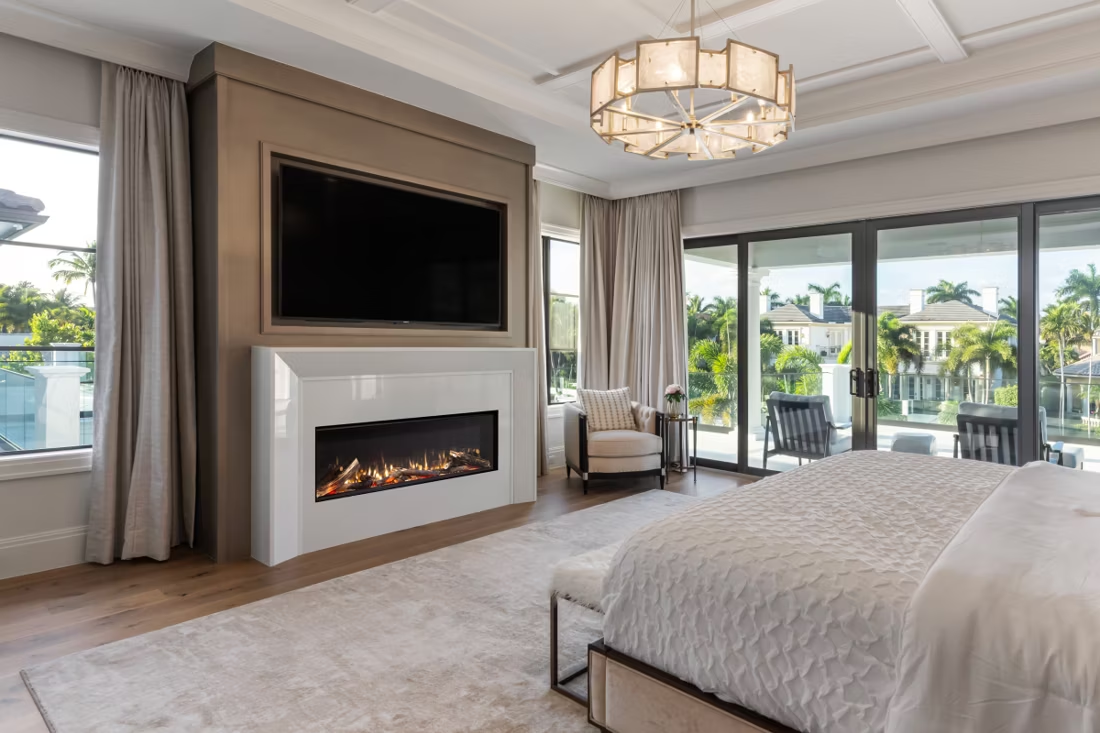
That mismatch between desire and demand is exactly where electric fireplaces do their best work. A plug-in insert or a wired-in built-in needs no chimney, no gas line, and no venting through a wall that's already fighting salt air and humidity year-round. Running one is cheap on Beaches Energy Services' residential rate of about 12.4 cents per kWh, and because there's no combustion, there's nothing for the coastal air quality here—currently flagged with no concerns—to worry about. For condos and beach houses along 3rd Street or up toward Ponte Vedra where HOA rules restrict anything with a flue, electric is often the only fireplace option on the table, and for most Jacksonville Beach homes, it's also the most practical one.
Three steps. No salesperson until you're ready.
Tell us about your project
Your zip code, your situation, and the fuel you're leaning toward—or let the answers point you to one.
See what's actually available
The brands dealers within 100 miles genuinely carry—real options, never a catalog mirage.
Get your dealer & Project Guide
A trusted local dealer, plus the free Project Guide & Parts List that names every component of the job.
Frequently Asked Questions
How much does an electric fireplace installation cost in Jacksonville Beach?
A plug-in insert or freestanding unit that just needs an outlet typically runs $300 to $700 installed, since there's no venting, gas line, or chimney work involved. A built-in wall unit or mantel-style fireplace wired into a dedicated circuit runs higher, generally $1,200 to $3,000, mostly labor for a licensed electrician to run power to the wall cavity. Either way, electric stays well below what a gas or wood project costs locally, since you're skipping venting and fuel-line work entirely.
What size electric fireplace do I actually need here?
Given winter lows averaging 49°F and a heating degree day count under 1,000, most Jacksonville Beach homes are buying an electric fireplace for the look and the occasional cool evening, not as a real heat source. A standard unit rated around 4,700-5,000 BTU (roughly 1,500 watts) is plenty to warm a living room on the rare night it dips into the 30s, and most owners run the flame effect without the heater on for most of the year. Sizing up for square footage the way you would in a colder climate isn't necessary here—buy for the wall and the look first.
Do I need a permit for an electric fireplace in Jacksonville Beach?
A plug-in freestanding or insert unit generally doesn't require a permit since it's just an appliance on an existing outlet. A built-in unit that needs a new dedicated circuit does require an electrical permit, pulled through the City of Jacksonville Beach Building & Zoning Department for work inside city limits, or Duval County's building department if your address falls outside city boundaries. Most local dealers who install built-ins handle that permit and the final inspection as part of the job.
Built-in, insert, or freestanding—what's most common in Jacksonville Beach?
In the beach condos and townhomes packed in around 3rd Street and Beach Boulevard, a wall-mounted or mantel-style built-in is the most requested option, since it reads like a real fireplace without needing a masonry chase that was never built into these structures. In older single-family homes with a disused wood-burning firebox, an electric insert that slides into the existing opening is popular—it reuses the mantel and surround while retiring the smoke and ash. Freestanding units show up mostly as a lower-cost, no-remodel option for renters and second homes.
What will an electric fireplace cost to run on my Beaches Energy Services bill?
At the residential rate of about 12.4 cents per kWh, a typical 1,500-watt heater running for three hours an evening costs roughly 56 cents a day, or about $17 a month if you use the heat function daily—which most Jacksonville Beach households don't, given how few genuinely cold nights there are. Running just the LED flame effect without heat costs only a few cents a day, which is how most local owners actually use these units for the bulk of the year.
Does the salt air here affect an electric fireplace?
Direct salt exposure isn't usually an issue since these units are indoor appliances, but homes within a block or two of the Atlantic do see faster corrosion on metal trim and electronics generally, and fireplace hardware is no exception in a humid coastal environment. Local dealers installing in oceanfront or near-oceanfront units often steer clients toward models with sealed circuit boards and stainless or powder-coated frames rather than bare steel, and it's worth asking about that spec specifically if you're within a few blocks of the beach.
Electric vs. gas—which makes more sense for a Jacksonville Beach home?
Gas gives you a more convincing flame and genuine supplemental heat output, but it requires a gas line or propane tank, venting, and a building permit for the gas work—real cost and complexity for a climate that only needs heat a handful of nights a year. Electric skips all of that: no venting, no fuel line, and a fraction of the install cost. For most Jacksonville Beach homeowners buying primarily for the visual, electric delivers nearly the same result gas would, at a lower cost and with none of the venting constraints that come with condo or HOA properties near the beach.
Why don't more people in Jacksonville Beach have wood-burning fireplaces?
With winter lows averaging 49°F and only 829 heating degree days a year, there's rarely enough sustained cold to justify a wood stove as a heat source, which is why wood-burning installs are essentially absent here despite oak, mahogany, and pine all being locally available species. What wood does get used for around Jacksonville Beach is grilling and smoking, not home heating. When homeowners do want the sight and sound of a real flame indoors, most end up choosing electric or gas instead, since neither demands a chimney or the seasoning and storage that wood requires in a humid coastal climate.
How much maintenance does an electric fireplace need in this climate?
Very little—wipe down the glass front periodically, dust the heater vents so airflow stays clear, and replace an LED module if the flame effect dims after years of use, which is about the extent of it. There's no chimney to sweep and no seasoning to plan around. The one climate-specific note for Jacksonville Beach is humidity: if the unit sits near an exterior wall or a room that gets salty, damp air off the ocean, a yearly check of the electrical connections is a smart habit even though the appliance itself needs no combustion maintenance at all.
Can I put a TV above my fireplace?
Yes—with an asterisk. Fireplaces are hot and TVs don't like heat. Either put a mantel between them to deflect rising warmth, or choose a fireplace with heat-management technology that creates a cool zone on the wall above—the wall stays around 125 degrees, barely warm, while the room still gets full heat. If you like clean lines and don't want a mantel, heat management is the answer.
Do electric fireplaces actually produce heat?
Yes—most put out around 4,800–5,000 BTUs from a standard outlet, which comfortably warms a bedroom, office, or den as a comfort-zone heater. What they won't do is carry a whole house the way wood, gas, or pellet can. Think of electric as ambiance-first with honest supplemental heat: flames on with no heat in July, flames plus warmth in January.
How much should I budget for a fireplace?
For an average home—covering the fireplace, the vent pipe, and basic installation—a budget between $3,900 and $5,500 gives you a lot of options across wood, gas, and pellet. By the time you add finish work, gas line, and electrical, the average complete installation lands between $5,000 and $12,000 all-in. In a remodel or new build, a good rule is to put about 2.5% of the total project cost toward the fireplace.
Does a fireplace add value to my home?
On average, a fireplace adds back to the home about the same amount you spent installing it. Add the monthly savings from heating the rooms you actually use instead of the whole house—often hundreds of dollars a year—and the value case is strong before you even count what a fire does for how your family uses the room.
Nearby Dealers
Hearth shops serving Jacksonville Beach and the surrounding area.
Electric Service in Jacksonville Beach
An electric fireplace's heater draws about 1,500 watts—pennies per hour at local rates.
Beaches Energy Services
Get your free Project Guide & Parts List for a Jacksonville Beach electric fireplace.
Tell me about your home, whether you're after a plug-in insert or a wired built-in, and I'll match you with a trusted local dealer and send a free Project Guide & Parts List sized for your space and your Beaches Energy Services circuit.
Find Your Fireplace →