
Pellet heat isn't really built for Homestead's climate.
With an incredibly light winter heating need and winter lows averaging 55°F, Homestead rarely needs a heating appliance at all—pellet or otherwise. Here's what that means for your project, and what most local homeowners choose instead.
Every Project Starts From One of These Five Situations
Homestead's tropical climate leaves almost nothing for a pellet stove to do.
Homestead sits at just 2 feet of elevation in climate zone 1A, the mildest heating classification in the country. The city has an incredibly light winter heating need—compare that to a place like Duluth, MN, which sees one of the heaviest heating loads in the country—and the average winter low hovers around 55°F. There simply isn't a heating season here in the way a pellet stove is designed for, and that's the honest starting point for anyone searching for one in Miami-Dade County.
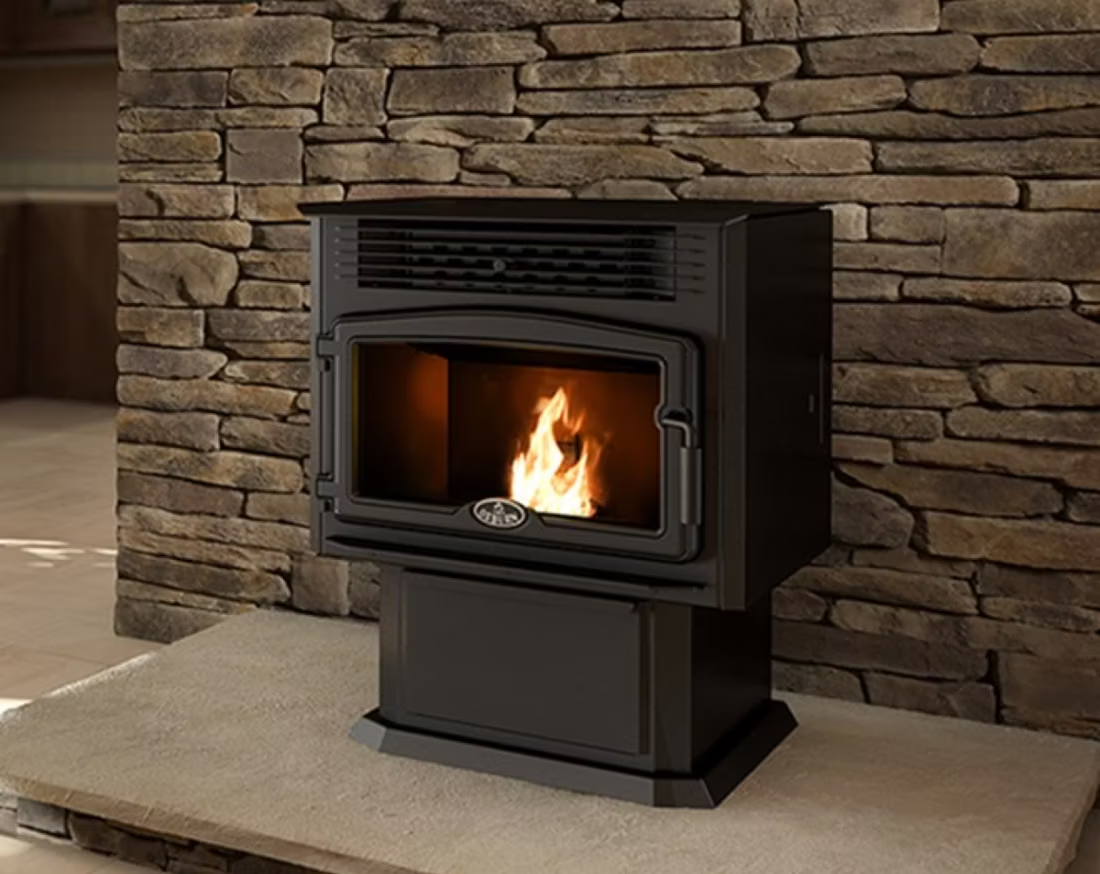
That doesn't mean nobody in the area is interested. Some Homestead homeowners want a pellet-fueled appliance for a second property up north, a workshop or garage that runs cooler than the house, or simply the look and ambiance of a hearth appliance without relying on it for real heat. Regional pellet brands like Lignetics, Hamer Pellet Fuel, and Greenway Renewable Energy are sold in South Florida, but the demand locally leans heavily toward pellet grills and smokers rather than home heating stoves. If you're set on a pellet heating appliance, we'll be straight with you about fit and connect you with a dealer who can talk through whether it makes sense—or point you toward an option, like electric, that actually suits Homestead's climate.
Three steps. No salesperson until you're ready.
Tell us about your project
Your zip code, your situation, and the fuel you're leaning toward—or let the answers point you to one.
See what's actually available
The brands dealers within 100 miles genuinely carry—real options, never a catalog mirage.
Get your dealer & Project Guide
A trusted local dealer, plus the free Project Guide & Parts List that names every component of the job.
Frequently Asked Questions
How much does a pellet stove installation cost in Homestead?
There isn't a well-established local price range for pellet stove installation in Homestead, mainly because so few get installed. Most Miami-Dade hearth dealers carry gas and electric fireplaces as their core business and would need to special-order a pellet unit and venting kit from an out-of-area distributor. That typically pushes both the equipment cost and the installer's time above what you'd pay in a place where pellet stoves are a routine job. If you're set on pellet, a local dealer can give you a firm number once they know the model and venting path—but budget for a wait on parts.
Why doesn't Homestead's climate support pellet heating?
Homestead has an incredibly light winter heating need, and the average winter low is around 55°F—nights cold enough for a jacket, but rarely cold enough to need supplemental heat overnight. Pellet stoves are built to run for hours at a time feeding a hopper-fed auger, which makes sense in places that see weeks of sub-freezing weather. In Homestead, a pellet stove would sit unused for all but a handful of nights a year, which is why so few local dealers stock them and why most homeowners here choose electric instead when they want fireplace ambiance.
Are the pellet brands sold in Homestead for heating stoves or for grills?
Mostly grills and smokers. Brands like Lignetics, Hamer Pellet Fuel, and Greenway Renewable Energy distribute in South Florida, but the demand here is driven almost entirely by outdoor cooking—pellet grills are popular across Miami-Dade backyards. If you're shopping for wood pellets and see these brands at a hardware store or feed supply, they're almost certainly stocked for smokers rather than home heating appliances. A true pellet heating stove and its specific fuel-grade pellets are a separate, harder-to-find purchase in this market.
Are there local dealers in Homestead who install pellet heating stoves?
Very few, if any, focus on pellet heating equipment specifically. Most Homestead-area hearth dealers built their business around gas fireplaces and electric units because that's what the climate and customer demand call for. If you have a specific reason to want a pellet stove—a second home elsewhere, a detached workshop, or a particular aesthetic—we can match you with a dealer within reach who's willing to source and install one, but expect a smaller pool of options than you'd find searching from, say, Bismarck, ND.
What do most Homestead homeowners install instead of a pellet stove?
Electric fireplaces and inserts are by far the more common choice. They install in a few hours with no venting, gas line, or hopper to manage, and they work fine as a decorative or occasional-warmth feature—which is really all most Homestead homes need. Both Florida Power & Light and the City of Homestead's municipal utility serve the area, with residential rates around 12.3 to 13.7 cents per kWh, making the running cost of an electric unit predictable and low for the handful of cool evenings a year you'd actually use it.
Can I still get help finding a pellet stove for a vacation property up north?
Yes—this comes up more often than you'd think for Homestead residents with a cabin or second home in a colder state. In that case, the sizing and dealer recommendation should come from the property's actual location and climate, not Homestead's. Tell us where the stove will actually be installed and we'll match you with a dealer local to that property instead, since permitting, venting requirements, and pellet supply all vary by region.
What permits does Miami-Dade require for a pellet stove installation?
If you do move forward with a pellet stove in Homestead, it's treated like any other solid-fuel appliance under Miami-Dade County's building code—a permit is required for the installation, covering the venting path and clearances to combustibles, and the work needs to be done by a licensed contractor. Because these installs are uncommon locally, it's worth confirming with the Miami-Dade Building Department or the City of Homestead's permitting office directly, since not every plans examiner handles pellet-vent installations regularly.
Does Homestead's humidity cause problems for pellet stoves and fuel storage?
It can. Wood pellets absorb moisture quickly, and Homestead's humidity—routinely in the 70-90% range for much of the year—will turn improperly stored pellets to mush and clog an auger fast. Anyone running a pellet stove here needs airtight, elevated storage, ideally indoors with climate control, rather than a garage or shed. The stove's hopper and auger components also need more frequent cleaning than they would in a dry climate to prevent rust and clumping, which is another reason pellet heating carries more upkeep in South Florida than it does in drier, colder regions.
Pellet stove vs. electric fireplace—which makes sense in Homestead?
For nearly every Homestead home, electric wins. It requires no venting, no fuel storage, no humidity management, and no special-order equipment, and it delivers the same visual ambiance most local buyers are actually after. A pellet stove only makes sense here in edge cases—an off-grid workshop, a strong personal preference for real combustion heat, or equipment meant for a property outside South Florida. If your household is choosing based on Homestead's actual weather, an electric fireplace or insert from a local dealer is almost always the more practical call.
Why is a fireplace insert so efficient?
An insert does two things: it seals the chimney completely, so you stop losing air you already paid to heat, and it radiates warmth into the room through the firebox and glass. Most add a heat-exchange fan that pulls cool room air underneath, wraps it around the hot firebox, and pushes it back out warm. Your home is more efficient before you've even lit the first fire.
Can a pellet stove heat a whole house?
It genuinely can. I burned a pellet stove as my only heat source for years after a furnace died, and it kept the entire house warm. Pellets feed automatically from a hopper, so you get wood-heat economics with thermostat-style control. Two honest caveats: it needs weekly cleaning during the season, and most models need electricity to run—ask about battery backup if outages are a concern.
How much should I budget for a fireplace?
For an average home—covering the fireplace, the vent pipe, and basic installation—a budget between $3,900 and $5,500 gives you a lot of options across wood, gas, and pellet. By the time you add finish work, gas line, and electrical, the average complete installation lands between $5,000 and $12,000 all-in. In a remodel or new build, a good rule is to put about 2.5% of the total project cost toward the fireplace.
Can I install a fireplace myself?
If you're putting a fire in your house on purpose, it's best to work with an expert. Unless you're genuinely experienced in framing, gas line, vent pipe, and the national code on clearances to combustibles, have a professional do it—and ideally the same company that sells you the fireplace, so warranty, service, and liability all live under one roof.
Nearby Dealers
Hearth shops serving Homestead and the surrounding area.
Pellet Brands Stocked Around Homestead
Manufacturers will point you to the nearest stocking dealer.
Find your pellet fireplace in Homestead.
Tell us about your project—whether it's for a Homestead property or a home elsewhere—and we'll match you with a trusted local dealer and send over a free Project Guide & Parts List, including the right venting kit, so you know exactly what's needed before you buy.
Find Your Fireplace →