
A fireplace built for ocean views, not January cold.
On a barrier island where winter lows barely dip into the 50s, electric is the fireplace that actually fits the building. Find the right unit and connect with a trusted local dealer.
Every Project Starts From One of These Five Situations
Ambiance first, heat second, on a barrier island where winter barely arrives.
Hillsboro Beach is a narrow strip of land between the Atlantic and the Intracoastal Waterway, built up almost entirely with mid-rise and high-rise condominiums and a small number of large estate homes. At 15 feet of elevation and a climate zone of 1A, this is about as far from a cold-climate market as it gets—winter lows average around 60°F and the town has an incredibly light heating need over the year, compared to several thousand in a place like Duluth, MN. Nobody here is installing a fireplace to survive the season.
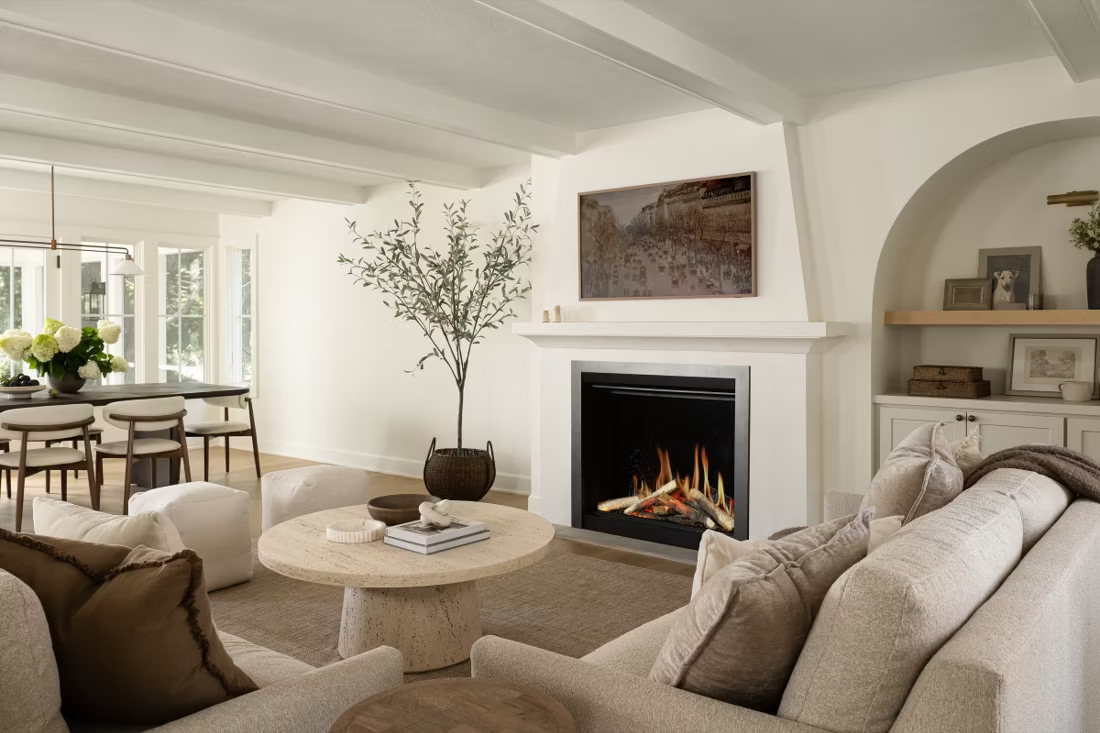
What they're installing it for is the look: a linear glow over a great-room media wall, a fireplace in the primary suite of an oceanfront condo, a design feature in a home built for entertaining. Wood-burning and pellet stoves are essentially absent from this market—most condo associations prohibit chimneys and flues outright, and there's no local firewood culture to support them. Gas is available for estate homes on propane, but electric is the fuel that actually clears condo board approval, since it needs no venting, no gas line, and no structural changes beyond an outlet or a dedicated circuit run by a licensed electrician.
Three steps. No salesperson until you're ready.
Tell us about your project
Your zip code, your situation, and the fuel you're leaning toward—or let the answers point you to one.
See what's actually available
The brands dealers within 100 miles genuinely carry—real options, never a catalog mirage.
Get your dealer & Project Guide
A trusted local dealer, plus the free Project Guide & Parts List that names every component of the job.
Frequently Asked Questions
How much does an electric fireplace installation cost in Hillsboro Beach?
A plug-in insert or wall-mounted unit that uses an existing outlet typically runs $300 to $1,200 installed. A built-in linear electric fireplace that needs a dedicated 20-amp circuit—common in the condo towers along A1A where an electrician has to route new wiring through concrete block or existing drywall—usually falls between $1,500 and $4,000, depending on unit size and how much wall work is involved. Because Hillsboro Beach's housing stock is almost entirely condominiums plus a handful of large estates, this is more often an electrical job than a masonry one.
Does an electric fireplace even make sense in a climate this warm?
Yes, but for a different reason than in a cold-climate market. With winter lows averaging around 60°F and an incredibly light heating need over the year—a fraction of what a homeowner in Bozeman, MT deals with over a single cold snap—nobody in Hillsboro Beach buys an electric fireplace to keep from freezing. It's for the visual warmth on a cool evening off the Atlantic, and for the design value it adds to a great room, primary suite, or condo living area. That's a legitimate and increasingly common reason to install one here; it's simply a decorative and comfort purchase rather than a survival one.
Will my condo association even allow an electric fireplace?
Almost certainly, and more easily than the alternatives. Most condo boards in Hillsboro Beach's oceanfront towers prohibit wood-burning units and restrict or ban gas fireplaces outright because of venting and fire-code concerns in multi-story buildings. Electric fireplaces are one of the few hearth options that routinely clear approval, since there's no chimney, no flue, and no gas line to run—just a standard outlet or, for a built-in unit, a new circuit. It's still worth checking your association's rules before purchase, since some buildings restrict wall modifications for recessed or wall-mounted models.
Do I need a permit to install an electric fireplace here?
A simple plug-in unit that runs off an existing outlet generally doesn't require a permit. If your installer needs to add a new circuit or outlet for a built-in or wall-mounted unit, that electrical work requires a permit through the Town of Hillsboro Beach Building Department (permitting is handled jointly with Broward County code). Local electricians and hearth dealers typically pull this permit as part of the installation, so it's rarely something the homeowner has to manage directly.
What type of electric fireplace fits best in a Hillsboro Beach home?
For the open-concept condo living rooms and oceanfront primary suites common here, a linear wall-mounted unit from a brand like Dimplex, Napoleon, or Amantii tends to fit best—low profile, wide flame presentation, and no mantel required in a modern space. For estate homes with a more traditional layout, a built-in electric insert set into an existing wall opening or media console can mimic the look of a masonry fireplace without any venting. A local dealer will look at your wall configuration and ceiling height before recommending a specific size.
Electric vs. gas—which is right for my home in Hillsboro Beach?
Gas is available here mainly through propane, since natural gas infrastructure is limited on the barrier island, and it works well in single-family estate homes where a propane tank and proper venting are feasible. Electric works everywhere else—especially in the condominium towers where gas lines and venting simply aren't an option and association rules favor electric. Electric also wins on installation simplicity and running cost for a unit that's mostly used for ambiance rather than heat. If you're in a condo, electric is almost always the practical answer; if you're in one of the larger estates, it's worth comparing both with a local dealer.
What does it cost to run an electric fireplace with FPL rates?
Florida Power & Light's residential rate runs around 13.71 cents per kWh. A typical 1,500-watt electric fireplace running on its heat setting costs roughly 21 cents an hour to operate; running on flame-only mode with the heater off, it draws a fraction of that—often under 5 cents an hour. Most Hillsboro Beach households run their unit a few hours in the evening on cooler nights rather than continuously, so the monthly impact on an FPL bill is modest.
How much maintenance does an electric fireplace need?
Very little compared to wood or gas—there's no chimney to sweep, no venting to inspect, and no combustion byproducts to worry about. Basic upkeep is dusting the heating element and glass front, keeping curtains or furniture clear of the fan grille, and eventually replacing the LED flame bulbs. One thing worth noting for this location specifically: salt air off the Atlantic can accelerate corrosion on lower-quality metal trim over time, so many Hillsboro Beach buyers opt for stainless steel or powder-coated housings on units near windows or balconies.
How do I size an electric fireplace for my condo or home?
Sizing an electric fireplace here is mostly about the room's square footage and wall dimensions rather than BTUs needed to survive a cold night, since heat output is a secondary feature for most Hillsboro Beach buyers. A 40- to 50-inch linear unit suits a standard condo living room, while a 60-inch or larger unit fits better as a focal wall in a great room or primary suite of one of the town's estate homes. A local dealer will measure your wall, check your electrical panel capacity, and confirm sizing during an in-home or in-unit consultation.
Can I put a TV above my fireplace?
Yes—with an asterisk. Fireplaces are hot and TVs don't like heat. Either put a mantel between them to deflect rising warmth, or choose a fireplace with heat-management technology that creates a cool zone on the wall above—the wall stays around 125 degrees, barely warm, while the room still gets full heat. If you like clean lines and don't want a mantel, heat management is the answer.
Do electric fireplaces actually produce heat?
Yes—most put out around 4,800–5,000 BTUs from a standard outlet, which comfortably warms a bedroom, office, or den as a comfort-zone heater. What they won't do is carry a whole house the way wood, gas, or pellet can. Think of electric as ambiance-first with honest supplemental heat: flames on with no heat in July, flames plus warmth in January.
Can a fireplace actually lower my heating bill?
Yes—by creating a comfort zone. A furnace heats every square foot of the house just to warm the one room you're in; a gas fireplace on low burns roughly a sixth of the gas a typical furnace does. Set the furnace around 55–60 degrees as a baseline, then heat the rooms your family actually uses. Families who heat this way commonly save $20–$60 a month.
What is an in-home preview and do I need one?
It's a visit where a hearth professional measures your space, confirms the model you picked actually works in your home, and walks the specs—framing, gas line, venting, finish work—before anything is ordered. Some details you just can't know until you see the house. Never make a down payment without one; it's the single most-skipped step that burns buyers.
Nearby Dealers
Hearth shops serving Hillsboro Beach and the surrounding area. Every listing shows whether it is a WhyFire partner, a dealer we have verified as authorized for the brands we recommend, or a local business carrying hearth products. No manufacturer pays for placement. How we verify dealers →
A&S Reclaimed Wood
Brandel Masonry
The Kitchenworks
Atlantic Purchasing
Outdoor Kitchen & Grill
Pro Masonry And Fireplace
Lifestyle Barn LLC
Electric Service in Hillsboro Beach
An electric fireplace's heater draws about 1,500 watts—pennies per hour at local rates.
Florida Power & Light Co
Find your electric fireplace in Hillsboro Beach.
Tell us about your condo or home and we'll match you with the right electric fireplace or insert, plus a free Project Guide & Parts List and a trusted local dealer to install it.
Find Your Fireplace →