
Keep Your Family Warm and Safe—No Matter What
Supplemental warmth for the cold fronts that roll down the Suwannee River valley—from Jasper to White Springs to Jennings. Find the right stove or insert and connect with a trusted local dealer.
Every Project Starts From One of These Five Situations
Wood heat rooted in Suwannee River country.
Hamilton County sits right up against the Georgia line in North Florida, and winters here aren't the year-round shorts-and-flip-flops stereotype most of the state gets. Average winter lows around 38°F and a real, if modest, heating season mean real cold fronts push through—enough that a wood stove or fireplace insert does genuine, useful work several nights a month, not just for looks. With a population under 6,000 spread across Jasper, White Springs, Jennings, and the surrounding farmland and timberland, a lot of homes here are older, rural, and built without central heat as the sole plan.
This is timber country—oak and pine are the backbone of the local landscape, with some mahogany showing up as well, and plenty of homeowners either cut their own from managed acreage or buy from a nearby sawmill rather than hauling bagged firewood from a big-box store. There are no air quality restrictions on wood burning in Hamilton County, so there's no curtailment schedule to plan around. For rural properties where power can flicker during storms rolling off the Gulf, a wood stove is also the one heat source that keeps working with no electricity at all.
Three steps. No salesperson until you're ready.
Tell us about your project
Your zip code, your situation, and the fuel you're leaning toward—or let the answers point you to one.
See what's actually available
The brands dealers within 100 miles genuinely carry—real options, never a catalog mirage.
Get your dealer & Project Guide
A trusted local dealer, plus the free Project Guide & Parts List that names every component of the job.
Frequently Asked Questions
How much does a wood stove installation cost in Hamilton County?
Most wood stove and insert installations for Hamilton County homes run in the general range of $3,500 to $8,000, with the final number depending on the unit, whether an existing masonry chimney can be reused, and how much new Class A pipe or hearth work is needed. Older farmhouses around Jasper and Jennings with an existing fireplace opening are typically on the lower end since the chimney is already in place. Homes with no existing chimney—including newer construction—cost more once full through-roof venting is added. A local dealer will give you a firm number after seeing the room.
Is a wood stove even worth it in a mild North Florida climate?
Yes, more than people assume. Hamilton County isn't South Florida—winter lows average around 38°F and the county sees a real, if modest, heating season each year, which means genuine cold snaps that can drop well below freezing overnight, especially along the Suwannee River bottoms where cold air settles. For most homes a wood stove works as strong supplemental heat: cheaper to run than electric resistance heat on the coldest nights, and it keeps a room warm if the power goes out during a winter storm. Very few homeowners here rely on wood as their only heat source, but plenty use it as their go-to for the handful of genuinely cold weeks each winter.
What size wood stove or insert do I need for my home?
Because Hamilton County's cold season is short and moderate rather than harsh, most homes are well served by a small to mid-size stove rated for 1,000 to 1,800 square feet, rather than the large, all-winter units sold in colder states. A stove sized for supplemental use—a few hours of hard use on the coldest nights rather than round-the-clock burning—is usually the right call for a house that also has central electric or propane heat. Older, drafty farmhouses around Jennings and White Springs with higher ceilings may need to size up slightly. A local dealer can walk your home and size it correctly rather than guessing off square footage alone.
Where can I find a certified wood stove installer near me?
Look for an installer with NFI (National Fireplace Institute) or CSIA (Chimney Safety Institute of America) certification—these credentials mean the installer is trained specifically in wood-burning appliance clearances and venting, not just general contracting. Because Hamilton County is small and rural, dealers who cover Jasper, White Springs, and Jennings often travel from a larger service area based out of Live Oak or the Lake City corridor. Expect a modest travel charge on top of the install quote for more remote rural addresses. Sticking with a certified specialist rather than a handyman matters here—improper clearances and venting are the leading cause of chimney fires.
Do I need a permit to install a wood stove in Hamilton County?
Yes—new wood stove and insert installations require a building permit through the Hamilton County Building Department, and the unit itself needs to meet current EPA emissions standards. Most local dealers handle the permit application as part of the installation, so you generally won't need to file it yourself. Once installed, there's no burning restriction to worry about day-to-day: Hamilton County has no air quality non-attainment designation or winter inversion issues, so you can burn on any cold night without checking an advisory first.
What kind of firewood is available locally, and what should I burn?
Oak and pine are the two most common species around Hamilton County, with some mahogany showing up from ornamental or salvaged trees as well. Oak is the better long-burn, high-heat choice for stove use once properly seasoned (6 to 12 months split and stacked); pine burns hotter and faster but produces more creosote if burned green, so it needs full seasoning before it goes in a stove. Given the county's timber and farming base, a lot of residents source firewood directly from a neighbor's land, a local sawmill's offcuts, or their own property rather than buying delivered cords—worth asking around before paying retail.
How often should my chimney be inspected and cleaned?
The CSIA recommends an annual inspection for any wood-burning appliance, and that holds true in Hamilton County even with a shorter burning season than colder states. Because usage here tends to be concentrated into a handful of cold-front weeks rather than spread evenly across a long winter, creosote can still build up faster than expected if oak or pine is burned before it's fully seasoned. Plan on a sweep and inspection in early fall, before the first real cold front comes through, so the stove is ready to go rather than waiting until the night you need it.
What's the difference between a wood stove and a wood insert for my home?
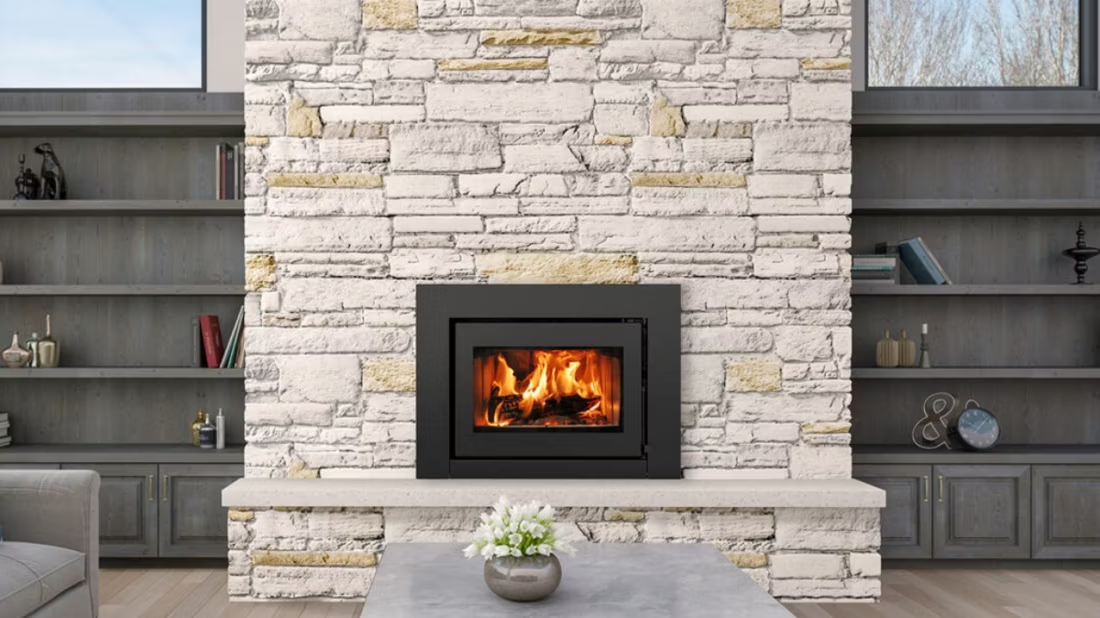
A wood stove is a freestanding unit that sits on a hearth pad and can go almost anywhere in the home with proper clearances—a good option for a home without an existing fireplace, which describes a lot of newer construction around Hamilton County. A wood insert is built to slide into an existing masonry fireplace opening, which is common in the county's older farmhouses around Jasper and White Springs, and it turns a drafty, inefficient open hearth into a much more effective heat source using the chimney that's already there. If you already have a fireplace, an insert is almost always the more cost-effective upgrade.
Wood stove vs. pellet stove—which makes more sense here?
A wood stove burns cordwood, needs no electricity to run, and works well with the oak and pine that's genuinely local to Hamilton County—a real advantage if you lose power during a storm. A pellet stove burns bagged pellets from brands like Lignetics, Hamer Pellet Fuel, or Greenway Renewable Energy, is easier to load and run on a thermostat, and produces very little ash—but it needs electricity for the auger and blower, so it goes dark in an outage. For a rural county where storm-related power loss is a real consideration, wood tends to be the more resilient choice; for homeowners who just want easy, clean supplemental heat and don't mind the electrical dependency, pellet is a solid option too.
What's the difference between an insert and a zero-clearance fireplace?
An insert is a fireplace that slides into a pre-existing wood-burning fireplace—if you don't have one, there's nothing to insert it into. A zero-clearance fireplace is built into a framed wall, which makes it the answer for remodels and new construction. Simple test: existing masonry fireplace means insert; blank or framed wall means zero-clearance.
What does it take to replace an existing fireplace?
Fireplaces are like icebergs—bigger behind the wall than in front of it. Replacement means removing the surrounding tile or stone (the finish material laps onto the fireplace face), pulling the old unit, setting the new one in the same enclosure, and re-finishing the wall. A hearth professional can determine what's behind your wall without demolition during an in-home preview.
Can I install a fireplace myself?
If you're putting a fire in your house on purpose, it's best to work with an expert. Unless you're genuinely experienced in framing, gas line, vent pipe, and the national code on clearances to combustibles, have a professional do it—and ideally the same company that sells you the fireplace, so warranty, service, and liability all live under one roof.
Does a fireplace add value to my home?
On average, a fireplace adds back to the home about the same amount you spent installing it. Add the monthly savings from heating the rooms you actually use instead of the whole house—often hundreds of dollars a year—and the value case is strong before you even count what a fire does for how your family uses the room.
Get your Hamilton County wood project planned right.
Tell us about your home and we'll match you with a trusted local dealer and send over your free Project Guide & Parts List—the stove, vent kit, and installation plan sized for your Hamilton County home.
Find Your Fireplace →