
Find the right electric fireplace for your Hamilton County home.
With winter lows averaging 38°F and only about 1,722 heating degree days a year, Hamilton County doesn't need a furnace-replacing wood stove—it needs warmth on demand for the handful of genuinely cold nights, plus year-round ambiance. Electric fits that job well, and a local dealer can tell you which unit actually works for your house.
Every Project Starts From One of These Five Situations
Ambiance and warmth without the venting hassle.
Hamilton County sits along the Suwannee River in Florida's far north, bordering Georgia, with Jasper as the county seat and small communities like White Springs and Jennings spread across a mostly rural, agricultural landscape. Climate zone 2A means hot, humid summers and short, mild winters—1,722 heating degree days a year is a fraction of what a place like Duluth, MN sees in a single season. Homes here rarely need sustained heat for more than a few weeks a year, which changes the math on what kind of fireplace actually makes sense.
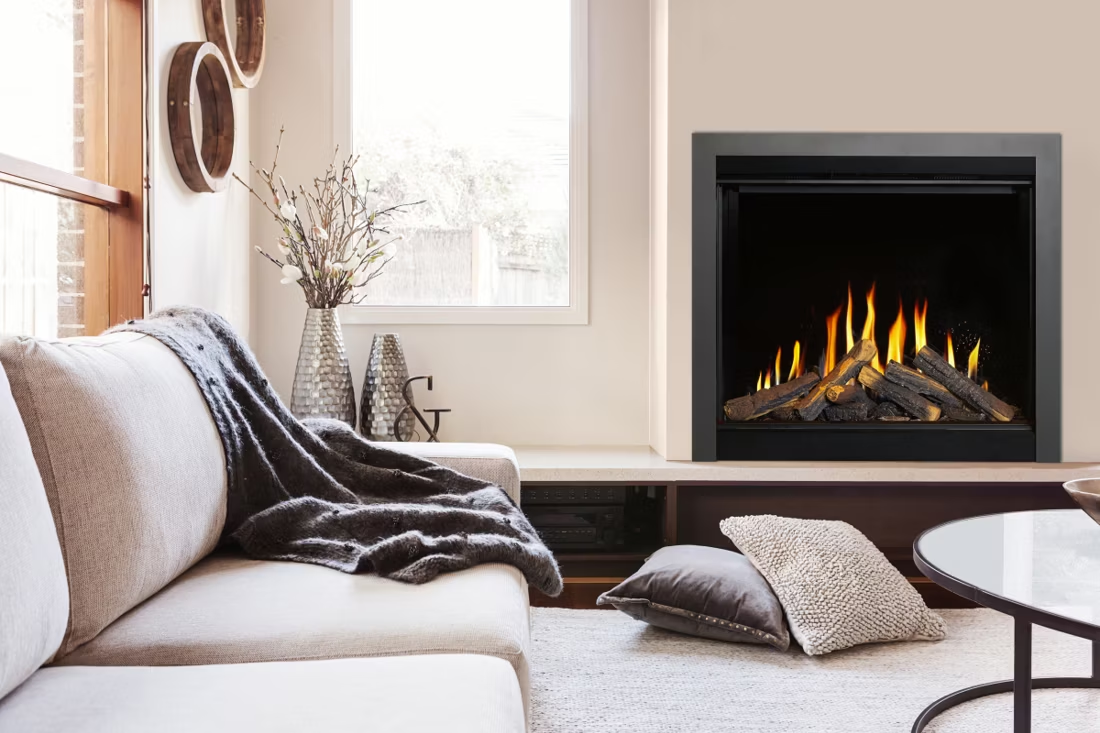
That's where electric earns its place. There's no chimney to build, no gas line to run, and no combustion byproducts to vent—which matters in a county where a lot of housing stock is manufactured or modular and wasn't built with masonry flues in mind. An electric insert or built-in unit gives a Hamilton County living room real ambiance and supplemental warmth for the occasional cold front rolling down from Georgia, without the structural work a wood or gas installation can require. It's not a primary heat source, and it won't run without power, but for this climate and this housing mix, it's often the most practical fit—and the one a local dealer can actually install in an afternoon.
Three steps. No salesperson until you're ready.
Tell us about your project
Your zip code, your situation, and the fuel you're leaning toward—or let the answers point you to one.
See what's actually available
The brands dealers within 100 miles genuinely carry—real options, never a catalog mirage.
Get your dealer & Project Guide
A trusted local dealer, plus the free Project Guide & Parts List that names every component of the job.
Frequently Asked Questions
How much does an electric fireplace installation cost in Hamilton County?
Plug-in electric inserts and freestanding stoves are the least expensive option—often under $1,000 installed, since there's no venting or gas line to run and many models simply plug into an existing outlet. Built-in wall units or larger 240V hardwired fireplaces cost more, generally landing in the $1,500 to $3,500 range once you factor in framing, trim, and an electrician's time to add or upgrade a circuit. Because Hamilton County's climate rarely demands serious heat output, most homeowners here are shopping for ambiance-first units rather than whole-room heaters, which keeps costs toward the lower end. A local dealer can give you a firm number after seeing the space.
Do I need a permit to install an electric fireplace in Hamilton County?
Usually not for a simple plug-in unit—there's no combustion, no venting, and no chimney work involved, which is exactly why electric is an easier retrofit than wood or gas. If you're having an electrician add a dedicated 240V circuit for a hardwired built-in unit, that electrical work typically does require a permit through the county building department, same as any other electrical modification. Your installer will know which category your project falls into.
Is electric heat enough for Hamilton County winters?
For most of the year, yes—Hamilton County's winter lows average 38°F, and true cold spells are short and infrequent compared to almost anywhere outside the Deep South. An electric fireplace works well as supplemental heat for those cold mornings and as a year-round ambiance feature the rest of the time. It's not designed to replace central heat during the coldest nights, but at this county's HDD total of roughly 1,722, most homes don't need it to.
Can an electric fireplace be my only heat source?
It's not recommended as a sole heat source for a whole home, even in a mild climate like Hamilton County's. Electric fireplaces are built for zone heating—warming the room they're in—rather than distributing heat through ductwork the way a furnace or heat pump does. Most Hamilton County homeowners pair an electric fireplace with existing central air/heat and use the fireplace for supplemental warmth in the main living space and for the visual effect on evenings that don't necessarily require any heat at all.
Can I put an electric insert into an existing fireplace opening?
Yes, and it's a common project in Hamilton County's older farmhouses and historic homes around Jasper and White Springs that were originally built with wood-burning masonry fireplaces. An electric insert slides into the existing opening, uses the same footprint, and typically just needs a nearby outlet or a short electrical run—no chimney relining, no venting modification. It's one of the fastest ways to bring a dormant fireplace back into daily use without touching the masonry.
Will my electric fireplace work during a power outage?
No—electric units are entirely dependent on grid power, so they'll go dark along with everything else in the house during an outage. If backup heat during storm-related power loss is a priority, a wood-burning option is worth considering alongside your electric unit; oak and pine are both common and locally available firewood species in Hamilton County. Many households here end up with an electric fireplace for daily convenience and ambiance, and keep a wood option in reserve for the rare multi-day outage.
Are electric fireplaces a good fit for manufactured or mobile homes?
Generally yes, and it's a big part of why electric is popular in a county like Hamilton, where manufactured and modular housing makes up a meaningful share of the local housing stock. Electric units skip the structural changes that wood or gas installations often require—no roof penetration, no masonry chimney, no gas line—which makes them one of the few fireplace options that can be added to a manufactured home without major renovation. A local dealer can confirm what's feasible for your specific home's electrical panel and wall construction.
How much maintenance does an electric fireplace need?
Very little compared to wood or gas. There's no chimney to sweep, no gas lines to inspect, and no combustion byproducts to manage. Maintenance is mostly limited to dusting the unit, occasionally replacing an LED module (which can last a decade or more), and keeping the heating element's vents clear of debris. It's one of the lowest-maintenance fireplace options available, which matters for a county where hiring a specialist for annual servicing can mean a longer drive for the technician.
Electric vs. pellet—which makes more sense for Hamilton County?
Pellet stoves from brands sold regionally, like Lignetics, Hamer Pellet Fuel, and Greenway Renewable Energy, burn compressed wood pellets and still require electricity to run the auger and blower—plus a hopper to fill, ash to empty, and venting to install. Electric fireplaces skip all of that: no fuel storage, no exhaust venting, and none of the moving parts that come with a pellet appliance. Given Hamilton County's mild climate and relatively low heating need, most homeowners here find electric simpler for a supplemental or ambiance-focused installation, while pellet tends to make more sense for someone who specifically wants a self-sufficient, higher-output heat source.
Can I put a TV above my fireplace?
Yes—with an asterisk. Fireplaces are hot and TVs don't like heat. Either put a mantel between them to deflect rising warmth, or choose a fireplace with heat-management technology that creates a cool zone on the wall above—the wall stays around 125 degrees, barely warm, while the room still gets full heat. If you like clean lines and don't want a mantel, heat management is the answer.
How much does an electric fireplace cost to run?
With the heater on, a typical unit draws about 1,500 watts—at average electric rates that's roughly 20 cents an hour. Run the flame effect alone and it costs pennies; the flames are LED-driven and use about as much power as a light bulb. There's no pilot light, no fuel delivery, and essentially no maintenance.
Can I install a fireplace myself?
If you're putting a fire in your house on purpose, it's best to work with an expert. Unless you're genuinely experienced in framing, gas line, vent pipe, and the national code on clearances to combustibles, have a professional do it—and ideally the same company that sells you the fireplace, so warranty, service, and liability all live under one roof.
Can a fireplace actually lower my heating bill?
Yes—by creating a comfort zone. A furnace heats every square foot of the house just to warm the one room you're in; a gas fireplace on low burns roughly a sixth of the gas a typical furnace does. Set the furnace around 55–60 degrees as a baseline, then heat the rooms your family actually uses. Families who heat this way commonly save $20–$60 a month.
Find your electric fireplace in Hamilton County.
Tell us a bit about your Hamilton County home and we'll match you with a trusted local dealer and send over a free Project Guide & Parts List—the exact unit, mounting or insert kit, and electrical requirements for your space.
Find Your Fireplace →