
Keep Your Family Warm and Safe—No Matter What
With almost no real heating season and winter lows averaging 59°F, Hallandale Beach almost never needs a fireplace for heat. If you still want real flame and cordwood, I'll connect you with a local dealer who can tell you honestly what's possible on your property.
Every Project Starts From One of These Five Situations
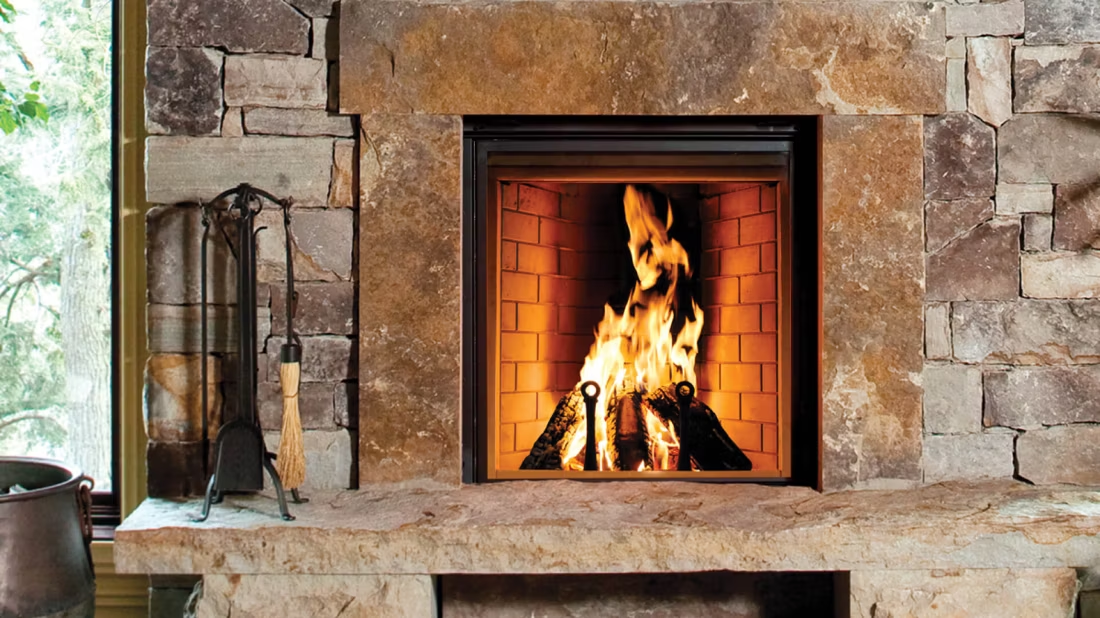
Here, a wood fireplace is chosen for ambiance, not survival.
Hallandale Beach sits at 5 feet of elevation in climate zone 1A, the hottest, most humid zone on the mainland U.S. There's barely any real heating season here—compare that to a place like Duluth, MN, which has a long, brutal seven-plus-month winter—and the average winter low is a mild 59°F. A handful of Arctic-front cold snaps might push overnight temperatures into the 40s for a night or two in January, but there is no sustained heating season here for a wood stove or fireplace to serve. The species you'd associate with the region—live oak, mahogany, slash pine—are grown as canopy and landscape trees or harvested commercially elsewhere in Florida, not cut locally for firewood the way pine and juniper are in western mountain towns.
There's also a structural reality working against wood-burning installs: Broward County falls inside Florida's High-Velocity Hurricane Zone, so any chimney or flue that penetrates a roof triggers additional wind-load engineering review beyond a standard building permit. Add in the fact that much of Hallandale Beach's housing stock along the beach and Intracoastal is high-rise condominiums, where associations routinely prohibit solid-fuel appliances outright, and you end up with a market where gas and electric fireplaces dominate almost entirely. A small number of single-family homeowners west of Federal Highway still build a wood-burning fireplace or outdoor wood-fired feature for entertaining and aesthetics—that's the honest use case here, not primary or backup heat.
Three steps. No salesperson until you're ready.
Tell us about your project
Your zip code, your situation, and the fuel you're leaning toward—or let the answers point you to one.
See what's actually available
The brands dealers within 100 miles genuinely carry—real options, never a catalog mirage.
Get your dealer & Project Guide
A trusted local dealer, plus the free Project Guide & Parts List that names every component of the job.
Frequently Asked Questions
Does it ever get cold enough in Hallandale Beach to actually need a wood-burning fireplace?
Realistically, no. With almost no real heating season and a winter low average of 59°F, Hallandale Beach doesn't have a heating season in the way a Northern or mountain town does. Occasional Arctic cold fronts can drop nighttime temperatures into the 40s for a night or two in January, which is enough to make a fireplace pleasant, but nowhere near enough to justify one as a heat source. Homeowners who install wood-burning units here are doing it for the fire itself, not the BTUs.
Why don't more Hallandale Beach homes have wood-burning fireplaces?
Two local realities work against it. First, a large share of the city's housing along the beach and the Intracoastal is condominium towers, and condo associations here almost universally prohibit solid-fuel appliances due to fire code, insurance, and shared-roof concerns. Second, Broward County sits inside Florida's High-Velocity Hurricane Zone, which means any roof penetration for a chimney or flue requires extra wind-load engineering beyond what a typical inland jurisdiction asks for. Between the two, most homeowners land on gas or electric instead.
If I still want a wood-burning fireplace, what does the process actually look like?
It's possible on a single-family lot, but plan on more steps than a typical install elsewhere. You'll need a building permit through the City of Hallandale Beach Building Division (or Broward County if your address falls outside city limits), and because you're in the HVHZ, any chimney penetrating the roof needs a wind-load engineering letter as part of that review—which extends the permit timeline. You'll also want a contractor who has actually built a masonry wood-burning fireplace in South Florida before, since most hearth dealers in this market focus their day-to-day work on gas and electric units.
Where would I even get firewood for a fireplace in Hallandale Beach?
Not from local forest land—there isn't any nearby, and there's no cutting-permit system like you'd find near a national forest out West. Oak, mahogany, and pine are common regional species, but oak and mahogany here are typically grown as shade and landscape trees rather than harvested for cordwood, and commercial pine production happens further north and inland in the state. In practice, firewood sold in South Florida is bundled oak or pine trucked down from north Florida or Georgia and sold retail at garden centers and grocery stores, not split from a woodlot down the street.
Would a gas or electric fireplace make more sense for my Hallandale Beach home?
For most homeowners here, yes. Gas fireplace installs are standard in this market, and electric units are especially practical—they need no chimney, no roof penetration, and no HVHZ engineering review, which makes them the only real option in most condo buildings. Florida Power & Light serves the area at roughly 13.7 cents per kWh, and an electric insert or built-in typically installs in a fraction of the time and cost of any solid-fuel alternative.
Can I install a wood-burning fireplace in a Hallandale Beach condo?
Almost never. Condo associations along the beach and the Intracoastal generally prohibit solid-fuel fireplaces outright, both for fire-code reasons and because a chimney would mean penetrating a shared roof structure that's already engineered to strict HVHZ wind standards. Electric fireplaces are the accepted workaround in nearly every condo building in this zip code range, since they need no venting and no structural changes.
What about a wood-fired pizza oven or outdoor fire feature instead of an indoor fireplace?
That's actually the more common way wood shows up in Hallandale Beach—as an outdoor feature on a single-family lot rather than an indoor fireplace. With no air quality concerns flagged for this area and no wildfire-driven burn restrictions like you'd find out West, an outdoor wood-fired oven or fire pit is generally easier to permit than an indoor unit, though setback rules from Broward County's building and fire codes still apply to any open-flame structure.
Do I need a permit for a wood-burning fireplace or outdoor wood feature here?
Yes. Inside city limits, the City of Hallandale Beach Building Division handles the permit; outside city limits, it runs through Broward County. The detail that catches people off guard is that any structure with a flue or chimney penetrating a roof falls under the county's High-Velocity Hurricane Zone provisions, which require additional wind-load engineering documentation on top of a standard building permit—something homeowners moving from a Northern state usually haven't dealt with before.
Wood vs. gas vs. electric—what do most Hallandale Beach homeowners actually pick?
The large majority choose electric or gas. Electric wins for condo owners because it sidesteps venting and HVHZ roof work entirely, and runs off Florida Power & Light's grid at about 13.7 cents per kWh. Gas is common in single-family homes with existing lines. Wood-burning fireplaces are chosen by a smaller group of single-family homeowners, usually for the look and feel of real flame during entertaining rather than for heat, and they're often paired with a gas-assisted lighting system for convenience.
Why won't my new wood stove get going like my old one?
New wood stoves are 70%+ efficient, so far less heat goes up the flue—which also means less draft to get a fire established. The rule: build a genuinely hot fire for about 45 minutes before you choke it down. Skip that and you get smoke in the room, creosote in the chimney, and a fire that never takes off. Most performance complaints trace straight back to this.
Why is a fireplace insert so efficient?
An insert does two things: it seals the chimney completely, so you stop losing air you already paid to heat, and it radiates warmth into the room through the firebox and glass. Most add a heat-exchange fan that pulls cool room air underneath, wraps it around the hot firebox, and pushes it back out warm. Your home is more efficient before you've even lit the first fire.
What is an in-home preview and do I need one?
It's a visit where a hearth professional measures your space, confirms the model you picked actually works in your home, and walks the specs—framing, gas line, venting, finish work—before anything is ordered. Some details you just can't know until you see the house. Never make a down payment without one; it's the single most-skipped step that burns buyers.
Does a fireplace add value to my home?
On average, a fireplace adds back to the home about the same amount you spent installing it. Add the monthly savings from heating the rooms you actually use instead of the whole house—often hundreds of dollars a year—and the value case is strong before you even count what a fire does for how your family uses the room.
Nearby Dealers
Hearth shops serving Hallandale Beach and the surrounding area. Every listing shows whether it is a WhyFire partner, a dealer we have verified as authorized for the brands we recommend, or a local business carrying hearth products. No manufacturer pays for placement. How we verify dealers →
Lifestyle Barn LLC
The Kitchenworks
Home Gas
Impel America Appliance
Brandel Masonry
One Space Solution LLC
A&S Reclaimed Wood
Get matched with a Hallandale Beach hearth dealer who'll tell you the truth about wood, gas, and electric.
Tell me about your home—condo or single-family, HOA or none—and I'll match you with a trusted local dealer and send a free Project Guide & Parts List, whether that means a genuine wood-burning build under Broward's hurricane code or a more practical gas or electric setup for your address.
Find Your Fireplace →