
The Glow of a Fire, Without the Heat Hallandale Beach Doesn't Need.
With winter lows averaging 59°F, Hallandale Beach homes and beachfront condos don't need heat—they want the look of a fire. Find the right electric unit and connect with a trusted local dealer.
Every Project Starts From One of These Five Situations
Ambiance first, heat optional in Hallandale Beach.
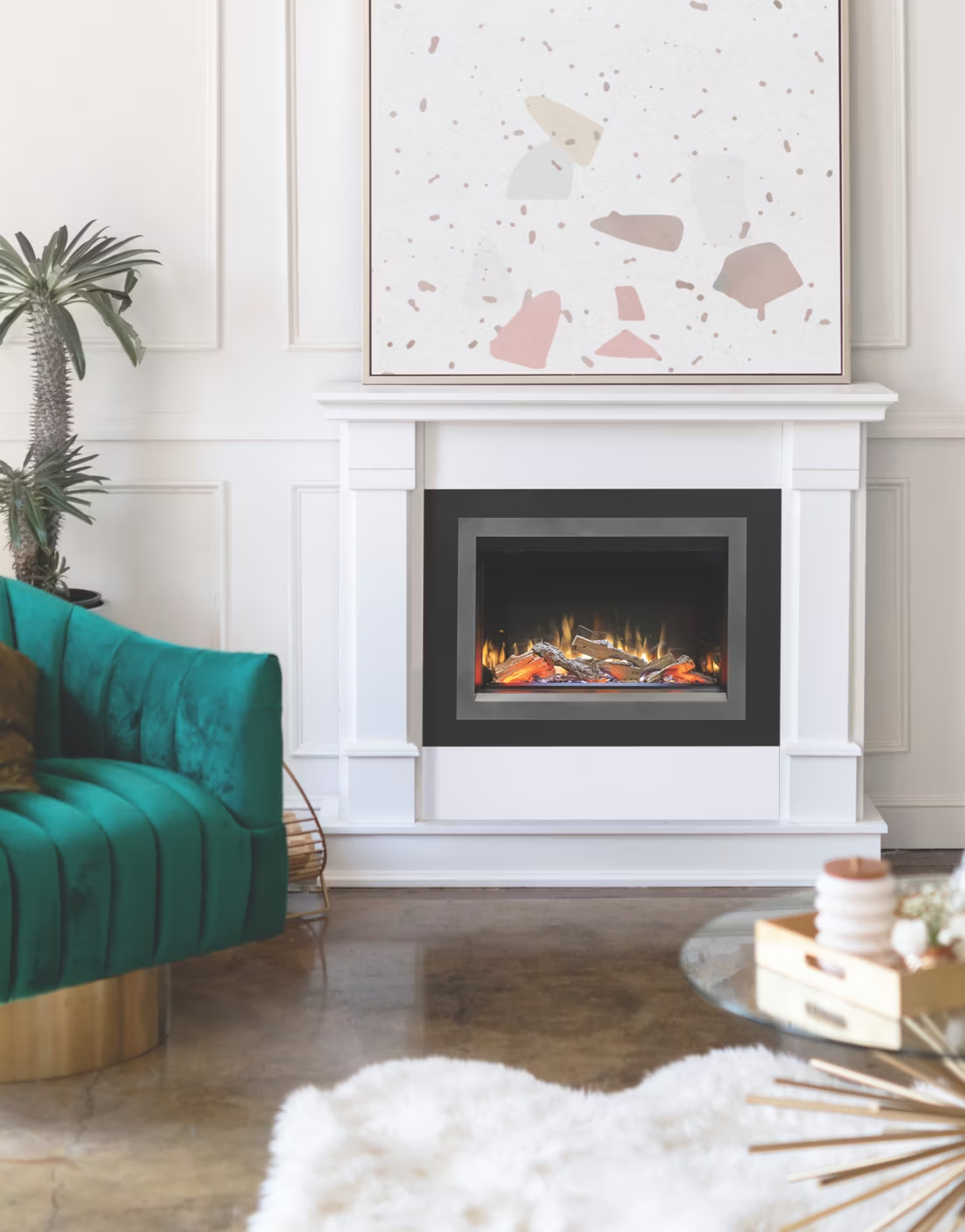
At 5 feet of elevation on the Broward County coast, Hallandale Beach has one of the mildest, shortest heating seasons in the country—a fraction of what a Midwest or mountain town sees in a single cold week. Winter lows average 59°F. Wood stoves and pellet stoves, which make sense in climates that demand sustained heat output, are essentially not-applicable here: there's no cutting season, no cord-wood supply chain, and no real need for a secondary heat source, even though oak, mahogany, and pine grow throughout South Florida. Electric fireplaces fill a different role entirely—they're about the visual and emotional pull of a fire, not warming a house.
That makes electric the practical choice for a city built largely on high-rise condos along Ocean Drive and the Intracoastal, where HOA rules restrict anything involving venting, gas lines, or open flame. An electric fireplace plugs into a standard outlet or ties into an existing circuit, produces zero combustion byproducts, and can go into a condo unit, a rental, or a ground-floor home with none of the structural work a gas or wood install requires. Florida Power & Light serves the area at a residential rate around 13.71¢ per kWh, so running a typical electric insert costs pennies per hour of use—you're paying for the flame effect and occasional heat, not a heating system.
Three steps. No salesperson until you're ready.
Tell us about your project
Your zip code, your situation, and the fuel you're leaning toward—or let the answers point you to one.
See what's actually available
The brands dealers within 100 miles genuinely carry—real options, never a catalog mirage.
Get your dealer & Project Guide
A trusted local dealer, plus the free Project Guide & Parts List that names every component of the job.
Frequently Asked Questions
How much does an electric fireplace installation cost in Hallandale Beach?
Plug-in electric inserts and freestanding units typically run $300 to $1,500 installed, since most just need to fit into an existing opening or console and be plugged in—no gas line, no venting, no chimney work. Built-in wall units with a custom surround, recessed mounting, or a dedicated electrical circuit run higher, usually $2,000 to $5,000, especially in condo renovations where an electrician needs to open a wall. Because there's no combustion involved, electric is consistently the least expensive fireplace category to install in Hallandale Beach.
Do I need a permit to install an electric fireplace in my condo or home?
In most cases, no—a plug-in electric fireplace that uses an existing outlet doesn't trigger a building permit. If you're having a unit hardwired into a dedicated circuit, or cutting into drywall for a recessed built-in, that electrical work typically does require a permit through the City of Hallandale Beach Building Department, pulled by a licensed electrician. Condo buildings add another layer: check with your HOA or building management before any wall modification, since many buildings restrict alterations to shared walls even for low-risk electric installs.
Will an electric fireplace actually heat my home, or is it just for looks?
Most units sold for Hallandale Beach are used primarily for the flame effect rather than heat—and given winter lows averaging 59°F and such a short, mild heating season overall, that's the right expectation. Most electric fireplaces include a small built-in heater (typically 1,500 watts) that can take the edge off a single room on a rare cool January night, but they're not sized or intended to replace central HVAC. If ambiance is the goal, any electric insert or built-in will do the job. If you want meaningful supplemental heat on the handful of genuinely cold nights, ask your local dealer about models with a higher-output heater setting.
Why don't I see wood-burning fireplace options for Hallandale Beach?
Wood-burning stoves and inserts are built for climates that need sustained heat output over a long cold season—that's not South Florida. With such a short, mild heating season for the year, there's no real cutting season, no local cordwood infrastructure, and no practical case for a wood stove, even though native oak, mahogany, and pine are common regional species. A small number of homeowners with rural or vacation properties elsewhere in the state install wood units for that specific use, but for a Hallandale Beach condo or home, electric or gas covers the ambiance without the smoke, ash, or venting requirements.
What should I know about installing an electric fireplace in an HOA building?
Electric is generally the easiest fireplace type to get approved in a Hallandale Beach condo association, since it involves no venting, no gas line, and no exterior modification—the things HOAs typically scrutinize. That said, boards still often require sign-off before any wall-mounted or recessed unit, particularly in buildings with concrete block construction where cutting into a wall affects shared structure. Freestanding or console-style electric fireplaces avoid this issue entirely since they require no modification at all—just an outlet.
How much does it cost to run an electric fireplace with FPL rates?
Florida Power & Light's residential rate runs around 13.71¢ per kWh. A typical electric fireplace draws very little power in flame-only mode—often under 100 watts—so running it for ambiance costs a fraction of a cent per hour. Switch on the heater function (usually 1,500 watts) and you're looking at roughly 20 cents an hour, which is still inexpensive compared to running central AC or heat. For most Hallandale Beach households, the electric fireplace itself barely moves the monthly bill.
Electric vs. gas—which is right for my home in Hallandale Beach?
Gas fireplaces are common here too and deliver a more authentic flame with real heat output, which some homeowners prefer for primary living rooms—but they require a gas line, venting, and a larger installation footprint. Electric skips all of that: no gas hookup, no venting, no combustion byproducts, and a much lower installed cost. For condo units, rental properties, or anywhere HOA rules limit structural changes, electric is usually the practical answer. For single-family homes with an existing gas line or a desire for a more traditional fire, gas is worth a look from a local dealer.
Are electric fireplaces safe for homes with kids or pets in Hallandale Beach?
Electric fireplaces are generally considered the safest option in the category—the flame effect is produced by LED lighting and a mist or reflection technique, not real fire, and the glass front stays cool to the touch on most modern models. There's no open flame, no combustible byproducts, and no risk of a gas leak. For households with young kids or pets, this is a real advantage over gas or wood units, though any unit with a heater function will still produce warm air near the vent, so placement still matters.
What electric fireplace brands hold up well in a coastal, humid climate like Hallandale Beach?
Salt air and humidity are real considerations this close to the Atlantic, even for an appliance with no combustion or venting. Brands like Dimplex, Napoleon, and Touchstone build electric units with sealed electronics and corrosion-resistant components that hold up better in coastal Florida than budget models with exposed wiring or lower-grade housings. If the fireplace is going near a balcony, sliding door, or anywhere with regular salt-air exposure, mention that to your local dealer—they can steer you toward a model rated for it rather than one that's likely to corrode within a couple of years.
Do electric fireplaces actually produce heat?
Yes—most put out around 4,800–5,000 BTUs from a standard outlet, which comfortably warms a bedroom, office, or den as a comfort-zone heater. What they won't do is carry a whole house the way wood, gas, or pellet can. Think of electric as ambiance-first with honest supplemental heat: flames on with no heat in July, flames plus warmth in January.
Can I put a TV above my fireplace?
Yes—with an asterisk. Fireplaces are hot and TVs don't like heat. Either put a mantel between them to deflect rising warmth, or choose a fireplace with heat-management technology that creates a cool zone on the wall above—the wall stays around 125 degrees, barely warm, while the room still gets full heat. If you like clean lines and don't want a mantel, heat management is the answer.
Can I install a fireplace myself?
If you're putting a fire in your house on purpose, it's best to work with an expert. Unless you're genuinely experienced in framing, gas line, vent pipe, and the national code on clearances to combustibles, have a professional do it—and ideally the same company that sells you the fireplace, so warranty, service, and liability all live under one roof.
What is an in-home preview and do I need one?
It's a visit where a hearth professional measures your space, confirms the model you picked actually works in your home, and walks the specs—framing, gas line, venting, finish work—before anything is ordered. Some details you just can't know until you see the house. Never make a down payment without one; it's the single most-skipped step that burns buyers.
Nearby Dealers
Hearth shops serving Hallandale Beach and the surrounding area. Every listing shows whether it is a WhyFire partner, a dealer we have verified as authorized for the brands we recommend, or a local business carrying hearth products. No manufacturer pays for placement. How we verify dealers →
Lifestyle Barn LLC
The Kitchenworks
Home Gas
Impel America Appliance
Brandel Masonry
One Space Solution LLC
A&S Reclaimed Wood
Electric Service in Hallandale Beach
An electric fireplace's heater draws about 1,500 watts—pennies per hour at local rates.
Florida Power & Light Co
Find your electric fireplace in Hallandale Beach.
Tell us a bit about your condo or home and we'll send a free Project Guide & Parts List for your Hallandale Beach electric fireplace project—the right unit, the exact parts, and a trusted local dealer to install it.
Find Your Fireplace →