
Keep Your Family Warm and Safe—No Matter What
From Quincy to Chattahoochee, Havana, and Greensboro, wood heat in Gadsden County plays a different role than it does up north—ambiance most nights, real backup warmth during the occasional freeze or storm-driven outage. Find the right stove or insert, and connect with a trusted local dealer.
Every Project Starts From One of These Five Situations
Wood heat for occasional cold, not brutal winters.
Gadsden County sits in the Florida Panhandle along the Apalachicola River, home to Quincy, Chattahoochee, Havana, Greensboro, and Midway. With a Climate Zone 2A designation and only a light winter heating load, winters here are nothing like the six-month burn seasons of a place like Duluth, MN—average winter lows hover around 40°F, and hard freezes are the exception, not the rule. That doesn't mean wood heat is out of place; it means it plays a different role than it does further north.
Most Gadsden County homeowners who install a wood stove or insert use it for a handful of genuinely cold nights each winter, the ambiance of a real fire, and—increasingly—as backup heat that doesn't depend on the grid. The Panhandle sees its share of tropical storm and hurricane activity (Hurricane Michael's 2018 track ran close to this part of the state), and a wood stove keeps working when the power doesn't. Locally available oak and pine burn well and are widely sold or self-sourced from tree removal work in the county, and with no air quality non-attainment designation here, there are no seasonal burn curtailment periods to plan around like there are in Western wood-burning regions.
Three steps. No salesperson until you're ready.
Tell us about your project
Your zip code, your situation, and the fuel you're leaning toward—or let the answers point you to one.
See what's actually available
The brands dealers within 100 miles genuinely carry—real options, never a catalog mirage.
Get your dealer & Project Guide
A trusted local dealer, plus the free Project Guide & Parts List that names every component of the job.
Frequently Asked Questions
How much does a wood stove installation cost in Gadsden County?
Most wood stove or insert installations in Gadsden County run in the $3,500 to $7,500 range, and homes here tend to land toward the lower end of that band. Because Gadsden County's winters are mild—average lows around 40°F and a light overall winter heating load—many homeowners choose a smaller stove sized for occasional use rather than a large catalytic unit built for round-the-clock winter burning. Costs climb if you need new Class A chimney pipe run through a roof (common in newer homes in Quincy or Midway without an existing masonry fireplace) versus dropping an insert into a chimney that's already there, which is common in Havana's older housing stock.
What size wood stove do I need for a Gadsden County home?
Smaller than you'd think if you're comparing notes with someone in a colder state. With only a light winter heating load overall, most Gadsden County homes do fine with a small to medium stove (rated for 1,000-1,800 sq ft) used for supplemental heat and a handful of genuinely cold snaps each winter, rather than a large unit sized for all-day, all-season heating. If your primary goal is backup heat during storm-related power outages rather than daily wintertime warmth, a local dealer can help you size for that use case specifically—it changes the recommendation.
Where can I find certified wood stove installers near me in Gadsden County?
Look for NFI (National Fireplace Institute) or CSIA (Chimney Safety Institute of America) certified installers—both indicate real training in wood-burning appliance clearances and venting, not just general contracting experience. Given Gadsden County's relatively small population base, several installers who serve Quincy and the surrounding towns also cover the greater Tallahassee metro area just to the east. Avoid handyman-style installs for a wood-burning unit; improper clearances and venting are the leading cause of chimney fires, and that risk doesn't shrink just because you're only burning a few weeks a year.
What's the difference between a wood stove and a wood insert?
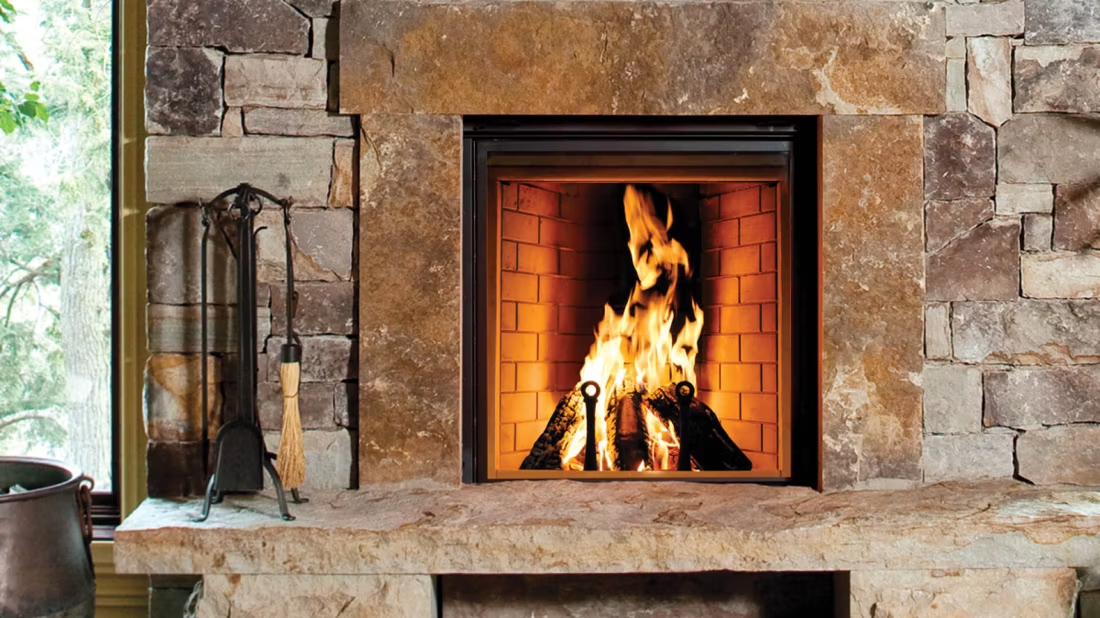
A wood stove is a freestanding unit on its own hearth pad, vented through a chimney, and can go in almost any room with the right clearances. A wood insert is built to slide into an existing masonry fireplace, which is common in Havana's and Quincy's older homes, and it converts a decorative, heat-leaking open hearth into an efficient heat source using the chimney you already have. If your Gadsden County home already has a working fireplace, an insert is usually the more cost-effective route since it skips new chimney construction.
Do I need a permit to install a wood stove in Gadsden County?
Yes—new wood-burning appliance installations require a building permit through the Gadsden County Building Department, and the stove itself needs to meet current EPA 2020 NSPS emissions standards. Most local hearth retailers handle the permit application as part of the installation quote, so you generally don't have to navigate it yourself. Because Gadsden County has no air quality non-attainment designation, there are no seasonal burn curtailment periods to work around here, unlike some Western wood-burning regions.
What's the best wood stove for a mild climate like Gadsden County's?
Since Gadsden County doesn't need a stove that can hold a 20-hour overnight burn at sub-zero temperatures, a smaller non-catalytic stove from a brand like Pacific Energy or Vermont Castings is often the better fit than a large catalytic unit built for harsh Northern winters. The priority here is efficient heat on cold nights and reliable operation as a backup source during storm outages, not maximum sustained BTU output. A local dealer can walk through your home's square footage and existing fireplace setup to land on the right size rather than over-buying capacity you'll rarely use.
How often should my chimney be inspected in Gadsden County?
The CSIA recommends an annual inspection regardless of how often you actually burn, and that holds true even in a mild climate like Gadsden County's. If your stove mostly sits ready for occasional cold nights or storm-related outages, creosote buildup happens more slowly than it would with daily winter use—but a chimney that's been sitting unused for months can still develop blockages from nesting animals or debris. Scheduling a sweep and inspection before hurricane season, when you're most likely to actually need the stove for backup heat, is a practical local habit.
Where can I get firewood in Gadsden County?
Oak and pine are the most commonly available firewood in Gadsden County, sourced from local land-clearing and tree-removal operations around Quincy, Chattahoochee, and the surrounding rural areas—both burn well, with oak giving longer, hotter coals and pine being easier to source and split. Mahogany shows up occasionally from ornamental tree removals and burns dense and hot, though it's a smaller share of the local supply. Because Gadsden County doesn't have the National Forest cutting-permit programs common out West, most homeowners either buy from a local firewood seller by the cord or arrange with a tree service directly.
Wood stove vs. pellet stove—which makes more sense in Gadsden County?
Wood stoves run without electricity, which matters in a county that sees tropical storm and hurricane-related power outages—a real consideration given the Panhandle's storm track. Pellet stoves, using regional brands like Lignetics or Hamer Pellet Fuel, are more convenient for the light, occasional use typical of Gadsden County's mild winters—load the hopper, set it, and walk away—but they need electricity to run the auger and blower, so they won't help during an outage. For a household prioritizing backup heat resilience, wood is the more dependable choice. For a household that just wants easy, low-maintenance warmth on the handful of cold nights each year, pellet is worth a look too.
Why won't my new wood stove get going like my old one?
New wood stoves are 70%+ efficient, so far less heat goes up the flue—which also means less draft to get a fire established. The rule: build a genuinely hot fire for about 45 minutes before you choke it down. Skip that and you get smoke in the room, creosote in the chimney, and a fire that never takes off. Most performance complaints trace straight back to this.
What's the difference between an insert and a zero-clearance fireplace?
An insert is a fireplace that slides into a pre-existing wood-burning fireplace—if you don't have one, there's nothing to insert it into. A zero-clearance fireplace is built into a framed wall, which makes it the answer for remodels and new construction. Simple test: existing masonry fireplace means insert; blank or framed wall means zero-clearance.
Can a fireplace actually lower my heating bill?
Yes—by creating a comfort zone. A furnace heats every square foot of the house just to warm the one room you're in; a gas fireplace on low burns roughly a sixth of the gas a typical furnace does. Set the furnace around 55–60 degrees as a baseline, then heat the rooms your family actually uses. Families who heat this way commonly save $20–$60 a month.
Does a fireplace add value to my home?
On average, a fireplace adds back to the home about the same amount you spent installing it. Add the monthly savings from heating the rooms you actually use instead of the whole house—often hundreds of dollars a year—and the value case is strong before you even count what a fire does for how your family uses the room.
Stove and Fireplace Dealers in Gadsden County
Find your wood fireplace in Gadsden County.
Tell us a bit about your home and how you plan to use it—daily ambiance, occasional cold nights, or storm backup—and we'll match you with the right wood stove or insert, plus a Project Guide & Parts List and a trusted local Gadsden County dealer to install it.
Find Your Fireplace →