
Warmth on demand for Gadsden County's mild winters.
From Quincy's historic district to Havana, Chattahoochee, and Greensboro, electric fireplaces add instant ambiance and supplemental heat without touching a chimney or a gas line. Find the right unit and connect with a trusted local dealer.
Every Project Starts From One of These Five Situations
Convenience built for a short heating season.
Gadsden County sits in climate zone 2A along the Georgia line, with an average winter low near 40°F and only about 1,600 heating degree days a year—a fraction of what a true wood-heat county carries. Most homes here run air conditioning nine or ten months of the year, and the handful of genuinely cold nights each winter, when temperatures dip into the 20s and 30s, call for something that switches on instantly rather than a full-time heating system. That's the gap electric fireplaces fill, from the antebellum homes of Quincy's historic district to farmhouses outside Chattahoochee and Greensboro.
Electricity in the county comes from Talquin Electric Cooperative, headquartered in Quincy and serving most of rural Gadsden County, with Duke Energy Florida covering pockets near the Georgia border. Because electric units produce zero combustion byproducts and Gadsden County has no listed air quality concerns to navigate, there's no emissions tradeoff to weigh. Just as important: no chimney, no gas line, and no exterior venting means a homeowner in one of Quincy's National Register homes—where alterations to original masonry are often restricted—can add heat and ambiance to a room without touching the historic fabric of the house.
Three steps. No salesperson until you're ready.
Tell us about your project
Your zip code, your situation, and the fuel you're leaning toward—or let the answers point you to one.
See what's actually available
The brands dealers within 100 miles genuinely carry—real options, never a catalog mirage.
Get your dealer & Project Guide
A trusted local dealer, plus the free Project Guide & Parts List that names every component of the job.
Frequently Asked Questions
How much does an electric fireplace installation cost in Gadsden County?
A plug-in electric insert or freestanding unit that runs off a standard 15- or 20-amp outlet typically runs $300 to $800 installed, since there's no wiring or venting to add. A built-in wall unit or linear electric fireplace that needs a dedicated circuit runs higher, often $1,200 to $2,800, especially in older Quincy and Havana homes where knob-and-tube or aluminum wiring sometimes requires panel work before a licensed electrician can safely add the new circuit. Local dealers will scope the wiring during an in-home visit before quoting a firm price.
Do I need a permit to install an electric fireplace in Gadsden County?
A simple plug-in electric insert or freestanding unit generally doesn't require a permit since it's treated like any other appliance. A built-in electric fireplace that requires a new dedicated circuit does require an electrical permit through the Gadsden County Building Department, and the wiring work needs to be done by a licensed electrician. Most local dealers coordinate this as part of the installation, so it's rarely something the homeowner has to manage directly.
Does an electric fireplace need a chimney or venting?
No—this is the main reason electric units work so well in Gadsden County. There's no combustion, so there's no flue, no exterior vent, and no clearance-to-combustibles rules to satisfy. That makes electric the practical choice for a historic Quincy home where the masonry chimney is original and protected, for a mobile home outside Midway where adding a chimney isn't feasible, or for any room where a homeowner wants fireplace ambiance without construction.
Will my electric fireplace work if the power goes out?
No, and this is worth being upfront about for a county that sits in the path of Gulf hurricane season. An electric fireplace needs grid power (or a generator) to run—unlike a wood stove, it isn't a backup heat source during an outage. For most Gadsden County homes that's an acceptable tradeoff, since real cold snaps here are short and outages tend to cluster around storm season rather than the coldest nights. If backup heat during outages matters more to your household, that's worth discussing with a local dealer alongside your electric fireplace plans.
What size electric fireplace do I need?
Most electric fireplaces sold in the U.S. put out around 4,600 to 5,200 BTU regardless of size, which is enough to noticeably warm a single room but isn't meant to replace central heat—appropriate given Gadsden County's mild 1,600 heating-degree-day climate. Sizing here is really about the opening and the visual scale of the room: a 30- to 40-inch linear unit suits a standard living room in a Quincy bungalow, while larger greatroom spaces or vaulted ceilings in newer Greensboro-area construction can handle a 50-inch-plus model or a wider mantel insert. A local dealer can walk through your fireplace opening or wall space and recommend a size that fits.
How much maintenance does an electric fireplace need?
Very little compared to wood or gas. There's no chimney sweep, no annual gas line inspection, and no ash to manage—just occasional dusting of the unit and cleaning the front glass, plus checking that the LED ember bed and blower are running properly. Most units last 10 to 15 years before the heating element or LED components need replacing, and local hearth retailers can usually source parts even for older discontinued models.
Are electric fireplaces covered by homeowners insurance the same way as wood or gas units?
Generally, yes, and often more favorably. Because there's no open flame or combustion involved, some insurers view electric fireplaces as lower risk than wood-burning appliances, which can matter for older wood-frame homes common throughout Quincy and Havana. That said, a built-in unit wired to a dedicated circuit should still be installed and inspected to code through the Gadsden County Building Department—proper installation documentation is what protects you if you ever need to file a claim.
What electric fireplace brands are available through local dealers?
Regional hearth retailers serving Gadsden County typically carry mainstream electric brands like Dimplex, Napoleon, and Touchstone, ranging from simple plug-in log inserts to full linear wall units with realistic flame technology. Because there's no fuel supply chain to worry about—no propane tank, no pellet brand, no firewood species to source—availability comes down to what a dealer stocks or can order, which is exactly the kind of local detail worth confirming before you commit to a specific model.
Electric vs. wood or gas—which makes more sense for a Gadsden County home?
With only about 1,600 heating degree days a year and winter lows averaging near 40°F, most Gadsden County homes don't need a serious primary heat source—they need something for the handful of genuinely cold nights and for evening ambiance the rest of the year. Wood, still burned locally using oak, pine, and occasionally mahogany scraps, appeals to homeowners who want backup heat during hurricane-season outages or who already have a working chimney. Gas requires either natural gas access (limited in the county) or a propane tank. Electric skips both of those commitments—no fuel storage, no venting, and a lower installed cost—which is why it's become the practical default for supplemental warmth and fireplace ambiance in a climate this mild. For primary heat or storm-outage backup, talk to a local dealer about wood or gas instead.
Does an electric fireplace need a vent or chimney?
No—that's its superpower. An electric fireplace needs a wall and an outlet, period. No vent pipe, no gas line, no clearances to design around, which is why it works in bedrooms, offices, apartments, and walls where venting a gas or wood unit would be impractical or impossible. Installation is typically the simplest and least expensive of any fireplace type.
Can I put a TV above my fireplace?
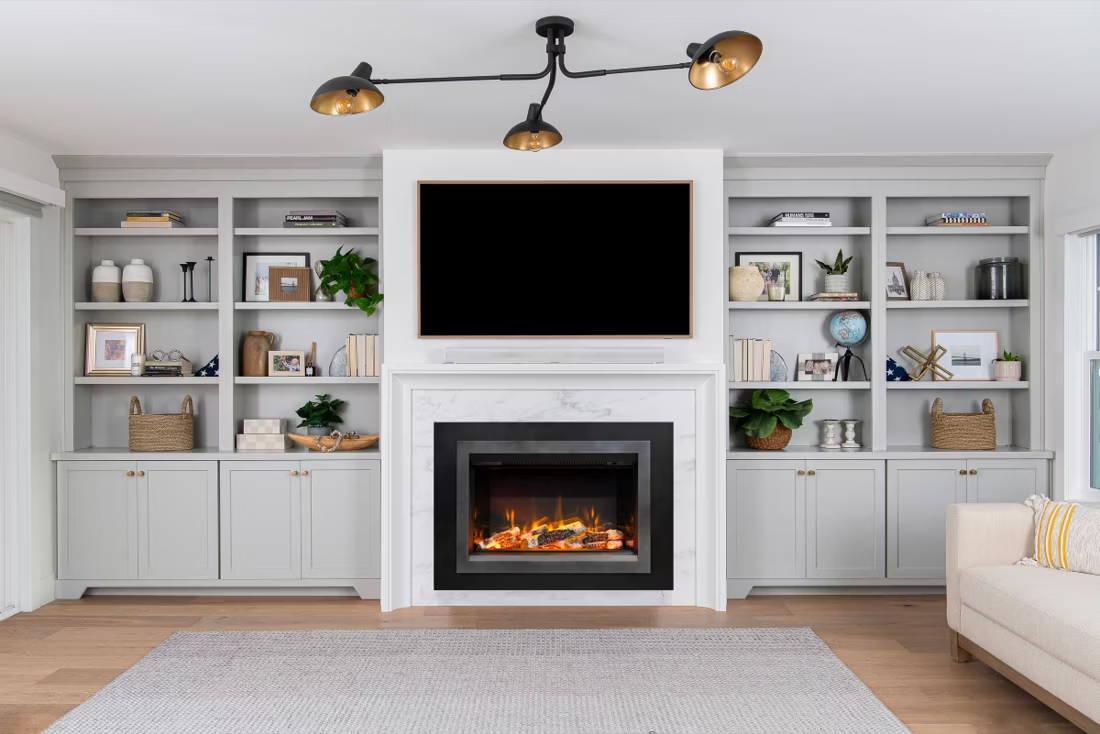
Yes—with an asterisk. Fireplaces are hot and TVs don't like heat. Either put a mantel between them to deflect rising warmth, or choose a fireplace with heat-management technology that creates a cool zone on the wall above—the wall stays around 125 degrees, barely warm, while the room still gets full heat. If you like clean lines and don't want a mantel, heat management is the answer.
Can a fireplace actually lower my heating bill?
Yes—by creating a comfort zone. A furnace heats every square foot of the house just to warm the one room you're in; a gas fireplace on low burns roughly a sixth of the gas a typical furnace does. Set the furnace around 55–60 degrees as a baseline, then heat the rooms your family actually uses. Families who heat this way commonly save $20–$60 a month.
How much should I budget for a fireplace?
For an average home—covering the fireplace, the vent pipe, and basic installation—a budget between $3,900 and $5,500 gives you a lot of options across wood, gas, and pellet. By the time you add finish work, gas line, and electrical, the average complete installation lands between $5,000 and $12,000 all-in. In a remodel or new build, a good rule is to put about 2.5% of the total project cost toward the fireplace.
Stove and Fireplace Dealers in Gadsden County
Find your electric fireplace in Gadsden County.
Tell us a bit about your home and we'll put together a free Project Guide & Parts List for your electric fireplace—sized and specified for your space, with a trusted local Gadsden County dealer matched to install it.
Find Your Fireplace →