
Keep Your Family Warm and Safe—No Matter What
With only a light, short winter heating season and winter lows averaging 50°F, few Fish Hawk homes need wood heat to survive winter. Some still want it for ambiance—here's what's realistic.
Every Project Starts From One of These Five Situations
Why so few Fish Hawk homes burn wood for heat.
Fish Hawk sits in USDA climate zone 2A at just 46 feet of elevation outside Tampa, where the winter low averages 50°F and the area sees only a light, short winter heating season. Compare that to a place like Duluth, Minnesota, which faces a long, brutal winter heating season stretching many months—Fish Hawk homes simply don't face the sustained cold that makes wood heat a practical necessity. Most winters here bring a handful of nights that dip into the 30s and maybe one or two frost advisories, not the weeks of sub-freezing temperatures that justify a cordwood supply and a chimney sweep on the calendar.
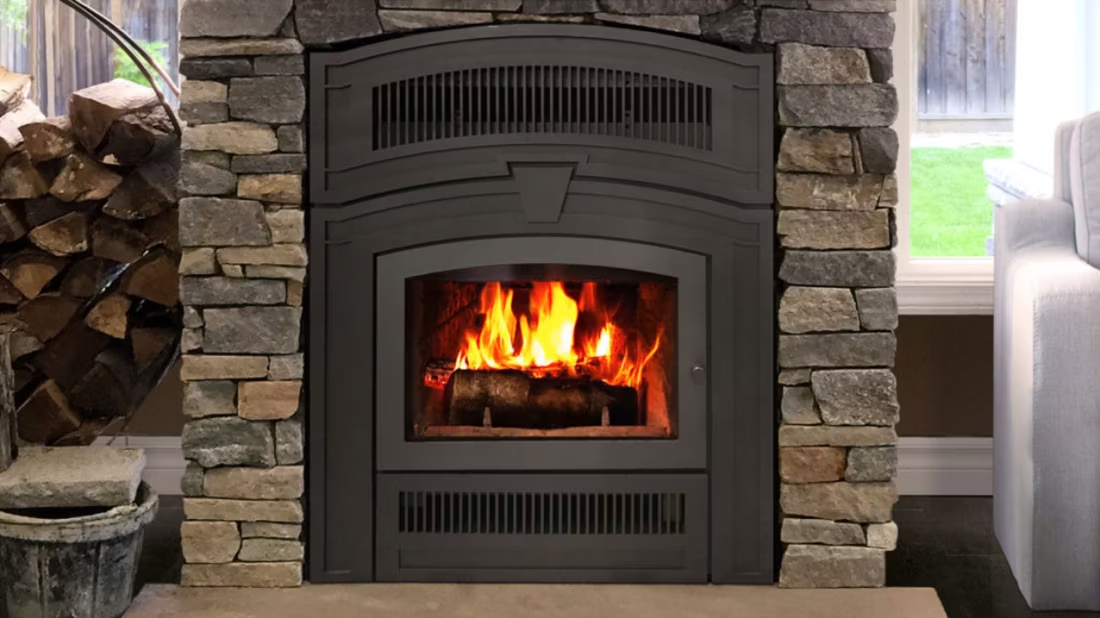
That said, a small number of Fish Hawk homeowners still install a wood-burning fireplace or stove—usually for the look and feel of a real fire during the occasional January cold snap, for resale appeal in the FishHawk Ranch and Starling neighborhoods, or because they grew up with wood heat elsewhere and want it in their Florida home too. Hillsborough County has no wildfire smoke or winter inversion concerns like Western states, and there's no non-attainment designation here, so air quality isn't the obstacle—practicality and neighborhood covenants usually are. If you're one of the homeowners who wants wood anyway, a trusted local dealer can walk you through what's actually installable given your lot, your HOA, and your home's construction.
Three steps. No salesperson until you're ready.
Tell us about your project
Your zip code, your situation, and the fuel you're leaning toward—or let the answers point you to one.
See what's actually available
The brands dealers within 100 miles genuinely carry—real options, never a catalog mirage.
Get your dealer & Project Guide
A trusted local dealer, plus the free Project Guide & Parts List that names every component of the job.
Frequently Asked Questions
Does a wood-burning fireplace even make sense in Fish Hawk, FL?
For most homes, no—not as a primary or even meaningful supplemental heat source. With winter lows averaging 50°F and only a light, short winter heating season, Fish Hawk simply doesn't get cold enough often enough to justify the wood supply, chimney maintenance, and creosote management that wood heat requires. Where it does make sense is as a lifestyle feature: a real wood fire on the rare 35°F night, or a decorative masonry fireplace that adds character to a new-build home in FishHawk Ranch. If you're chasing genuine cold-weather heat performance, gas or electric options fit Fish Hawk's climate far better and are far more common here.
How much does it cost to install a wood stove or fireplace in Fish Hawk?
Because wood-burning installs are uncommon in this part of Hillsborough County, there isn't a well-established local price benchmark the way there is for gas conversions or electric units. Nationally, a freestanding EPA-certified wood stove with Class A chimney and hearth pad typically runs $4,000 to $9,000 installed, and that range holds reasonably well here too—sometimes higher, since fewer local installers specialize in wood-burning work and may need to bring in chimney materials that aren't kept in regular stock. A local dealer can give you a firm number once they've seen your home; this is exactly the kind of project where getting an actual quote matters more than a rule of thumb.
Do I need a permit for a wood-burning fireplace in Fish Hawk?
Yes. Any new wood-burning appliance requires a building permit through the Hillsborough County Building Department, and the unit itself must meet current EPA New Source Performance Standards. Most reputable installers handle the permit application and inspection scheduling as part of the job. Because wood stoves are a less common request here than in colder states, it's worth confirming your installer has actually pulled wood-stove permits with the county before—not every hearth contractor in the Tampa Bay area specializes in solid-fuel installs.
If I burn wood in Fish Hawk, what species should I use?
Oak and pine are the two realistic options locally. Live oak and water oak are common storm-downed hardwoods around Hillsborough County and, once seasoned for six to twelve months, burn hot and clean. Southern yellow pine is also widely available from local tree removal but burns faster and leaves more creosote, so it's better mixed with oak than used alone. Mahogany, while present as an ornamental and shade tree in some Fish Hawk landscaping, isn't a traditional firewood species here and most tree services won't offer it for burning—stick with oak and pine sourced from a local firewood supplier or tree removal company.
Will a wood fireplace add resale value to my Fish Hawk home?
It can, modestly—mainly as an aesthetic feature rather than a functional selling point. In master-planned communities like FishHawk Ranch, buyers relocating from colder states sometimes view a wood-burning fireplace as a familiar comfort feature, and a well-built masonry fireplace can be a nice architectural anchor in a great room. But don't expect it to move the needle the way a screened lanai or pool does in this market. If resale value is your main motivation, ask a local dealer whether a gas fireplace insert—which offers the same visual payoff with none of the wood-handling drawbacks—might be the smarter investment for Tampa Bay buyers.
Are there restrictions on burning wood in Fish Hawk or Hillsborough County?
There are no air-quality non-attainment issues or winter inversion concerns in this part of Florida, unlike Western wood-burning regions, so the county doesn't impose the kind of seasonal curtailment periods you'd see in a place like Klamath Falls, Oregon. The more likely restriction comes from your homeowners association. Many Fish Hawk neighborhoods, including sections of FishHawk Ranch, have architectural review requirements covering exterior chimney appearance and smoke nuisance clauses in their covenants. Check with your HOA before ordering a unit—it's a faster problem to catch than a county permit issue.
Would gas or electric make more sense than wood for my Fish Hawk home?
For most homeowners here, yes. Both Tampa Electric and Duke Energy Florida serve the area with residential rates around 14.7 to 16.6 cents per kWh, making a electric fireplace an easy, permit-light option for supplemental warmth and ambiance—most electric units install for $400 to $1,200 with no venting required. Gas fireplaces are also common in Fish Hawk's newer construction and deliver instant, adjustable heat without the wood supply, chimney sweeping, or creosote concerns. Wood remains the right call only if the ritual and radiant feel of a real fire matters more to you than heating performance.
Can I install a wood-burning fireplace in a FishHawk Ranch HOA community?
Possibly, but you'll need architectural review board approval before you order anything. FishHawk Ranch and similar deed-restricted communities in the area typically require exterior modification approval for anything affecting the roofline or facade, which includes a new chimney or flue. Some covenants also restrict visible smoke or require specific chimney cap styles to match neighborhood aesthetics. Submit your plans to the HOA in parallel with your Hillsborough County building permit application so you're not caught mid-project waiting on a signature.
What are my best alternatives if wood heat isn't practical for my home?
Given Fish Hawk's mild winters, most homeowners land on either a direct-vent gas fireplace or insert, or an electric fireplace for rooms where running gas line isn't practical. Gas gives you real flame and genuine heat output on the occasional cold snap, with service available through the area's natural gas providers. Electric units require no venting at all and can be installed almost anywhere in a day, which suits a supplemental-ambiance need in a climate that rarely demands real heat. A local dealer can help you weigh both against your specific room and budget.
Why is my open fireplace making my house colder?
Open fireplaces suck—literally. As the fire burns, it consumes air your furnace already paid to heat and pulls it out through the chimney, so the house is actually colder after the fire goes out than before you lit it. An insert fixes this: it seals the chimney, puts fixed glass across the front, and turns that hole in your house into a real heat source.
Why won't my new wood stove get going like my old one?
New wood stoves are 70%+ efficient, so far less heat goes up the flue—which also means less draft to get a fire established. The rule: build a genuinely hot fire for about 45 minutes before you choke it down. Skip that and you get smoke in the room, creosote in the chimney, and a fire that never takes off. Most performance complaints trace straight back to this.
Can a fireplace actually lower my heating bill?
Yes—by creating a comfort zone. A furnace heats every square foot of the house just to warm the one room you're in; a gas fireplace on low burns roughly a sixth of the gas a typical furnace does. Set the furnace around 55–60 degrees as a baseline, then heat the rooms your family actually uses. Families who heat this way commonly save $20–$60 a month.
Can I install a fireplace myself?
If you're putting a fire in your house on purpose, it's best to work with an expert. Unless you're genuinely experienced in framing, gas line, vent pipe, and the national code on clearances to combustibles, have a professional do it—and ideally the same company that sells you the fireplace, so warranty, service, and liability all live under one roof.
Nearby Dealers
Hearth shops serving Fish Hawk and the surrounding area.
Find your wood fireplace option in Fish Hawk.
Wood heat is uncommon here, but if it's what you want, we'll match you with a trusted local dealer who can tell you honestly what's installable in your home—and send you a free Project Guide & Parts List with the exact parts, vent kit, and recommended installer for your Fish Hawk project.
Find Your Fireplace →