
Pellet Stoves in Fish Hawk: A Rare Choice for a Warm Climate.
With winter lows averaging 50°F and just 436 heating degree days a year, Fish Hawk homes almost never need a pellet stove for warmth. If you're still considering one, here's the honest picture.
Every Project Starts From One of These Five Situations
Why pellet heat rarely makes sense here.
Fish Hawk sits in Hillsborough County's climate zone 2A, a subtropical belt where winter lows average 50°F and the entire heating season adds up to roughly 436 heating degree days. Compare that to a place like Duluth, Minnesota, which racks up over 10,000 heating degree days a year—Fish Hawk homes are simply never built with the insulation, chimney chases, or hearth pads that make a pellet stove installation practical or worthwhile. Local building codes and floor plans here are designed around air conditioning, not wood-fired backup heat.
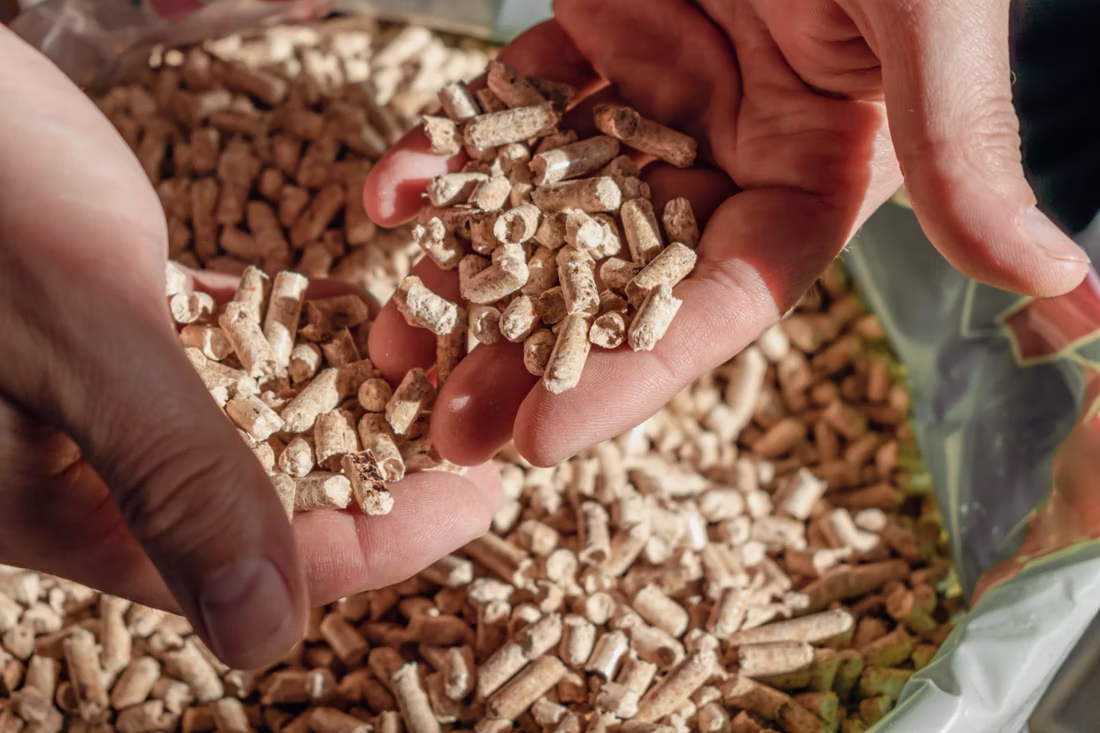
That said, pellet appliances aren't entirely absent from the area. Regional suppliers like Lignetics, Hamer Pellet Fuel, and Greenway Renewable Energy sell bagged pellets throughout the Tampa Bay region, though the overwhelming majority go into outdoor pellet grills and smokers rather than home heating stoves. A small number of Fish Hawk homeowners do install a pellet stove or insert—usually for ambiance in a den or lanai, as a novelty during the occasional hard freeze, or because they split time with a colder-climate property up north. If that's you, a local dealer can still help, but go in knowing this is a niche project here, not a standard one.
Three steps. No salesperson until you're ready.
Tell us about your project
Your zip code, your situation, and the fuel you're leaning toward—or let the answers point you to one.
See what's actually available
The brands dealers within 100 miles genuinely carry—real options, never a catalog mirage.
Get your dealer & Project Guide
A trusted local dealer, plus the free Project Guide & Parts List that names every component of the job.
Frequently Asked Questions
Does anyone actually install pellet stoves in Fish Hawk?
Occasionally, yes, but it's uncommon. With Hillsborough County averaging only 436 heating degree days a year and winter lows rarely dipping below 50°F, most homeowners here have no functional need for supplemental wood or pellet heat. The installs that do happen tend to be for aesthetic reasons—a stove as a focal point in a family room—or for homeowners who also own a cabin or second home in a colder state and want the same look locally. If you're set on one, a local dealer can still source and install a unit, but expect a smaller pool of installers to choose from than you'd find in a northern climate.
Why doesn't a pellet stove make sense for most Fish Hawk homes?
The math just doesn't work in this climate. A pellet stove exists to offset a heating bill or provide backup warmth through a long cold season—but Fish Hawk's heating season is short and mild by comparison to a place like Duluth, Minnesota, which sees more than 20 times the heating degree days Fish Hawk does in a typical year. Florida homes are also built with open floor plans, high ceilings, and minimal insulation aimed at keeping cool air in during summer, not holding radiant heat in winter. A pellet stove installed here would run for maybe a handful of nights a year.
If I still want one, what does a pellet stove installation cost?
We don't have Fish Hawk-specific pricing because installs are rare enough that local cost data is thin, but nationally, a pellet stove or insert installation typically runs $3,000 to $6,000 depending on the unit, venting path, and whether an existing masonry fireplace is being converted. Because so few local installers regularly handle pellet venting work here, get quotes from at least two dealers and confirm they've actually installed a pellet appliance before, not just wood or gas units.
Are wood pellets even available locally?
Yes, but mostly for the grill, not the living room. Brands like Lignetics, Hamer Pellet Fuel, and Greenway Renewable Energy distribute bagged hardwood pellets throughout the Tampa Bay area, and you'll find them at hardware stores and outdoor supply retailers. The vast majority of that supply goes into pellet smokers and grills rather than home heating stoves, so if you do install a pellet stove, sourcing fuel is easy—you're just buying from the same shelf as your neighbor's Traeger.
What heating options actually make sense for a Fish Hawk home?
Gas and electric options are a far more practical fit for this climate. Natural gas or propane fireplaces provide instant ambiance and the occasional real heat boost on the handful of nights each winter when temperatures drop into the 30s and 40s, without requiring a hopper of fuel or daily maintenance. Electric fireplaces and inserts are even simpler—plug-and-play units that run on standard household current through Tampa Electric or Duke Energy Florida, with no venting or fuel storage at all. For most Fish Hawk homeowners chasing the look and feel of a fireplace, gas or electric solves the problem more cleanly than pellet.
Do I need a permit to install a pellet stove in Fish Hawk?
Yes—any new solid-fuel appliance, pellet included, requires a building permit through the Hillsborough County Building Services Division since Fish Hawk is unincorporated. The permit process covers venting, clearances to combustibles, and hearth pad requirements just as it would for a wood stove. Because pellet installs are infrequent here, it's worth confirming with the permitting office ahead of time that your installer has pulled a pellet-specific permit before, so nothing gets flagged during inspection.
Could a pellet stove work as backup heat during one of Florida's rare cold snaps?
In theory, but it's a poor fit for that job specifically. Florida does see occasional hard freezes—the 2010 citrus freeze that hit the Tampa Bay area is a well-known example—but those events are rare, brief, and usually paired with the exact conditions that make a pellet stove a bad backup choice: pellet stoves require electricity to run their auger and combustion blower, so if a freeze arrives alongside a grid outage, the stove won't run at all. A propane heater or gas fireplace with a standing pilot is a more reliable backup for the rare cold night in Fish Hawk.
Do pellet stoves work during power outages?
No, and this matters more in Fish Hawk than the cold argument does. Pellet stoves rely on an electric auger to feed fuel and an electric blower to distribute heat, so they shut down the moment power from Tampa Electric or Duke Energy Florida goes out. Given that Hillsborough County's most common power interruptions come from summer thunderstorms and hurricane season rather than winter cold, a pellet stove offers essentially no backup heating value here—a battery-backed or standing-pilot gas appliance is the better choice if backup capability is the goal.
Pellet vs. gas—which is the better choice for a Fish Hawk home?
For this climate, gas wins for most homeowners. A gas fireplace or insert, run on natural gas from Tampa Electric's service territory or propane where gas isn't available, lights instantly, needs no fuel storage, and—with the right ignition system—can even operate through a power outage. Pellet stoves require hopper loading, ash cleanup, and continuous electricity, none of which pays off when the heating season is measured in single-digit heating degree days rather than months of sustained cold. Pellet only makes sense here if you specifically want the look and ritual of a pellet-fed fire for its own sake, not as a practical heating solution.
How often does a pellet stove need cleaning?
A clean pellet stove is a happy pellet stove. Plan on cleaning the burn pot about once a week when you're burning regularly—ash and clinkers gum up the air holes just like a pellet barbecue. Most pellet stove problems trace back to skipped cleaning that nobody explained up front. Some designs make it easy with a trapdoor burn pot: pull a lever and the gunk drops into the ash pan.
Why is my open fireplace making my house colder?
Open fireplaces suck—literally. As the fire burns, it consumes air your furnace already paid to heat and pulls it out through the chimney, so the house is actually colder after the fire goes out than before you lit it. An insert fixes this: it seals the chimney, puts fixed glass across the front, and turns that hole in your house into a real heat source.
Can a fireplace actually lower my heating bill?
Yes—by creating a comfort zone. A furnace heats every square foot of the house just to warm the one room you're in; a gas fireplace on low burns roughly a sixth of the gas a typical furnace does. Set the furnace around 55–60 degrees as a baseline, then heat the rooms your family actually uses. Families who heat this way commonly save $20–$60 a month.
Can I install a fireplace myself?
If you're putting a fire in your house on purpose, it's best to work with an expert. Unless you're genuinely experienced in framing, gas line, vent pipe, and the national code on clearances to combustibles, have a professional do it—and ideally the same company that sells you the fireplace, so warranty, service, and liability all live under one roof.
Nearby Dealers
Hearth shops serving Fish Hawk and the surrounding area.
Pellet Brands Stocked Around Fish Hawk
Manufacturers will point you to the nearest stocking dealer.
See what's realistic for your Fish Hawk home.
Tell us about your project and, if pellet is genuinely the right call, we'll match you with a local dealer and send over a free Project Guide & Parts List—including the vent kit and installer recommendation for your specific setup.
Find Your Fireplace →