
Efficient winter heat, built for Escambia County's mild Gulf Coast climate.
From Pensacola to Cantonment, Century, and Molino, Escambia County doesn't ask much of a heating system—just a short, mild winter heating season. A pellet stove sized right for that reality, and installed by a local pro, is often the smartest fit. Find the right unit and connect with a trusted local dealer.
Every Project Starts From One of These Five Situations
A low-maintenance option for a mild, humid climate.
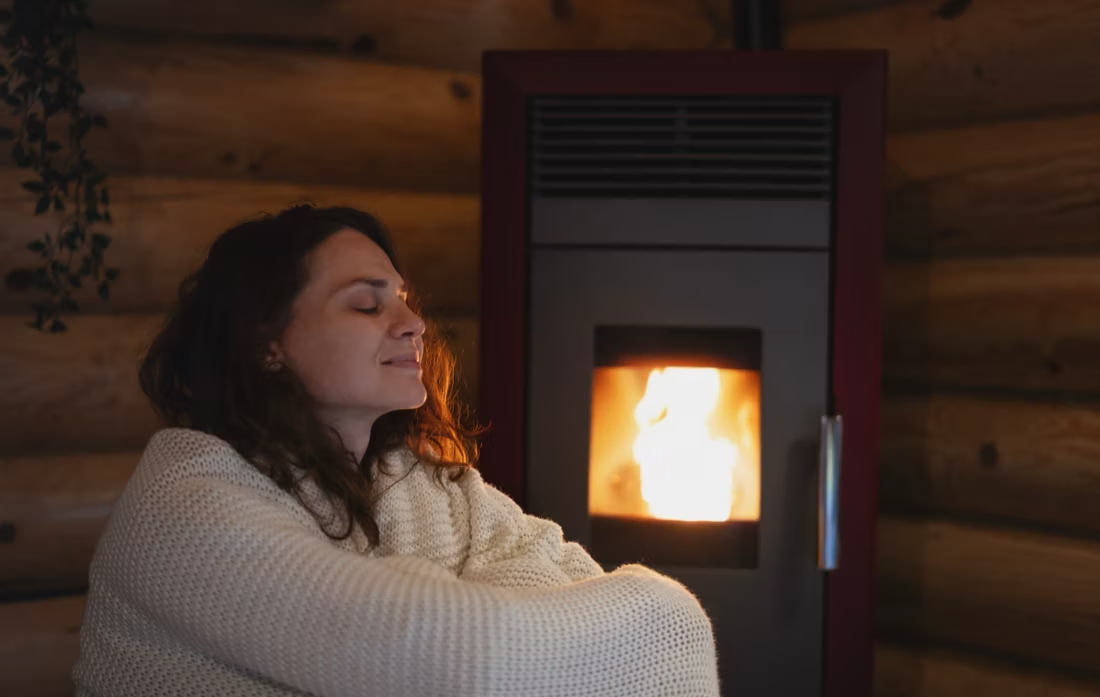
Escambia County sits at the western tip of the Florida Panhandle, in climate zone 2A, with an average winter low around 44°F and a short, mild heating season—a fraction of what a Duluth or Fargo homeowner deals with. Most homes here run central HVAC as the primary system, but pellet stoves and inserts have carved out a real niche: supplemental heat for the handful of genuinely cold nights each winter, ambiance in living rooms and dens, and backup warmth during the occasional Arctic outbreak that pushes temperatures into the 20s across the Panhandle. Homes in the more rural northern reaches of the county—Century, Molino, Cantonment—are more likely to lean on a pellet stove as a meaningful heat source than tightly built newer construction closer to Pensacola.
Because Escambia County doesn't have local wood-pellet manufacturing, most pellets sold here come from regional mills—brands like Lignetics, Hamer Pellet Fuel, and Greenway Renewable Energy are common on shelves at feed stores and hardware retailers across the county. That's a different supply chain than firewood, where local oak, mahogany, and pine are cut and split close to home. Pellet stoves trade the ritual of a wood fire for thermostat-level control, easy hopper loading, and clean, consistent combustion—appealing for homeowners who want fireplace ambiance without chainsaws, cutting permits, or ash buildup. The tradeoff worth knowing up front: pellet stoves need household electricity to run the auger and blower, which matters in a hurricane-prone county where storm-season outages are a real planning consideration.
Three steps. No salesperson until you're ready.
Tell us about your project
Your zip code, your situation, and the fuel you're leaning toward—or let the answers point you to one.
See what's actually available
The brands dealers within 100 miles genuinely carry—real options, never a catalog mirage.
Get your dealer & Project Guide
A trusted local dealer, plus the free Project Guide & Parts List that names every component of the job.
Frequently Asked Questions
How much does a pellet stove installation cost in Escambia County?
Most pellet stove installations in Escambia County run in the $3,000 to $6,000 range, on the lower end nationally, largely because homes here rarely need a large-capacity unit given the mild climate. A freestanding pellet stove venting through an exterior wall with a short pellet-vent pipe run is typically the most affordable configuration. Costs move higher if you're converting an existing wood-burning fireplace into a pellet insert, which requires a liner kit sized for pellet venting rather than a standard chimney flue. A local retailer can give you a firm number after seeing your home and existing venting situation.
What size pellet stove do I actually need in Escambia County?
Smaller than you might think. With a short, mild heating season and winter lows that average in the mid-40s, most Escambia County homes are well served by a small to mid-size pellet stove used for supplemental heat in a main living area rather than whole-house heating. A unit rated for 1,000 to 1,500 square feet covers most living rooms and open-concept spaces in Pensacola, Cantonment, or Warrington. Homes in Century or Molino that lean on the stove more heavily during cold snaps, or that have larger, older, less-insulated floor plans, may do better with a mid-size unit rated closer to 2,000 square feet. Oversizing wastes money and can leave a pellet stove cycling on and off inefficiently in a climate this mild—a local dealer's in-home assessment is worth doing before you buy.
Where can I find a certified pellet stove installer near me?
Look for installers with NFI (National Fireplace Institute) certification, and confirm they're comfortable with pellet-specific venting—it's a different system than a masonry chimney or Class A wood-stove pipe. Pellet stoves vent through smaller-diameter pipe and can often run horizontally through an exterior wall, which is convenient for slab-built homes common throughout Pensacola and the surrounding county, but it still has to be sized and sealed correctly. The hearth retailers serving Escambia County handle both the stove sale and the installation, which keeps warranty coverage and code compliance under one roof rather than splitting the job between a big-box purchase and a separate handyman install.
What's the difference between a pellet stove and a pellet insert?
A pellet stove is a freestanding unit that sits on its own hearth pad and vents through an exterior wall or existing chimney—it can go almost anywhere with the right clearances. A pellet insert is built to slide into an existing masonry fireplace opening, which is a common upgrade path for older Pensacola-area homes with a wood fireplace that rarely gets used. The insert seals off the drafty open firebox and uses a pellet-rated liner inside the existing chimney, turning an inefficient fireplace into a controllable heat source. For homes without an existing fireplace, a freestanding stove is the more straightforward option.
Do I need a permit to install a pellet stove in Escambia County?
Yes—a building permit is standard for a new pellet stove installation, since it involves wall penetration for venting and, in most cases, a dedicated electrical circuit for the appliance. Check with your local building department (the City of Pensacola or Escambia County, depending on whether you're inside city limits) before work begins. Most established hearth retailers pull the permit as part of the installation and coordinate any electrical work needed, so you're not left managing multiple trades yourself.
What's the best pellet stove for Escambia County's climate?
Given the mild climate, most Escambia County homeowners are better served by a smaller, efficient unit than a high-output model built for sustained sub-zero cold. Look for a stove with a wide burn-rate range so it can run low and steady on the 40s-and-50s nights that make up most of the county's heating season, rather than cycling hard on and off. A model with a battery-backup option or a simple UPS pairing is worth asking about too—Gulf Coast hurricane season brings power outages that would otherwise shut a pellet stove down completely, unlike a wood stove that keeps running without electricity.
Where can I buy wood pellets in Escambia County?
Wood pellets aren't manufactured locally, so most Escambia County retailers stock bagged pellets from regional producers—Lignetics, Hamer Pellet Fuel, and Greenway Renewable Energy are commonly available at hearth shops, feed stores, and some hardware retailers across Pensacola and the surrounding county. Pricing typically runs in line with regional Southeast averages, and buying a full winter's supply in fall—before any hurricane-season shipping disruptions—is a common practice among longtime pellet-stove owners here. Your dealer can tell you which brand burns cleanest in the specific stove model you buy, since ash content varies between suppliers.
Will my pellet stove work during a hurricane power outage?
Not without backup power. Pellet stoves rely on an electric auger to feed fuel and a blower to circulate heat and exhaust, so a standard unit shuts down the moment the power does—a real consideration in a county that sees regular tropical-storm and hurricane-season outages. Some homeowners pair a pellet stove with a small battery backup or portable generator specifically to keep it running through a multi-day outage. If reliable heat during power loss is a priority for your household, it's worth discussing with a local dealer, or considering a wood-burning stove as a secondary option—wood needs no electricity at all.
Pellet vs. gas vs. wood—which fits an Escambia County home?
Gas fireplaces offer instant, thermostat-style heat with no fuel handling and are the most common choice for primary living spaces in newer Pensacola-area homes. Pellet stoves offer a similar hands-off convenience—load the hopper, set it, forget it—with a more visible flame and the option to burn a renewable fuel, but they depend on electricity to run. Wood stoves require more hands-on effort (cutting or buying cordwood, cleaning ash, sweeping the chimney) but keep working during power outages, which matters here during hurricane season. For most Escambia County homes, where heating demand is light most winters, the choice often comes down to how much hands-on involvement you want and how much you're weighing storm-season power reliability. A local retailer can walk through all three options for your specific home.
Why is a fireplace insert so efficient?
An insert does two things: it seals the chimney completely, so you stop losing air you already paid to heat, and it radiates warmth into the room through the firebox and glass. Most add a heat-exchange fan that pulls cool room air underneath, wraps it around the hot firebox, and pushes it back out warm. Your home is more efficient before you've even lit the first fire.
How often does a pellet stove need cleaning?
A clean pellet stove is a happy pellet stove. Plan on cleaning the burn pot about once a week when you're burning regularly—ash and clinkers gum up the air holes just like a pellet barbecue. Most pellet stove problems trace back to skipped cleaning that nobody explained up front. Some designs make it easy with a trapdoor burn pot: pull a lever and the gunk drops into the ash pan.
How much should I budget for a fireplace?
For an average home—covering the fireplace, the vent pipe, and basic installation—a budget between $3,900 and $5,500 gives you a lot of options across wood, gas, and pellet. By the time you add finish work, gas line, and electrical, the average complete installation lands between $5,000 and $12,000 all-in. In a remodel or new build, a good rule is to put about 2.5% of the total project cost toward the fireplace.
What is an in-home preview and do I need one?
It's a visit where a hearth professional measures your space, confirms the model you picked actually works in your home, and walks the specs—framing, gas line, venting, finish work—before anything is ordered. Some details you just can't know until you see the house. Never make a down payment without one; it's the single most-skipped step that burns buyers.
Stove and Fireplace Dealers in Escambia County
Pellet Brands Stocked Around Escambia County
Manufacturers will point you to the nearest stocking dealer.
Find your pellet stove in Escambia County.
Tell us a bit about your home in Pensacola, Cantonment, Century, or Molino, and we'll match you with a trusted local dealer and send over a free Project Guide & Parts List—a plan for your pellet stove project with the exact parts, including the vent kit, and a dealer recommendation to match.
Find Your Fireplace →