
Fireplace warmth for the mild winters of Escambia County.
Wood, gas, pellet, and electric fireplace resources for every city and community in Escambia County—from Pensacola to Century. Find the right unit and connect with a trusted local hearth retailer.
Every Project Starts From One of These Five Situations
Coastal Florida heating, on its own terms.
Escambia County anchors Florida's western Panhandle, home to Pensacola and roughly 580,000 residents along Pensacola Bay and the Gulf. This is climate zone 2A—hot, humid, and mild in winter, with an average low near 44°F and only about 1,300 heating degree days a year, a fraction of what a city like Fargo, ND sees in a single season. But mild doesn't mean absent: Gulf cold fronts push temperatures into the 20s and 30s several times most winters, and plenty of homeowners here run a fireplace for those snaps, for holiday atmosphere, and for the ambiance that coastal living calls for year-round. Local oak, pine, and mahogany are the wood species people actually burn, and with no air quality non-attainment issues or winter inversion concerns in this county, there's no burn-ban culture limiting wood heat the way there is in the western basins.
What you'll find on this hub: hearth retailers, service technicians, and fuel suppliers serving every community in the county—from downtown Pensacola and Pensacola Beach out to Cantonment, Century, Molino, Gonzalez, Beulah, Ferry Pass, Warrington, and Myrtle Grove. Pick your fuel below to drill into specifics—local dealers, installation costs, recommended units, and the resources that match your project. Whether you're finishing a bayfront home or adding warmth to a place near Century up by the Alabama line, this is the starting point.
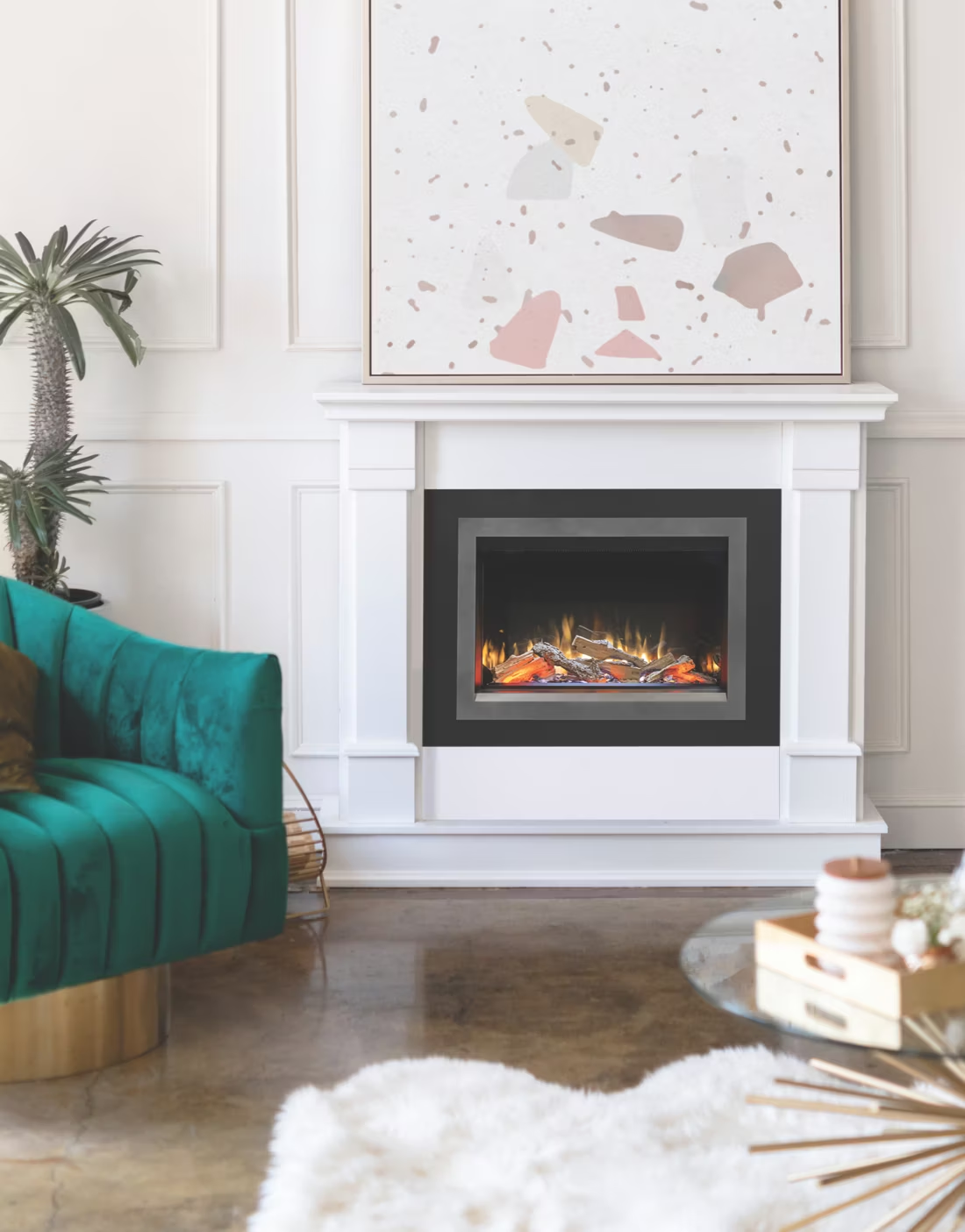
Four fuels. One honest answer for Escambia County.
Three steps. No salesperson until you're ready.
Tell us about your project
Your zip code, your situation, and the fuel you're leaning toward—or let the answers point you to one.
See what's actually available
The brands dealers within 100 miles genuinely carry—real options, never a catalog mirage.
Get your dealer & Project Guide
A trusted local dealer, plus the free Project Guide & Parts List that names every component of the job.
Frequently Asked Questions
Which fuel works best in Escambia County?
With only about 1,300 heating degree days and winter lows averaging 44°F, Escambia County isn't a primary-heat climate the way International Falls, MN or Bismarck, ND are—but that doesn't mean fireplaces sit unused. Gas is the popular choice for Pensacola-area homeowners who want instant, on-demand warmth during Gulf cold fronts without babysitting a fire—natural gas is available through Pensacola Energy in much of the city, with propane filling in for county homes outside the service area. Wood remains genuinely popular for ambiance and holiday-season use, and local oak and pine burn cleanly and are easy to source. Pellet stoves work well here too, especially with regional supply from Lignetics and Hamer Pellet Fuel keeping fuel available without a woodpile. Electric fireplaces are a strong fit for condos along Pensacola Beach and homes where a chimney isn't practical—plug-in warmth for the handful of genuinely cold nights each winter.
Do I need a permit to install a fireplace in Escambia County?
Generally, yes. New wood stoves, wood inserts, gas fireplaces, gas inserts, gas stoves, and pellet stoves typically require a building permit through Escambia County Building Inspections, or through the City of Pensacola's permitting office if the home sits within city limits. Gas installations also need a separate gas permit and licensed gas-fitter for the line connection—this matters for both natural gas hookups through Pensacola Energy and propane conversions. Electric fireplaces usually skip the permit process unless the install involves hardwiring or a new dedicated circuit. Most local hearth retailers pull permits as part of the installation, so homeowners typically aren't filing paperwork themselves.
Are there air quality or burn restrictions in Escambia County?
No—Escambia County has no winter inversion issues, no non-attainment designation, and no seasonal burn curtailment program, unlike wood-heavy basins in the West. That means homeowners here can generally burn oak, pine, or mahogany without the yellow/red advisory days that limit wood use elsewhere. New wood stove installs still need to meet current EPA emissions standards nationwide, but there's no local overlay of extra restrictions layered on top—one less thing to plan around if wood heat is what you want.
Can one local hearth retailer handle all four fuel types?
Several Pensacola-area hearth retailers carry three or more fuel types, which is useful if you're cross-shopping before deciding. A dealer that stocks wood, gas, and electric side by side can show you working displays and talk through trade-offs for a bayfront condo versus a house out toward Cantonment. Fewer dealers carry deep pellet-stove selection, since pellet demand is lighter in a mild-winter county like this one, but the regional supply chain—Lignetics, Hamer Pellet Fuel, Greenway Renewable Energy—keeps it a viable option if that's the direction you want to go. The county + fuel pages above break down exactly which local retailers carry which fuel.
How does service work in the outlying parts of Escambia County?
Most service technicians are based in or near Pensacola and travel out to Cantonment, Century, Molino, and Gonzalez for chimney sweeps, gas inspections, and pellet stove cleaning. Because the winter heating season here is short and mild compared to a place like Burlington, VT, service scheduling is generally easier—there's less of a rush-before-first-frost crunch. Expect a modest travel fee for the farther-out communities near the Alabama line, and it's still worth booking your annual chimney sweep or gas inspection in early fall before the handful of cold-front weeks hit.
What's the typical cost range for fireplace installation across all fuel types in Escambia County?
Costs vary by fuel and by how much venting or gas line work is involved. Wood stove or insert installation: roughly $4,000–$8,500 for a typical retrofit, more if new chimney construction is required. Gas fireplace, insert, or stove: roughly $4,000–$10,000 depending on whether a new gas line is needed or existing Pensacola Energy or propane service is already in place. Pellet stove or insert: roughly $4,000–$7,000 for a standard install. Electric fireplace: $200–$3,000 for the unit itself, plus $400–$1,200 in labor for anything beyond a simple plug-and-play wall unit. The county + fuel pages above break these down further with local retailer pricing.
Can a fireplace actually lower my heating bill?
Yes—by creating a comfort zone. A furnace heats every square foot of the house just to warm the one room you're in; a gas fireplace on low burns roughly a sixth of the gas a typical furnace does. Set the furnace around 55–60 degrees as a baseline, then heat the rooms your family actually uses. Families who heat this way commonly save $20–$60 a month.
How much should I budget for a fireplace?
For an average home—covering the fireplace, the vent pipe, and basic installation—a budget between $3,900 and $5,500 gives you a lot of options across wood, gas, and pellet. By the time you add finish work, gas line, and electrical, the average complete installation lands between $5,000 and $12,000 all-in. In a remodel or new build, a good rule is to put about 2.5% of the total project cost toward the fireplace.
Does a fireplace add value to my home?
On average, a fireplace adds back to the home about the same amount you spent installing it. Add the monthly savings from heating the rooms you actually use instead of the whole house—often hundreds of dollars a year—and the value case is strong before you even count what a fire does for how your family uses the room.
What are the biggest mistakes people make buying a fireplace?
Five come up constantly: budgeting for the unit but not the full job (vent, gas line, electrical, finish work); drowning in options instead of starting from style and fuel; buying without an in-home preview; handing installation to a handyman instead of a pro; and giving up out of sheer indecision. Every one is avoidable with a clear plan—step one, step two, step three.
Stove and Fireplace Dealers in Escambia County
Listings include WhyFire partner dealers, dealers we have verified as authorized for the brands we recommend, and established local businesses that carry hearth products. Every listing shows which one it is. The ones marked Preferred run on WhyFire's software, so they can show you real pricing and book your appointment right here. No manufacturer pays for placement. How we verify dealers →
Fireplace Concepts, Inc
Hood's Discount Home Center
Patio Specialists
Coastal Insulation - Ft. Walton Beach
Street'S Exquisite Plants
Find your fireplace in Escambia County.
Pick your fuel below and I'll match you with a trusted local hearth retailer and send over a free Project Guide & Parts List—the exact parts, vent kit included, and the dealer I'd recommend for your home. ,
Find Your Fireplace →