
Is a pellet stove even worth it in East Lake?
With just 589 heating degree days and winter lows averaging 51°F, pellet heat isn't a Pinellas County staple—but for the right home, it can still make sense. Here's the honest read, and a path to a trusted local dealer if you want one.
Every Project Starts From One of These Five Situations
Pellet stoves are uncommon here—and that's not a mistake on your part.
East Lake sits at just 11 feet of elevation on the Gulf Coast side of Pinellas County, in climate zone 2A, where winter lows average 51°F and the whole heating season adds up to only about 589 heating degree days—a fraction of what a place like Duluth, MN or Burlington, VT racks up in a single cold month. That's the core reason pellet stoves rate as not-applicable for this area: there simply isn't enough sustained cold to justify a standing-load pellet appliance as a heat source the way there would be in the upper Midwest or interior mountain West.
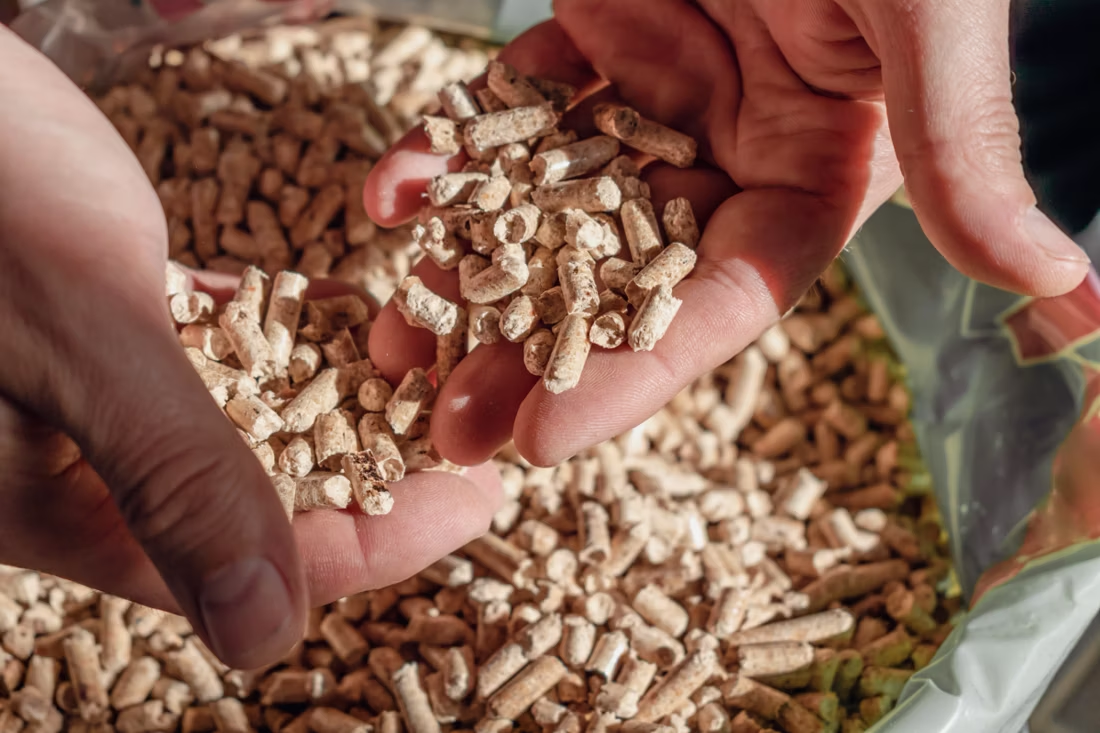
That said, a small number of East Lake homeowners still install pellet stoves—usually for ambient evening use on the rare cold front, as a design feature in a den or lanai-adjacent room, or because they split time with a second home up north and want the same look here. If that's you, regional suppliers like Lignetics, Hamer Pellet Fuel, and Greenway Renewable Energy do distribute pellets into the Tampa Bay area, so fuel isn't the obstacle—it's more a question of whether the appliance earns its keep in a home that rarely needs supplemental heat at all. Gas and electric options are far more common local choices for anyone whose main goal is reliable heat rather than ambiance.
Three steps. No salesperson until you're ready.
Tell us about your project
Your zip code, your situation, and the fuel you're leaning toward—or let the answers point you to one.
See what's actually available
The brands dealers within 100 miles genuinely carry—real options, never a catalog mirage.
Get your dealer & Project Guide
A trusted local dealer, plus the free Project Guide & Parts List that names every component of the job.
Frequently Asked Questions
Are pellet stoves actually used in East Lake, FL?
Rarely as a primary or even meaningful supplemental heat source. With winter lows averaging 51°F and only about 589 heating degree days per year, most East Lake homes never need sustained heating the way a stove is designed to provide. The homeowners who do install one are typically after the visual and ambient appeal of a real flame on the handful of nights each winter that dip into the 30s or 40s, not a heating solution. If your main goal is warmth, a gas or electric fireplace is a far more common and cost-effective choice in this climate.
If I still want one, what does installation cost in East Lake?
Pellet stove installs typically run $4,500 to $7,500 in most parts of Florida, depending on the unit and whether venting needs to be run through an exterior wall—East Lake homes rarely have an existing chimney to retrofit, so most installs are new through-wall venting rather than a conversion. Because pellet appliances aren't a common request locally, expect fewer dealers stocking them compared to gas or electric units, and budget extra lead time for special ordering the stove and hopper components.
Where do pellets come from if I install a stove here?
You won't be growing or milling pellets locally, but you also won't be stranded—regional suppliers including Lignetics, Hamer Pellet Fuel, and Greenway Renewable Energy distribute bagged pellets throughout the Tampa Bay area, typically sold through hardware stores, farm supply retailers, and some hearth dealers. Because pellet stoves are uncommon in Pinellas County, don't expect the pellet aisle at every big-box store—a local hearth dealer can point you to the most reliable regional source and help you figure out how many bags you'd realistically burn through a mild East Lake winter.
Why is pellet heat considered not applicable for a climate like this?
It comes down to the numbers: East Lake's climate zone (2A) and heating degree day total (589) put it firmly in cooling-dominated territory, not heating territory. A pellet stove's core advantage—a hopper-fed, thermostatically controlled, long-burning heat source—is built for climates where a home needs heat for months at a stretch, like the upper Midwest or Mountain West. In East Lake, the AC runs far more than any heating appliance ever would, so the economics and daily usefulness of a pellet stove just don't pencil out the way they would somewhere colder.
What do East Lake homeowners install instead of a pellet stove?
Gas fireplaces and electric fireplaces are both rated standard for this area and are the far more common choices. Gas gives you the visual of a real flame with instant on-off convenience and no fuel to store, while electric fireplaces—powered through Duke Energy Florida at a residential rate around 16.6 cents per kWh—are often the simplest retrofit for a home that just wants ambiance without any venting or fuel logistics at all. Either tends to be a better fit than a pellet stove for a Pinellas County home.
Do pellet stoves need much clearance or a chimney in a Florida home?
No traditional masonry chimney is required—pellet stoves vent through a small-diameter pipe that typically runs horizontally out an exterior wall, which actually makes them easier to retrofit into an East Lake home without an existing fireplace than a wood stove would be. The tradeoff is that you still need a dedicated 120V outlet nearby to run the auger, igniter, and blower, plus a spot to store bagged pellets—something worth planning for in a home built around Florida's compact utility and storage layouts.
Is there any cold-weather event where a pellet stove would actually help in East Lake?
Occasionally—Pinellas County does see the odd Arctic-air intrusion that drops nighttime lows into the 30s for a night or two, and a pellet stove would genuinely take the edge off a den or living room during one of those events. But those cold snaps are short and infrequent enough that most local homeowners find a portable electric heater or their existing HVAC system covers the need just fine, without the cost and footprint of a dedicated pellet appliance sized for a climate it wasn't really made for.
Can I find a local dealer who installs pellet stoves in East Lake?
Yes, though the pool is smaller than it would be for gas or electric fireplaces, simply because demand is lower in a 2A climate. A trusted local dealer can tell you honestly whether a pellet stove makes sense for your specific home and usage goals, help you avoid an oversized unit that will rarely get used, and make sure venting and electrical are done to code. That honest conversation is worth having before you commit to an appliance that Florida's climate doesn't naturally call for.
Pellet vs. gas vs. electric—what's actually right for an East Lake home?
Given the climate here, gas and electric fireplaces are the practical front-runners: gas delivers real flame and instant heat without fuel storage, and electric is the simplest install with no venting at all, running on Duke Energy Florida service. Pellet stoves require sourcing bagged fuel from regional suppliers, dedicated storage space, and routine hopper-filling—a lot of upkeep for a climate that only occasionally asks for supplemental heat. If ambiance and a live flame matter most to you, gas is usually the better-suited choice locally; pellet only makes sense if you specifically want that appliance type for reasons beyond heating performance.
How often does a pellet stove need cleaning?
A clean pellet stove is a happy pellet stove. Plan on cleaning the burn pot about once a week when you're burning regularly—ash and clinkers gum up the air holes just like a pellet barbecue. Most pellet stove problems trace back to skipped cleaning that nobody explained up front. Some designs make it easy with a trapdoor burn pot: pull a lever and the gunk drops into the ash pan.
What's the difference between an insert and a zero-clearance fireplace?
An insert is a fireplace that slides into a pre-existing wood-burning fireplace—if you don't have one, there's nothing to insert it into. A zero-clearance fireplace is built into a framed wall, which makes it the answer for remodels and new construction. Simple test: existing masonry fireplace means insert; blank or framed wall means zero-clearance.
Can I install a fireplace myself?
If you're putting a fire in your house on purpose, it's best to work with an expert. Unless you're genuinely experienced in framing, gas line, vent pipe, and the national code on clearances to combustibles, have a professional do it—and ideally the same company that sells you the fireplace, so warranty, service, and liability all live under one roof.
Can a fireplace actually lower my heating bill?
Yes—by creating a comfort zone. A furnace heats every square foot of the house just to warm the one room you're in; a gas fireplace on low burns roughly a sixth of the gas a typical furnace does. Set the furnace around 55–60 degrees as a baseline, then heat the rooms your family actually uses. Families who heat this way commonly save $20–$60 a month.
Nearby Dealers
Hearth shops serving East Lake and the surrounding area.
Urban Concepts Modern Hearth & Outdoor
Urban Concepts Modern Patio And Fireplace
Pellet Brands Stocked Around East Lake
Manufacturers will point you to the nearest stocking dealer.
Get the honest answer for your East Lake home.
Tell us about your space and goals and we'll match you with a trusted local dealer, plus a free Project Guide & Parts List—whether that ends up being a pellet stove, or something better suited to Pinellas County's climate.
Find Your Fireplace →