
Fireplace ambiance, built for Florida living.
With winter lows averaging 51°F, East Lake doesn't need a furnace substitute—it needs a fireplace that looks and feels real without a chimney, gas line, or venting. Find the right unit and get matched with a trusted local dealer.
Every Project Starts From One of These Five Situations
Heat is optional here. Ambiance isn't.
East Lake sits in Pinellas County on Florida's Gulf Coast at just 11 feet of elevation, in climate zone 2A. The area has an extremely light, short winter heating season—compare that to a place like Duluth, MN, which faces a long, brutal heating season, and it's clear why wood stoves and pellet stoves are essentially absent from the local hearth market here. There's no cutting-permit culture, no cordwood suppliers, and very little demand for a heat source built for sub-zero nights that East Lake rarely if ever sees.
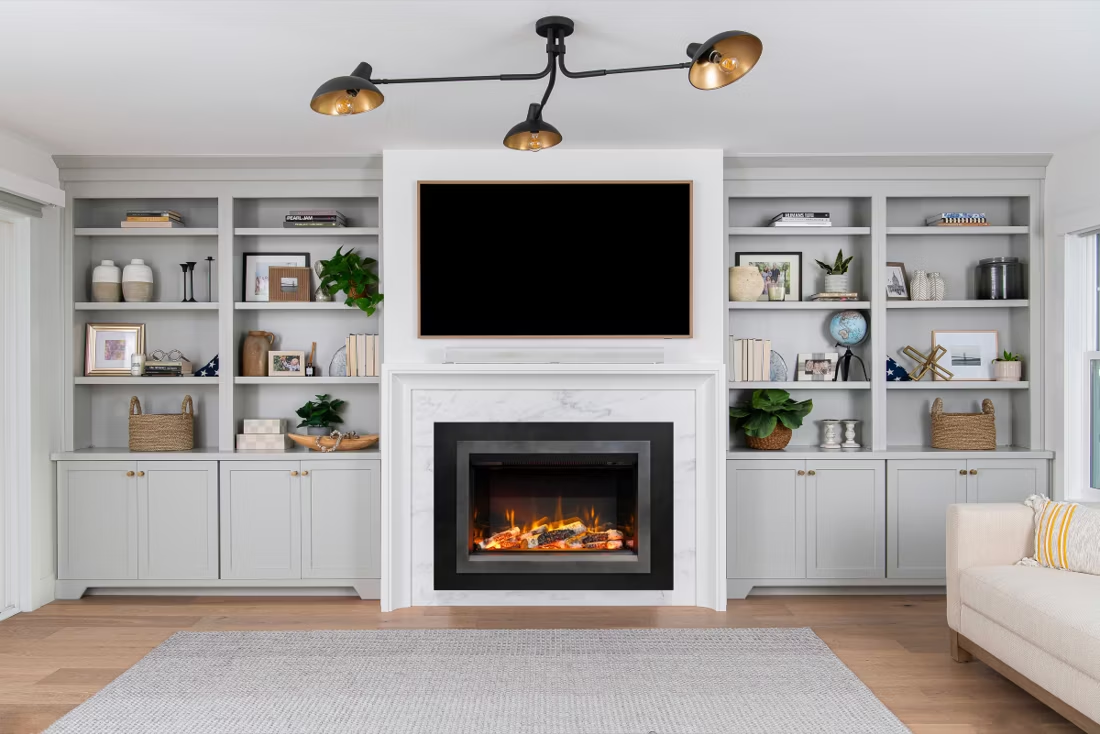
That's exactly why electric fireplaces fit so well in Pinellas County. They deliver the flame-effect and glow homeowners want in a family room or primary suite without any combustion, venting, or gas line—which matters in a market built almost entirely on concrete block and stucco (CBS) construction, where retrofitting a chimney chase is impractical and rarely worth it. Duke Energy Florida serves East Lake at roughly 16.6 cents per kWh, so running a unit a few evenings a week costs pennies, and most installs skip the permitting complexity that comes with wood or gas altogether.
Three steps. No salesperson until you're ready.
Tell us about your project
Your zip code, your situation, and the fuel you're leaning toward—or let the answers point you to one.
See what's actually available
The brands dealers within 100 miles genuinely carry—real options, never a catalog mirage.
Get your dealer & Project Guide
A trusted local dealer, plus the free Project Guide & Parts List that names every component of the job.
Frequently Asked Questions
How much does an electric fireplace installation cost in East Lake?
Plug-in electric fireplace inserts and stand-alone units start around $300–$800 and require no professional installation beyond finding an outlet. Built-in or wall-mounted units that get wired into a dedicated 120V or 240V circuit typically run $1,200–$3,000 installed, including trim kits and any minor framing or drywall work. Because there's no venting, gas line, or chimney involved, electric installs in East Lake are consistently the fastest and least disruptive hearth project a local dealer handles—often a single day.
Will an electric fireplace actually heat my East Lake home?
Most models put out around 4,600–5,000 BTUs, roughly equivalent to a space heater, which is genuinely useful supplemental warmth on the handful of nights each winter when East Lake dips into the 30s or 40s. But with such a light, short winter heating season overall, nobody in Pinellas County is buying an electric fireplace to carry whole-home heat load the way a homeowner in Bismarck, ND might. Here, the heat function is a nice bonus on cool evenings—the flame effect and ambiance are the actual draw, and units run fine with the heater switched off most of the year.
Do I need a permit to install an electric fireplace in East Lake?
A plug-in unit that draws on an existing outlet typically doesn't require a permit. If you're having a built-in or wall-mounted unit hardwired to a new dedicated circuit, that electrical work falls under Pinellas County Building Services and requires a licensed electrician and an electrical permit. There's no combustion appliance inspection involved since there's no venting or gas line—it's purely an electrical scope, which is one reason electric installs move faster than wood or gas projects locally.
Why don't more East Lake homes have wood-burning fireplaces?
Wood heat just doesn't have a functional role in this climate. With winter lows averaging 51°F and almost no sustained cold snaps, there's no meaningful heating demand to justify cordwood storage, chimney maintenance, or a masonry hearth in a CBS home. A small number of older East Lake homes still have a decorative wood-burning fireplace built decades ago, but most owners either use it a few times a winter for ambiance or convert it to gas or electric. If you inherited one and want it usable without hauling firewood, an electric log insert is the simplest retrofit.
What's the best type of electric fireplace for a Florida CBS home?
For East Lake's typical concrete-block-and-stucco construction, wall-mounted electric fireplaces and built-in linear units are the most popular choice since they don't require any masonry work—they mount to interior stud walls or get recessed into a framed niche. For homes with an existing but rarely-used masonry fireplace, an electric insert that slides into the firebox is an easy upgrade that keeps the mantel and surround intact. Freestanding electric stoves are less common here since most East Lake homes lean toward a modern, built-in look rather than a stove-style silhouette.
Electric vs. gas fireplace—which is right for my home?
Gas fireplaces are common in East Lake and deliver real, consistent heat along with a more authentic flame, but they require a gas line (propane is the standard fuel option outside natural-gas-served areas of Pinellas County) plus venting and combustion-appliance permitting. Electric fireplaces skip all of that—no gas line, no venting, lower upfront cost, and a Duke Energy Florida bill that barely moves with occasional use. For homes prioritizing ambiance, easy installation, and flexibility (electric units can go almost anywhere), electric wins. For homeowners who want fireplace heat that can genuinely take the edge off a cold snap, gas is the stronger performer.
How much does it cost to run an electric fireplace in East Lake?
At Duke Energy Florida's residential rate of about 16.6 cents per kWh, a typical 1,500-watt electric fireplace running on the heat setting costs roughly 25 cents an hour. Most East Lake homeowners run their unit primarily for the flame effect, which draws only a fraction of that—often under 50 watts—so a fireplace used for ambiance most evenings adds only a few dollars a month to the electric bill.
Can I convert an existing wood-burning fireplace to electric?
Yes—it's a common request from owners of older East Lake homes with a masonry fireplace that hasn't been used in years. An electric insert slides into the existing firebox opening and plugs into a nearby outlet or gets hardwired if you want it on its own circuit, no chimney work or masonry demolition required. It's typically the least expensive fireplace conversion available, and a local dealer can confirm your firebox dimensions will fit standard insert sizes during a quick in-home visit.
What features should I look for in an electric fireplace for a warm climate?
Since heat output matters less in East Lake than it would in a colder market, prioritize flame realism (look for models with layered LED or water-vapor flame technology), a heater you can run independently of the flame effect, and a trim kit or surround that matches your wall finish. Multi-color and adjustable-brightness flame settings are popular locally since the unit often runs flame-only, without heat, for most of the year. A trusted local dealer can walk you through which models hold up best for year-round ambiance use rather than seasonal heating.
Do electric fireplaces actually produce heat?
Yes—most put out around 4,800–5,000 BTUs from a standard outlet, which comfortably warms a bedroom, office, or den as a comfort-zone heater. What they won't do is carry a whole house the way wood, gas, or pellet can. Think of electric as ambiance-first with honest supplemental heat: flames on with no heat in July, flames plus warmth in January.
Can I put a TV above my fireplace?
Yes—with an asterisk. Fireplaces are hot and TVs don't like heat. Either put a mantel between them to deflect rising warmth, or choose a fireplace with heat-management technology that creates a cool zone on the wall above—the wall stays around 125 degrees, barely warm, while the room still gets full heat. If you like clean lines and don't want a mantel, heat management is the answer.
Can a fireplace actually lower my heating bill?
Yes—by creating a comfort zone. A furnace heats every square foot of the house just to warm the one room you're in; a gas fireplace on low burns roughly a sixth of the gas a typical furnace does. Set the furnace around 55–60 degrees as a baseline, then heat the rooms your family actually uses. Families who heat this way commonly save $20–$60 a month.
Does a fireplace add value to my home?
On average, a fireplace adds back to the home about the same amount you spent installing it. Add the monthly savings from heating the rooms you actually use instead of the whole house—often hundreds of dollars a year—and the value case is strong before you even count what a fire does for how your family uses the room.
Nearby Dealers
Hearth shops serving East Lake and the surrounding area.
Urban Concepts Modern Hearth & Outdoor
Urban Concepts Modern Patio And Fireplace
Electric Service in East Lake
An electric fireplace's heater draws about 1,500 watts—pennies per hour at local rates.
Duke Energy Florida, LLC
Find your electric fireplace in East Lake.
Tell us a bit about your home and we'll match you with a trusted local East Lake dealer and send over a free Project Guide & Parts List—the exact fireplace, mounting or insert kit, and installation plan for your space.
Find Your Fireplace →