
Gas fireplaces built for Country Club's subtropical winters.
With winter lows averaging 59°F and one of the lightest heating seasons in the country, nobody in Country Club is heating a house with a fireplace. But gas still has a real job to do here—ambiance, home value, and a flame that works when Florida Power & Light doesn't. Find the right unit and connect with a trusted local dealer.
Every Project Starts From One of These Five Situations
A fireplace for ambiance, not survival heat.
Country Club sits at 6 feet of elevation in unincorporated Miami-Dade County, in Climate Zone 1A—hot and humid nearly year-round. To put its barely-there heating needs in perspective, a place like Fargo, ND faces a winter heating season more than 70 times as demanding. Wood stoves and pellet stoves simply don't have a role here, and most homes in this stretch of the 33015/33017 corridor were built without a masonry fireplace at all, since wood heat was never part of South Florida's construction tradition.
Gas is different. It shows up here for the look and feel of a real flame in a family room, for resale value in a competitive Miami-Dade housing market, and—increasingly—as a backup during hurricane season, when FPL outages can stretch for days after a storm. Piped natural gas isn't universal in this part of unincorporated Miami-Dade, so most gas fireplace installs here run on propane from a small residential tank rather than a municipal gas line. Either way, a properly vented gas unit gives Country Club homeowners real flame and real heat on the rare January cold snap, without waiting on the grid to come back.
Three steps. No salesperson until you're ready.
Tell us about your project
Your zip code, your situation, and the fuel you're leaning toward—or let the answers point you to one.
See what's actually available
The brands dealers within 100 miles genuinely carry—real options, never a catalog mirage.
Get your dealer & Project Guide
A trusted local dealer, plus the free Project Guide & Parts List that names every component of the job.
Frequently Asked Questions
How much does a gas fireplace installation cost in Country Club?
A simple gas log set or vent-free insert into an existing decorative firebox typically runs $1,500 to $3,000. A full direct-vent gas fireplace or insert—including a new propane tank setup, gas line run, and venting through a CBS (concrete block stucco) wall—usually lands between $3,500 and $8,000, depending on the unit and how much gas line work is needed. Because most Country Club homes don't have an existing masonry chimney, the venting path (and whether it needs a roof or wall penetration) is usually the biggest cost swing. A local dealer will give you a firm number after seeing the room.
Do I need natural gas, or is propane the standard here?
Propane is the more common answer in Country Club. Piped natural gas service doesn't reach every block of unincorporated Miami-Dade the way it does in older, denser parts of the county, so most gas fireplace installs here run on a propane tank set outside the home. If your street does have gas service already—for a range or water heater—a fireplace can usually tie into that existing line, which simplifies things. Your local dealer will check what's actually available at your address before recommending a fuel source.
My home doesn't have a fireplace at all—can I still add gas?
Yes, and it's a common project in Country Club, since many homes built from the 1960s through the 1990s never included a wood-burning fireplace in the first place. A built-in direct-vent gas fireplace can be framed into a family room or primary bedroom wall, with venting run out through the CBS exterior wall or roof. Because you're not retrofitting an existing chimney, the installer has more flexibility in where the unit goes—the main constraints are the wall cavity depth and a clear path for the vent termination, which needs to clear windows and property lines per code.
Will a gas fireplace work during a hurricane power outage?
This is one of the main reasons Country Club homeowners install gas at all. Units with IPI (intermittent pilot ignition) run on a small battery backup and will light on demand even with the power out—worth checking that the batteries are fresh before June, not after a storm's already rolling in. Valor fireplaces take it a step further: their pilot assembly generates its own electricity through the thermocouple, so there's no battery to remember at all. After a storm knocks out FPL service for days, a gas fireplace on propane can be one of the few reliable sources of light and warmth in the house—ask your local dealer specifically about the ignition system on any unit you're considering.
What's the difference between a gas fireplace, insert, and stove for a home like mine?
A gas fireplace is a built-in unit framed into a wall—the standard choice for Country Club homes since most don't have an existing fireplace opening. A gas insert is built to slide into an existing masonry firebox, which is less common here but does show up in the older custom-built homes near Miami Lakes that were constructed with a decorative fireplace. A gas stove is a freestanding cabinet-style unit that sits on the floor—an option worth considering if you want the flexibility to place it without framing a full wall unit. For most Country Club households, a built-in direct-vent fireplace is the simplest path.
Do I need a permit to install a gas fireplace in Country Club?
Yes. Since Country Club is unincorporated, permitting runs through Miami-Dade County's Regulatory and Economic Resources (RER) department rather than a city building office, and you'll need both a building permit and a licensed gas-fitter for any propane or gas line work. Because Miami-Dade is a High-Velocity Hurricane Zone (HVHZ), venting components for a direct-vent unit need to carry a Notice of Acceptance (NOA) rating—not every manufacturer's vent kit is approved for use here, so this is worth confirming before you fall in love with a particular model. A local dealer familiar with HVHZ rules will know which units and vent kits already carry the approval.
Vented vs. vent-free gas fireplaces—what makes sense in Country Club?
Vent-free (ventless) gas fireplaces and log sets are legal in Florida and popular in South Florida homes precisely because they skip the venting question entirely—no wall or roof penetration needed, which matters in a CBS home. They do release combustion byproducts into the room, so they're restricted to spaces above a minimum size and typically include an oxygen depletion sensor. Vented direct-vent units cost more to install because of the venting and HVHZ-approved components, but they deliver more consistent heat and don't put any moisture or combustion gas into the living space—a real consideration in Miami-Dade's already-humid air. Most local dealers carry both and can walk you through the tradeoff for your specific room.
How often should a gas fireplace be serviced in a coastal climate like this?
Plan on an annual inspection, same as anywhere—but South Florida's salt air and year-round humidity make it more important here than in drier climates. A technician should check the burner, pilot assembly, and any exterior venting or propane tank fittings for corrosion, not just soot. Homes closer to the coast see faster wear on metal components than inland properties. Expect to pay in the same general range as anywhere else in the country for an annual check—the bigger issue in Country Club is not skipping it, since corrosion problems progress quietly in this climate.
Gas vs. electric fireplace—which makes more sense for a Country Club home?
Electric fireplaces plug into a standard outlet, need no venting or gas line at all, and are the simplest retrofit into an existing wall or media console—a real advantage in a CBS home where running gas line or venting adds cost. At Florida Power & Light's residential rate of about 13.7 cents per kWh, running one is inexpensive for occasional evening use. Gas delivers a larger, more realistic flame and genuine heat output, plus the hurricane-season advantage of working without grid power on a propane tank. For a primary living space where you want real ambiance and storm-season backup, gas usually wins; for a bedroom or secondary room where you mainly want the visual, electric is often the easier and cheaper install.
Why is my open fireplace making my house colder?
Open fireplaces suck—literally. As the fire burns, it consumes air your furnace already paid to heat and pulls it out through the chimney, so the house is actually colder after the fire goes out than before you lit it. An insert fixes this: it seals the chimney, puts fixed glass across the front, and turns that hole in your house into a real heat source.
Can I put a TV above my fireplace?
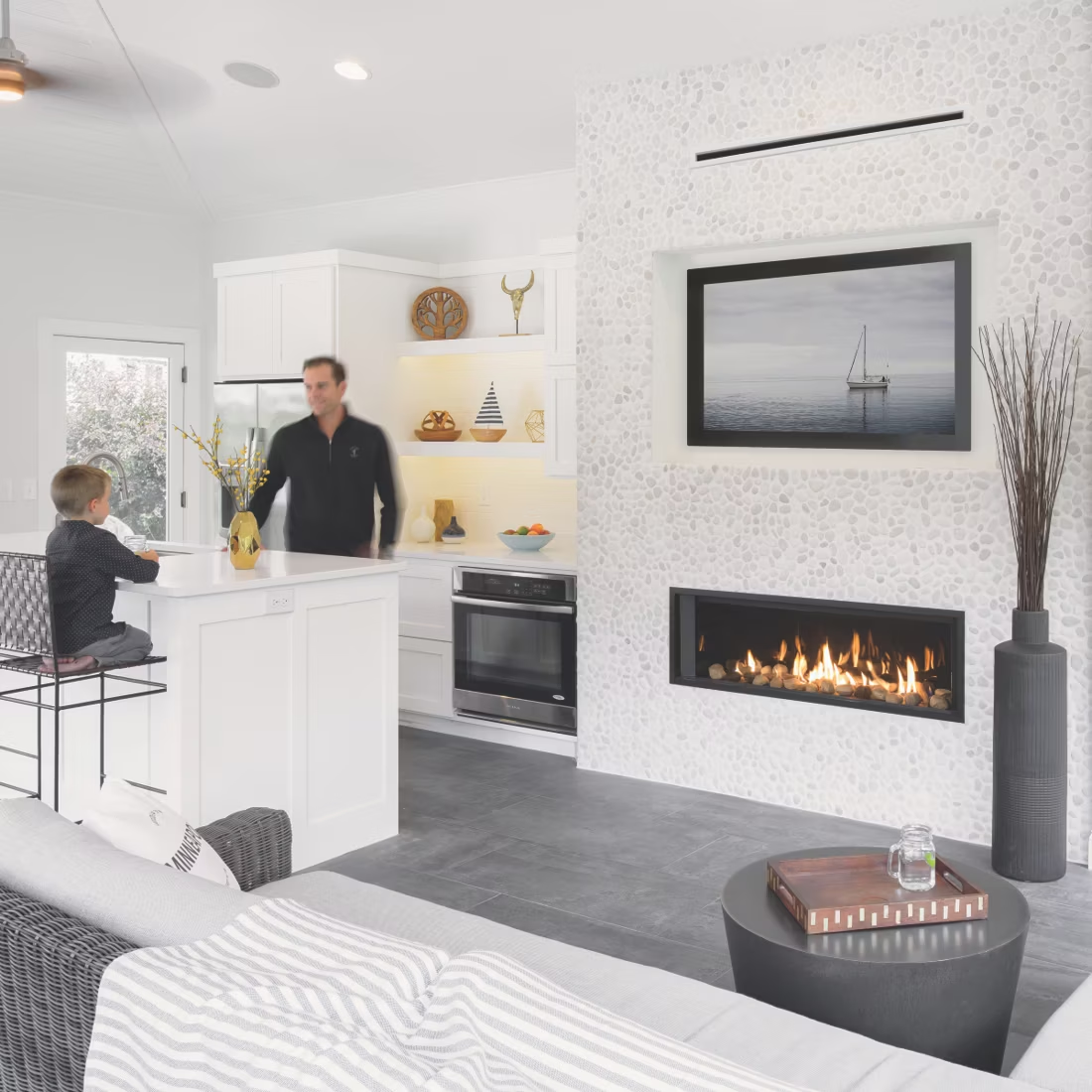
Yes—with an asterisk. Fireplaces are hot and TVs don't like heat. Either put a mantel between them to deflect rising warmth, or choose a fireplace with heat-management technology that creates a cool zone on the wall above—the wall stays around 125 degrees, barely warm, while the room still gets full heat. If you like clean lines and don't want a mantel, heat management is the answer.
What is an in-home preview and do I need one?
It's a visit where a hearth professional measures your space, confirms the model you picked actually works in your home, and walks the specs—framing, gas line, venting, finish work—before anything is ordered. Some details you just can't know until you see the house. Never make a down payment without one; it's the single most-skipped step that burns buyers.
Can a fireplace actually lower my heating bill?
Yes—by creating a comfort zone. A furnace heats every square foot of the house just to warm the one room you're in; a gas fireplace on low burns roughly a sixth of the gas a typical furnace does. Set the furnace around 55–60 degrees as a baseline, then heat the rooms your family actually uses. Families who heat this way commonly save $20–$60 a month.
Nearby Dealers
Hearth shops serving Country Club and the surrounding area.
Find your gas fireplace in Country Club.
Tell us a bit about your home and we'll match you with a trusted local dealer and send over a free Project Guide & Parts List—the exact parts, including the vent kit, for your gas fireplace project in Country Club.
Find Your Fireplace →