
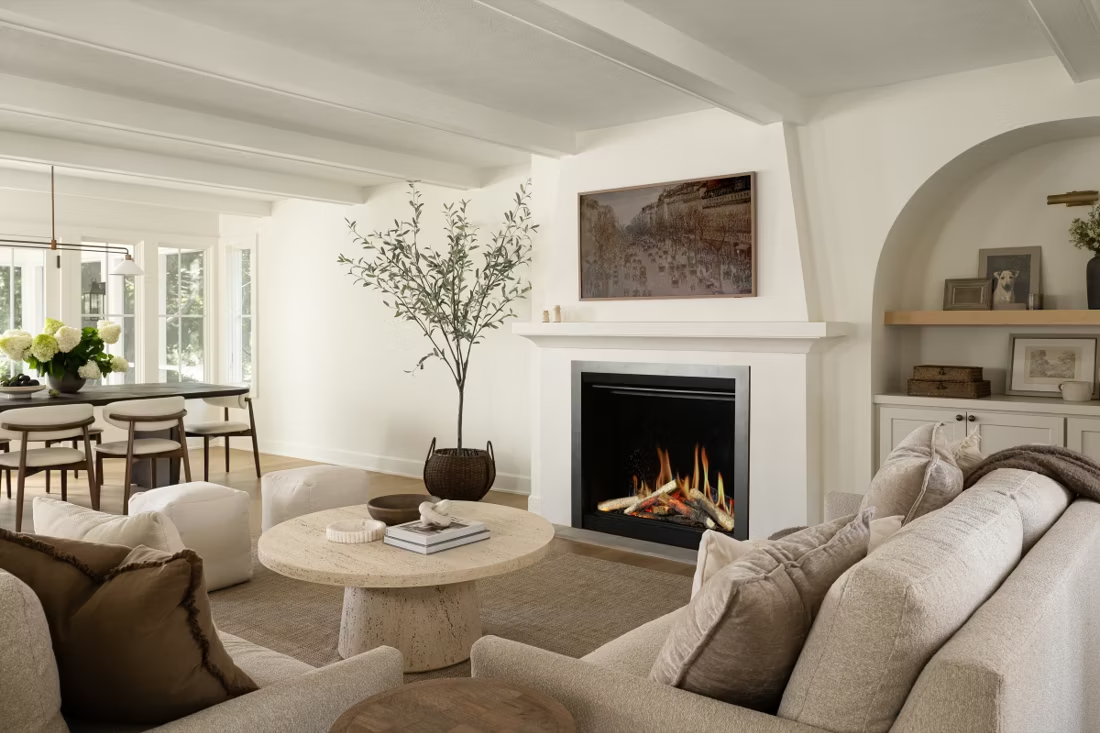
The look of fire, without the need for heat, in Country Club.
Country Club winters average a low of 59°F, so nobody here needs a fireplace to survive January. Electric units deliver the flame effect and the focal-wall glow, and we'll match you with a trusted local dealer who installs it right.
Every Project Starts From One of These Five Situations
In Country Club, ambiance is the point—not survival heat.
Country Club sits in unincorporated northwest Miami-Dade near Miami Lakes and Hialeah, at 6 feet of elevation in climate zone 1A. With only about 122 heating degree days a year—compared to a place like Duluth, MN, which racks up over 9,000—nobody here is choosing a fireplace to keep from freezing. Wood stoves and pellet stoves are essentially nonexistent in this housing stock for good reason: there's no cold to burn against, no chimney tradition, and no cutting permits to speak of. Electric is a different story, because it was never about BTUs in the first place.
Across the mix of 1970s-80s single-family ranch homes and the townhome and condo communities that make up a lot of the 33015 and 33017 zips, electric fireplaces show up as design features—a focal wall in the family room, a built-in in a primary suite, a mantel piece where a real hearth was never in the plans. Florida Power & Light serves the area at roughly 13.71 cents per kWh, so running one for ambiance costs pennies an hour. No gas line, no venting, and in most HOA-governed communities around Country Club, no exterior modification to get approved—which makes electric the lowest-friction hearth option in a climate that genuinely doesn't need one.
Three steps. No salesperson until you're ready.
Tell us about your project
Your zip code, your situation, and the fuel you're leaning toward—or let the answers point you to one.
See what's actually available
The brands dealers within 100 miles genuinely carry—real options, never a catalog mirage.
Get your dealer & Project Guide
A trusted local dealer, plus the free Project Guide & Parts List that names every component of the job.
Frequently Asked Questions
How much does an electric fireplace installation cost in Country Club?
Most projects here run $300 to $3,500 depending on the unit type. A plug-in freestanding or wall-mount unit that just needs an existing outlet typically lands at $300-$800 including mounting. An electric insert dropped into an existing masonry firebox—common in the older ranch homes off NW 154th Street and around Miami Lakes—runs $800-$1,800. A built-in linear electric fireplace with a custom surround or media wall, which often requires a licensed electrician to run a dedicated 120V or 240V circuit, is the $1,500-$3,500 range. Local dealers will confirm exact pricing after seeing your wall and your existing electrical panel capacity.
Do I need a permit to install an electric fireplace in Country Club?
It depends on the install. A plug-in unit that draws from a standard outlet generally doesn't require a permit. A hardwired built-in that needs a new dedicated circuit does require an electrical permit through Miami-Dade County's permitting process, and the work has to be pulled by a licensed electrician. If you're in a townhome or condo association—common throughout the 33015 and 33017 zips—check your HOA's alteration rules too; most associations have no objection to electric units since there's no venting or exterior change involved, but wall modifications for a built-in surround sometimes need sign-off.
Does an electric fireplace actually add useful heat in Country Club?
Not usually, and that's fine. With an average winter low of 59°F and only about 122 heating degree days a year, most homeowners here run their unit on flame-only mode with the heater switched off. That said, most electric fireplaces include a built-in 1,500-watt heater for the rare nights it's genuinely useful—South Florida still sees the occasional arctic intrusion, like the January cold snap that pushed inland Miami-Dade lows into the 40s. On those nights, the heater setting can take the chill off a bedroom or den without turning on central air-conditioning-adjacent heat strips for the whole house.
What's the difference between an electric insert, a wall-mount, and a built-in electric fireplace?
An electric insert is sized to slide into an existing masonry firebox, which works well in the older single-family homes around Country Club that were built with a decorative fireplace but never a real chimney flue. A wall-mount is a slim unit hung directly on drywall like a large TV—the fastest, cheapest option and popular in condos and townhomes where wall modifications aren't practical. A built-in electric fireplace is framed into a wall or a custom media console, giving the most seamless, high-end look but requiring more carpentry and, usually, an electrician for the dedicated circuit. Which one makes sense mostly comes down to whether you have an existing firebox opening or a blank wall.
What will an electric fireplace cost to run on my FPL bill?
Florida Power & Light bills residential customers around 13.71 cents per kWh. A typical electric fireplace running flame effect only (no heater) draws under 100 watts, so it costs a fraction of a cent per hour to run. With the heater engaged at the standard 1,500-watt setting, expect roughly 21 cents per hour. Since most Country Club households only use the heater a handful of nights a year, the annual cost of running an electric fireplace here is negligible compared to the central AC bill that dominates most of the year.
Are electric fireplaces allowed in my condo or townhome community?
Almost always, yes—and that's a big part of why electric is the standard hearth choice in Country Club's condo and townhome communities. Because there's no venting, no gas line, and no chimney involved, electric units don't trigger the exterior-modification restrictions that many HOAs enforce. Wall-mounted and freestanding models need no association approval at all in most cases. If you're planning a built-in surround that changes the look of a shared or exterior wall, it's still worth a quick check with your association's architectural review committee, but the fireplace itself is rarely the issue.
Should I consider a gas fireplace instead, since I'm in Miami-Dade anyway?
Some newer construction in the broader Miami Lakes and Hialeah area does include gas fireplaces, since natural gas and propane service exist in parts of Miami-Dade—but for most Country Club homes, adding a gas line, venting, and a licensed gas-fitter for a feature that's used purely for looks is a lot of infrastructure for very little payoff. Electric skips all of that: no gas line, no venting path to engineer, no annual gas appliance inspection. Unless you specifically want the sound and heat signature of a real gas flame, electric gets you the visual effect for a fraction of the installation cost and complexity.
Why don't wood or pellet stoves show up in Country Club at all?
With only 122 heating degree days a year and winter lows averaging 59°F, there's simply no heating load to justify a wood or pellet stove here—they're built for climates where you need to hold a house at temperature overnight, not take the edge off a rare 45-degree morning. Miami-Dade also doesn't have the Forest Service cutting permits, cured-firewood supply chain, or pellet distribution that make wood heat practical in colder regions. Homeowners who love the look of a real wood fire but live in Country Club almost always land on an electric unit with a realistic LED log set instead—same visual, none of the venting or fuel logistics.
Which electric fireplace looks the most realistic?
Look for models with layered LED flame technology and a real log or ember bed set rather than the older single-strip LED bar units—Dimplex's Opti-myst and multi-fire models and Napoleon's Allure series are common choices local dealers carry, and both use a more convincing, textured flame movement than budget units. For a built-in media wall look, a linear unit with a black glass frame reads more like a modern gas fireplace than a traditional electric insert. Because there's no real fire or heat requirement driving the decision in Country Club, picking a unit mostly comes down to how the flame looks in person—worth seeing a floor model at a local dealer before buying anything online.
Can I put a TV above my fireplace?
Yes—with an asterisk. Fireplaces are hot and TVs don't like heat. Either put a mantel between them to deflect rising warmth, or choose a fireplace with heat-management technology that creates a cool zone on the wall above—the wall stays around 125 degrees, barely warm, while the room still gets full heat. If you like clean lines and don't want a mantel, heat management is the answer.
Does an electric fireplace need a vent or chimney?
No—that's its superpower. An electric fireplace needs a wall and an outlet, period. No vent pipe, no gas line, no clearances to design around, which is why it works in bedrooms, offices, apartments, and walls where venting a gas or wood unit would be impractical or impossible. Installation is typically the simplest and least expensive of any fireplace type.
Does a fireplace add value to my home?
On average, a fireplace adds back to the home about the same amount you spent installing it. Add the monthly savings from heating the rooms you actually use instead of the whole house—often hundreds of dollars a year—and the value case is strong before you even count what a fire does for how your family uses the room.
Can a fireplace actually lower my heating bill?
Yes—by creating a comfort zone. A furnace heats every square foot of the house just to warm the one room you're in; a gas fireplace on low burns roughly a sixth of the gas a typical furnace does. Set the furnace around 55–60 degrees as a baseline, then heat the rooms your family actually uses. Families who heat this way commonly save $20–$60 a month.
Nearby Dealers
Hearth shops serving Country Club and the surrounding area.
Electric Service in Country Club
An electric fireplace's heater draws about 1,500 watts—pennies per hour at local rates.
Florida Power & Light Co
Find your electric fireplace in Country Club.
Tell us about your wall, your electrical setup, and the look you're going for, and we'll send you a free Project Guide & Parts List—the exact unit, mount or surround parts, and a trusted local dealer to install it in Country Club.
Find Your Fireplace →