
Keep Your Family Warm and Safe—No Matter What
With winter lows averaging 54°F and almost no heating demand, wood-burning fireplaces are uncommon here—but for the homeowners who still want one, a trusted local dealer can tell you honestly what's involved.
Every Project Starts From One of These Five Situations
A subtropical climate with almost no heating season.
Cape Coral sits at just 10 feet of elevation on Florida's Gulf Coast, squarely in ASHRAE Climate Zone 2A—hot and humid, with a winter low average of 54°F and only about 252 heating degree days a year. For comparison, a cold-climate city like Duluth, Minnesota logs roughly 10,000 heating degree days annually; Cape Coral sees only a small fraction of that heating demand. Most winters here bring a handful of cold fronts that push overnight temperatures into the 40s, occasionally the high 30s, for a night or two before rebounding into the 70s. That's not a climate that calls for a wood stove or masonry fireplace as a heat source—it's a climate where air conditioning, not heating, drives the mechanical systems in nearly every home.
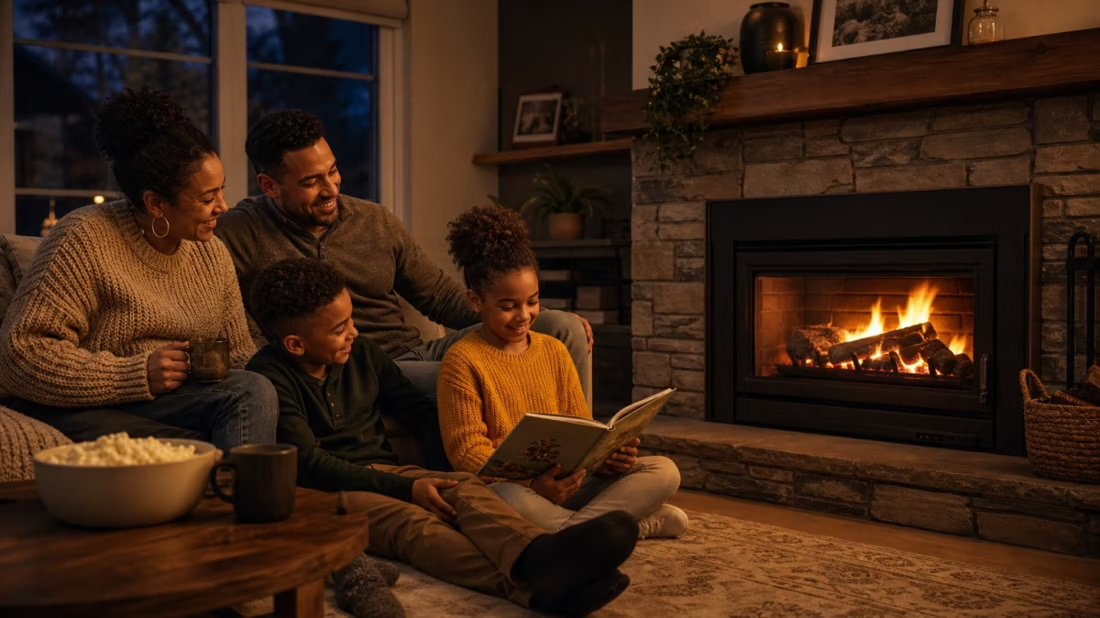
That's why wood is flagged not-applicable rather than rare for Cape Coral—it's genuinely uncommon here, not just unusual. The homeowners who do pursue a wood-burning fireplace are typically after something other than warmth: the look and ritual of a real fire on a lanai or in a great room, nostalgia from a previous home up north, or a feature tied to a second home elsewhere. For everyone else, the far more common path in Cape Coral is an electric fireplace or insert—no chimney, no venting, and no risk of an appliance sitting cold and unused for 350 nights a year. If a wood fireplace is still what you want, a local dealer familiar with Southwest Florida's concrete-block construction can walk you through what's actually involved before you commit.
Three steps. No salesperson until you're ready.
Tell us about your project
Your zip code, your situation, and the fuel you're leaning toward—or let the answers point you to one.
See what's actually available
The brands dealers within 100 miles genuinely carry—real options, never a catalog mirage.
Get your dealer & Project Guide
A trusted local dealer, plus the free Project Guide & Parts List that names every component of the job.
Frequently Asked Questions
Do people actually install wood-burning fireplaces in Cape Coral?
A small number do, yes—but it's genuinely uncommon. Most requests come from transplants who grew up with a wood fireplace up north and want the look and ritual more than the heat, or from homeowners adding a feature fireplace to a lanai or great room for ambiance. The hearth dealer network serving the Cape Coral–Fort Myers corridor is thinner than what you'd find in a cold-climate market, but a handful of retailers can still order, permit, and install a factory-built wood-burning unit or masonry fireplace when that's genuinely what a homeowner wants.
Why doesn't Cape Coral's climate call for wood heat?
Cape Coral logs roughly 252 heating degree days a year, with a winter low average around 54°F. A cold-climate city like Bozeman, Montana logs closer to 8,000 heating degree days—meaning Cape Coral's actual heating demand is a small fraction of what a wood stove is designed to handle. A wood stove sized to heat even a modest Cape Coral home would sit unused for the vast majority of the year, since the AC—not a furnace or stove—is doing almost all the mechanical work here.
What do most Cape Coral homeowners choose instead of a wood fireplace?
Electric fireplaces and inserts are by far the more common choice, and it's not close. FPL and Lee County Electric Cooperative both serve the area at a residential rate around 13.71 cents per kWh, and an electric unit needs no chimney, no venting, and no combustion air—a real advantage in concrete-block Cape Coral homes where cutting a new chase through a CBS wall or tile roof for a chimney is expensive and structurally involved. Electric fireplaces deliver the visual and ambiance most homeowners are actually after without any of the wood-heat infrastructure this climate doesn't need.
If I still want a wood-burning fireplace, what permits do I need in Cape Coral?
Any new wood-burning fireplace or chimney requires a building permit—through the City of Cape Coral Building Division if you're within city limits, or the Lee County Building Department if you're in an unincorporated part of the county. Because Cape Coral homes are predominantly concrete block and stucco, adding a masonry or factory-built wood fireplace usually means cutting a new chase and roof penetration, which is more construction than most gas or electric retrofits require. Many of Cape Coral's canal-front and gated communities also carry deed restrictions on exterior chimneys, so it's worth checking your HOA documents before you get too far into planning.
Can I get firewood locally in Cape Coral?
Yes, but not through the kind of dedicated cordwood industry you'd find in a heating-climate state. Oak, mahogany, and pine are the species most commonly available locally, generally sourced from tree services and land-clearing operations rather than firewood-specific suppliers—a fair amount of it comes out of storm cleanup and invasive-species removal work after hurricane season. Because demand is low and supply is opportunistic rather than dedicated, expect to pay more per cord than you would in a state where firewood is a year-round business, and expect availability to vary by season.
Are there smoke or air-quality restrictions on burning wood in Cape Coral?
Lee County has no air quality non-attainment designation and no winter inversion issues like you'd see in a mountain valley, so there's no regional smoke advisory system to worry about. That said, Cape Coral's canal-front lots sit close together, and most subdivisions have local nuisance ordinances or HOA rules addressing smoke that drifts onto a neighbor's lanai or pool cage. If you do install a wood-burning unit, it's worth checking those restrictions before your first fire, not after a neighbor complains.
Will a wood-burning fireplace help during hurricane season power outages?
Not really, and it's worth being honest about that. Cape Coral's post-storm outages are an AC problem, not a heating problem—homes get hot and humid without power, not cold. A wood stove offers essentially no benefit for that scenario. If backup power is the goal, a generator sized to run at least the AC and refrigerator does far more for a Cape Coral household during outage season than any wood-burning appliance would. A wood fireplace here is worth installing for ambiance and aesthetics alone, not as an emergency-preparedness measure.
Can I add a wood fireplace to new construction in Cape Coral?
It's possible but uncommon. Most Cape Coral builders working in concrete block and stucco don't include chimney chases as a standard option, since the vast majority of buyers either skip a fireplace entirely or choose a vent-free or electric unit that doesn't require one. Adding a true wood-burning fireplace means specifying a chimney chase and roof penetration during the framing and roofing phase—a change order that's straightforward if you raise it early with your builder, but expensive and disruptive if you try to add it after the home is built.
Wood vs. electric fireplace—which makes sense for a Cape Coral home?
For the large majority of Cape Coral homeowners, electric is the practical answer: no chimney or venting to cut through a concrete-block wall, a straightforward retrofit into an existing wall or built-in, and running costs tied to FPL or Lee County Electric Cooperative's roughly 13.71 cent per kWh residential rate. Wood only makes sense if you specifically want a real, burning fire—the sound, the smell, the ritual—and are willing to take on chimney construction, HOA review, and sourcing firewood in a market that doesn't really have a dedicated firewood industry. Both are legitimate choices; they're just answering very different questions.
Can a wood stove burn all night?
The right one can. If waking up to a warm house and live coals matters to you, say exactly that when you're shopping—firebox size and burn-rate control determine overnight performance far more than any number on a spec sheet. It's a much more useful question than asking about BTUs.
Why is a fireplace insert so efficient?
An insert does two things: it seals the chimney completely, so you stop losing air you already paid to heat, and it radiates warmth into the room through the firebox and glass. Most add a heat-exchange fan that pulls cool room air underneath, wraps it around the hot firebox, and pushes it back out warm. Your home is more efficient before you've even lit the first fire.
Can I install a fireplace myself?
If you're putting a fire in your house on purpose, it's best to work with an expert. Unless you're genuinely experienced in framing, gas line, vent pipe, and the national code on clearances to combustibles, have a professional do it—and ideally the same company that sells you the fireplace, so warranty, service, and liability all live under one roof.
Does a fireplace add value to my home?
On average, a fireplace adds back to the home about the same amount you spent installing it. Add the monthly savings from heating the rooms you actually use instead of the whole house—often hundreds of dollars a year—and the value case is strong before you even count what a fire does for how your family uses the room.
Nearby Dealers
Hearth shops serving Cape Coral and the surrounding area. Every listing shows whether it is a WhyFire partner, a dealer we have verified as authorized for the brands we recommend, or a local business carrying hearth products. No manufacturer pays for placement. How we verify dealers →
South Florida Gas Co Inc
Accent Fireplace & Accessories
The Outdoor Kitchen Place
See what's possible for wood heat in Cape Coral.
If a wood-burning fireplace or stove is still the right fit for your Cape Coral home, we'll match you with a local dealer experienced in the retrofit—permits, chimney work, and all—and hand you a free Project Guide & Parts List built around your project.
Find Your Fireplace →