
Real Fireplace Ambiance—No Chimney Required.
With winter lows averaging just 54°F, Cape Coral homes don't need combustion heat—they need a clean, vent-free flame that works in a condo, a canal-front lanai, or a mainland great room. Find the right unit and connect with a trusted local dealer.
Every Project Starts From One of These Five Situations
Ambiance-first heat for a climate that rarely needs it.
Cape Coral sits at just 10 feet of elevation in climate zone 2A, and the numbers tell the story: an average winter low of 54°F and a winter heating season so light it barely registers, a fraction of what a city like Duluth, MN racks up in a single January week. Wood heat is essentially absent here, and gas fireplaces remain rare since there's rarely a cold snap that justifies running a flue through a coastal roof. Electric is the fuel that actually fits—no combustion, no venting, no seasonal firewood, just a flame that looks real whenever you want the ambiance.
That fits how Cape Coral is actually built: a city crisscrossed by more than 400 miles of canals, dense with waterfront condos, lanais, and single-story homes on slab foundations where routing a chimney or gas line is either impossible or unnecessary. Both Florida Power & Light and Lee County Electric Cooperative serve homes across the city's zip codes, and at a residential rate around $0.1371 per kWh, running a 1,500-watt electric unit costs about 20 cents an hour—cheap enough to leave the flame on for atmosphere without worrying about the bill, and with zero risk from propane tanks or gas lines during hurricane season.
Three steps. No salesperson until you're ready.
Tell us about your project
Your zip code, your situation, and the fuel you're leaning toward—or let the answers point you to one.
See what's actually available
The brands dealers within 100 miles genuinely carry—real options, never a catalog mirage.
Get your dealer & Project Guide
A trusted local dealer, plus the free Project Guide & Parts List that names every component of the job.
Frequently Asked Questions
How much does an electric fireplace installation cost in Cape Coral?
Costs vary a lot by unit type. A plug-in freestanding or insert unit runs $150 to $600 and needs no installation beyond an outlet. A built-in wall unit or linear fireplace, which typically needs a dedicated 120V or 240V circuit run by an electrician, runs $800 to $2,500 installed. A full mantel package with custom surround and millwork for a great room or lanai can reach $2,500 to $4,500. Because there's no chimney, gas line, or venting to install, electric projects in Cape Coral consistently land well under wood or gas comparables in colder-climate cities.
Do I need a permit to install an electric fireplace in Cape Coral?
Most plug-in electric fireplaces need no permit at all—they're treated like any other appliance. If you're installing a built-in unit that requires a new dedicated circuit or panel work, an electrical permit is typically required through the City of Cape Coral Building Division, or through Lee County's Building Department if the property sits in unincorporated Lee County. A licensed electrician pulling the permit as part of the install is standard practice and keeps the work inspection-ready if you sell the home.
Will an electric fireplace actually heat my home in Cape Coral?
Not as primary heat, and it doesn't need to be. With an average winter low of 54°F and a winter heating season so light it barely registers, Cape Coral homes almost never need whole-house supplemental heat. Most electric fireplaces here run in ambiance-only mode most of the year, with the 1,500-watt heater element (roughly 5,000 BTU) reserved for the handful of nights each winter when a cold front pushes temperatures into the 40s. Think of it as zone comfort for a chilly evening, not a furnace replacement.
What's the difference between an electric insert, wall-mount, and mantel package?
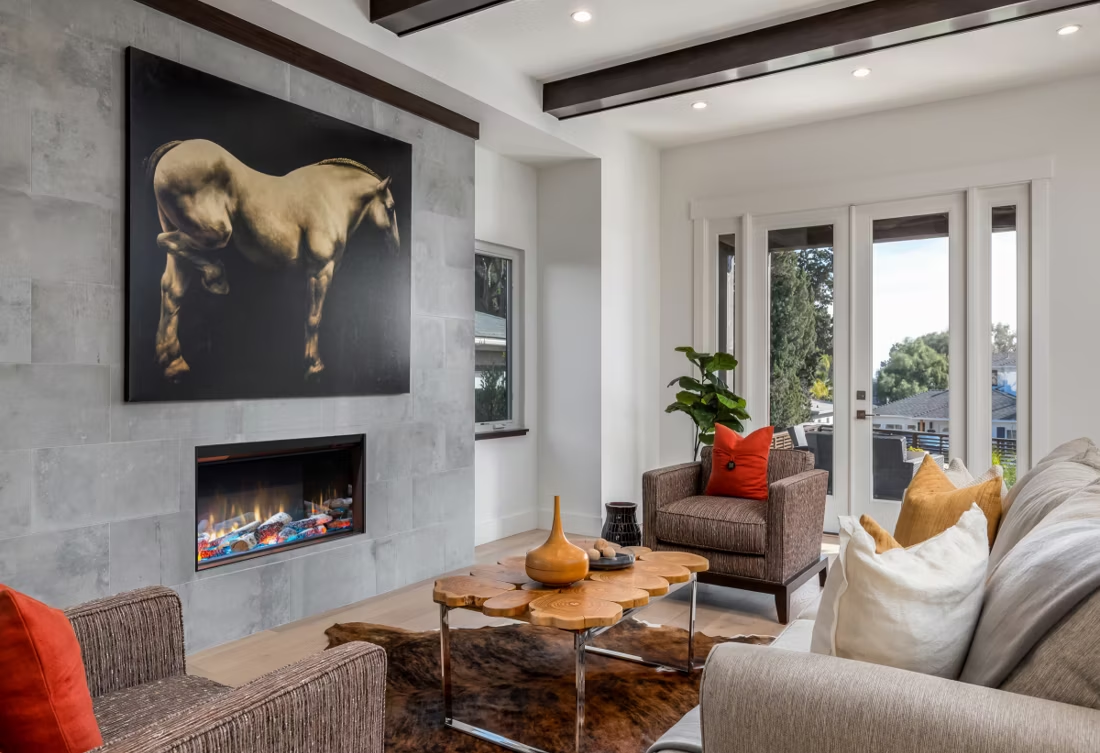
An electric insert drops into an existing fireplace opening or built-in niche and is the common retrofit choice for older Cape Coral homes with an unused masonry firebox. A wall-mount or linear unit hangs flush on the wall like a large-format TV and is popular in newer coastal-contemporary builds and condos along the canals. A mantel package pairs an insert or built-in unit with a full wood or stone surround for a more traditional look in ranch-style homes. All three run on standard household power with no venting required.
How much does it cost to run an electric fireplace with FPL or LCEC rates?
At the local residential rate of about $0.1371 per kWh from Florida Power & Light or Lee County Electric Cooperative, a 1,500-watt heater running on high costs roughly 20 cents an hour, or about $5 for a full day of continuous heat. Most Cape Coral homeowners run the flame effect alone during the warmer months, which draws only a few watts and costs pennies a day, and only switch on the heater during the occasional January cold snap.
Can I install an electric fireplace in a condo or lanai in Cape Coral?
Yes, and it's one of the most common installs locally. Because there's no venting, no gas line, and no exterior modification, electric units are typically HOA-friendly in Cape Coral's canal-front condo buildings, and they work well in screened or enclosed lanais where a wood or gas unit simply wouldn't be permitted. Check your specific condo association's rules on electrical modifications, but most plug-in and even hardwired units clear approval without issue.
Are electric fireplaces a safe choice for hurricane season and coastal humidity?
Electric units carry real advantages here: no gas line that could be damaged in a storm, no propane tank to secure or evacuate, and no chimney or vent flashing that can fail under high wind and heavy rain. Sealed electric fireplace cabinets also hold up well against Cape Coral's humidity better than untreated masonry. The one practical note for storm season: if you're in a flood-prone area near the canals, unplug portable or freestanding units and move them above potential surge lines before a storm, and have any built-in unit inspected if the home takes on water.
What styles of electric fireplaces are most popular in Cape Coral homes?
Linear wall-mount units with a wide, low flame bar are popular in newer coastal-contemporary builds and canal-front homes, often set into a floating shelf or stone-look panel. Mantel packages with a more traditional wood surround show up in older ranch-style homes across zip codes like 33990 and 33991. TV-stand combo units, which pair a media console with a built-in electric firebox, are a common choice for condos and secondary living spaces where a wall-mount isn't practical.
Electric vs. gas—which is right for my Cape Coral home?
Gas fireplaces are genuinely rare in Cape Coral since municipal natural gas service is limited and propane requires tank installation and ongoing delivery, which most homeowners consider unnecessary given how little heat the climate actually calls for. Electric skips all of that: no gas line permit, no tank, no combustion byproducts, and a simpler installation overall. The main reason someone chooses gas here is wanting a real flame with a distinct look and sound, and if that's the priority, a local dealer can walk you through propane options. For the vast majority of Cape Coral homeowners focused on ambiance and occasional supplemental warmth, electric is the simpler and more common answer.
Can I put a TV above my fireplace?
Yes—with an asterisk. Fireplaces are hot and TVs don't like heat. Either put a mantel between them to deflect rising warmth, or choose a fireplace with heat-management technology that creates a cool zone on the wall above—the wall stays around 125 degrees, barely warm, while the room still gets full heat. If you like clean lines and don't want a mantel, heat management is the answer.
Do electric fireplaces actually produce heat?
Yes—most put out around 4,800–5,000 BTUs from a standard outlet, which comfortably warms a bedroom, office, or den as a comfort-zone heater. What they won't do is carry a whole house the way wood, gas, or pellet can. Think of electric as ambiance-first with honest supplemental heat: flames on with no heat in July, flames plus warmth in January.
Can I install a fireplace myself?
If you're putting a fire in your house on purpose, it's best to work with an expert. Unless you're genuinely experienced in framing, gas line, vent pipe, and the national code on clearances to combustibles, have a professional do it—and ideally the same company that sells you the fireplace, so warranty, service, and liability all live under one roof.
How much should I budget for a fireplace?
For an average home—covering the fireplace, the vent pipe, and basic installation—a budget between $3,900 and $5,500 gives you a lot of options across wood, gas, and pellet. By the time you add finish work, gas line, and electrical, the average complete installation lands between $5,000 and $12,000 all-in. In a remodel or new build, a good rule is to put about 2.5% of the total project cost toward the fireplace.
Nearby Dealers
Hearth shops serving Cape Coral and the surrounding area. Every listing shows whether it is a WhyFire partner, a dealer we have verified as authorized for the brands we recommend, or a local business carrying hearth products. No manufacturer pays for placement. How we verify dealers →
South Florida Gas Co Inc
Accent Fireplace & Accessories
The Outdoor Kitchen Place
Electric Service in Cape Coral
An electric fireplace's heater draws about 1,500 watts—pennies per hour at local rates.
Florida Power & Light Co
Lee County Electric Coop, Inc
Find your electric fireplace in Cape Coral.
Tell us a bit about your home and we'll put together a free Project Guide & Parts List—the right electric fireplace or insert for your space, with a recommended local Cape Coral dealer to handle the install.
Find Your Fireplace →