
Pellet Heat Isn't Standard in Cape Coral—But It's Still Possible.
With just 252 heating degree days a year and winter lows averaging 54°F, Cape Coral rarely needs supplemental heat. A small number of homeowners still want a pellet stove—here's the honest picture.
Every Project Starts From One of These Five Situations
Cape Coral's climate rarely calls for supplemental heat.
Cape Coral sits at 10 feet of elevation in climate zone 2A, where the average winter low hovers around 54°F and the entire heating season adds up to roughly 252 heating degree days. For comparison, a city like Duluth, Minnesota racks up close to 9,700 heating degree days in a single winter—nearly 40 times what Cape Coral sees all year. That gap is the whole story: pellet stoves are engineered to burn steadily for hours in sub-freezing weather, and Lee County simply doesn't produce the sustained cold that makes that capability worth the investment for most households.
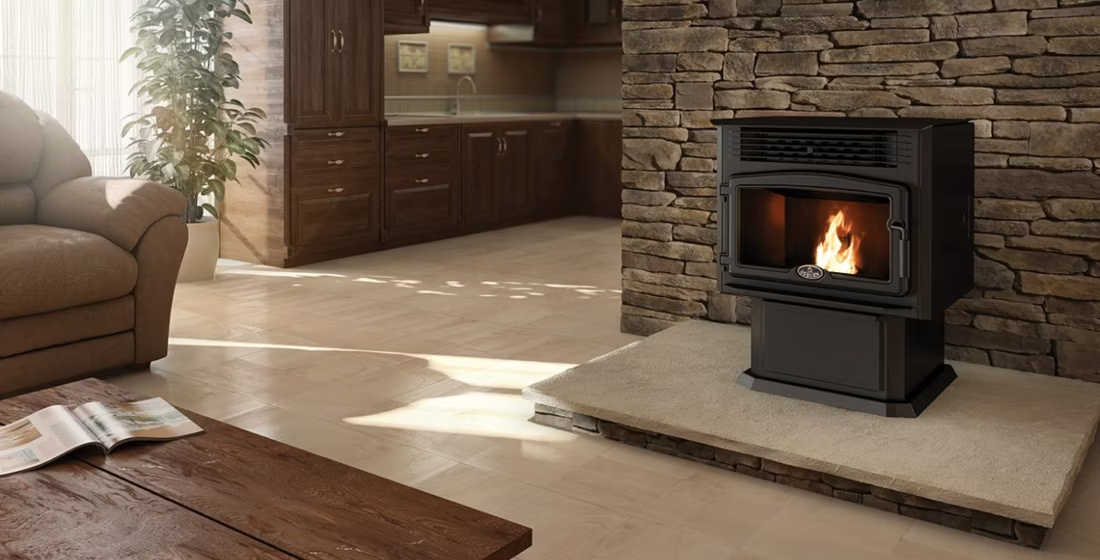
That said, a pellet stove isn't unheard of here. Snowbirds who grew up with one up north, homeowners who want the look and glow of a real flame without the mess of wood, and people who occasionally feel a January cold snap dip into the 30s do sometimes install one—usually for ambiance and the rare cold night rather than as a primary heat source. If that's you, the practical hurdles are different than in a cold-climate market: most Cape Coral homes are concrete block stucco (CBS) construction without an existing chimney, so a direct-vent pellet stove with side-wall venting is typically the only realistic path, and dealer selection is thinner than it would be in, say, the Panhandle or North Florida.
Three steps. No salesperson until you're ready.
Tell us about your project
Your zip code, your situation, and the fuel you're leaning toward—or let the answers point you to one.
See what's actually available
The brands dealers within 100 miles genuinely carry—real options, never a catalog mirage.
Get your dealer & Project Guide
A trusted local dealer, plus the free Project Guide & Parts List that names every component of the job.
Frequently Asked Questions
Does a pellet stove actually make sense in Cape Coral's climate?
For most homes, no—not as a functional heat source. With 252 heating degree days a year and average winter lows around 54°F, a pellet stove will sit unused for the vast majority of the calendar. It can still make sense as a design feature or for the handful of nights each winter when a cold front pushes overnight temperatures into the 30s, but if you're looking for a return on heating costs the way a Minneapolis or Bismarck homeowner would get, that math doesn't work here. Most Cape Coral households considering supplemental heat at all lean toward an electric fireplace instead, since Florida Power & Light and Lee County Electric Cooperative service is reliable and a plug-in unit avoids venting a hole through a concrete block wall for a handful of cool evenings a year.
How much does a pellet stove installation cost in Cape Coral?
There isn't a well-established local price range the way there is in colder markets, simply because so few installs happen here. Nationally, a direct-vent pellet stove installation typically runs $3,500 to $6,500 depending on the unit and venting complexity—and in Cape Coral, expect to land at the higher end of any range you're quoted. Most homes are concrete block stucco without an existing chimney, so the installer has to core-drill or frame a new side-wall vent penetration, which adds labor most Northern installers wouldn't need to price in. Get a firm, in-home quote before committing; a phone estimate won't account for your specific wall construction.
Can I even find a dealer who sells and installs pellet stoves near Cape Coral?
You can, but the network is thin compared to what you'd find in a colder region. Because pellet fuel relevance is low across Lee County, most hearth retailers in the Cape Coral and Fort Myers area focus their floor space on gas logs and electric fireplaces, with pellet units available as a special-order item rather than something sitting on the showroom floor. If you're set on pellet, it's worth calling ahead to confirm a dealer actually stocks and services pellet appliances—not just gas—before you drive out.
Where do I buy pellet fuel in the Cape Coral area?
Regional pellet brands like Lignetics, Hamer Pellet Fuel, and Greenway Renewable Energy do circulate in Florida, but retail availability in Cape Coral itself is limited since demand is so low. Expect to order pellets online in bulk, or check with big-box hardware stores in Fort Myers or Naples that occasionally stock a pallet or two heading into the rare cold snap. If you go this route, buy your season's supply in fall—you don't want to be hunting for a single bag of hardwood pellets in late January when a cold front finally shows up.
Why would anyone install a pellet stove in a place that barely gets cold?
The homeowners who do it usually aren't chasing heating-bill savings. It's more often transplants from cold-climate states who miss the ritual of a real flame, second-home owners splitting time between Cape Coral and a colder property, or people who simply like the look of a pellet fire glowing in the living room during the handful of nights each winter when it dips into the 30s. It's a legitimate reason to install one—just go in knowing it's an aesthetic and occasional-comfort choice here, not a primary heating strategy the way it would be in a place like Buffalo or Fargo.
My house doesn't have a chimney—can I still install a pellet stove?
Yes, and this is actually the standard setup in Cape Coral rather than the exception. Most homes here are concrete block stucco construction without a masonry chimney, so pellet stoves are installed as direct-vent units with PL venting run through an exterior block wall rather than up through a roof. This is a straightforward job for an experienced hearth installer, but it does require coring or framing a wall penetration, which is a different scope of work than the chimney-liner inserts common in older Northern homes. Confirm your installer has done side-wall vent work specifically before signing a contract.
Would an electric fireplace make more sense than a pellet stove for my Cape Coral home?
For most households here, yes. Electric fireplaces don't require any venting, work immediately on the rare cool evening, and cost far less to install than a pellet unit—often under $1,500 including a surround. With Florida Power & Light and Lee County Electric Cooperative both serving the area at roughly 13.7 cents per kWh, running an electric unit occasionally in January costs very little. Pellet stoves make more sense if you specifically want a real flame and the tactile experience of loading fuel; electric makes more sense if you want ambiance and occasional warmth with zero maintenance. Both are reasonable choices in a climate this mild—it comes down to what you value.
Do I need a permit to install a pellet stove in Cape Coral?
Yes—any new fuel-burning appliance, including a pellet stove, typically requires a building permit through the City of Cape Coral's building division (or Lee County's building department if you're outside city limits), since the work involves a wall penetration and vent termination clearances from windows, doors, and property lines. A reputable local installer will pull this permit as part of the job. Given how rarely these installs happen locally, it's worth confirming your installer has actually pulled a pellet-stove permit in Cape Coral before, rather than assuming it's routine paperwork for them.
Pellet stove vs. gas fireplace—which is more realistic for Cape Coral?
Neither is a mainstream choice here, honestly. Natural gas infrastructure is limited across Cape Coral, so gas fireplace installs usually mean running on propane, which adds tank costs and ongoing delivery. Pellet stoves avoid the fuel-line question entirely but require sourcing bagged pellets that aren't widely stocked locally and venting through a block wall. If you want a real flame with minimal fuss, a propane fireplace with a local propane supplier is usually simpler to keep running long-term. If you like the idea of loading fuel yourself and don't mind ordering pellets online, a pellet stove is the more self-sufficient option. Either way, talk to a local dealer about what they can actually service before you buy—that matters more here than in a market where every installer handles these units weekly.
What's the difference between an insert and a zero-clearance fireplace?
An insert is a fireplace that slides into a pre-existing wood-burning fireplace—if you don't have one, there's nothing to insert it into. A zero-clearance fireplace is built into a framed wall, which makes it the answer for remodels and new construction. Simple test: existing masonry fireplace means insert; blank or framed wall means zero-clearance.
Why is a fireplace insert so efficient?
An insert does two things: it seals the chimney completely, so you stop losing air you already paid to heat, and it radiates warmth into the room through the firebox and glass. Most add a heat-exchange fan that pulls cool room air underneath, wraps it around the hot firebox, and pushes it back out warm. Your home is more efficient before you've even lit the first fire.
What is an in-home preview and do I need one?
It's a visit where a hearth professional measures your space, confirms the model you picked actually works in your home, and walks the specs—framing, gas line, venting, finish work—before anything is ordered. Some details you just can't know until you see the house. Never make a down payment without one; it's the single most-skipped step that burns buyers.
Can I install a fireplace myself?
If you're putting a fire in your house on purpose, it's best to work with an expert. Unless you're genuinely experienced in framing, gas line, vent pipe, and the national code on clearances to combustibles, have a professional do it—and ideally the same company that sells you the fireplace, so warranty, service, and liability all live under one roof.
Nearby Dealers
Hearth shops serving Cape Coral and the surrounding area. Every listing shows whether it is a WhyFire partner, a dealer we have verified as authorized for the brands we recommend, or a local business carrying hearth products. No manufacturer pays for placement. How we verify dealers →
South Florida Gas Co Inc
Accent Fireplace & Accessories
The Outdoor Kitchen Place
Pellet Brands Stocked Around Cape Coral
Manufacturers will point you to the nearest stocking dealer.
Find your pellet stove in Cape Coral.
Tell us about your home and we'll be straight with you about whether pellet makes sense for your situation, then match you with a trusted local dealer and send over a free Project Guide & Parts List—the exact parts, including the vent kit, for your specific install.
Find Your Fireplace →