
Ambiance and easy heat for Callaway's Gulf Coast winters.
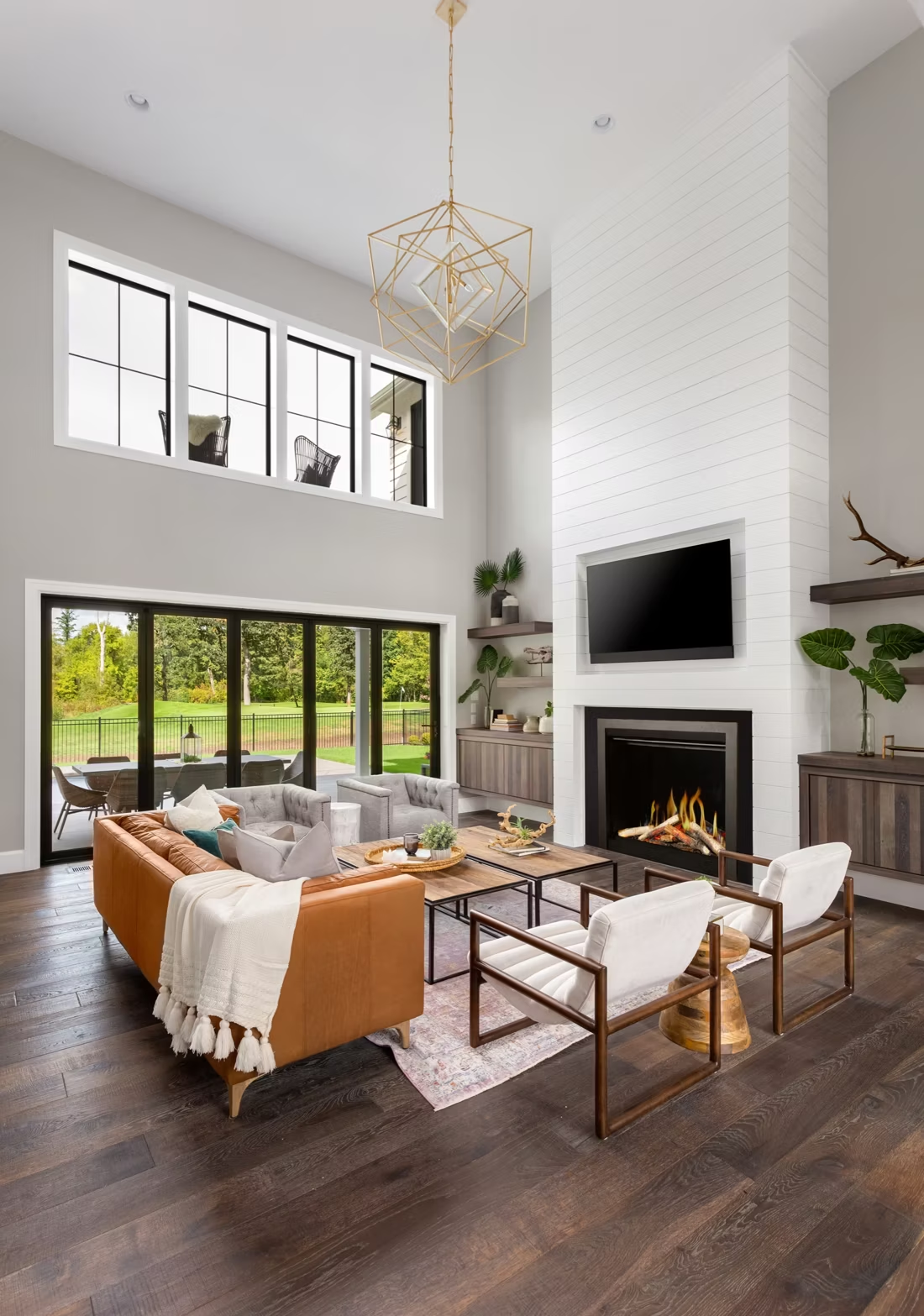
With winter lows averaging in the mid-40s, Callaway homes rarely need serious heating equipment—electric fireplaces deliver the look and warmth people actually want here. Find the right unit and connect with a trusted local dealer.
Every Project Starts From One of These Five Situations
Electric fireplaces fit the way Callaway actually lives.
Callaway sits at just 11 feet of elevation on the Gulf Coast in Bay County, in climate zone 2A, where the heating season is short and mild—a light winter heating load, compared to a place like Duluth, MN, which racks up nearly ten times that. Winter lows here average 45°F, so homeowners aren't trying to keep a house warm through a hard freeze; they're looking to take the chill off a January evening or add a focal point to a living room. That's exactly the job an electric fireplace is built for.
There's no chimney to build, no gas line to run, and no combustion byproducts to vent—which matters in a coastal community still rebuilding housing stock in the years since Hurricane Michael tore through Bay County in 2018. Many newer or repaired homes here have tighter building envelopes and simplified mechanical systems, and a plug-in or hardwired electric unit drops in without touching the roofline or exterior wall penetrations that wood or gas venting would require. Duke Energy Florida serves the area, and at a residential rate around 16.6 cents per kWh, running an electric fireplace a few hours a night costs only a modest amount even during Callaway's coolest stretches.
Three steps. No salesperson until you're ready.
Tell us about your project
Your zip code, your situation, and the fuel you're leaning toward—or let the answers point you to one.
See what's actually available
The brands dealers within 100 miles genuinely carry—real options, never a catalog mirage.
Get your dealer & Project Guide
A trusted local dealer, plus the free Project Guide & Parts List that names every component of the job.
Frequently Asked Questions
How much does an electric fireplace installation cost in Callaway?
Plug-in freestanding stoves and mantel-style units are the least expensive option and typically run $200 to $600 including delivery and setup, since they use a standard household outlet and need no electrical work. Wall-mounted linear units and built-in electric fireplaces that require a dedicated 120V or 240V circuit, in-wall framing, and finish trim usually run $1,500 to $3,500 installed. Because Callaway's mild climate means these units are supplementing ambiance more than fighting a hard winter, most local buyers land toward the lower end of that range unless they're doing a full mantel surround or built-in wall installation.
Do I need a permit to install an electric fireplace in Callaway?
A plug-in unit that uses an existing outlet generally doesn't require a permit. If your installer needs to add a new dedicated circuit, run wiring for a built-in unit, or do any framing changes to a wall, that electrical work falls under Bay County's Building and Development Services permitting process, since Callaway building projects are handled through the county. A licensed electrician pulling the permit as part of the install is the norm, and most local hearth and appliance dealers coordinate that step for you rather than leaving you to schedule it separately.
Is an electric fireplace really enough heat for a Callaway winter?
For most homes here, yes. With an average winter low of 45°F and only a light winter heating load each year, Callaway simply doesn't get the sustained cold that would overwhelm a 1,500-watt electric heater element, which is the standard output for most inserts and stoves on the market. Electric units are best understood as zone heat for one room rather than whole-house heating—but in a climate this mild, that's usually all a household actually needs on the handful of nights each winter that dip into the 30s.
Will my electric fireplace still work during a power outage?
No—and this is worth being direct about. Every electric fireplace, whether it's a plug-in stove or a hardwired built-in unit, requires household power to run its heater and flame effect. Callaway has experienced extended outages before, most notably in the aftermath of Hurricane Michael in 2018, when parts of Bay County were without power for weeks. If backup heat during storm season is a priority for your household, a gas unit on propane or natural gas is a better fit for that specific need; an electric fireplace should be thought of purely as everyday comfort and ambiance, not storm-season backup.
What's the difference between an electric insert, a wall-mounted unit, and a freestanding stove?
An electric insert is sized to slide into an existing masonry or gas fireplace opening, letting you convert an old, rarely-used firebox into something you'll actually use nightly—a common project in Callaway's older housing stock near Tyndall Air Force Base and along East Avenue. A wall-mounted or built-in linear unit sits flush in a framed wall, often flanked by a custom mantel, and reads as a true architectural feature. A freestanding electric stove is portable, plugs into any outlet, and can move with you if you rent or relocate. For most Callaway homeowners without an existing fireplace opening, freestanding stoves and wall-mounted units are the two most popular routes.
Electric vs. gas—which is right for my Callaway home?
Gas fireplaces offer higher heat output, work during power outages if paired with a battery-backup ignition system, and suit homes that want a true secondary heat source during Gulf Coast cold snaps or hurricane-season outages. Electric fireplaces cost far less to install, need no gas line or venting, and are simpler for renters or homeowners who mainly want the visual and mild-warmth benefit. Given Callaway's short, mild heating season, a lot of local buyers choose electric for everyday living spaces and reserve gas consideration for households specifically planning around storm-season power loss. Either fuel is available through local dealers who can walk you through the tradeoff for your specific home.
How much does it cost to run an electric fireplace in Callaway?
At Duke Energy Florida's residential rate of roughly 16.6 cents per kWh, a standard 1,500-watt electric fireplace running on its heater setting costs about 25 cents per hour to operate. Running it three to four hours an evening through a cool January stretch adds roughly $8 to $10 a month to your electric bill—noticeably less than what a whole-house HVAC system costs to close that same comfort gap. Most units also let you run the flame visual with the heater off, which uses only a few watts, so you can keep the ambiance going year-round without any real cost.
Do electric fireplaces hold up in Callaway's humid, salty coastal air?
They can, but not every unit is built for it. Callaway's proximity to St. Andrew Bay and the Gulf means higher ambient humidity and, in homes closer to the water, some salt exposure that can affect lower-quality electronics and control boards over time. Look for units with sealed control components and stick to reputable manufacturers rather than the cheapest big-box models—a local dealer can point you toward hardware that's proven itself in other Bay County installs rather than something that may struggle after a few humid summers in storage or in an uninsulated garage or sunroom.
Can I install an electric fireplace myself, or do I need a professional?
A basic plug-in stove or insert is genuinely a DIY-friendly project—you set it in place, plug it into an existing outlet, and you're done. Where it makes sense to bring in a licensed electrician is any built-in or wall-mounted installation that needs a new circuit, in-wall wiring, or work near a wet location like a bathroom. Given Callaway's rebuilt and renovated housing stock post-Hurricane Michael, wiring conditions vary a lot from house to house, so having a local electrician or dealer verify your panel capacity before a built-in install avoids surprises mid-project.
Can I put a TV above my fireplace?
Yes—with an asterisk. Fireplaces are hot and TVs don't like heat. Either put a mantel between them to deflect rising warmth, or choose a fireplace with heat-management technology that creates a cool zone on the wall above—the wall stays around 125 degrees, barely warm, while the room still gets full heat. If you like clean lines and don't want a mantel, heat management is the answer.
How much does an electric fireplace cost to run?
With the heater on, a typical unit draws about 1,500 watts—at average electric rates that's roughly 20 cents an hour. Run the flame effect alone and it costs pennies; the flames are LED-driven and use about as much power as a light bulb. There's no pilot light, no fuel delivery, and essentially no maintenance.
Does a fireplace add value to my home?
On average, a fireplace adds back to the home about the same amount you spent installing it. Add the monthly savings from heating the rooms you actually use instead of the whole house—often hundreds of dollars a year—and the value case is strong before you even count what a fire does for how your family uses the room.
Can a fireplace actually lower my heating bill?
Yes—by creating a comfort zone. A furnace heats every square foot of the house just to warm the one room you're in; a gas fireplace on low burns roughly a sixth of the gas a typical furnace does. Set the furnace around 55–60 degrees as a baseline, then heat the rooms your family actually uses. Families who heat this way commonly save $20–$60 a month.
Nearby Dealers
Hearth shops serving Callaway and the surrounding area. Every listing shows whether it is a WhyFire partner, a dealer we have verified as authorized for the brands we recommend, or a local business carrying hearth products. No manufacturer pays for placement. How we verify dealers →
We’ve paused dealer listings for this connection today. Enter your zip or postal code above to find dealers near you, or come back tomorrow.
Popular Electric Brands
Where each brand came from, what's inside it today, and every current model. No brand pays to be here. Not every dealer carries every brand, so enter your zip code to see what's sold near Callaway.
Fireplace Xtrordinair
Fireplace Xtrordinair, now often called FireplaceX, is the fireplace brand of Travis Industries, Inc., of Mukilteo, Washington.
5 electric models →DaVinci
DaVinci Custom Fireplaces is a brand of Travis Industries, Inc., of Mukilteo, Washington, the company behind Lopi and Fireplace Xtrordinair.
5 electric models →Kozy Heat
Kozy Heat was founded in 1976 by Dudley Hussong in Lakefield, Minnesota, and incorporated as Hussong Manufacturing Co., Inc. in 1978.
3 electric models →Forge & Flame
Forge & Flame is the stove brand Hearth & Home Technologies introduced in August 2023 to bring Vermont Castings, Harman, and Quadra-Fire under one name.
1 electric model →Electric Service in Callaway
An electric fireplace's heater draws about 1,500 watts—pennies per hour at local rates.
Duke Energy Florida, LLC
Find your electric fireplace in Callaway.
Tell us a bit about your home and we'll help you find the right electric fireplace or insert, plus a free Project Guide & Parts List with the exact parts and a trusted local Callaway dealer to install them.
Find Your Fireplace →