
Electric fireplace warmth for Bay County's mild winters and hurricane season.
No chimney, no gas line, no open flame—just ambiance and supplemental heat for the occasional cold front along the Panama City and Panama City Beach coastline. Find the right unit and connect with a trusted local dealer.
Every Project Starts From One of These Five Situations
Zone heat and ambiance for a Gulf Coast climate.
Bay County sits in climate zone 2A on Florida's Panhandle, with an average winter low around 43°F and only about 1,288 heating degree days a year—a fraction of what a cold-climate home in Duluth or Bismarck sees in a single month. Wood heat has essentially no functional role here despite the native oak, pine, and mahogany stands across the county; a handful of homeowners install wood stoves purely for visual charm on vacation cabins or as a novelty, but nobody in Panama City, Lynn Haven, or Callaway is heating a home with cordwood. What does make sense here is electric—clean, flame-free ambiance for the living room, and genuine supplemental warmth on the handful of nights each winter when a cold front pushes overnight lows into the 30s.
Electric units have also become the default choice for the county's dense beach condo stock in Panama City Beach, where HOA rules and insurance carriers frequently prohibit open-flame appliances but have no issue with a UL-listed electric insert or wall-mount unit. Power in the county comes through Florida Power & Light (formerly Gulf Power), and that matters for one honest caveat: an electric fireplace needs grid power to run, so during the tropical storms and hurricanes that periodically hit this stretch of coast—Bay County is still rebuilding in the wake of Hurricane Michael—an electric unit goes dark exactly when a generator-backed gas fireplace would keep running. For most households that's a fair trade for the simplicity and safety electric offers; for anyone leaning on a fireplace as real emergency heat, it's worth discussing gas alongside electric with a local dealer.
Three steps. No salesperson until you're ready.
Tell us about your project
Your zip code, your situation, and the fuel you're leaning toward—or let the answers point you to one.
See what's actually available
The brands dealers within 100 miles genuinely carry—real options, never a catalog mirage.
Get your dealer & Project Guide
A trusted local dealer, plus the free Project Guide & Parts List that names every component of the job.
Frequently Asked Questions
How much does an electric fireplace installation cost in Bay County?
Plug-in electric inserts and freestanding units are the least expensive option, often installed in an afternoon for a few hundred dollars since they run off a standard 120-volt outlet with no electrician required. Built-in wall units and larger mantel packages typically need a dedicated 20-amp circuit, which means bringing in a licensed electrician—that pushes total project cost into the $1,500-$3,500 range once the unit, surround, and wiring are accounted for. Custom linear units set into a new wall or media center run higher still, mainly due to framing and finish carpentry rather than the appliance itself. A local dealer in Panama City or Lynn Haven can quote the exact number once they know whether you're retrofitting an opening or building new.
Do I need a permit to install an electric fireplace in Bay County?
A simple plug-in electric fireplace or insert generally doesn't require a permit since no gas line, venting, or new wiring is involved. Once a project requires a dedicated circuit—which is standard for most built-in wall units—an electrical permit is typically pulled through the Bay County Building and Inspection Division, or through the City of Panama City or City of Panama City Beach building department if the property sits within those city limits. Reputable local installers handle this paperwork as part of the job, so it's worth confirming during your quote whether the unit you're considering needs one.
Will my electric fireplace still work during a hurricane power outage?
No—this is the honest tradeoff with electric heat in a hurricane-prone county. Unlike a wood stove or a battery-backup gas fireplace, an electric fireplace has no function without grid power, and Bay County's grid, run by Florida Power & Light, has seen extended outages after storms like Hurricane Michael. If you're buying an electric fireplace purely for ambiance and light supplemental heat, that's a non-issue. If you want a fireplace that can actually serve as emergency heat during a post-storm outage, pair the electric unit with a whole-home or portable generator, or ask a local dealer about a vented or vent-free gas alternative for that specific role.
Electric vs. gas fireplace—which makes more sense for a Bay County home?
Gas is the more common choice here for homeowners who want a fireplace to carry real heating load or to keep functioning through a power outage with a battery-backup ignition system, and natural gas or propane service is available across much of the county. Electric wins on installation simplicity—no gas line, no venting, no combustion byproducts—and on flexibility, since units can go anywhere there's an outlet or a dedicated circuit, including condo units and rentals where gas or wood appliances aren't permitted. Given Bay County's mild 1,288 heating-degree-day climate, most homeowners here are choosing based on ambiance, install cost, and building restrictions rather than raw heat output, which tips the decision toward electric more often than it would in a colder market.
Can I install an electric fireplace in my Panama City Beach condo?
In most cases, yes, and it's often the only fireplace option HOAs and insurance carriers will approve for high-rise beach condos. Open-flame gas and wood appliances are commonly restricted or outright banned in multi-unit buildings along the beach due to fire and insurance liability, but a UL-listed electric insert or wall-mount unit typically clears those restrictions without issue since there's no combustion, no venting penetration through a shared wall, and no gas line running through common areas. Always confirm with your HOA documents before purchase, since rules vary building to building, but electric is generally the path of least resistance for condo owners from Panama City Beach to Mexico Beach.
How much heat do I actually need from a fireplace in Bay County?
Not much, by national standards. With an average winter low around 43°F and roughly 1,288 heating degree days per year, Bay County homes rarely need whole-room heating from a fireplace the way a home in Fargo or Burlington would. Most homeowners here are sizing for supplemental, occasional-use warmth—enough to take the chill off a living room on the coldest nights of the year, which typically dip into the 30s a handful of times each winter. That means smaller and mid-size electric units are usually sufficient; there's rarely a need to size up for whole-home heat load the way a cold-climate buyer would.
What should I look for in an electric fireplace near the Gulf Coast?
Salt air and humidity are the main considerations for Bay County's coastal communities, especially in Panama City Beach and Mexico Beach. Look for units with corrosion-resistant housings and sealed electronics if the fireplace will be installed near an exterior wall or in a home with regular salt-air exposure from open windows or hurricane shutters left ajar. Brands like Dimplex and Napoleon offer linear and wall-mount electric units that hold up well in humid coastal conditions, and a local dealer can point you toward models with a track record in this specific climate rather than a generic big-box unit.
How much maintenance does an electric fireplace require?
Very little compared to wood or gas. There's no chimney to sweep, no gas lines to inspect, and no soot or ash to clean up. Maintenance is mostly limited to dusting the unit, occasionally cleaning the glass front, and checking that the heating element and fan are free of dust buildup, which matters in Bay County's humid environment since dust and moisture together can accelerate wear on internal components. Most electric fireplace heating elements are rated for 20,000+ hours of use, so with basic care a unit installed today should outlast most other appliances in the house.
What does it cost to run an electric fireplace day to day in Bay County?
Most electric fireplaces draw around 1,500 watts on the heat setting, which at Florida Power & Light's typical residential rates works out to roughly 15-20 cents per hour of heated use—considerably cheaper than running central HVAC to warm a single room. Ambiance-only mode with the heater off draws only a few watts, so leaving the flame effect running for evening atmosphere costs next to nothing. Given how few genuinely cold days Bay County sees each winter, most homeowners here run their electric fireplace far more often for the visual effect than for the heat itself.
Can I put a TV above my fireplace?
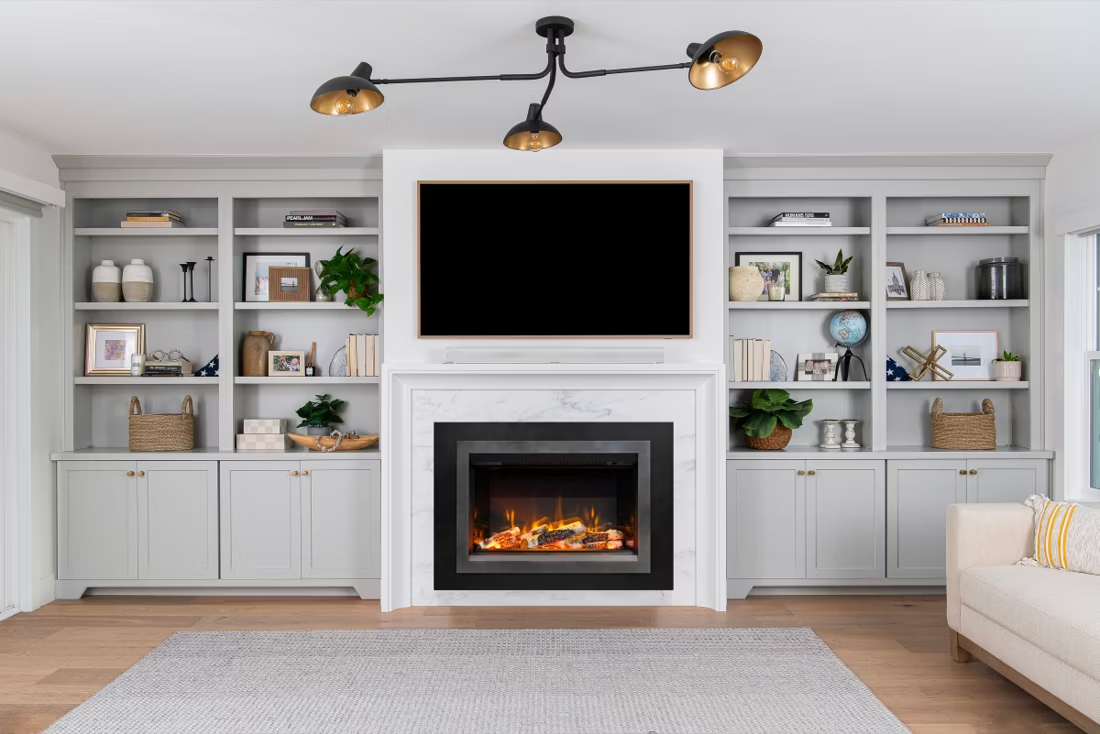
Yes—with an asterisk. Fireplaces are hot and TVs don't like heat. Either put a mantel between them to deflect rising warmth, or choose a fireplace with heat-management technology that creates a cool zone on the wall above—the wall stays around 125 degrees, barely warm, while the room still gets full heat. If you like clean lines and don't want a mantel, heat management is the answer.
Does an electric fireplace need a vent or chimney?
No—that's its superpower. An electric fireplace needs a wall and an outlet, period. No vent pipe, no gas line, no clearances to design around, which is why it works in bedrooms, offices, apartments, and walls where venting a gas or wood unit would be impractical or impossible. Installation is typically the simplest and least expensive of any fireplace type.
How much should I budget for a fireplace?
For an average home—covering the fireplace, the vent pipe, and basic installation—a budget between $3,900 and $5,500 gives you a lot of options across wood, gas, and pellet. By the time you add finish work, gas line, and electrical, the average complete installation lands between $5,000 and $12,000 all-in. In a remodel or new build, a good rule is to put about 2.5% of the total project cost toward the fireplace.
Does a fireplace add value to my home?
On average, a fireplace adds back to the home about the same amount you spent installing it. Add the monthly savings from heating the rooms you actually use instead of the whole house—often hundreds of dollars a year—and the value case is strong before you even count what a fire does for how your family uses the room.
Stove and Fireplace Dealers in Bay County
Find your electric fireplace in Bay County.
Tell us a bit about your home and we'll match you with the right electric fireplace or insert—and connect you with a trusted local dealer who can hand you a free Project Guide & Parts List.
Find Your Fireplace →