
Fireplace Ambiance for the Florida Panhandle.
Gas and electric fireplace resources for Panama City, Panama City Beach, Lynn Haven, Callaway, and every Bay County community along the Gulf—plus straight answers on why wood and pellet stoves rarely make sense in this climate.
Every Project Starts From One of These Five Situations
Warm Gulf winters shape Bay County's hearth market.
Bay County sits on the Florida Panhandle's Gulf Coast, home to Panama City, Panama City Beach, Lynn Haven, and Callaway. Climate zone 2A means short, mild winters—the average winter low is 43°F and the county logs only about 1,288 heating degree days a year. Compare that to a place like Duluth, Minnesota, which racks up over 9,000 HDD, and it's clear why heat load here is a fraction of what cold-climate homes deal with. Oak, mahogany, and pine grow throughout the county, but they're landscape and lumber species, not a firewood supply chain built for daily heating—there simply isn't enough cold season to justify it for most homes.
What you'll find on this hub: gas and electric fireplace retailers, service technicians, and fuel suppliers serving every community in the county—from Panama City and Panama City Beach down to Mexico Beach and inland toward Fountain and Youngstown. Wood and pellet stoves show up occasionally—a beach house owner wants real-flame ambiance, or someone with a second home up north wants a matching aesthetic here—but gas and electric are what actually make sense for year-round Bay County living. Pick your fuel below to see local dealers, install costs, and the resources that fit your project.
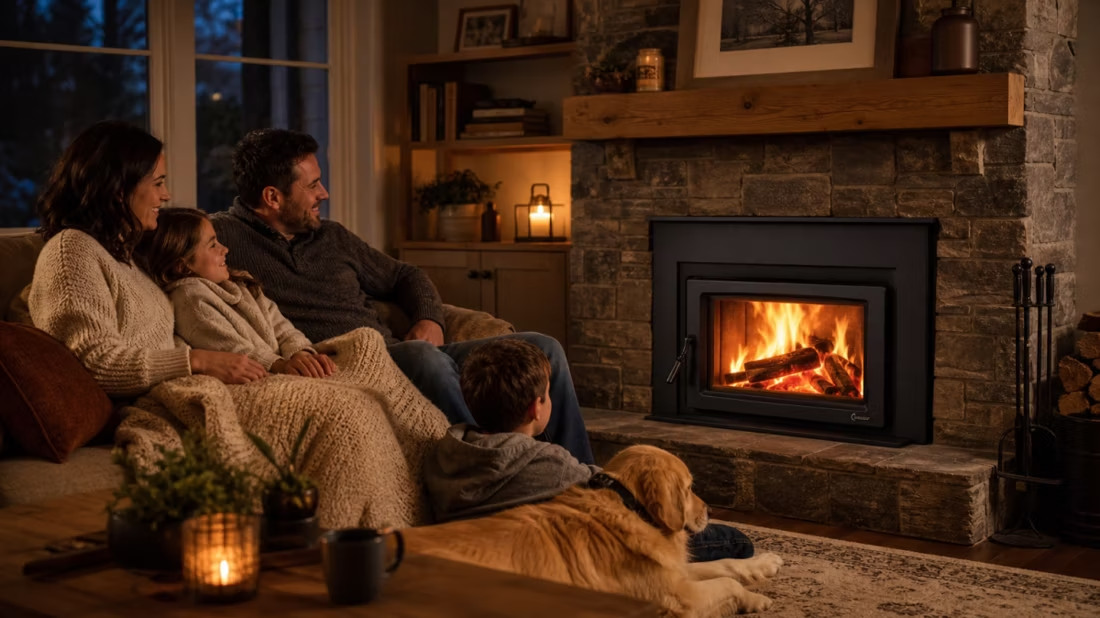
Four fuels. One honest answer for Bay County.
Three steps. No salesperson until you're ready.
Tell us about your project
Your zip code, your situation, and the fuel you're leaning toward—or let the answers point you to one.
See what's actually available
The brands dealers within 100 miles genuinely carry—real options, never a catalog mirage.
Get your dealer & Project Guide
A trusted local dealer, plus the free Project Guide & Parts List that names every component of the job.
Frequently Asked Questions
Which fuel works best in Bay County?
Gas and electric are the practical choices here. Gas fireplaces—running on propane or piped gas depending on the neighborhood—give you real flame and instant heat for the handful of genuinely cool nights each winter, plus a strong aesthetic upgrade for Gulf Coast homes. Electric fireplaces are popular for exactly the same reason without any venting or fuel-line work—plug-and-play ambiance in a climate where heat output barely matters. Wood stoves are uncommon in Bay County; the 1,288 heating degree days and 43°F average winter low don't create real demand, though a small number of homeowners install one for ambiance in a beach house or to match a second home up north. Pellet stoves are essentially absent as a home-heating category—the regional pellet brands you'll see locally, like Lignetics and Hamer Pellet Fuel, are sold mainly for grills and smokers, not hearth appliances.
Do I need a permit to install a fireplace in Bay County?
Yes, in most cases. Gas fireplace and gas insert installations require a building permit plus a licensed gas-fitter for the line connection, and Bay County's coastal location means installers also have to account for Florida Building Code wind-load and corrosion requirements—especially for homes on the beach side of Highway 98 where salt air accelerates wear on venting and hardware. Electric fireplace installs typically skip the permit process unless you're hardwiring a built-in unit into a new circuit. Permits are handled through Bay County's building department for unincorporated areas, or through the city permit office if you're inside Panama City, Panama City Beach, or Lynn Haven limits. Most local retailers manage this paperwork as part of the install.
Are there air quality or burning restrictions in Bay County?
No—Bay County has no wood-smoke non-attainment designation and no winter inversion pattern like you'd see in mountain basins, so there are no curtailment days or burning advisories to plan around. The bigger practical constraint on wood heat here isn't air quality, it's the climate itself: with an average winter low of 43°F, most homes simply don't generate enough heating demand to justify a wood-burning appliance, chimney maintenance, and a firewood supply. If you do want a wood-burning fireplace for ambiance, there's nothing regulatory stopping you—it's purely a question of whether it fits how you'll actually use it.
Can one local hearth retailer handle both gas and electric?
Yes—most hearth retailers serving Bay County carry both gas and electric lines, since those are the two fuels that actually move here. Dealers based in Panama City and Lynn Haven typically stock working displays of both so you can compare a vented gas unit against a plug-in electric insert side by side. A handful of dealers also keep a wood-burning display model on hand for the occasional beach-house or vacation-property buyer, but that's the exception rather than the core business for most showrooms in the county.
How does fireplace installation work in a coastal, hurricane-prone county like this?
Coastal conditions change the details even when the fuel choice is simple. Gas venting and exterior components need corrosion-resistant materials to hold up against salt air, especially for homes in Panama City Beach and Mexico Beach. Homes built on pilings or elevated slabs near the Gulf also need venting runs planned around the structure's wind-rated construction. Installers familiar with Bay County's building code work through these details as a matter of course—it's less about extreme cold-weather performance, which matters little at a 43°F average winter low, and more about salt exposure and storm-code compliance.
What's the typical cost range for gas and electric fireplace installation in Bay County?
Gas fireplace, insert, or stove installation typically runs $4,000–$9,500 depending on whether you're tapping an existing propane tank or piped gas line versus running new gas service, plus any coastal-grade venting upgrades. Electric fireplace installation is the more budget-friendly option: $200–$2,800 for the unit itself, and $300–$1,000 in labor for anything beyond a simple plug-in wall unit—built-ins with new circuits sit at the higher end. Wood-burning installations, when someone does want one for ambiance, tend to cost more per project than in cold-climate markets since there's less local competition and infrastructure built around them. See the county + fuel pages above for dealer-specific pricing.
How much should I budget for a fireplace?
For an average home—covering the fireplace, the vent pipe, and basic installation—a budget between $3,900 and $5,500 gives you a lot of options across wood, gas, and pellet. By the time you add finish work, gas line, and electrical, the average complete installation lands between $5,000 and $12,000 all-in. In a remodel or new build, a good rule is to put about 2.5% of the total project cost toward the fireplace.
Does a fireplace add value to my home?
On average, a fireplace adds back to the home about the same amount you spent installing it. Add the monthly savings from heating the rooms you actually use instead of the whole house—often hundreds of dollars a year—and the value case is strong before you even count what a fire does for how your family uses the room.
Can I install a fireplace myself?
If you're putting a fire in your house on purpose, it's best to work with an expert. Unless you're genuinely experienced in framing, gas line, vent pipe, and the national code on clearances to combustibles, have a professional do it—and ideally the same company that sells you the fireplace, so warranty, service, and liability all live under one roof.
Can a fireplace actually lower my heating bill?
Yes—by creating a comfort zone. A furnace heats every square foot of the house just to warm the one room you're in; a gas fireplace on low burns roughly a sixth of the gas a typical furnace does. Set the furnace around 55–60 degrees as a baseline, then heat the rooms your family actually uses. Families who heat this way commonly save $20–$60 a month.
Stove and Fireplace Dealers in Bay County
Listings include WhyFire partner dealers, dealers we have verified as authorized for the brands we recommend, and established local businesses that carry hearth products. Every listing shows which one it is. The ones marked Preferred run on WhyFire's software, so they can show you real pricing and book your appointment right here. No manufacturer pays for placement. How we verify dealers →
Doodlebuggers Fireplace, Grill & Outdoor
Ravalle Services Inc
Florida Bath & Surface
Bay Breeze Patio
Waldorf Ace Hardware
Ferrellgas- Apalachicola
Find your fireplace in Bay County.
Get matched with a trusted local Bay County dealer and receive a free Project Guide & Parts List—the exact parts, including the vent kit, and the dealer we recommend for your project.
Find Your Fireplace →