
Keep Your Family Warm and Safe—No Matter What
With winter lows averaging 45°F and such a light winter heating season, wood heat is the exception in Bradford County—but for the homeowners who want the look and backup value of a real fire, we'll connect you with a local dealer who knows what's actually installable here.
Every Project Starts From One of These Five Situations
Wood heat is the exception, not the rule, in Bradford County.
Bradford County is a small, rural stretch of north-central Florida—county seat Starke, with Lawtey, Hampton, and Brooker rounding out a population of about 7,553. Camp Blanding anchors the eastern side of the county, and pine flatwoods and oak hammocks cover much of the rest. With a Climate Zone 2A designation and a very light winter heating load, winters here are mild by any national standard—a fraction of what a place like Duluth, MN or Fargo, ND deals with in a single season. Winter lows average 45°F, and hard freezes are the exception, not the norm.
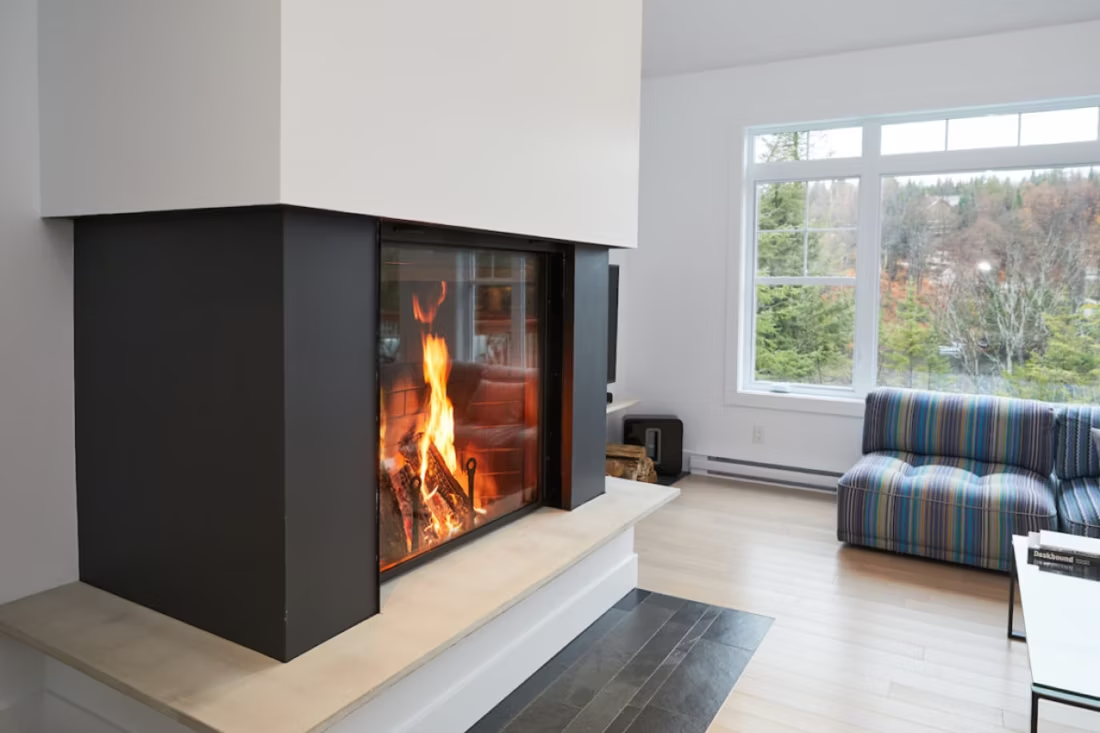
That means wood-burning fireplaces and stoves aren't a practical heating necessity for most Bradford County homes—gas and electric units cover the occasional chilly night far more efficiently. Still, some homeowners install a wood stove or fireplace anyway: for the ambiance of a real fire on a rare cold front, for a rustic look in an older Starke farmhouse, or as a no-electricity heat source during the power outages that follow Florida's hurricane season. If that's you, a local dealer can tell you honestly whether it makes sense for your specific house and how it fits alongside a primary gas or electric system.
Three steps. No salesperson until you're ready.
Tell us about your project
Your zip code, your situation, and the fuel you're leaning toward—or let the answers point you to one.
See what's actually available
The brands dealers within 100 miles genuinely carry—real options, never a catalog mirage.
Get your dealer & Project Guide
A trusted local dealer, plus the free Project Guide & Parts List that names every component of the job.
Frequently Asked Questions
Does a wood stove or fireplace actually make sense in Bradford County's climate?
For most homes, no—not as a primary heat source. With winter lows averaging 45°F and such a light winter heating load overall, Bradford County rarely sees the kind of sustained cold that makes wood heat a practical necessity. Where wood fireplaces do get installed here, it's usually for the ambiance of a real fire, a rustic aesthetic in an older Starke or Lawtey home, or as backup heat during power outages after a storm. If your goal is everyday warmth, a gas or electric fireplace will almost always serve you better and cost less to run.
How much does installing a wood-burning fireplace cost in Bradford County?
Because demand is low, pricing varies more here than in colder markets with more competition among installers. A basic freestanding wood stove with new Class A chimney venting typically runs in the $3,000 to $6,500 range for a decorative or occasional-use install; costs climb if a masonry chimney needs to be built from scratch rather than routed through an exterior wall. Since so few Bradford County homes need wood heat for warmth, most installers here treat it as a specialty job rather than routine work—expect a local dealer to walk you through what's realistic for your specific house before quoting anything.
Do I need a permit to install a wood stove in Starke or elsewhere in Bradford County?
Yes. New wood-burning appliance installations require a permit through the Bradford County Building Department, which reviews clearance-to-combustibles, hearth pad sizing, and chimney or vent-pipe specs against current code—the same requirements that apply anywhere in Florida, regardless of how rarely the unit gets used. Most reputable installers handle the permit paperwork as part of the job, so this shouldn't fall on you to manage alone.
What wood species are actually available to burn locally?
Oak and pine are the two workhorses in Bradford County's woodlots and are what most local sellers stock—oak for its dense, long-burning coals and pine as a faster-catching supplement. Mahogany shows up in the county's tree inventory too, more often planted as ornamental or lumber stock than harvested for firewood, and it's not something you'll typically find at a roadside wood stand. If you do end up burning occasionally, oak is the better choice for heat output; pine is fine for kindling but burns fast and produces more resin buildup if used exclusively.
Wood vs. gas vs. electric—which actually fits a Bradford County home?
For most Bradford County houses, gas or electric wins outright. Both are standard, practical choices here—gas gives you instant, adjustable heat with no ash or creosote to manage, and electric fireplace inserts are simple to install with minimal clearance requirements, which matters in the county's older and manufactured housing stock. Wood only makes sense if you specifically want the experience of a real fire or a no-power backup option; given how mild and short winters run here, it's rarely the right call as your only heat source.
Can I install a wood-burning fireplace in a mobile or manufactured home in Bradford County?
It's harder than in a site-built home. Many manufactured and mobile homes common in Bradford County's rural areas aren't built to the clearance and structural specifications that wood stoves require, and not every stove model is HUD-listed for mobile home use. If you're in a manufactured home and want a wood-burning unit, you'll need a model specifically listed and labeled for mobile home installation, plus careful attention to floor protection and outside-air kits—a local dealer familiar with Bradford County's housing stock can tell you quickly whether your home qualifies.
How often should a rarely-used wood fireplace be inspected?
Even light or occasional use warrants an annual inspection. Infrequent, low-temperature fires—the kind you're likely to have in a mild climate like Bradford County's—can actually produce more creosote buildup than steady daily burning, because the fire often doesn't get hot enough to fully combust. A yearly Level 1 chimney inspection catches that before it becomes a hazard, even if you only light the thing a handful of times each winter.
Where can I buy firewood in Bradford County?
Because so few local homes rely on wood heat, you won't find the density of firewood suppliers you'd see in a colder market—but seasoned oak and pine are available through small local sellers and landowners around Starke and Brooker, often advertised by word of mouth or roadside signage rather than storefronts. If you're only burning occasionally for ambiance, a half-cord to a cord will likely cover an entire winter.
Is a wood-burning insert worth it for an existing masonry fireplace in an older Starke home?
It can be, if the chimney is structurally sound. Some of Starke's older homes have original masonry fireplaces that were built for wood decades ago, before central HVAC was standard. An insert can turn that draft-prone opening into a cleaner, more controlled firebox—but given Bradford County's mild winters, most homeowners doing this are after the look and occasional-use value rather than a heating upgrade. Have a local dealer inspect the flue and firebox condition first; older masonry sometimes needs relining before any insert can go in safely.
What's the difference between an insert and a zero-clearance fireplace?
An insert is a fireplace that slides into a pre-existing wood-burning fireplace—if you don't have one, there's nothing to insert it into. A zero-clearance fireplace is built into a framed wall, which makes it the answer for remodels and new construction. Simple test: existing masonry fireplace means insert; blank or framed wall means zero-clearance.
Why is a fireplace insert so efficient?
An insert does two things: it seals the chimney completely, so you stop losing air you already paid to heat, and it radiates warmth into the room through the firebox and glass. Most add a heat-exchange fan that pulls cool room air underneath, wraps it around the hot firebox, and pushes it back out warm. Your home is more efficient before you've even lit the first fire.
How much should I budget for a fireplace?
For an average home—covering the fireplace, the vent pipe, and basic installation—a budget between $3,900 and $5,500 gives you a lot of options across wood, gas, and pellet. By the time you add finish work, gas line, and electrical, the average complete installation lands between $5,000 and $12,000 all-in. In a remodel or new build, a good rule is to put about 2.5% of the total project cost toward the fireplace.
Does a fireplace add value to my home?
On average, a fireplace adds back to the home about the same amount you spent installing it. Add the monthly savings from heating the rooms you actually use instead of the whole house—often hundreds of dollars a year—and the value case is strong before you even count what a fire does for how your family uses the room.
Find your wood fireplace in Bradford County.
Tell us a bit about your home and whether you're after ambiance, occasional heat, or storm-season backup—we'll match you with a trusted local dealer and send over a free Project Guide & Parts List with the exact parts, vent kit, and recommended installer for your Bradford County project.
Find Your Fireplace →