
Find the right fireplace for Bradford County homes.
With average winter lows around 45°F and only about 962 heating degree days a year, Bradford County doesn't need a cold-climate heating system—but gas and electric fireplaces still deliver ambiance, backup warmth, and real comfort on the county's cooler nights. Find a trusted local dealer serving Starke, Lawtey, Brooker, and Hampton.
Every Project Starts From One of These Five Situations
Mild winters, real demand for ambiance and backup heat in Bradford County, Florida.
Bradford County sits in Florida's climate zone 2A, a warm-humid region where the heating season barely registers next to a place like Duluth, MN or Fargo, ND—those cities each rack up 8,000+ heating degree days a year, while Bradford County sees roughly 962. Winter lows here average around 45°F, with the occasional dip into the 20s during a cold front, but nothing close to a sustained freeze. Oak, mahogany, and pine are the common local hardwoods, and they show up plenty in furniture and landscaping—but with heating demand this low, wood-burning fireplaces have effectively fallen out of use as a primary heat source in the county.
What you'll find on this hub reflects that reality: gas and electric fireplaces are the standard hearth options across Bradford County, while wood and pellet appliances are genuinely rare—installed occasionally for looks in an older Starke farmhouse, but not as a heating strategy. Pick your fuel below to see local dealers, typical installation costs, and the resources that fit your project, whether you're in town in Starke or out along a county road toward Lawtey or Brooker.
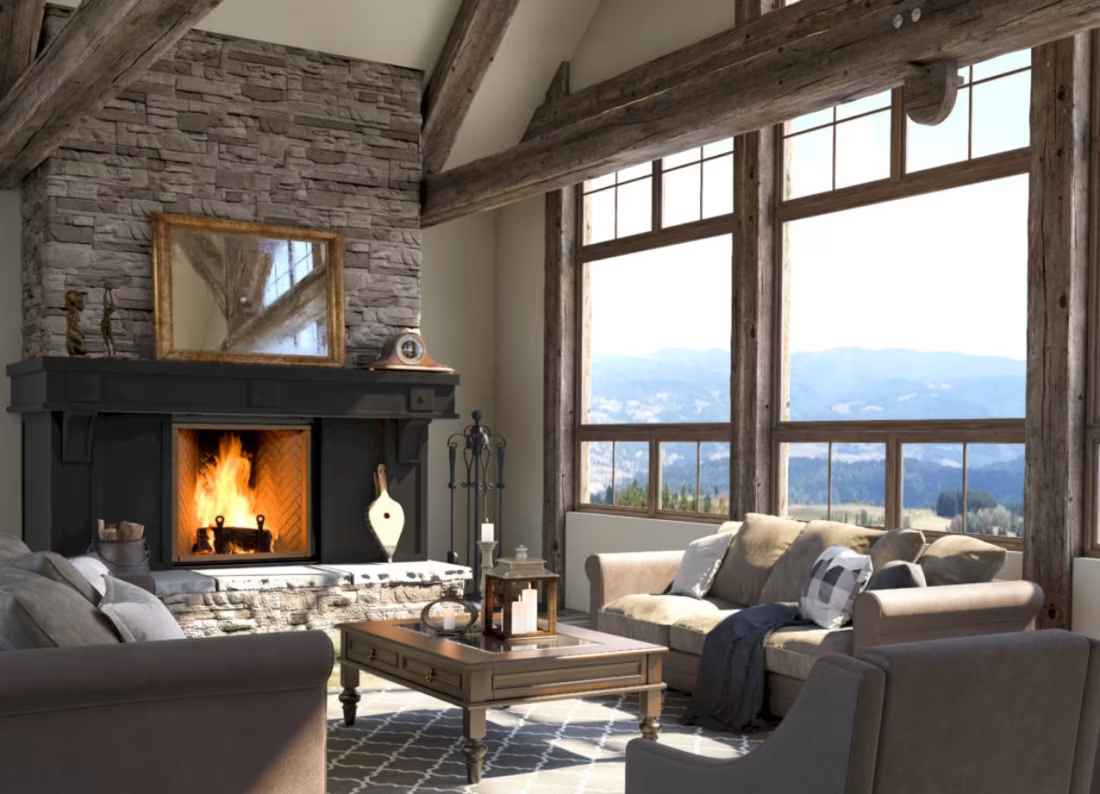
Four fuels. One honest answer for Bradford County.
Three steps. No salesperson until you're ready.
Tell us about your project
Your zip code, your situation, and the fuel you're leaning toward—or let the answers point you to one.
See what's actually available
The brands dealers within 100 miles genuinely carry—real options, never a catalog mirage.
Get your dealer & Project Guide
A trusted local dealer, plus the free Project Guide & Parts List that names every component of the job.
Frequently Asked Questions
Which fuel works best in Bradford County?
Gas and electric are the fuels that actually make sense here. With average winter lows near 45°F and only about 962 heating degree days a year, Bradford County never develops the sustained cold that makes wood or pellet heat a practical necessity—there's no equivalent to the 20-hour overnight burns a Blaze King owner in Duluth, MN relies on. Gas fireplaces, running mostly on propane outside Starke's limited town service, give homeowners instant supplemental heat and ambiance without any fuel storage or labor. Electric fireplaces are the other common choice—no venting, no gas line, and a straightforward install in the ranch homes and manufactured housing common throughout the county. Wood-burning units still show up occasionally, usually for looks in an older home rather than as a heat source, and pellet stoves are essentially absent since there's no cold-climate driver to justify one.
Do I need a permit to install a fireplace in Bradford County?
Generally yes. Gas fireplace and gas insert installations in Bradford County require a building permit through the Bradford County Building Department (or the town of Starke's permitting office if you're inside city limits), plus a separate gas line permit handled by a licensed gas-fitter—this applies whether you're on propane or the limited natural gas service available in town. Electric fireplace installs typically don't require a permit for plug-in units, but built-in electric fireplaces that need new wiring or a dedicated circuit do require an electrical permit. Most local dealers pull these permits as part of the installation, so you're not usually filing paperwork yourself.
Is a wood-burning fireplace realistic in Bradford County?
It's uncommon, and it's worth being honest about that. With only about 962 heating degree days a year and winter lows averaging 45°F, wood heat isn't solving a real problem here the way it does in a cold-climate market. That said, a small number of Bradford County homeowners—often in older Starke properties with an existing masonry chimney—install or restore a wood-burning fireplace for the look and feel of a real fire, using local oak or pine. If that's your goal, it's a legitimate project; just go in expecting an occasional-use amenity rather than a heating system.
Can one local dealer handle both gas and electric fireplace installs?
Yes—most hearth retailers serving Bradford County, generally based in or near Starke or making the drive out from the Gainesville area, carry both gas and electric lines, since those are the two fuels with real local demand. That's useful if you're deciding between a propane-fed gas insert and a zero-clearance electric unit for the same room; a dealer who carries both can walk you through the venting, wiring, and cost trade-offs side by side rather than pushing whichever fuel they happen to stock.
Are pellet stoves available at all in Bradford County?
Technically, yes, but they're a niche request. Brands like Lignetics, Hamer Pellet Fuel, and Greenway Renewable Energy distribute pellets into the broader north Florida region, so fuel isn't impossible to find—but with the county's mild winters, there's little practical reason to install a pellet stove as a heat source. Homeowners set on one will likely need to work with a dealer outside the county, in a larger market like Gainesville or Jacksonville, and should expect longer lead times on both the appliance and service support.
What's the typical cost range for gas and electric fireplace installation in Bradford County?
For gas fireplaces, inserts, or stoves, expect roughly $4,000–$9,500 depending on whether you're tapping into an existing propane tank or gas line versus running new gas service to the appliance. Electric fireplaces run considerably less: $200–$3,000 for the unit itself, plus $400–$1,200 in labor for anything beyond a simple plug-in—which covers most wall-mount and insert installs in Bradford County homes. Built-in electric units that require new wiring or a dedicated circuit land toward the higher end of that labor range.
What is an in-home preview and do I need one?
It's a visit where a hearth professional measures your space, confirms the model you picked actually works in your home, and walks the specs—framing, gas line, venting, finish work—before anything is ordered. Some details you just can't know until you see the house. Never make a down payment without one; it's the single most-skipped step that burns buyers.
Wood, gas, pellet, or electric—how do I choose?
Match the fuel to your life, not the other way around. Wood: lowest fuel cost and total power-outage independence, but you're hauling and stacking. Gas: press a button, set a thermostat, no maintenance to speak of. Pellet: wood economics with automatic feeding, in exchange for weekly cleaning and a need for electricity. Electric: plugs in anywhere with honest supplemental heat. Nobody regrets the fuel that fits how they actually live.
Can a fireplace actually lower my heating bill?
Yes—by creating a comfort zone. A furnace heats every square foot of the house just to warm the one room you're in; a gas fireplace on low burns roughly a sixth of the gas a typical furnace does. Set the furnace around 55–60 degrees as a baseline, then heat the rooms your family actually uses. Families who heat this way commonly save $20–$60 a month.
How much should I budget for a fireplace?
For an average home—covering the fireplace, the vent pipe, and basic installation—a budget between $3,900 and $5,500 gives you a lot of options across wood, gas, and pellet. By the time you add finish work, gas line, and electrical, the average complete installation lands between $5,000 and $12,000 all-in. In a remodel or new build, a good rule is to put about 2.5% of the total project cost toward the fireplace.
Stove and Fireplace Dealers in Bradford County
Listings include WhyFire partner dealers, dealers we have verified as authorized for the brands we recommend, and established local businesses that carry hearth products. Every listing shows which one it is. The ones marked Preferred run on WhyFire's software, so they can show you real pricing and book your appointment right here. No manufacturer pays for placement. How we verify dealers →
Premier Gas & Grills
Get matched with a Bradford County hearth dealer.
Tell us about your gas or electric fireplace project and we'll match you with a trusted local dealer serving Bradford County, plus send you a free Project Guide & Parts List—the exact parts, vent kit if needed, and a recommended installer for your home.
Find Your Fireplace →