
A Niche Choice for Highland Acres's Mild Winters.
Pellet stoves aren't the default heat source here, but for supplemental warmth, ambiance, or backup, the right unit and a trusted local dealer make it worthwhile.
Every Project Starts From One of These Five Situations
Coastal Delaware winters rarely demand pellet heat.
Highland Acres sits at just 39 feet of elevation in Kent County, in climate zone 4A, with a winter heating season that's notably short and mild, and a winter low average of 28°F. That's a fraction of what a pellet-heavy market like Burlington, Vermont sees—Burlington's winters run far longer and colder, and homes there often run a pellet stove as genuine supplemental or even primary heat for months at a time. In Highland Acres, most winters are short enough and mild enough that a furnace or heat pump handles the load without much help.
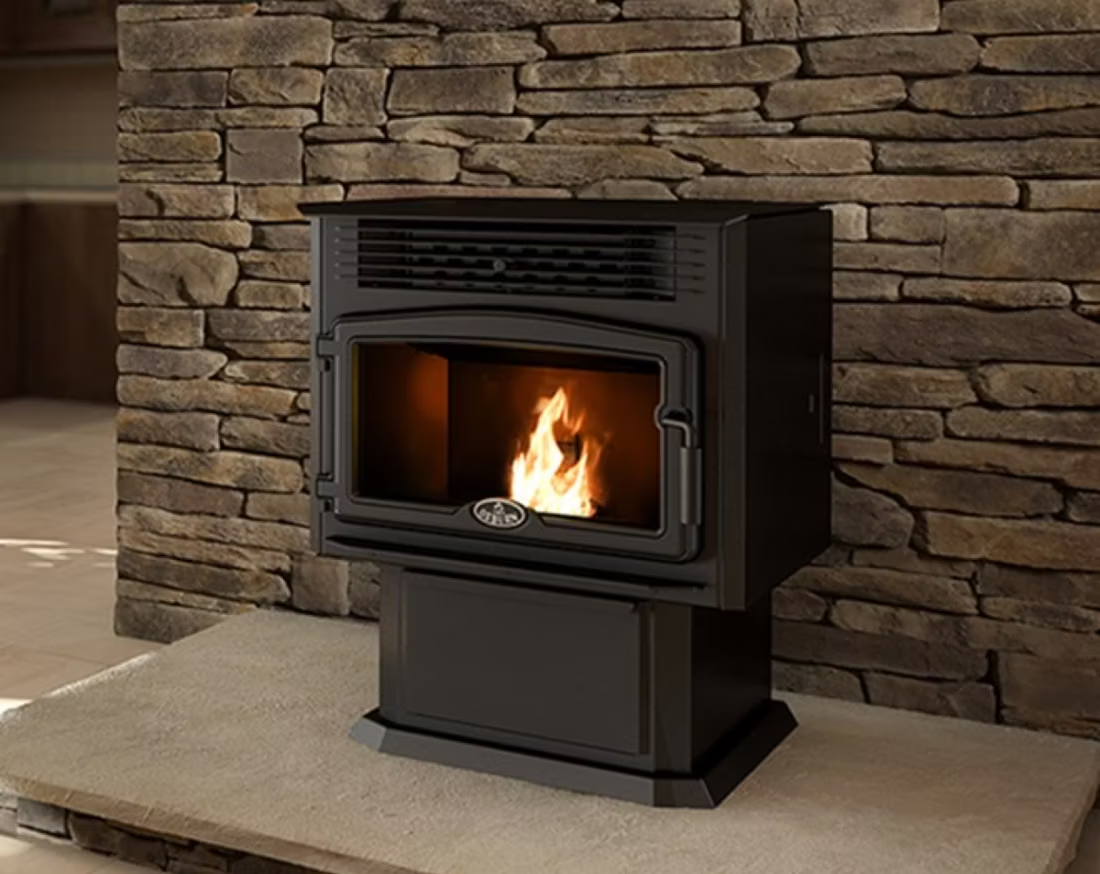
That said, pellet stoves aren't unheard of here—they show up in homes that want zone heat for one room, backup warmth during ice storms, or the look and feel of a real fire without the wood handling. Regional brands like Energex, Hamer Pellet Fuel, and Greene Team Pellet Fuel are sold through Mid-Atlantic hearth distributors and available to Highland Acres homeowners who want one. If that's you, I'll match you with a local dealer who can size the unit correctly and tell you honestly whether it's the right fit for your house.
Three steps. No salesperson until you're ready.
Tell us about your project
Your zip code, your situation, and the fuel you're leaning toward—or let the answers point you to one.
See what's actually available
The brands dealers within 100 miles genuinely carry—real options, never a catalog mirage.
Get your dealer & Project Guide
A trusted local dealer, plus the free Project Guide & Parts List that names every component of the job.
Frequently Asked Questions
Why aren't pellet stoves more common in Highland Acres?
Highland Acres has a mild climate zone 4A profile—winters that run short and mild, with winter lows averaging 28°F. Compare that to a pellet-stove stronghold like Duluth, Minnesota, where winters stretch long and harsh, genuinely needing supplemental heat for half the year. Here, most homes get by on a furnace or heat pump served by Delmarva Power, Delaware Electric Cooperative, or City of Dover, and a pellet stove ends up being a nice-to-have rather than a necessity. That doesn't mean it's a bad idea—it just means the decision is usually about comfort, ambiance, or backup rather than survival heat.
What does a pellet stove installation cost in Highland Acres?
There isn't deep local pricing data for pellet installs in Highland Acres specifically, since the market is small—but Mid-Atlantic pellet stove and insert installations typically run $3,000 to $6,000, depending on whether you're venting through an existing masonry chimney, a wall, or need new roof penetration. Electrical work for the auger and blower is usually minor since most homes already have a nearby outlet, which keeps costs lower than a comparable wood stove install. A local dealer can give you a firm number after seeing your fireplace or install location.
Do I need a permit to install a pellet stove in Kent County?
Most likely, yes. Kent County Levy Court's Building Permits & Inspections office typically requires a permit for new solid-fuel appliance installations, including pellet stoves, to verify clearances and venting meet code. If you live within Dover city limits rather than unincorporated Kent County, the City of Dover's own building department handles it instead. Either way, the local dealer who sells and installs your unit will usually pull the permit as part of the job, so it's worth confirming that's included in your quote.
How does venting work for a pellet stove in a home like mine?
Pellet stoves vent differently than wood stoves—they use a small-diameter PL vent pipe (typically 3 or 4 inches) rather than a full masonry chimney, and can usually run horizontally through a wall rather than requiring a straight vertical run. That makes them easier to retrofit into a Highland Acres home without an existing fireplace or chimney than a comparable wood stove would be. If you do have an existing masonry fireplace, a pellet insert can use it, but the vent pipe still needs its own liner sized for pellet exhaust—not the open flue a wood fire would use.
Where can I buy pellet fuel near Highland Acres?
Pellet fuel isn't sold on every street corner in a market this small, but regional brands including Energex, Hamer Pellet Fuel, and Greene Team Pellet Fuel are distributed through hearth retailers and hardware suppliers serving the Dover area. Because pellet heat is a niche choice here rather than a primary heating strategy for most households, it's worth confirming with your local dealer where they source their bags and whether they can set you up with a standing seasonal order—running out mid-winter is the most common frustration for first-time pellet stove owners.
Will my pellet stove work during a power outage?
No—and this is worth knowing before you buy one for backup heat. Unlike a wood stove, a pellet stove's auger, igniter, and blower all run on electricity, so it goes dark the moment Delmarva Power or Delaware Electric Cooperative service drops. Some owners pair a pellet stove with a small battery backup or generator to bridge outages, but if reliable heat during storms is your main goal in Highland Acres, a wood-burning appliance or a gas unit with battery-backup ignition is a more dependable choice.
What size pellet stove makes sense for a Highland Acres home?
Given the mild winters here, most homeowners are sizing for one room or a supplemental heating role rather than whole-house coverage—a small to mid-size pellet stove (rated around 40,000-50,000 BTU) is usually plenty for a living room or open main floor in a typical Kent County home. Going bigger than that rarely makes sense given how few days actually demand it; oversizing just means more cycling and wasted pellets. A local dealer can walk your space and give you a specific recommendation.
How much maintenance does a pellet stove need?
Pellet stoves need more routine attention than gas but less than wood: emptying the ash pan every few days of use, cleaning the burn pot weekly during heavy use, and a full professional cleaning of the exhaust venting and hopper mechanism once a year. Given how lightly most Highland Acres households run a pellet stove—often just cool evenings or occasional backup—annual maintenance before the season starts is usually sufficient rather than mid-winter servicing.
Pellet vs. gas—which makes more sense for a Highland Acres home?
For most homes here, gas is the more natural fit. Highland Acres has standard gas fuel relevance, meaning gas fireplaces and inserts are a mainstream, well-supported option with instant on-demand heat and no fuel storage required. Pellet stoves require bagged fuel storage, regular feeding and ash cleanup, and don't work in a power outage—real tradeoffs for a mild climate that doesn't demand daily heavy heating. Where pellet still wins is ambiance and the look of a real flame with more efficiency than an open hearth. If that's the priority, it's a fine choice; if you want the lowest-hassle heat source, gas is worth comparing first.
Why is my open fireplace making my house colder?
Open fireplaces suck—literally. As the fire burns, it consumes air your furnace already paid to heat and pulls it out through the chimney, so the house is actually colder after the fire goes out than before you lit it. An insert fixes this: it seals the chimney, puts fixed glass across the front, and turns that hole in your house into a real heat source.
What's the difference between an insert and a zero-clearance fireplace?
An insert is a fireplace that slides into a pre-existing wood-burning fireplace—if you don't have one, there's nothing to insert it into. A zero-clearance fireplace is built into a framed wall, which makes it the answer for remodels and new construction. Simple test: existing masonry fireplace means insert; blank or framed wall means zero-clearance.
Does a fireplace add value to my home?
On average, a fireplace adds back to the home about the same amount you spent installing it. Add the monthly savings from heating the rooms you actually use instead of the whole house—often hundreds of dollars a year—and the value case is strong before you even count what a fire does for how your family uses the room.
Can I install a fireplace myself?
If you're putting a fire in your house on purpose, it's best to work with an expert. Unless you're genuinely experienced in framing, gas line, vent pipe, and the national code on clearances to combustibles, have a professional do it—and ideally the same company that sells you the fireplace, so warranty, service, and liability all live under one roof.
Nearby Dealers
Hearth shops serving Highland Acres and the surrounding area. Every listing shows whether it is a WhyFire partner, a dealer we have verified as authorized for the brands we recommend, or a local business carrying hearth products. No manufacturer pays for placement. How we verify dealers →
Delaware Brick
Byler's Stove Shoppe, Inc
Walls Farm & Garden Center Inc
Tri-Gas & Oil
Pellet Brands Stocked Around Highland Acres
Manufacturers will point you to the nearest stocking dealer.
Find your pellet fireplace in Highland Acres.
Tell us about your home and goals—supplemental heat, backup warmth, or ambiance—and we'll send your free Project Guide & Parts List with the right pellet stove or insert and a trusted local dealer who can install it correctly.
Find Your Fireplace →