
Warm, Reliable Heat for Kent County Winters.
Clean, on-demand heat for Highland Acres homes, most of them running on propane rather than piped natural gas. Find the right unit and connect with a trusted local dealer.
Every Project Starts From One of These Five Situations
Propane-fueled comfort in Delaware's flat coastal plain.
Highland Acres sits just north of Dover at only 39 feet of elevation, in climate zone 4A. Winters here are mild by national standards—average lows hover around 28°F and the area has a winter heating season that's just a fraction of what a place like Burlington, VT experiences in a typical year. That milder profile means a gas fireplace in Highland Acres is more often chosen for zone heating, ambiance, and backup warmth during a cold snap than for round-the-clock survival heat.
Highland Acres is a small unincorporated community of under 4,000 people, and natural gas mains don't reach most addresses out here the way they do closer to downtown Dover. That makes propane the standard fuel for gas fireplaces and inserts in this area, typically supplied by a regional propane company with either an above-ground or buried tank. Electric service comes from a mix of Delmarva Power, Delaware Electric Cooperative, and the City of Dover depending on exactly where your property sits, which matters if you're weighing a gas unit with a battery-backup ignition system against the local grid's reliability.
Three steps. No salesperson until you're ready.
Tell us about your project
Your zip code, your situation, and the fuel you're leaning toward—or let the answers point you to one.
See what's actually available
The brands dealers within 100 miles genuinely carry—real options, never a catalog mirage.
Get your dealer & Project Guide
A trusted local dealer, plus the free Project Guide & Parts List that names every component of the job.
Frequently Asked Questions
How much does a gas fireplace installation cost in Highland Acres?
Most gas fireplace and insert installations in the Highland Acres area run somewhere between $3,500 and $9,500, with the biggest swing factor being fuel source. If you're already on propane with a tank in place, a direct-vent insert or fireplace install sits toward the lower end. If a new propane tank needs to be set and connected—common for this area since natural gas mains don't reach most Highland Acres properties—expect the tank installation and line run to add to the total. A local dealer will walk your property and give you a firm number before any work starts.
Can I convert my existing wood fireplace to gas?
Yes, and it's a common upgrade in older Kent County homes that were originally built around an oak, hickory, or maple-burning masonry fireplace. A gas insert typically slides into that existing firebox, using a stainless liner run through your current chimney as the vent path. Because most Highland Acres homes run on propane rather than piped gas, the conversion usually includes running a gas line from an existing or new propane tank to the fireplace location. Expect the project to land in a similar $3,500–$8,500 range as a new install, depending on that tank and line work.
Do I need natural gas, or should I plan on propane?
Plan on propane. Highland Acres is an unincorporated pocket of Kent County without natural gas mains running to most properties, so the overwhelming majority of gas fireplace installs out here run on propane from a dedicated tank. If your home happens to sit closer to a natural gas line near Dover proper, your installer can confirm availability, but don't count on it as the default. Nearly every gas fireplace model sold today can be configured for propane with the correct orifice and regulator, so fuel choice won't limit which unit you can get.
Will my gas fireplace work during a power outage?
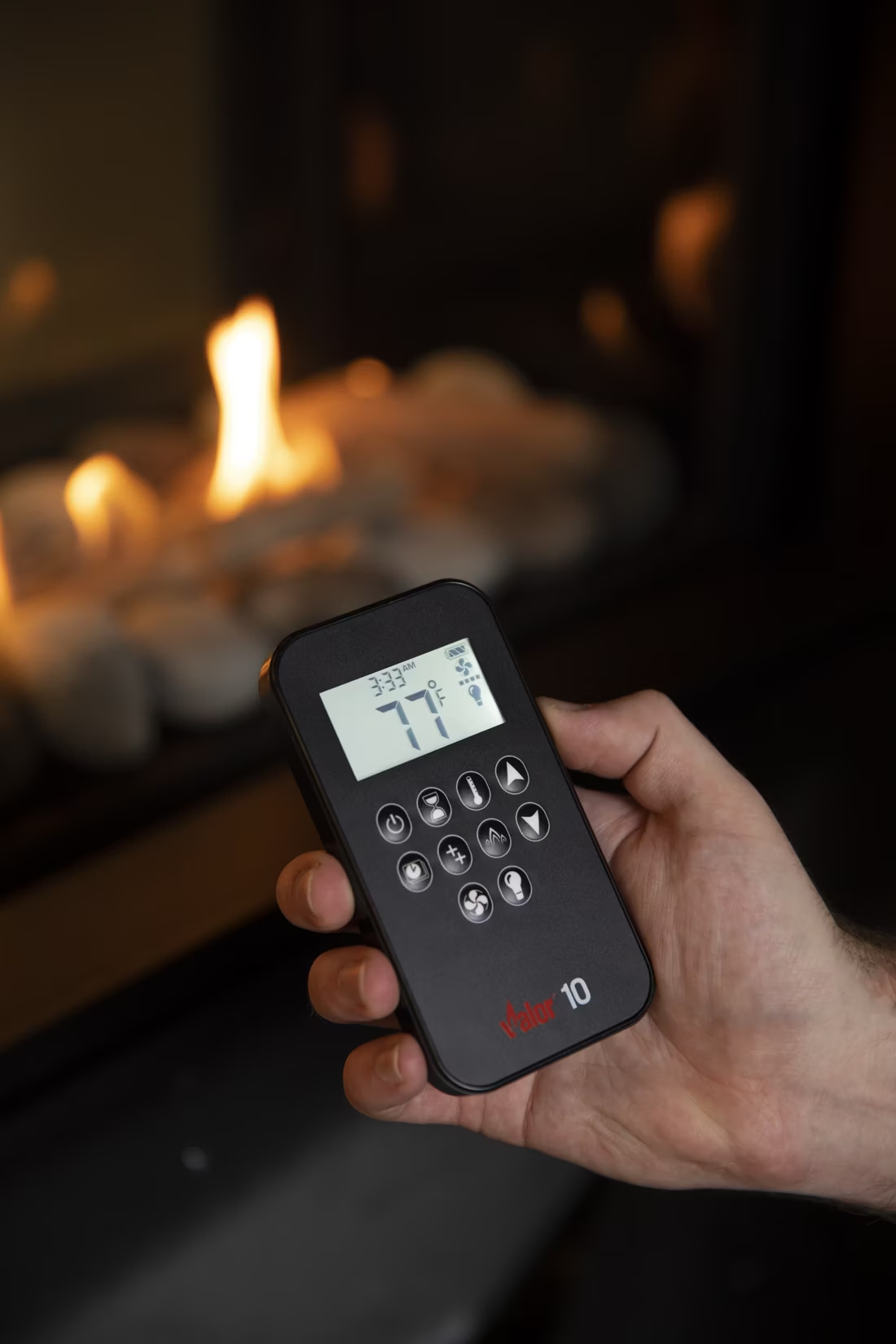
Most will, with the right ignition system. Units with intermittent pilot ignition (IPI) run on a small battery backup that kicks in the moment grid power drops, so the fireplace still lights on demand. That matters in this part of Kent County, where service comes from a mix of Delmarva Power, Delaware Electric Cooperative, and the City of Dover, and rural feeders can be slower to restore after a coastal storm knocks out power. Valor fireplaces take it a step further—their pilot generates its own electricity through a thermocouple, so there's no battery to remember or replace. Ask your local dealer which ignition system is on any unit you're considering.
What's the difference between a gas fireplace, gas insert, and gas stove?
A gas fireplace is a fully built-in unit framed into a wall, typically chosen for new construction or a remodel. A gas insert is sized to fit into an existing masonry firebox, turning an old wood-burning fireplace into a sealed, efficient gas unit that vents through the existing chimney. A gas stove is a freestanding cabinet-style unit that sits out in the room like a traditional wood stove but runs on gas or propane. For Highland Acres homes with an older masonry fireplace already in place, an insert is usually the simplest and most cost-effective path.
Do I need a permit to install a gas fireplace in Highland Acres?
Yes. Building permits for Highland Acres fall under Kent County Levy Court's Department of Planning Services, since the community is unincorporated. If your install involves a new or relocated propane tank, that work also needs to clear the Delaware State Fire Marshal's office, which reviews propane storage and installation for residential properties statewide. A reputable local dealer coordinates both the building permit and the Fire Marshal sign-off as part of the install, so you're not chasing separate approvals yourself.
What's the difference between vented and vent-free gas fireplaces?
Vented (direct-vent) gas fireplaces pull combustion air from outside and exhaust it back outside through a sealed pipe—they're the cleanest and most universally recommended option. Vent-free units burn fuel directly into the room without any exterior venting; Delaware permits them, but only within strict room-size and ventilation rules, and they're not a fit for smaller, tightly sealed rooms. Given how mild Highland Acres winters run, some homeowners consider a vent-free unit for a smaller den or bonus room, but most local dealers will steer whole-house living areas toward a direct-vent model for the added margin of safety and indoor air quality.
How often should my gas fireplace be serviced?
Plan on an annual inspection, ideally before the first cold snap each fall. A technician checks the burner, pilot assembly, gas connections, and venting, and cleans the glass and interior—a much quicker visit than a wood chimney sweep, but it's what keeps the warranty valid and the unit burning cleanly. Local gas appliance service providers in the Dover area typically charge $150 to $225 for this visit, and it's worth doing every year even if the fireplace only sees occasional use.
Gas vs. electric fireplace—which makes more sense in Highland Acres?
With Highland Acres having a short, mild heating season and winter lows that rarely drop far below the upper 20s, both options can work, but they solve different problems. A gas fireplace delivers real heat output and keeps working in a power outage with the right ignition system—useful given the mix of Delmarva Power, Delaware Electric Cooperative, and City of Dover service in this area. An electric fireplace needs no venting, no gas line, and no propane tank, and at local residential rates of roughly $0.14 to $0.16 per kWh, it's inexpensive to run for occasional ambiance or light supplemental heat in a single room. For a primary heat source, gas usually wins; for a low-commitment install in a room that just needs some warmth and glow, electric is hard to beat on simplicity.
What's the difference between an insert and a zero-clearance fireplace?
An insert is a fireplace that slides into a pre-existing wood-burning fireplace—if you don't have one, there's nothing to insert it into. A zero-clearance fireplace is built into a framed wall, which makes it the answer for remodels and new construction. Simple test: existing masonry fireplace means insert; blank or framed wall means zero-clearance.
Why is my open fireplace making my house colder?
Open fireplaces suck—literally. As the fire burns, it consumes air your furnace already paid to heat and pulls it out through the chimney, so the house is actually colder after the fire goes out than before you lit it. An insert fixes this: it seals the chimney, puts fixed glass across the front, and turns that hole in your house into a real heat source.
Can I install a fireplace myself?
If you're putting a fire in your house on purpose, it's best to work with an expert. Unless you're genuinely experienced in framing, gas line, vent pipe, and the national code on clearances to combustibles, have a professional do it—and ideally the same company that sells you the fireplace, so warranty, service, and liability all live under one roof.
What is an in-home preview and do I need one?
It's a visit where a hearth professional measures your space, confirms the model you picked actually works in your home, and walks the specs—framing, gas line, venting, finish work—before anything is ordered. Some details you just can't know until you see the house. Never make a down payment without one; it's the single most-skipped step that burns buyers.
Nearby Dealers
Hearth shops serving Highland Acres and the surrounding area. Every listing shows whether it is a WhyFire partner, a dealer we have verified as authorized for the brands we recommend, or a local business carrying hearth products. No manufacturer pays for placement. How we verify dealers →
Delaware Brick
Byler's Stove Shoppe, Inc
Walls Farm & Garden Center Inc
Tri-Gas & Oil
Find your gas fireplace in Highland Acres.
Tell us a bit about your home and propane setup, and we'll put together a free Project Guide & Parts List—the right unit, the exact parts including your vent kit, and a trusted local dealer near Highland Acres to install it.
Find Your Fireplace →