
Add real warmth to your Claymont home without a chimney.
No venting, no gas line, no masonry work—just plug-in or hardwired warmth sized for New Castle County rowhomes and colonials. Get matched with a local dealer who can install it right.
Every Project Starts From One of These Five Situations
The easiest heat upgrade for Delaware's older housing stock.
Claymont sits tucked between Wilmington and the Pennsylvania line, in a climate zone 4A pocket where winter lows average 27°F and the winter heating season adds up to about half the load a place like Minneapolis, MN sees in a typical year. Much of the town's housing dates to its early-20th-century mill and steel era: brick rowhomes, tight-lot colonials, and post-war cottages, many without a masonry chimney or with a flue that was never rated for solid fuel. Newer construction along the I-95 corridor tends to skip chimneys entirely.
That housing mix, plus a dense suburban footprint with no nearby public forest land or cutting permits, is exactly why wood and pellet appliances rarely make sense here—there's nowhere local to source cut-your-own firewood, and most lots and HOAs aren't set up for solid-fuel venting. Electric fireplaces sidestep all of that. Delmarva Power serves Claymont at a residential rate of about $0.1637/kWh, and a typical electric insert or wall-mount unit draws far less than running a furnace, making it a practical way to add zone heat and real ambiance to a room without touching your existing HVAC or masonry.
Three steps. No salesperson until you're ready.
Tell us about your project
Your zip code, your situation, and the fuel you're leaning toward—or let the answers point you to one.
See what's actually available
The brands dealers within 100 miles genuinely carry—real options, never a catalog mirage.
Get your dealer & Project Guide
A trusted local dealer, plus the free Project Guide & Parts List that names every component of the job.
Frequently Asked Questions
How much does an electric fireplace installation cost in Claymont?
Most electric fireplace projects in Claymont run $300 to $2,500. A plug-in freestanding unit or a simple insert into an existing firebox sits at the low end and often needs nothing more than an existing outlet. A built-in wall unit or a linear model set into new framing costs more once an electrician runs a dedicated 120V or 240V circuit—common in Claymont's older rowhomes where panel capacity and outlet placement don't always line up with where homeowners want the fireplace. A local dealer can quote the exact number after seeing the wall and your electrical panel.
Do I need a permit to install an electric fireplace in Claymont?
A plug-in electric fireplace that uses an existing outlet typically doesn't require a permit—it's treated like any other appliance. If you're adding a built-in unit that needs a new dedicated circuit, New Castle County requires an electrical permit for that wiring work, and it needs to be pulled by a licensed electrician. Most local hearth dealers either employ a licensed electrician or coordinate directly with one, so this step is usually handled as part of the install rather than something you manage yourself.
What's the difference between an electric insert, a wall-mount unit, and a freestanding electric fireplace?
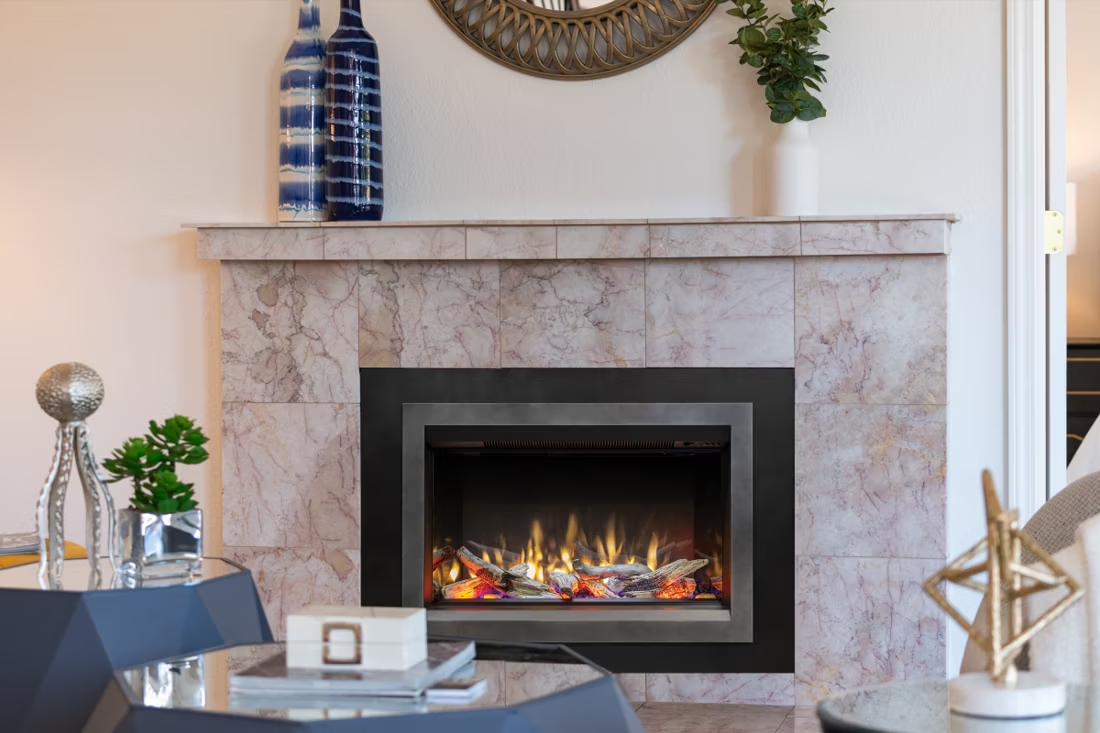
An electric insert is built to slide into an existing masonry firebox—a common retrofit for Claymont's older brick fireplaces that were never converted to gas. A wall-mount or built-in linear unit sits flush in new framing or is mounted like a large flat-screen, popular in newer construction and open-concept remodels. A freestanding electric stove or mantel unit needs no installation beyond an outlet and can be moved room to room, which makes it a common choice for renters and rowhome owners who don't want to touch the wall. All three run off standard household current and produce comparable heat output for the wattage.
How much does it cost to run an electric fireplace in Claymont?
Most electric fireplace heaters draw around 1,500 watts on high. At Delmarva Power's residential rate of roughly $0.1637 per kWh, running one for five hours a day costs about $1.23 daily, or roughly $37 a month if used every evening through a Claymont winter. That's considerably cheaper than heating an entire home with electric resistance heat, which is part of why these units work best as supplemental zone heat for a living room or bedroom rather than a whole-house solution.
Can an electric fireplace actually heat my home during a Claymont winter?
It can comfortably heat a single room. With average winter lows around 27°F and a winter heating season well lighter than northern-tier climates like Duluth, MN or Burlington, VT, Claymont's cold snaps are real but not extreme, and a 1,500-watt electric insert or stove can noticeably warm a bedroom, den, or open living area. It's not sized to replace your furnace on the coldest nights of the year, but paired with your existing heat source, it lets you turn the thermostat down and heat only the room you're using.
Why don't more people in Claymont install wood or pellet stoves?
Claymont's tightly packed rowhomes, small lots, and lack of nearby public forest land make wood and pellet heat impractical for most residents here—there's no local cutting permit system like you'd find near a national forest, and running a proper Class A chimney through a shared-wall rowhome is often not feasible. A handful of homeowners with detached houses on larger New Castle County lots still burn wood, favoring local oak, hickory, or maple, but for the typical Claymont property, electric is simply the more workable retrofit.
What electric fireplace brands are available through local dealers?
Dealers serving the Claymont and greater Wilmington area commonly carry Dimplex, Napoleon, and Touchstone electric fireplaces, ranging from basic mantel inserts to full linear wall units with multi-color flame effects and app control. Availability varies by dealer and by what's actually stocked for install in this market, which is exactly why matching with a local pro beats ordering a big-box unit sight unseen—they can tell you what fits your firebox opening or wall cavity and what they can actually service afterward.
Can I convert my existing masonry fireplace to electric?
Yes, and it's a common project in Claymont's older brick homes. An electric insert slides into the existing firebox opening, often with a surround panel that hides gaps, and plugs into a nearby outlet or a new dedicated circuit if the unit calls for 240V. Unlike a gas conversion, there's no venting or gas line to run, which keeps the project simpler and typically faster—many installs are done in a single day once the electrical work is sorted.
Electric vs. gas—which is right for my Claymont home?
Gas fireplaces are common in Claymont too, especially where natural gas service already runs to the home, and they produce more real heat output for supplemental winter use along with the look of an actual flame. Electric fireplaces cost far less to install, need no gas line or venting, and work in any room with an outlet—making them the practical choice for rowhomes, rentals, condos, and anyone who wants ambiance and light heat without construction. If your Claymont home doesn't already have gas service or you're renting, electric is usually the simpler path; if you're planning a larger remodel and want stronger heat output, it's worth comparing both with a local dealer.
Can I put a TV above my fireplace?
Yes—with an asterisk. Fireplaces are hot and TVs don't like heat. Either put a mantel between them to deflect rising warmth, or choose a fireplace with heat-management technology that creates a cool zone on the wall above—the wall stays around 125 degrees, barely warm, while the room still gets full heat. If you like clean lines and don't want a mantel, heat management is the answer.
Do electric fireplaces actually produce heat?
Yes—most put out around 4,800–5,000 BTUs from a standard outlet, which comfortably warms a bedroom, office, or den as a comfort-zone heater. What they won't do is carry a whole house the way wood, gas, or pellet can. Think of electric as ambiance-first with honest supplemental heat: flames on with no heat in July, flames plus warmth in January.
Does a fireplace add value to my home?
On average, a fireplace adds back to the home about the same amount you spent installing it. Add the monthly savings from heating the rooms you actually use instead of the whole house—often hundreds of dollars a year—and the value case is strong before you even count what a fire does for how your family uses the room.
How much should I budget for a fireplace?
For an average home—covering the fireplace, the vent pipe, and basic installation—a budget between $3,900 and $5,500 gives you a lot of options across wood, gas, and pellet. By the time you add finish work, gas line, and electrical, the average complete installation lands between $5,000 and $12,000 all-in. In a remodel or new build, a good rule is to put about 2.5% of the total project cost toward the fireplace.
Nearby Dealers
Hearth shops serving Claymont and the surrounding area. Every listing shows whether it is a WhyFire partner, a dealer we have verified as authorized for the brands we recommend, or a local business carrying hearth products. No manufacturer pays for placement. How we verify dealers →
Comfort Home & Hearth
Athenia Mason Supply Wilmington LLC
Ah Angersterin Inc
Wertz & Co,Inc
First State Hearth Services
Delaware Brick
Halco Grills And Fireplaces
Halligan's Hearth And Home
Closer To The Hearth
McCloskey's Garden & Hearth
Johnson Fitness And Wellness
The Stove Store
Norristown Chimney
Electric Service in Claymont
An electric fireplace's heater draws about 1,500 watts—pennies per hour at local rates.
Delmarva Power
Find your electric fireplace in Claymont.
Tell us a bit about your home and we'll match you with the right electric fireplace, insert, or wall unit—plus a free Project Guide & Parts List and a trusted local dealer to install it.
Find Your Fireplace →