
Find the right fireplace in New Castle County.
Gas and electric fireplaces are the standard choice across New Castle County's dense, I-95 corridor suburbs. Wood and pellet stoves are uncommon here—mild winters and near-universal piped gas access make them a niche pick, not the norm. Find a trusted local dealer for whichever fuel actually fits your home.
Every Project Starts From One of These Five Situations
A mild, suburban climate shapes hearth choices across New Castle County, Delaware.
New Castle County sits in climate zone 4A with a real but modest heating season and average winter lows around 24°F—nowhere near the severity of Burlington, VT or Bismarck, ND, where winters run far colder and longer. The county is the most densely populated in Delaware, anchored by Wilmington and stretching through Newark, New Castle, Middletown, Bear, and Glasgow along the I-95 corridor. Rowhouses, townhome developments, and tight suburban lots dominate the housing stock, and piped natural gas is widely available through Delmarva Power's service territory—which is exactly why gas fireplaces are the default hearth upgrade here.
Wood stoves and pellet stoves are genuinely uncommon in New Castle County—not because of any burn restriction (the county has no listed air quality concerns), but because mild winters, small suburban lots, and easy gas access make them impractical for most homes. When a homeowner does want wood heat for ambiance—burning local oak, hickory, or maple—it's usually a secondary unit in a home with some acreage out toward Middletown, Townsend, or Odessa, not a primary heat source. Pick your fuel below: gas and electric are where the real local dealer network is, and this hub also covers the county's cities and unincorporated communities.
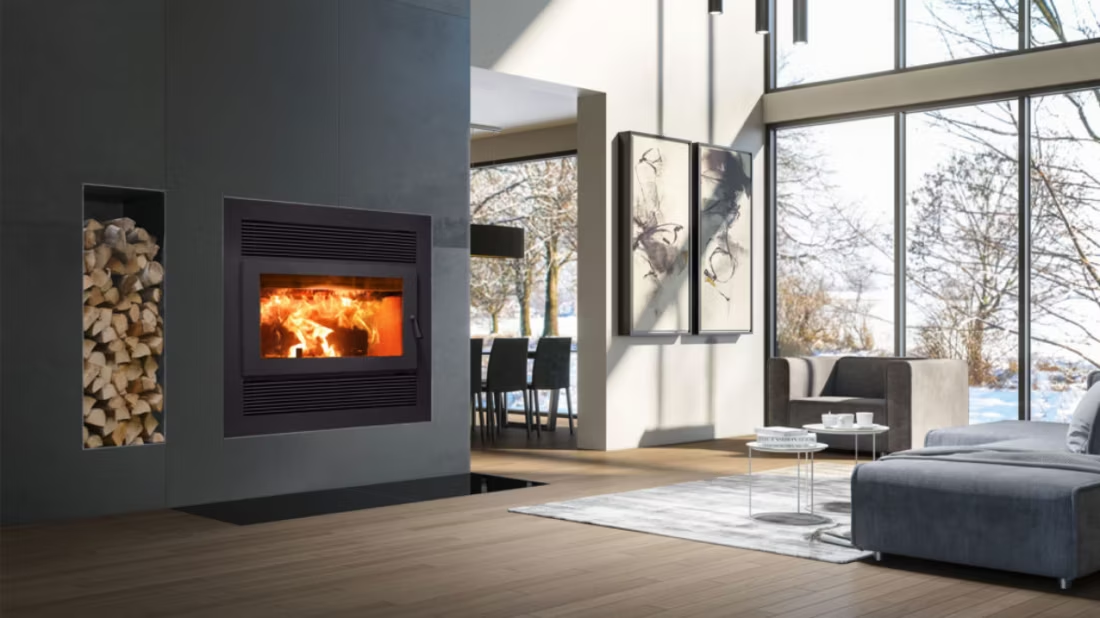
Four fuels. One honest answer for New Castle County.
Three steps. No salesperson until you're ready.
Tell us about your project
Your zip code, your situation, and the fuel you're leaning toward—or let the answers point you to one.
See what's actually available
The brands dealers within 100 miles genuinely carry—real options, never a catalog mirage.
Get your dealer & Project Guide
A trusted local dealer, plus the free Project Guide & Parts List that names every component of the job.
Frequently Asked Questions
Which fuel works best in New Castle County?
For most homes here, it's gas or electric. New Castle County sits in a mild climate zone (4A, winter lows averaging 24°F)—nothing close to the cold of Bismarck, ND or Burlington, VT—and Delmarva Power's natural gas footprint covers most of the Wilmington-Newark corridor, making gas fireplaces and inserts the easy, popular upgrade. Electric fireplaces are the go-to for the county's many rowhouses, townhomes, and condos, where venting isn't practical and a plug-in or hardwired unit solves the problem cleanly. Wood stoves burning local oak, hickory, or maple do exist, but almost exclusively as secondary or ambiance units on properties with some acreage near Middletown, Townsend, or Odessa—not as primary heat. Pellet stoves are rarer still; if you already own one, regional brands like Energex and Greene Team are available through local suppliers, but few dealers here specialize in pellet installs.
Do I need a permit to install a fireplace in New Castle County?
Generally yes. Gas fireplace, insert, or stove installations typically require a building permit plus a separate gas line permit and licensed gas-fitter for the connection work. Built-in electric fireplaces that involve new wiring or a dedicated circuit usually need an electrical permit; simple plug-in units generally don't. Within Wilmington, Newark, or the City of New Castle, permits run through that city's own building department; in unincorporated parts of the county, permitting goes through the New Castle County Department of Land Use. Most local hearth retailers handle this paperwork as part of the installation, so it's rarely something homeowners manage on their own.
Is wood burning restricted in New Castle County?
No—the county has no listed air quality non-attainment issues or wood-burning curtailment program, unlike some Western counties that see winter inversions. Wood stoves simply aren't common here for practical reasons: mild winters, small suburban lot sizes, and near-universal access to piped natural gas mean most homeowners choose gas or electric instead. The wood installs that do happen are usually in the county's few rural pockets, like the areas around Middletown or Townsend, and they're typically supplemental rather than a home's main heat source.
Can one local dealer handle both gas and electric fireplaces?
Yes, and that's actually the norm along the I-95 corridor. Because wood and pellet demand is low in New Castle County, most hearth retailers build their business around gas fireplaces, gas inserts, and electric units as their core product lines—which makes it easy to compare both fuels at one showroom if you're not sure which fits your home. If you specifically want a wood or pellet stove, expect a smaller pool of dealers and possibly a special order rather than an in-stock unit.
How does electric fireplace installation work in New Castle County's townhomes and rowhouses?
Very simply, in most cases. New Castle County's housing stock—rowhouses in Wilmington, townhome developments in Bear, Glasgow, and Middletown—is well suited to electric fireplaces because there's no venting or chimney to deal with. A plug-in unit or freestanding electric stove can go in with no permit at all. A built-in, wall-recessed electric fireplace that requires a new dedicated circuit is a bigger job—that needs a licensed electrician and typically an electrical permit—but it's still a fraction of the work a gas line or chimney installation would require.
What's the typical cost range for fireplace installation across fuel types in New Castle County?
Gas fireplace, insert, or stove: roughly $4,000–$9,000, with the range driven mostly by how much new gas line work is needed—lower if you're tapping into existing service, higher for a new gas line run to a room without it. Electric fireplace: $200–$3,000 for the unit itself, plus $400–$1,200 in labor for anything beyond a plug-in install, such as a built-in with a new circuit. Wood or pellet stove installs are uncommon enough locally that pricing runs closer to national averages—often $4,500–$9,000—but expect fewer local dealers stocking units and possibly a longer lead time for parts.
Can a fireplace actually lower my heating bill?
Yes—by creating a comfort zone. A furnace heats every square foot of the house just to warm the one room you're in; a gas fireplace on low burns roughly a sixth of the gas a typical furnace does. Set the furnace around 55–60 degrees as a baseline, then heat the rooms your family actually uses. Families who heat this way commonly save $20–$60 a month.
Does a fireplace add value to my home?
On average, a fireplace adds back to the home about the same amount you spent installing it. Add the monthly savings from heating the rooms you actually use instead of the whole house—often hundreds of dollars a year—and the value case is strong before you even count what a fire does for how your family uses the room.
Wood, gas, pellet, or electric—how do I choose?
Match the fuel to your life, not the other way around. Wood: lowest fuel cost and total power-outage independence, but you're hauling and stacking. Gas: press a button, set a thermostat, no maintenance to speak of. Pellet: wood economics with automatic feeding, in exchange for weekly cleaning and a need for electricity. Electric: plugs in anywhere with honest supplemental heat. Nobody regrets the fuel that fits how they actually live.
What are the biggest mistakes people make buying a fireplace?
Five come up constantly: budgeting for the unit but not the full job (vent, gas line, electrical, finish work); drowning in options instead of starting from style and fuel; buying without an in-home preview; handing installation to a handyman instead of a pro; and giving up out of sheer indecision. Every one is avoidable with a clear plan—step one, step two, step three.
Stove and Fireplace Dealers in New Castle County
Listings include WhyFire partner dealers, dealers we have verified as authorized for the brands we recommend, and established local businesses that carry hearth products. Every listing shows which one it is. The ones marked Preferred run on WhyFire's software, so they can show you real pricing and book your appointment right here. No manufacturer pays for placement. How we verify dealers →
First State Hearth Services
Delaware Brick
Wertz & Co,Inc
Athenia Mason Supply Wilmington LLC
Ah Angersterin Inc
Closer To The Hearth
Johnson Fitness And Wellness
The Stove Store
Comfort Home & Hearth
Schagrin Gas - Middletown
Fortiline
Duvall's Lawn & Garden Inc.
Starks Chimney Services
Halco Grills And Fireplaces
Halligan's Hearth And Home
Get matched with a New Castle County hearth dealer.
Tell us about your home and we'll match you with a trusted local dealer for your gas or electric project—or point you toward the right resource if you're one of the county's rare wood or pellet installs. You'll get a free Project Guide & Parts List: the exact parts, including the vent kit if your project needs one, and our recommended local dealer near you.
Find Your Fireplace →