
Add real ambiance without adding a chimney.
Zone heat and real flame-look ambiance for New Castle County homes—no venting, no gas line, no masonry work. Find the right unit and a trusted local dealer near Bear.
Every Project Starts From One of These Five Situations
Supplemental heat that plugs in and works instantly.
Bear sits on the Coastal Plain in New Castle County at just 78 feet of elevation, with a climate zone 4A profile and a moderate winter heating season overall. Winters here average a low around 25°F—cold enough for a real furnace or heat pump to run steadily, but nowhere near the brutal single-digit stretches you'd see in a place like Burlington, VT or Bismarck, ND. That moderate profile is exactly why electric fireplaces make sense as a primary living-space upgrade rather than an emergency heat source: most Bear homes already have a gas furnace or heat pump doing the heavy lifting, and an electric unit adds zone heat and a real-flame look to a family room, basement, or bedroom without touching the home's main HVAC system.
Bear has grown fast over the past two decades as a suburban extension of Newark and the Christiana area, which means a lot of newer townhomes, split-levels, and finished basements—spaces that are easy to retrofit with a wall-mount or built-in electric unit since there's no chimney or gas line to run. Delmarva Power serves the area at a residential rate around 16.4 cents per kWh, which keeps typical operating costs modest: a 1,500-watt insert running on high draws roughly 25 cents an hour. No masonry, no flue, no combustion byproducts—just an outlet and, for larger built-in models, a licensed electrician for the circuit.
Three steps. No salesperson until you're ready.
Tell us about your project
Your zip code, your situation, and the fuel you're leaning toward—or let the answers point you to one.
See what's actually available
The brands dealers within 100 miles genuinely carry—real options, never a catalog mirage.
Get your dealer & Project Guide
A trusted local dealer, plus the free Project Guide & Parts List that names every component of the job.
Frequently Asked Questions
How much does an electric fireplace installation cost in Bear?
A plug-in electric insert or freestanding stove that drops into an existing opening or sits against a wall typically runs $400 to $1,200 installed, since it just needs a standard outlet. A built-in wall unit or a linear electric fireplace set into new framing—common in the finished basements and townhome great rooms around Bear—runs closer to $1,500 to $3,500 once you factor in a dedicated 20-amp circuit, an electrician's time, and any surround or mantel finish work. Retrofitting an existing wood-burning masonry fireplace with an electric insert is usually on the lower end, often $500 to $1,500, since the firebox opening already exists.
What size electric fireplace do I need for my room?
Most electric fireplaces are rated for supplemental zone heat rather than whole-room heating from cold, and manufacturers typically size units to heat 400 to 1,000 square feet under ideal conditions—in practice, plan on an electric unit comfortably taking the chill off a single room in the 250-400 square foot range during a Bear winter. For a primary living room or open-concept great room, a larger 50-inch to 60-inch linear unit with a 5,000-9,000 BTU heater will do more work; for a bedroom or den, a smaller 36-inch insert is plenty. A local dealer can walk your space and size it against your ceiling height and window exposure.
How much does it cost to run an electric fireplace with Delmarva Power rates?
Delmarva Power's residential rate in the Bear area runs around 16.4 cents per kWh. Most electric fireplace heaters draw about 1,500 watts on their highest heat setting, which works out to roughly 24-25 cents per hour of heated use. Running one for four hours a night through a cold snap costs about a dollar. The flame effect alone, with the heater switched off, draws only 30-100 watts depending on the model—pennies an hour—which is why a lot of homeowners run the flame for ambiance year-round and only switch on the heater when it's actually needed.
Do I need a permit to install an electric fireplace in Bear?
A plug-in electric insert or freestanding unit that uses an existing standard outlet generally doesn't require a permit. If you're adding a built-in wall unit that needs a new dedicated circuit, New Castle County requires an electrical permit for that wiring work, which a licensed electrician pulls as part of the job. There's no venting, gas line, or combustion-related inspection involved—electric is by far the simplest fuel type to permit and install in New Castle County.
Is electric a good fit for Bear's climate, or should I look at gas or wood?
Bear's winters are moderate for the Mid-Atlantic—average lows around 25°F and a fairly moderate overall heating season—which means most homes are already carrying the heating load with a furnace or heat pump. Electric fireplaces fit well here as supplemental zone heat and ambiance in a family room or finished basement, without the cordwood storage of a wood stove (oak, hickory, and maple are the common local species) or the gas line work of a gas insert. If you're after backup heat during a power outage, electric is the wrong tool—it needs power to run. Wood or a battery-backed gas unit are better choices for that specific need; electric is best chosen for convenience and appearance rather than emergency heat.
Electric insert vs. wall-mount vs. freestanding—which type fits my home?
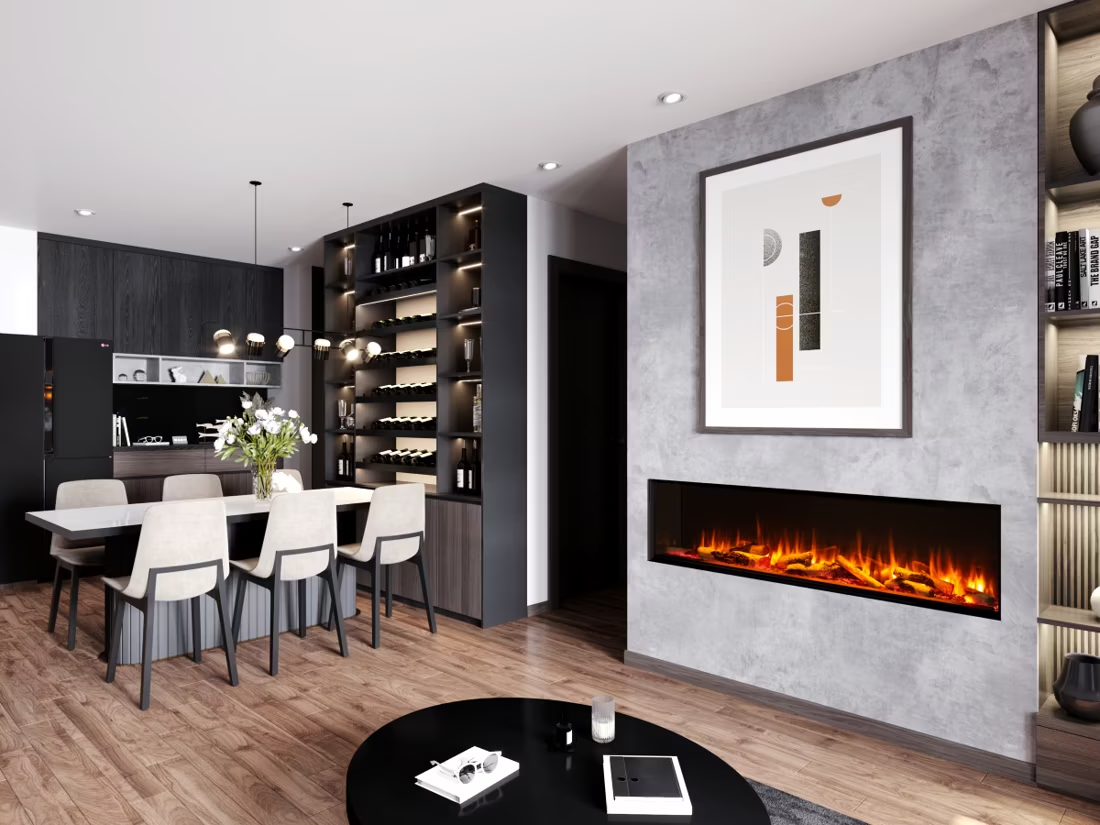
If you have an existing wood-burning masonry fireplace you want to modernize, an electric insert slides into that opening and gives you flame-look ambiance and zone heat without chimney maintenance. If you're finishing a basement or building out a great room in one of Bear's newer townhomes, a linear wall-mount unit set into framing gives a sleek, modern look with a wider viewing area. Freestanding electric stoves work well in a room without any existing fireplace opening—they just need floor space and an outlet. A local dealer can show you all three in person before you commit.
Can an electric fireplace heat my whole house?
No—electric fireplaces are built for zone heating, not whole-home heat. Even a well-rated unit tops out around 9,000-10,000 BTU equivalent, which is a fraction of what a central furnace or heat pump puts out. In Bear, where the existing HVAC system is already sized for the area's moderate winter heating needs, the electric fireplace's job is to add comfortable heat to the specific room you're using, cutting how hard the central system has to work in that space, not to replace it.
How much maintenance does an electric fireplace need?
Very little compared to wood or gas. There's no chimney to sweep, no gas lines to inspect, and no combustion byproducts to vent. Maintenance is mostly dusting the interior and cleaning the glass front, occasionally checking or replacing the LED flame bulbs (most last 20,000+ hours), and vacuuming any dust from the heater's air intake so it runs efficiently. There's no annual inspection requirement the way there is for gas or wood appliances in New Castle County.
Are there rebates for electric fireplaces through Delmarva Power?
Delmarva Power and Energize Delaware periodically run efficiency incentive programs, though they're typically aimed at heat pumps, insulation, and whole-home efficiency upgrades rather than electric fireplaces specifically, since fireplaces are a supplemental rather than primary heating appliance. It's still worth checking Energize Delaware's current program list before you buy, since some efficiency bundles include point-of-sale discounts on qualifying electric heating appliances. A local dealer can tell you what's currently available at the time of your purchase.
Can I put a TV above my fireplace?
Yes—with an asterisk. Fireplaces are hot and TVs don't like heat. Either put a mantel between them to deflect rising warmth, or choose a fireplace with heat-management technology that creates a cool zone on the wall above—the wall stays around 125 degrees, barely warm, while the room still gets full heat. If you like clean lines and don't want a mantel, heat management is the answer.
Does an electric fireplace need a vent or chimney?
No—that's its superpower. An electric fireplace needs a wall and an outlet, period. No vent pipe, no gas line, no clearances to design around, which is why it works in bedrooms, offices, apartments, and walls where venting a gas or wood unit would be impractical or impossible. Installation is typically the simplest and least expensive of any fireplace type.
Can a fireplace actually lower my heating bill?
Yes—by creating a comfort zone. A furnace heats every square foot of the house just to warm the one room you're in; a gas fireplace on low burns roughly a sixth of the gas a typical furnace does. Set the furnace around 55–60 degrees as a baseline, then heat the rooms your family actually uses. Families who heat this way commonly save $20–$60 a month.
Should the dealer who sells my fireplace also install it?
Ideally, yes. A fireplace project involves vent pipe, gas line, electrical, and often tile or stone. Hire three or four separate trades and you own the liability and the game of telephone between them. One company selling and installing means one accountable party, start to finish—ask about factory training, on-time completion records, and what happens if an inspection fails.
Nearby Dealers
Hearth shops serving Bear and the surrounding area. Every listing shows whether it is a WhyFire partner, a dealer we have verified as authorized for the brands we recommend, or a local business carrying hearth products. No manufacturer pays for placement. How we verify dealers →
Closer To The Hearth
Johnson Fitness And Wellness
The Stove Store
First State Hearth Services
Delaware Brick
Wertz & Co,Inc
Athenia Mason Supply Wilmington LLC
Ah Angersterin Inc
Schagrin Gas - Middletown
Fortiline
Starks Chimney Services
Duvall's Lawn & Garden Inc.
Comfort Home & Hearth
Tri-Gas & Oil
Electric Service in Bear
An electric fireplace's heater draws about 1,500 watts—pennies per hour at local rates.
Delmarva Power
Find your electric fireplace in Bear.
Tell us a bit about your home and we'll match you with the right electric fireplace or insert—and connect you with a trusted local dealer who can give you a free Project Guide & Parts List.
Find Your Fireplace →