
Reliable Gas Heat for Southeastern Connecticut's Coastal Winters.
From the Mystic and Stonington shoreline to inland Norwich and Colchester, gas fireplaces deliver instant, controllable warmth through Connecticut's damp, five-month heating season. Find the right unit and connect with a trusted local dealer.
Every Project Starts From One of These Five Situations
Steady warmth without the woodpile.
New London County—Southeastern Connecticut—is home to about 255,200 people spread across coastal towns like New London, Groton, Stonington, and Waterford, and inland communities like Norwich, Colchester, and Voluntown. Winters here bring lows dipping to around 21°F, with a heating season that typically runs from mid-October into April. It's a milder, damper cold than you'd find in a place like Duluth MN, but the humidity off Long Island Sound makes the chill feel persistent, and homeowners want heat they can turn on the moment a nor'easter rolls through—not a fire they have to build and tend.
Natural gas service through Eversource covers much of the county's more built-up corridor—New London, Groton, Norwich, and Waterford—while homes further inland and along the quieter reaches of Route 82 and Route 49 near Voluntown and North Stonington typically run on propane from regional suppliers. Connecticut doesn't have functional county government, so there's no single Southeastern Connecticut permitting office—each town, from Norwich to Old Lyme to Ledyard, issues its own building and gas permits. A local hearth dealer who already knows which town inspector wants what saves real time. Either way, a gas fireplace or insert gives you real, instant heat during a power outage or an ice storm, without the ash, the wood stacking, or the chimney-tending that a wood-burning setup demands.
Three steps. No salesperson until you're ready.
Tell us about your project
Your zip code, your situation, and the fuel you're leaning toward—or let the answers point you to one.
See what's actually available
The brands dealers within 100 miles genuinely carry—real options, never a catalog mirage.
Get your dealer & Project Guide
A trusted local dealer, plus the free Project Guide & Parts List that names every component of the job.
Frequently Asked Questions
How much does a gas fireplace installation cost in Southeastern Connecticut?
Most gas fireplace and insert installations in Southeastern Connecticut run $4,500 to $10,000, depending on the unit, the venting path, and whether you're on natural gas or propane. A direct-vent insert dropped into an existing masonry fireplace in a New London or Mystic colonial—with gas already run to the house—sits toward the lower end. A new built-in gas fireplace for a remodel in Waterford or Colchester, requiring fresh gas line work and framing, runs higher. Homes converting from propane tank service or needing a longer gas line run from the street will land at the top of the range. A local dealer will give you a firm number after seeing the space.
Can I convert my existing wood fireplace to gas?
Yes, and it's one of the most common projects for the older housing stock around New London, Norwich, and the Mystic-Stonington shoreline, where many homes still have their original masonry fireplace. A gas insert typically uses a stainless steel liner run through your existing chimney, so you keep the look of the fireplace while gaining real heat output and losing the ash and creosote maintenance. Expect $4,500 to $9,000 for the conversion, with homes already on Eversource natural gas usually landing lower than those needing a new propane tank and line.
Is natural gas available in Southeastern Connecticut, or will I need propane?
It depends on where in the county you are. Eversource runs natural gas mains through the denser parts of New London, Groton, Norwich, and Waterford, so if your home already has a gas water heater or range, adding a fireplace is usually a straightforward tap-in. Head further out—toward Voluntown, Sterling, North Stonington, or the rural edges of Lyme and East Lyme—and you're more likely on propane from a regional supplier, either with an existing tank or a new one set for the fireplace. Nearly every gas fireplace on the market can be configured for either fuel; your installer just sets the correct orifice and regulator.
Will my gas fireplace still work if the power goes out?
In most cases, yes. Southeastern Connecticut's coastal exposure means nor'easters and the occasional hurricane remnant knock out power for days at a time, and a gas fireplace with intermittent pilot ignition (IPI) has a battery backup—usually AA batteries in the unit—that keeps it lighting on demand when the grid drops. Valor fireplaces take a slightly different approach: the pilot's thermocouple generates its own electricity, so there are no batteries to remember at all. If storm-driven outages are a real concern for your Groton or Waterford home, ask your dealer specifically about the ignition system before you buy.
What's the difference between a gas fireplace, a gas insert, and a gas stove?
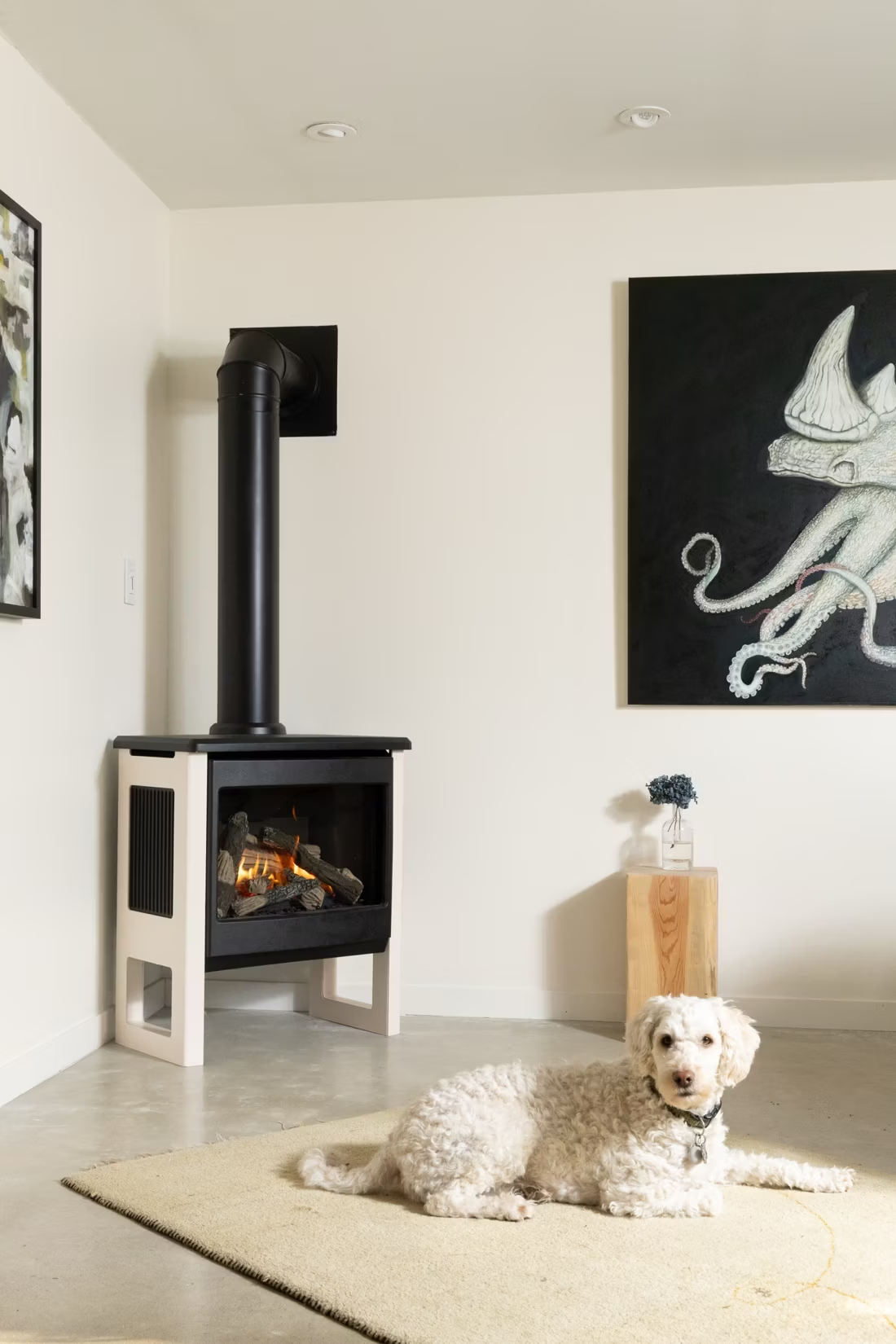
A gas fireplace is a built-in unit framed into a wall—the standard choice for new construction or a full remodel. A gas insert is sized to slide into an existing masonry firebox, which fits the housing stock in towns like New London, Norwich, and Old Lyme where original brick fireplaces are common. A gas stove is freestanding, sitting on the floor like a wood stove but running on gas—a good option if you want supplemental heat in a room with no existing chimney or hearth. For most Southeastern Connecticut homeowners upgrading an old fireplace, the insert is the natural fit.
Do I need a permit to install a gas fireplace, and who issues it?
Yes—a building permit and a gas permit are both required, but since Connecticut counties don't function as governing bodies, you'll be pulling permits through your own town's building department rather than any Southeastern Connecticut county office. That means New London, Groton, Norwich, Stonington, Waterford, and Ledyard each run their own process and inspection schedule. A local hearth dealer who installs across several of these towns will already know each inspector's expectations, which is one of the real advantages of hiring locally rather than out-of-area.
Should I worry about salt air near the coast affecting my gas fireplace?
It's worth asking about. Homes in Groton, Stonington, Mystic, and along the Waterford and East Lyme shoreline sit close enough to Long Island Sound that salt-laden air can accelerate corrosion on lower-grade venting components over years of exposure. Most reputable installers in the county default to stainless steel venting for direct-vent units in shoreline towns rather than the aluminum sometimes used further inland—it costs a little more up front but avoids replacing corroded venting a decade in. Ask your dealer whether they spec stainless as standard for coastal installs.
How often does a gas fireplace need to be serviced?
Plan on an annual inspection, ideally before the heating season ramps up in October. A technician checks the burner, pilot assembly, venting, and gas connections, and cleans the glass and interior—a much smaller job than sweeping a wood chimney, but still important for safety and efficiency. Local gas appliance service providers in the New London and Norwich area typically charge $150 to $250 for this visit, and it's worth doing every year even if the unit sees light use.
Gas vs. wood vs. pellet—what makes sense for a Southeastern Connecticut home?
Wood is still viable here—there's no air quality non-attainment issue in the county, and oak, maple, birch, and ash are all locally available for burning—but it means tending a fire and stacking a woodpile. Pellet stoves, stocked regionally by brands like Lignetics and New England Wood Pellet, offer a cleaner, thermostat-controlled burn but need electricity to run the auger, so they go dark in an outage. Gas splits the difference for a lot of homeowners here: instant on-off control, no ash or wood handling, and—with the right ignition system—heat that keeps working through a coastal storm outage. Many Southeastern Connecticut homes end up with gas in the main living space and keep a wood stove or fireplace elsewhere as backup.
Why is my open fireplace making my house colder?
Open fireplaces suck—literally. As the fire burns, it consumes air your furnace already paid to heat and pulls it out through the chimney, so the house is actually colder after the fire goes out than before you lit it. An insert fixes this: it seals the chimney, puts fixed glass across the front, and turns that hole in your house into a real heat source.
Is my gas fireplace wasting gas?
If it was installed more than 15 years ago, probably. Older gas fireplaces keep a standing pilot light burning all the time, and that little flame can cost a couple hundred dollars a year. Newer models use pilot-on-demand ignition—the pilot lights only when you use the fireplace and goes out when you turn it off.
Can a fireplace actually lower my heating bill?
Yes—by creating a comfort zone. A furnace heats every square foot of the house just to warm the one room you're in; a gas fireplace on low burns roughly a sixth of the gas a typical furnace does. Set the furnace around 55–60 degrees as a baseline, then heat the rooms your family actually uses. Families who heat this way commonly save $20–$60 a month.
Can I install a fireplace myself?
If you're putting a fire in your house on purpose, it's best to work with an expert. Unless you're genuinely experienced in framing, gas line, vent pipe, and the national code on clearances to combustibles, have a professional do it—and ideally the same company that sells you the fireplace, so warranty, service, and liability all live under one roof.
Stove and Fireplace Dealers in Southeastern Connecticut County
Listings include WhyFire partner dealers, dealers we have verified as authorized for the brands we recommend, and established local businesses that carry hearth products. Every listing shows which one it is. The ones marked Preferred run on WhyFire's software, so they can show you real pricing and book your appointment right here. No manufacturer pays for placement. How we verify dealers →
Spicer Advanced Gas<br>The Propane Store
Quality Propane
Fireside Supply
Fireworks Hearth And Home LLC
Superior Hearth, Spas & Leisure
Find your gas fireplace in Southeastern Connecticut.
Tell us about your home and we'll match you with the right gas fireplace, insert, or stove—plus a free Project Guide & Parts List with the exact parts and your recommended local dealer.
Find Your Fireplace →