
Steady Gas Heat for Norwich's Long Connecticut Winters.
Clean, on-demand heat for Norwich's colonials, triple-deckers, and ranches alike. We'll help you find the right gas fireplace or insert and connect you with a trusted local dealer.
Every Project Starts From One of These Five Situations
A clean, dependable heat source for the Rose City.
Norwich sits at just 113 feet in elevation where the Thames, Yantic, and Shetucket rivers converge in Southeastern Connecticut. Winters here are real but not brutal—average lows around 21°F and a moderate winter heating season, noticeably milder than inland New England or a city like Buffalo, NY with its considerably longer, colder heating season, but still enough to keep furnaces and zone heaters running from November through March. The city's housing stock ranges from 19th-century mill-town colonials and triple-deckers near downtown to mid-century ranches and capes in the outlying neighborhoods—most of it built around central oil or gas heat rather than any wood-burning tradition.
That history shows up in the local numbers: wood and pellet stoves are essentially a non-factor in Norwich, while gas remains the standard choice for supplemental and zone heating. Norwich Public Utilities, the city-owned utility that also supplies natural gas alongside electric and water service, runs mains through much of the downtown and older residential grid; homes outside that footprint—toward Preston, Bozrah, and the more rural edges of New London County—typically run on propane instead. With Eversource-territory electric rates in the area running 22 to 25 cents per kWh, a gas fireplace or insert is often the more economical way to add real heat to a room without leaning on baseboard electric or a heat pump working overtime on the coldest nights.
Three steps. No salesperson until you're ready.
Tell us about your project
Your zip code, your situation, and the fuel you're leaning toward—or let the answers point you to one.
See what's actually available
The brands dealers within 100 miles genuinely carry—real options, never a catalog mirage.
Get your dealer & Project Guide
A trusted local dealer, plus the free Project Guide & Parts List that names every component of the job.
Frequently Asked Questions
How much does a gas fireplace installation cost in Norwich?
Most gas fireplace and insert installations in the Norwich area run $3,500 to $9,500, depending on the unit, the venting path, and whether new gas line work is needed. A direct-vent insert dropped into an existing masonry fireplace in one of Norwich's older colonials or triple-deckers, with a gas line already run to that wall, sits toward the lower end. A new built-in unit for a remodel or addition—with framing, venting, and a fresh line from the meter—lands in the middle to upper range. Homes running on propane rather than Norwich Public Utilities gas service sometimes add the cost of a tank setup on top. A local dealer will give you a firm number after seeing the space in person.
Can I convert my existing wood fireplace to gas?
Yes, and it's a common project in Norwich's older housing stock—plenty of homes near downtown and along the Yantic and Shetucket corridors still have the original brick fireboxes from their colonial or mill-era construction. A gas insert typically installs into that existing masonry opening using a stainless liner run up the current chimney, usually in the $4,000 to $8,500 range depending on the insert and whether the home is on Norwich Public Utilities gas or propane. The conversion keeps the original mantel and surround while eliminating the ash, draft, and creosote upkeep of the old wood-burning setup.
Do I need natural gas, or can I use propane?
Either works, and which one you'll use mostly comes down to where in Norwich you live. Norwich Public Utilities runs natural gas mains through much of the downtown grid and many surrounding residential neighborhoods, so if your home already has a gas water heater or range, adding a fireplace is usually a straightforward tie-in. Homes further out toward Bozrah, Preston, or the rural edges of the county are more often on propane, either from an existing tank or a new one set by a local propane supplier. Nearly every gas fireplace model on the market can be configured for either fuel—your installer sets the correct orifice and regulator for whichever you have.
Will my gas fireplace work during a power outage?
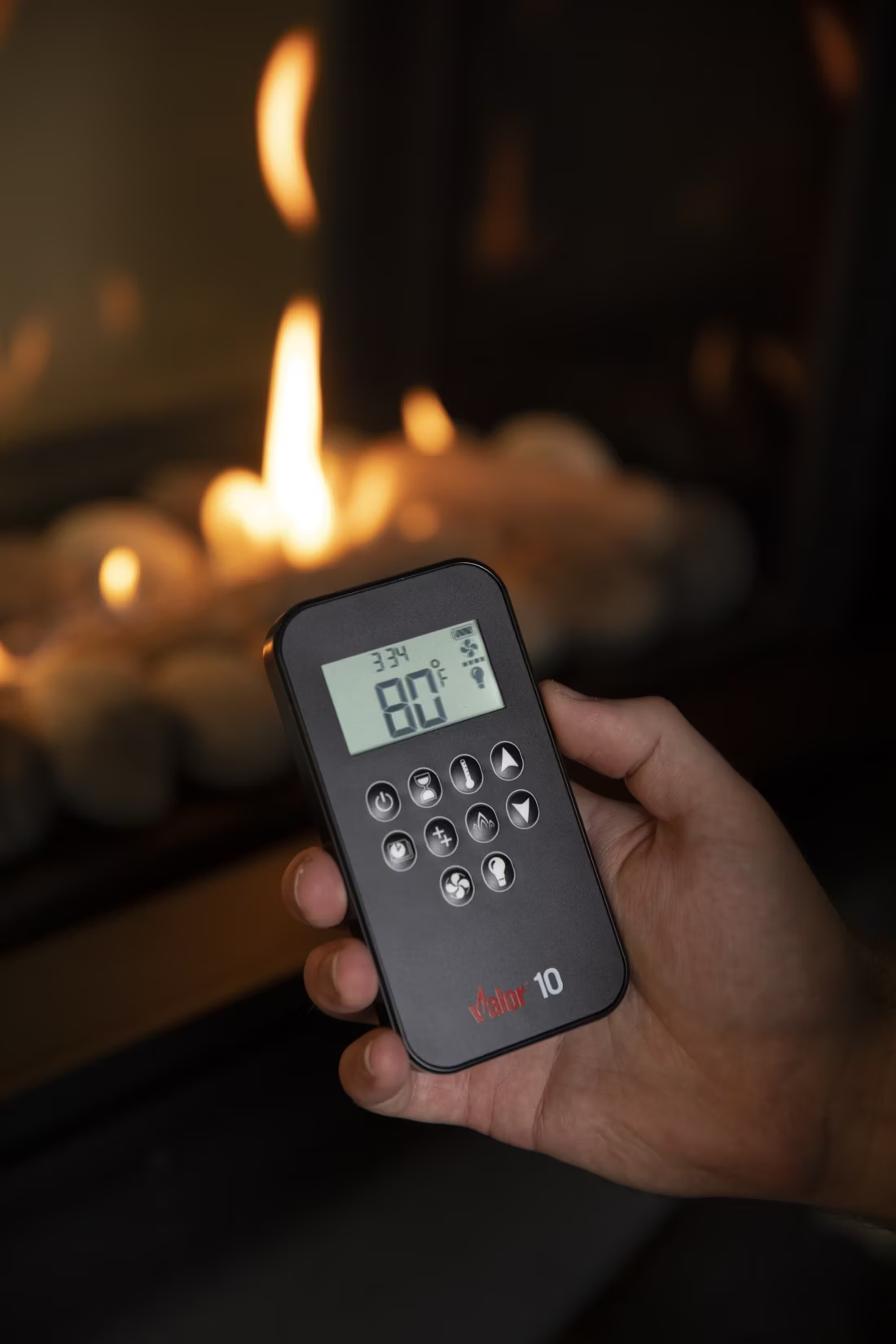
Most modern gas fireplaces will, which matters in a region that's had its share of multi-day outages—the October 2011 snowstorm and several nor'easters since have left parts of New London County without power for days at a stretch. Units with intermittent pilot ignition (IPI) run on a small battery backup that kicks in automatically when the grid drops, so the fireplace still lights on demand. Valor fireplaces go a step further: their pilot assembly generates its own electricity through the thermocouple, so there's no battery to remember to replace. Given how far Eversource-territory rates of 22-25 cents per kWh can push an electric baseboard or heat-pump bill during an outage-adjacent cold snap, a gas fireplace that runs independent of the grid is worth asking your dealer about.
What's the difference between a gas fireplace, gas insert, and gas stove?
A gas fireplace is a fully built-in unit framed into a wall—the right call for new construction or a major remodel. A gas insert is sized to slide into an existing masonry fireplace opening, using your current chimney as the vent path, which fits a lot of Norwich's older colonials and triple-deckers with brick fireboxes already in place. A gas stove is a freestanding cast-iron or steel unit that sits on the floor like a traditional wood stove but burns gas—a good option for a room without any existing fireplace and no interest in framing one in. For most Norwich homeowners upgrading an existing hearth, the insert is the simplest and most common path.
Do I need a permit to install a gas fireplace in Norwich?
Yes—the City of Norwich Building Department requires a permit for new gas fireplace installations, and any gas line work needs to be pulled by a licensed gas fitter, coordinated with Norwich Public Utilities if your home is on their gas system. Norwich doesn't carry the kind of air-quality restrictions some Connecticut cities do, so there's no non-attainment or curtailment paperwork to worry about—permitting here is really about safety and code compliance on the venting and gas connection. Most hearth dealers file the permit as part of the installation, so it's rarely something homeowners have to manage themselves.
What's the difference between vented and vent-free gas fireplaces?
Vented, direct-vent gas fireplaces draw combustion air from outside and exhaust it back outside through a sealed pipe—they're the standard, code-clean choice everywhere, Norwich included. Vent-free (unvented) units burn directly into the room and are legal in Connecticut, but the state fire code requires minimum room volume, an oxygen depletion sensor, and limits on total input BTUs for the space. Given that stricter math, most Norwich homeowners and dealers default to direct-vent units—they deliver more usable heat, don't affect indoor air quality, and skip the room-size calculations entirely.
How often should my gas fireplace be serviced?
Plan on an annual inspection, ideally in late summer or early fall before the heating season starts. A certified technician checks the burner, pilot assembly, venting, and gas connections, and cleans the glass and interior. It's a much quicker visit than a wood-stove chimney sweep—most local gas service providers charge $150 to $250 for the annual check—but it's the visit that catches a failing thermocouple or a venting issue before it becomes a safety problem in the middle of a Southeastern Connecticut winter.
Should I consider a wood or pellet stove instead of gas?
For most Norwich homes, no—wood and pellet stoves are genuinely rare here. This isn't an area with an established cordwood culture the way rural New London County hill towns or northern New England are, and a lot of the local housing stock—dense downtown lots, triple-deckers, tighter suburban parcels—isn't well suited to storing and stacking wood. Gas is the practical default for anyone in Norwich looking to add supplemental zone heat or upgrade an old fireplace: instant on-off operation, no ash or creosote, and no need to source, season, or haul fuel. A handful of dealers can still special-order a wood or pellet unit if you're set on one, but you'll find far fewer local installers with deep wood-stove experience than gas fireplace specialists.
What's the difference between an insert and a zero-clearance fireplace?
An insert is a fireplace that slides into a pre-existing wood-burning fireplace—if you don't have one, there's nothing to insert it into. A zero-clearance fireplace is built into a framed wall, which makes it the answer for remodels and new construction. Simple test: existing masonry fireplace means insert; blank or framed wall means zero-clearance.
Why is my open fireplace making my house colder?
Open fireplaces suck—literally. As the fire burns, it consumes air your furnace already paid to heat and pulls it out through the chimney, so the house is actually colder after the fire goes out than before you lit it. An insert fixes this: it seals the chimney, puts fixed glass across the front, and turns that hole in your house into a real heat source.
Can a fireplace actually lower my heating bill?
Yes—by creating a comfort zone. A furnace heats every square foot of the house just to warm the one room you're in; a gas fireplace on low burns roughly a sixth of the gas a typical furnace does. Set the furnace around 55–60 degrees as a baseline, then heat the rooms your family actually uses. Families who heat this way commonly save $20–$60 a month.
Does a fireplace add value to my home?
On average, a fireplace adds back to the home about the same amount you spent installing it. Add the monthly savings from heating the rooms you actually use instead of the whole house—often hundreds of dollars a year—and the value case is strong before you even count what a fire does for how your family uses the room.
Nearby Dealers
Hearth shops serving Norwich and the surrounding area. Every listing shows whether it is a WhyFire partner, a dealer we have verified as authorized for the brands we recommend, or a local business carrying hearth products. No manufacturer pays for placement. How we verify dealers →
Spicer Advanced Gas<br>The Propane Store
Quality Propane
Fireside Supply
Superior Hearth, Spas & Leisure
Stove King
Fireworks Hearth And Home LLC
Find your gas fireplace in Norwich.
Tell us about your home and heating goals, and we'll match you with a trusted local Norwich-area dealer and send over a free Project Guide & Parts List—the exact parts, vent kit, and recommended dealer for your gas fireplace project.
Find Your Fireplace →