
Find the right heat for every town in Southeastern Connecticut.
Wood, gas, pellet, and electric fireplace resources for every community from New London and Groton to Mystic, Stonington, and Norwich. Find the right unit for your home and connect with a trusted local hearth retailer.
Every Project Starts From One of These Five Situations
Coastal winters and hardwood heritage across Southeastern Connecticut.
Southeastern Connecticut runs from the Long Island Sound shoreline towns of Stonington, Mystic, and Old Saybrook inland through Norwich, Montville, and Colchester. With a solid winter heating load and winter lows averaging 21°F, the heating season here typically stretches from mid-October through April—real cold, but nowhere near the extremes of interior New England. What the region has instead is abundant hardwood: oak, maple, birch, and ash grow throughout the mixed hardwood forests that cover much of New London County, and seasoned cordwood from local loggers and firewood dealers remains a practical, affordable heat source for a lot of households here.
What you'll find on this hub: hearth retailers, service technicians, and fuel suppliers serving every community in the region—from the naval and maritime towns of New London and Groton to the historic villages of Mystic and Stonington, and inland through Norwich, Ledyard, and East Lyme. Pick your fuel below to drill into specifics—local dealers, installation costs, recommended units, and the resources that match your project. Whether you're heating a saltbox colonial near the shore or a farmhouse outside Colchester, this is the starting point.
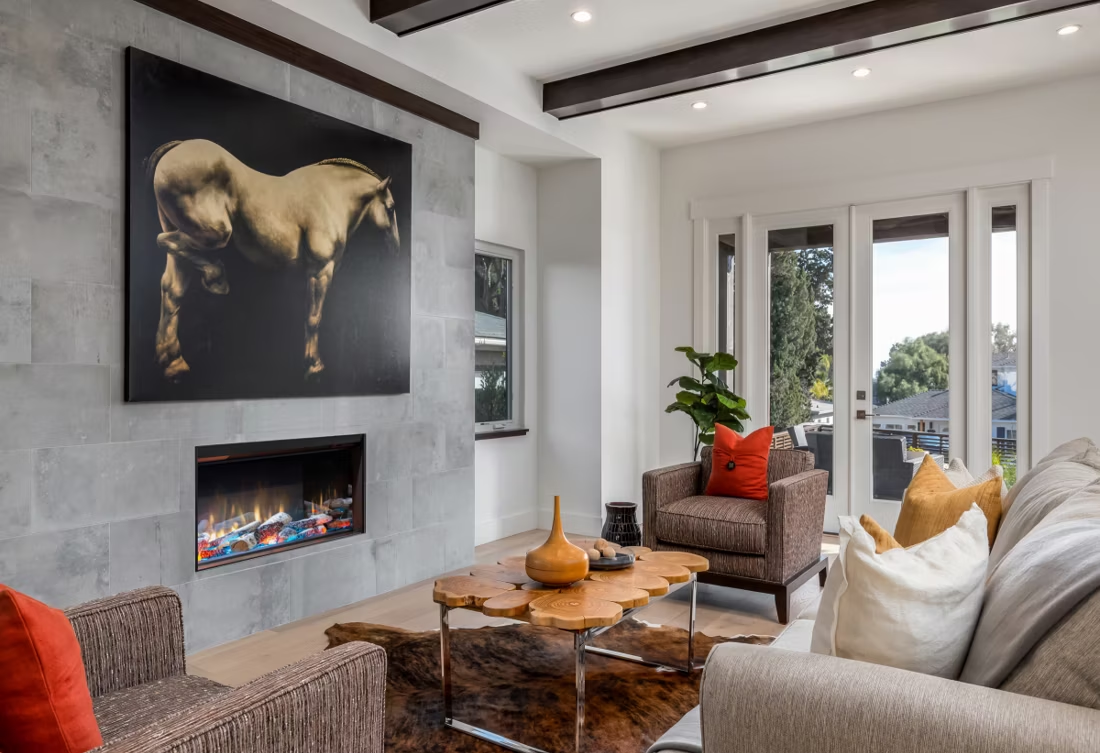
Four fuels. One honest answer for Southeastern Connecticut County.
Wood
81 models available near Southeastern Connecticut County.
Find your wood stove →Gas
365 models available near Southeastern Connecticut County.
Find your gas fireplace →Pellet
See what's available near Southeastern Connecticut County.
Find your pellet stove →Electric
11 models available near Southeastern Connecticut County.
Find your electric fireplace →Three steps. No salesperson until you're ready.
Tell us about your project
Your zip code, your situation, and the fuel you're leaning toward—or let the answers point you to one.
See what's actually available
The brands dealers within 100 miles genuinely carry—real options, never a catalog mirage.
Get your dealer & Project Guide
A trusted local dealer, plus the free Project Guide & Parts List that names every component of the job.
Frequently Asked Questions
Which fuel works best in Southeastern Connecticut?
It depends on the home and the household. Wood remains a strong option here—oak, maple, birch, and ash are all locally abundant, and with a solid winter heating load, a well-seasoned load of hardwood in a modern EPA-certified stove or insert can carry a home through most of the winter without straining the wallet. Gas is the convenience choice in coastal towns like Groton and New London where natural gas mains run through denser neighborhoods; inland communities more often run gas fireplaces on propane. Pellet is a solid middle ground—regional supply is reliable, with New England Wood Pellet, Maine Woods Pellet Co., and Lignetics all sold at local hearth shops and hardware stores, so running out mid-winter isn't a real worry. Electric fireplaces show up often in the region's older colonial and saltbox homes near Mystic and Stonington, where retrofitting a full chimney isn't practical—they're supplemental heat and ambiance, not a primary source through a Connecticut winter.
Do I need a permit to install a fireplace in Southeastern Connecticut?
Yes, in most cases. Connecticut dissolved county government back in 1960, so there's no single 'Southeastern Connecticut' permitting office—each town handles it individually. That means the building department in New London, Norwich, Groton, Stonington, or wherever you live issues the permit, all under the Connecticut State Building Code. New wood stoves, inserts, gas fireplaces, gas inserts, and pellet stoves typically require a permit; gas installations also need a licensed gas fitter for the connection, and any hardwired electric fireplace or built-in unit needs a licensed electrician. Most local hearth retailers handle the permitting paperwork as part of the installation, so homeowners usually aren't filing it themselves.
Are there air quality restrictions on wood burning in Southeastern Connecticut?
Not in the way you'd see out West. The region has no history of winter inversions, non-attainment status, or wildfire smoke advisories—Long Island Sound's coastal airflow keeps things moving in a way that basin geography elsewhere doesn't allow. That said, new wood stove and insert installations are still expected to meet current EPA 2020 NSPS emissions standards, and swapping an old pre-1990s stove for a certified unit generally cuts particulate output dramatically while burning less wood for the same heat. If you're near the shoreline in Stonington or Old Saybrook, salt-laden air is more likely to affect your chimney liner over time than any regional smoke rule is to affect your burning.
Can one local hearth retailer handle all four fuel types?
Many of the larger hearth retailers serving Southeastern Connecticut—particularly the shops based out of Norwich and Waterford—carry wood, gas, pellet, and electric under one roof, which makes it easier to walk in undecided and compare units side by side. Smaller shops closer to the shoreline in Mystic or Stonington sometimes specialize more narrowly, often leaning toward gas and electric given the number of historic homes without existing chimneys in those villages. If you're cross-shopping fuels, the multi-fuel dealers can show working displays of each type and talk through the trade-offs for your specific house.
How does service work across a coastal and inland region like this?
Most chimney sweeps and gas technicians serving Southeastern Connecticut are based in the Norwich-Waterford-New London corridor and travel out to the shoreline towns and rural inland communities as needed. Coastal homes near Mystic, Stonington, and Old Saybrook see more chimney liner and cap corrosion from salt air, so sweeps out there often flag liner replacement sooner than techs working inland around Colchester or Lebanon would expect to. Fall is the busy season—booking your annual sweep or gas inspection in September or early October, before the first cold snap, generally gets you a faster appointment than waiting until December.
What's the typical cost range for fireplace installation across all fuel types in Southeastern Connecticut?
Ranges vary by fuel and by how much existing infrastructure you already have. Wood stove or insert installation: roughly $4,500–$9,500 for a typical retrofit into an existing masonry chimney, more if new flue liner or chimney work is needed. Gas fireplace, insert, or stove: roughly $5,000–$12,000, with cost driven mainly by how far the gas line has to run and whether it's natural gas or propane. Pellet stove or insert: roughly $4,000–$7,500 for a standard installation. Electric fireplace: $200–$3,500 for the unit itself, plus $500–$1,500 in labor for anything beyond a simple plug-in unit, such as a built-in or hardwired wall installation. For details tied to a specific fuel and town, see the town + fuel pages linked above.
Does a fireplace add value to my home?
On average, a fireplace adds back to the home about the same amount you spent installing it. Add the monthly savings from heating the rooms you actually use instead of the whole house—often hundreds of dollars a year—and the value case is strong before you even count what a fire does for how your family uses the room.
How much should I budget for a fireplace?
For an average home—covering the fireplace, the vent pipe, and basic installation—a budget between $3,900 and $5,500 gives you a lot of options across wood, gas, and pellet. By the time you add finish work, gas line, and electrical, the average complete installation lands between $5,000 and $12,000 all-in. In a remodel or new build, a good rule is to put about 2.5% of the total project cost toward the fireplace.
Can I install a fireplace myself?
If you're putting a fire in your house on purpose, it's best to work with an expert. Unless you're genuinely experienced in framing, gas line, vent pipe, and the national code on clearances to combustibles, have a professional do it—and ideally the same company that sells you the fireplace, so warranty, service, and liability all live under one roof.
I know I want a fireplace—where do I actually start?
Do two things today: snap a photo of the wall or fireplace you want to transform, and take a tape measure to the space—width, height, depth. Those two artifacts answer most of a hearth professional's first questions. Then settle fuel (wood, gas, pellet, or electric) and set a realistic budget: $3,900–$5,500 covers fireplace, vent, and basic install for most homes.
Stove and Fireplace Dealers in Southeastern Connecticut County
Listings include WhyFire partner dealers, dealers we have verified as authorized for the brands we recommend, and established local businesses that carry hearth products. Every listing shows which one it is. The ones marked Preferred run on WhyFire's software, so they can show you real pricing and book your appointment right here. No manufacturer pays for placement. How we verify dealers →
Spicer Advanced Gas<br>The Propane Store
Quality Propane
Fireside Supply
Fireworks Hearth And Home LLC
Superior Hearth, Spas & Leisure
Find your fireplace in Southeastern Connecticut.
Pick your fuel below and we'll match you with a trusted local dealer and send you a free Project Guide & Parts List—the exact parts, including the vent kit, for your specific home and town.
Find Your Fireplace →