
Real gas heat, built for Guilford Center's coastal winters.
Steady, code-compliant warmth for the colonial-era homes and shoreline damp of Guilford Center—matched with the right local dealer for your fireplace or insert.
Every Project Starts From One of These Five Situations
Propane-powered comfort in a historic Connecticut village.
Guilford Center sits just 13 feet above Long Island Sound in one of Connecticut's oldest shoreline towns, where a moderate but real winter heating season brings raw, damp cold rather than the deep-freeze extremes of a place like Duluth MN or Burlington VT. Winter lows average in the low 20s, and the moisture off the Sound makes that cold feel sharper than the thermometer suggests. Guilford Center's tight lots, colonial-era saltboxes, and proximity to the town's historic district mean new wood-burning installations are rare here—many homeowners simply don't have the clearances, the chimney condition, or the interest in sourcing and stacking cordwood that wood heat requires. Gas has become the practical, clean-burning answer instead.
There's no municipal natural gas main reaching most of Guilford Center, so the large majority of gas fireplace and insert installations here run on propane, delivered and stored in a buried or aboveground tank. Electric service comes from United Illuminating and Connecticut Light & Power, and at roughly 25 to 31 cents per kWh—among the highest residential electric rates in New England—running an electric fireplace as a serious heat source gets expensive fast. A propane gas insert or fireplace gives Guilford Center homeowners instant, reliable heat without that electric bill shock, and without the wood-smoke and storage constraints that make cordwood impractical on many village lots.
Three steps. No salesperson until you're ready.
Tell us about your project
Your zip code, your situation, and the fuel you're leaning toward—or let the answers point you to one.
See what's actually available
The brands dealers within 100 miles genuinely carry—real options, never a catalog mirage.
Get your dealer & Project Guide
A trusted local dealer, plus the free Project Guide & Parts List that names every component of the job.
Frequently Asked Questions
How much does a gas fireplace installation cost in Guilford Center?
Most gas fireplace and insert installations in Guilford Center run between roughly $4,000 and $9,500. Since there's no natural gas main through most of the village, propane setups are the norm—if you don't already have a tank, add $500 to $1,500 for a new propane tank installation from a local supplier. Converting an existing masonry fireplace in one of the area's colonial-era homes with a direct-vent gas insert tends to land on the lower-to-middle end of that range; a new built-in unit requiring fresh venting and gas line runs sits higher. Local installers will give you a firm number after seeing your chimney and gas setup in person.
Can I convert my existing wood fireplace to gas?
Yes, and in Guilford Center it's often the most common path to a gas fireplace, since so many homes here have original masonry fireplaces from the 18th and 19th century that were never built for modern wood-burning use. A direct-vent gas insert slides into that existing firebox, uses a stainless liner run through the old chimney, and typically costs $4,000 to $8,500 depending on the insert and whether new propane line work is needed. It keeps the historic mantel and surround intact while giving you real, controllable heat at the flip of a switch—no cordwood, no creosote, no clearance issues in a tight colonial floor plan.
Do I need natural gas, or does my gas fireplace run on propane?
In Guilford Center, plan on propane. There's no natural gas utility main serving most of the village, so nearly every gas fireplace, insert, or stove installed here runs on propane from a local delivery supplier, stored in a buried or aboveground tank sized to the appliance's BTU load. If you're near the shoreline in a section of Guilford with an actual gas main, natural gas is an option—but don't assume it's available just because you're a few miles from the Guilford Green. Your installer can confirm what's actually running to your street before you commit to a unit.
Will my gas fireplace work during a power outage?
Most will. Nor'easters and coastal storms off Long Island Sound regularly knock out power for United Illuminating and CL&P customers in this part of Connecticut, so ignition type matters. Units with IPI (intermittent pilot ignition) run on AA battery backup that kicks in automatically when the power drops—just remember to swap the batteries each fall. Valor fireplaces take a different approach: their pilot generates its own electricity through the thermocouple, so there are no batteries to maintain at all. For a shoreline village that loses power during winter storms, that's a real advantage worth asking your local dealer about.
What's the difference between a gas fireplace, gas insert, and gas stove?
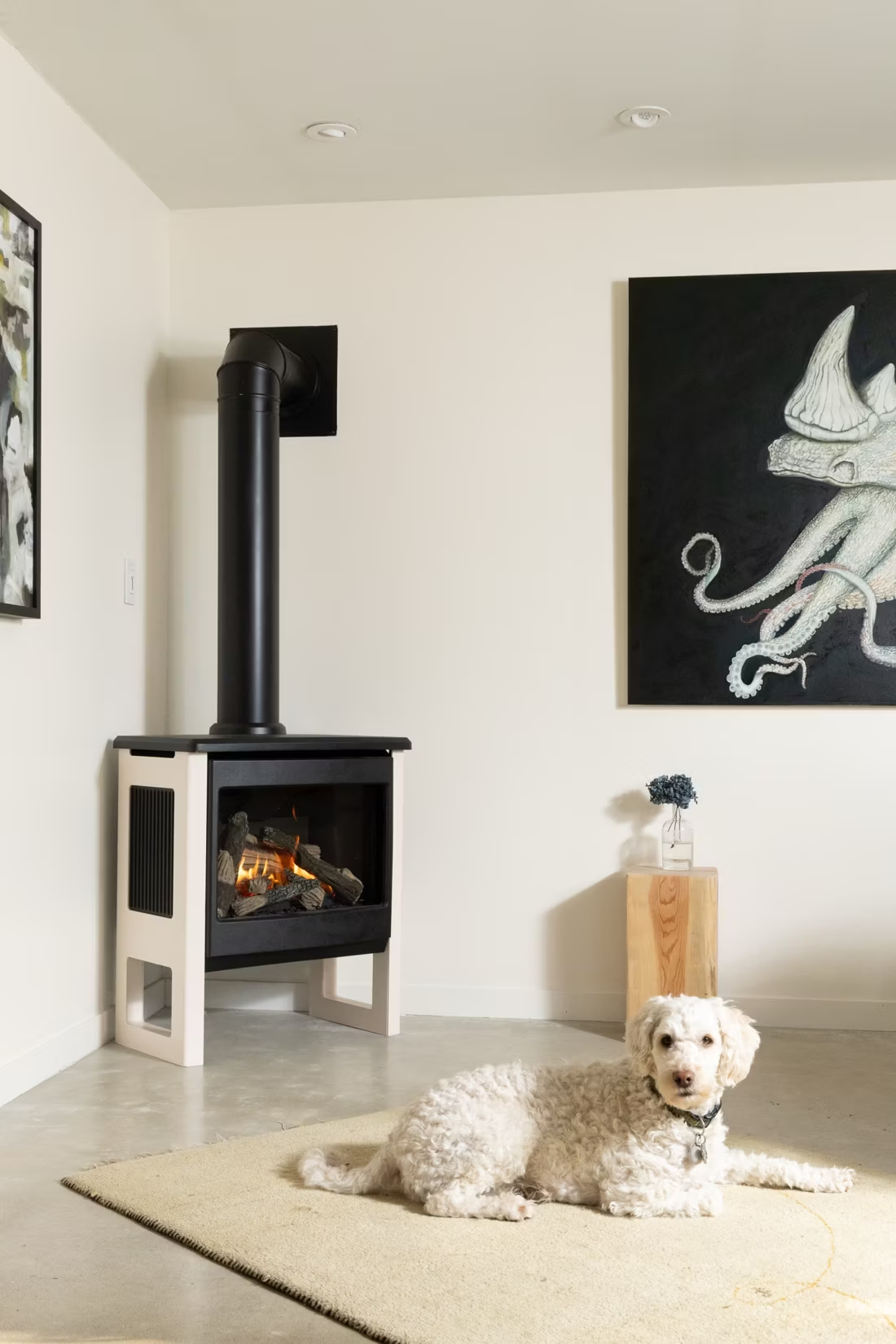
A gas insert fits into an existing masonry firebox—the right call for Guilford Center's stock of colonial and Federal-style homes with original fireplaces. A built-in gas fireplace is framed into a wall from scratch, which fits new additions or rooms without an existing chimney. A gas stove is freestanding, sitting on a hearth pad and venting through a wall or chimney chase—a good option in a smaller cottage or outbuilding where a full fireplace isn't practical. Most homeowners here with an existing hearth go the insert route; new construction or additions usually call for a built-in unit.
Do I need a permit to install a gas fireplace in Guilford Center?
Yes—a building permit and gas-fitter-installed line work go through the Town of Guilford Building Department, and the gas connection itself must be done by a licensed propane or gas fitter, not a general contractor. If your home sits within one of Guilford's designated historic districts, exterior venting placement can also draw a look from the historic district commission, particularly on street-facing elevations. A reputable local hearth dealer will already know how to route venting to satisfy both code and any historic-district sightline concerns, and typically handles the permitting as part of the installation.
What's the difference between vented and vent-free gas fireplaces?
Vented (direct-vent) units draw combustion air from outside and exhaust it back outside through sealed venting—they're the standard, code-friendly choice and what most Guilford Center installs use. Vent-free units burn fuel directly into the room with no outside venting; they're legal in Connecticut but come with strict room-size minimums and oxygen-depletion sensor requirements, and they add moisture and combustion byproducts to indoor air. Given the shoreline humidity Guilford Center already deals with, most local installers steer homeowners toward direct-vent units, which sidestep that moisture concern entirely while still delivering strong, consistent heat.
How often should my gas fireplace be serviced?
Plan on an annual inspection, ideally in early fall before the propane deliveries pick up for the season. A technician checks the burner, pilot assembly, venting, and gas connections, and cleans the glass and interior—this runs about $150 to $250 locally. It's a much smaller job than chimney sweeping, but skipping it is how pilot and ignition problems go unnoticed until the coldest night of the year, which in a shoreline village with regular storm-driven outages is exactly when you don't want a fireplace that won't light.
Gas vs. wood vs. electric—which makes sense in Guilford Center?
Wood-burning stoves and inserts are genuinely uncommon here—tight village lots, aging chimneys not built for modern wood use, and the historic district's constraints mean new wood installations are rare, and pellet stoves see little demand for the same reasons. Electric fireplaces are simple to install and fine for ambiance, but at 25 to 31 cents per kWh from United Illuminating or CL&P, they're not an economical primary or backup heat source. That leaves propane gas as the practical choice for most Guilford Center homes: instant heat, no wood storage or ash cleanup, and a battery-backup or self-powered pilot option that keeps working when a Sound-side storm takes out the grid.
What's the difference between an insert and a zero-clearance fireplace?
An insert is a fireplace that slides into a pre-existing wood-burning fireplace—if you don't have one, there's nothing to insert it into. A zero-clearance fireplace is built into a framed wall, which makes it the answer for remodels and new construction. Simple test: existing masonry fireplace means insert; blank or framed wall means zero-clearance.
Why is my open fireplace making my house colder?
Open fireplaces suck—literally. As the fire burns, it consumes air your furnace already paid to heat and pulls it out through the chimney, so the house is actually colder after the fire goes out than before you lit it. An insert fixes this: it seals the chimney, puts fixed glass across the front, and turns that hole in your house into a real heat source.
Does a fireplace add value to my home?
On average, a fireplace adds back to the home about the same amount you spent installing it. Add the monthly savings from heating the rooms you actually use instead of the whole house—often hundreds of dollars a year—and the value case is strong before you even count what a fire does for how your family uses the room.
How much should I budget for a fireplace?
For an average home—covering the fireplace, the vent pipe, and basic installation—a budget between $3,900 and $5,500 gives you a lot of options across wood, gas, and pellet. By the time you add finish work, gas line, and electrical, the average complete installation lands between $5,000 and $12,000 all-in. In a remodel or new build, a good rule is to put about 2.5% of the total project cost toward the fireplace.
Nearby Dealers
Hearth shops serving Guilford Center and the surrounding area. Every listing shows whether it is a WhyFire partner, a dealer we have verified as authorized for the brands we recommend, or a local business carrying hearth products. No manufacturer pays for placement. How we verify dealers →
Jj Sullivan Inc.
New Haven Masonry
Fireworks Hearth And Home LLC
Fireplace Surplus
Tani’s Masonry Supply, LLC
Spicer Advanced Gas<br>The Propane Store
Spotless Chimney Sweeping & Solutions
Find your gas fireplace in Guilford Center.
Tell us about your home and your existing fireplace or chimney, and we'll match you with a trusted local dealer plus a free Project Guide & Parts List—the exact parts, vent kit, and recommended installer for your Guilford Center gas project.
Find Your Fireplace →