
Find the right pellet stove for Yuma County's plains winters.
Steady, thermostat-controlled heat for the wind-driven cold of Colorado's northeastern plains—from Yuma to Wray to Eckley. Get matched with a trusted local dealer who can size and install it right.
Every Project Starts From One of These Five Situations
Consistent heat for a county built on wide-open exposure.
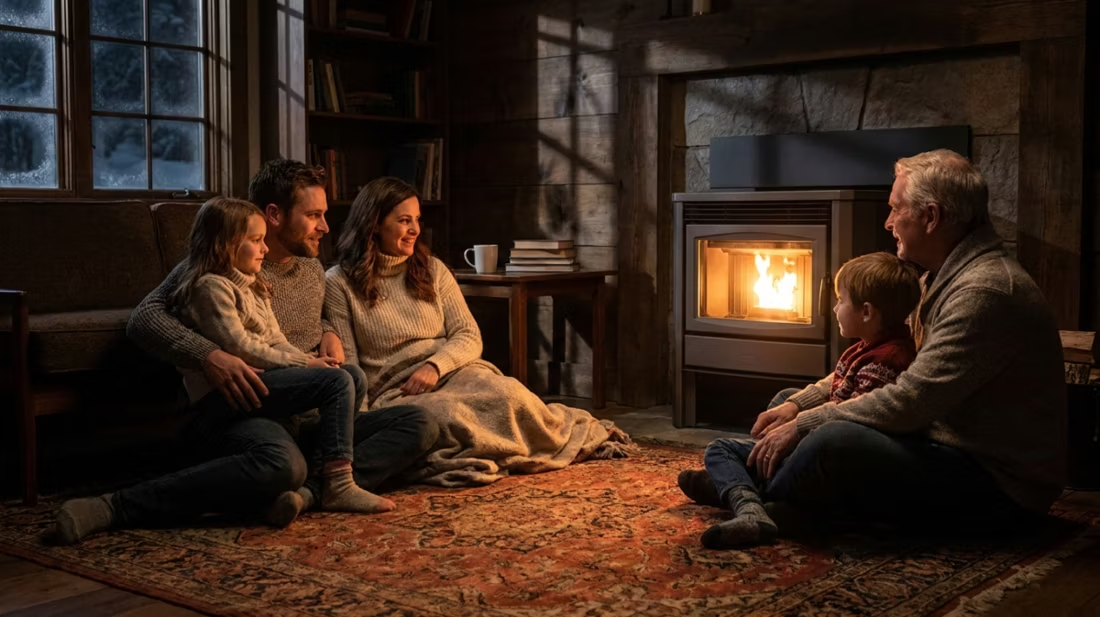
Yuma County sits out on Colorado's northeastern plains, a farming and ranching region with roughly 5,842 heating degree days a year and average winter lows around 17°F. There's little in the way of windbreak once you're outside town, and that constant plains wind cuts through drafty older farmhouses harder than the raw temperature alone suggests—closer in feel to what a place like Fargo, ND deals with than to a sheltered mountain valley. A pellet stove's steady, thermostat-driven output holds a consistent room temperature through those long, wind-exposed nights without the tending a wood stove demands.
With just over 6,500 residents spread across a large, rural county, firewood self-sufficiency has real roots here, but pellet heat has picked up ground for a practical reason: bagged pellets from regional suppliers like Bear Mountain, Lignetics, and Forest Energy are easy to store in a machine shed or garage and easy to haul in bulk when you're an hour from the nearest big-box store. For homes in Yuma, Wray, or the smaller communities scattered across the county, a pellet insert or freestanding stove offers clean, consistent heat with far less daily fuss than splitting and stacking cordwood—while still giving you a real, visible flame.
Three steps. No salesperson until you're ready.
Tell us about your project
Your zip code, your situation, and the fuel you're leaning toward—or let the answers point you to one.
See what's actually available
The brands dealers within 100 miles genuinely carry—real options, never a catalog mirage.
Get your dealer & Project Guide
A trusted local dealer, plus the free Project Guide & Parts List that names every component of the job.
Frequently Asked Questions
How much does a pellet stove installation cost in Yuma County?
Pellet stove and insert installations in Yuma County typically run in the same general range seen across rural Colorado's Eastern Plains—expect $4,500 to $7,500 depending on whether it's a freestanding stove with a straightforward through-wall vent or an insert going into an existing masonry fireplace with a full liner run. Homes on the outer edges of the county, well outside Yuma or Wray, may see a modest travel charge added by the installer. Your local dealer will give you a firm number after seeing the space in person.
What size pellet stove do I need for my home?
Sizing depends on square footage, insulation, and how exposed your home is to Yuma County's near-constant plains wind—an older farmhouse with single-pane windows on an open quarter section will need more heating capacity than a newer, tighter home in town on the same footprint. As a rough guide: smaller units suit a single large room or a well-insulated cabin, mid-size units handle most main living areas in a typical county home, and larger units can serve as primary heat for an open-concept or ranch-style layout. Because wind exposure varies so much across the county's flat terrain, an in-home visit from a local dealer is the most reliable way to size correctly—oversizing wastes pellets, undersizing leaves you cold on the worst nights.
Where can I buy pellets in Yuma County?
Regional brands like Bear Mountain, Lignetics, and Forest Energy are the common options carried by dealers and farm supply retailers serving Yuma County. Given the drive times across this stretch of the plains, most households buy in bulk—a full ton or more at a time—rather than a bag or two as needed, and a dry machine shed or garage works fine for storage. Ask your local dealer about seasonal pre-buy pricing, since pellet costs can shift with demand heading into winter.
What's the difference between a pellet stove and a pellet insert?
A pellet stove is a freestanding unit that sits on its own hearth pad and vents through an exterior wall or existing chimney chase—it can go almost anywhere in the home with the right clearances. A pellet insert is built to slide into an existing masonry fireplace opening, turning an old wood-burning fireplace into a much more efficient, thermostat-controlled heat source. For county homes with an existing fireplace that isn't pulling its weight on a windy plains night, an insert is often the simpler upgrade. Homes without an existing fireplace usually go with a freestanding stove instead.
Do pellet stoves work during a power outage?
No—this is the main tradeoff to weigh against wood heat. Pellet stoves rely on an electric auger to feed fuel and a blower to distribute heat, so they shut down when the power does. On the plains, winter storms and high wind events can knock out power for stretches, so if backup heat during an outage is a priority, some Yuma County homeowners pair a pellet stove for daily convenience with a wood stove or generator for storm backup. If reliable grid power isn't a concern for your property, a pellet stove's ease of use is hard to beat for everyday heating.
Do I need a permit to install a pellet stove in Yuma County?
Most new solid-fuel appliance installations, including pellet stoves and inserts, require a building permit through the county or the relevant municipal building department, depending on whether the home sits inside Yuma, Wray, or unincorporated county land. A trusted local dealer handling your installation typically manages the permitting as part of the job, so you're not chasing paperwork on your own. Given Yuma County's occasional wildfire smoke concerns during dry stretches, pellet stoves also have the advantage of not adding to local wood-smoke output the way an uncertified wood stove would.
How often does a pellet stove need cleaning and maintenance?
Plan on cleaning the burn pot and ash area every few days to weekly during regular heating-season use, and a full professional service once a year—typically before the season starts in late summer or early fall. Annual service covers the auger, exhaust blower, gaskets, and venting, and catches wear before it turns into a mid-winter breakdown. For a county this rural, where a service call means real drive time, staying ahead of maintenance rather than waiting for a failure matters more than it might in a denser area.
What's the difference between a pellet stove and a wood stove for a home like mine?
Wood stoves burn cordwood—often ponderosa pine, aspen, pinyon, or juniper cut locally—and keep working through a power outage, which matters on the exposed plains where wind events can down lines. Pellet stoves trade that off-grid resilience for real convenience: load the hopper, set the thermostat, and get steady heat with far less daily tending and less ash than cordwood produces. For a primary residence in Yuma County where daily convenience matters most, pellet often wins. For a property where storm-driven outages are a real concern and off-grid heat matters, wood is worth serious consideration, and some homeowners keep both.
Are pellet stoves a good fit for older farmhouses in Yuma County?
Generally, yes, with a caveat on sizing. Older farmhouses on the plains tend to have less insulation and more air infiltration than newer builds, and the constant wind across open Yuma County ground makes that infiltration worse. A properly sized pellet insert or stove can still deliver strong, consistent supplemental or even primary heat in these homes, but undersizing is the most common mistake—a unit sized for a similar square footage in a tighter, newer home often won't keep up in a drafty older farmhouse on an exposed section. A local dealer who understands the county's building stock will size accordingly.
How often does a pellet stove need cleaning?
A clean pellet stove is a happy pellet stove. Plan on cleaning the burn pot about once a week when you're burning regularly—ash and clinkers gum up the air holes just like a pellet barbecue. Most pellet stove problems trace back to skipped cleaning that nobody explained up front. Some designs make it easy with a trapdoor burn pot: pull a lever and the gunk drops into the ash pan.
Why is my open fireplace making my house colder?
Open fireplaces suck—literally. As the fire burns, it consumes air your furnace already paid to heat and pulls it out through the chimney, so the house is actually colder after the fire goes out than before you lit it. An insert fixes this: it seals the chimney, puts fixed glass across the front, and turns that hole in your house into a real heat source.
Does a fireplace add value to my home?
On average, a fireplace adds back to the home about the same amount you spent installing it. Add the monthly savings from heating the rooms you actually use instead of the whole house—often hundreds of dollars a year—and the value case is strong before you even count what a fire does for how your family uses the room.
Can I install a fireplace myself?
If you're putting a fire in your house on purpose, it's best to work with an expert. Unless you're genuinely experienced in framing, gas line, vent pipe, and the national code on clearances to combustibles, have a professional do it—and ideally the same company that sells you the fireplace, so warranty, service, and liability all live under one roof.
Stove and Fireplace Dealers in Yuma County
Pellet Brands Stocked Around Yuma County
Manufacturers will point you to the nearest stocking dealer.
Get your free Pellet Project Guide for Yuma County.
Tell us a bit about your home and we'll match you with a trusted local dealer, plus a free Project Guide & Parts List—the exact parts, vent kit, and installer recommendation for your pellet project in Yuma County.
Find Your Fireplace →