
Warm up any room in Yuma County—no chimney, no gas line.
Zone heat for farmhouses and additions across the high plains of Yuma County, from Yuma to Wray to Eckley—no venting, no chimney, no propane tank. Find the right unit and connect with a trusted local dealer.
Every Project Starts From One of These Five Situations
Simple heat for a room without a gas line.
Yuma County sits on the high plains of northeastern Colorado, a stretch of dryland farm and ranch country running from Yuma and Wray down through Eckley and Otis. Winters here are genuinely cold—an average low of 17°F, a long, demanding heating season on par with Fargo, ND, and the kind of wind-driven chill more common there than to the Front Range 150 miles west. A lot of the county's housing stock is older farmhouses, manufactured homes, and additions that were never plumbed for gas or built with ductwork reaching every room.
That's where electric fireplaces fill a real gap. A plug-in insert needs nothing more than a standard outlet—no chimney, no gas line, no propane tank to keep filled. Larger built-in units draw on a dedicated 240V circuit, which a licensed electrician can run through most existing panels in a single visit. For rural Yuma County homes served by Highline Electric Association, that means adding real supplemental heat to a bedroom, sunroom, or converted garage without touching the furnace or running new gas lines. It's also worth noting during wildfire smoke season, when air quality advisories make wood or pellet burning less appealing—an electric unit adds ambiance and heat without adding smoke.
Three steps. No salesperson until you're ready.
Tell us about your project
Your zip code, your situation, and the fuel you're leaning toward—or let the answers point you to one.
See what's actually available
The brands dealers within 100 miles genuinely carry—real options, never a catalog mirage.
Get your dealer & Project Guide
A trusted local dealer, plus the free Project Guide & Parts List that names every component of the job.
Frequently Asked Questions
How much does an electric fireplace installation cost in Yuma County?
Most electric fireplace projects in Yuma County fall into two categories. A plug-in insert or freestanding unit—the kind that slides into an existing opening or stands on its own—typically runs $300 to $1,200 installed, since it needs no wiring beyond an existing outlet. A built-in electric fireplace or a larger wall-mounted unit that needs a dedicated 240V circuit runs higher, generally $1,500 to $4,000, once you factor in the electrician's time to run a new circuit through an older farmhouse panel. Local dealers can tell you which category your project falls into after a quick look at your electrical panel and the room you're heating.
What size electric fireplace do I need for my room?
Electric fireplaces are built for zone heating, not whole-house heat, so sizing is about the specific room rather than the whole home. A standard 1,500-watt unit comfortably supplements heat in a 300–400 square foot room—enough for most bedrooms, sunrooms, or additions common in Yuma County's older farmhouses. For a larger open living area, you'd want either a wider linear unit or to treat the electric fireplace purely as ambiance and rely on your primary furnace for the bulk of the heat. Given the county's average winter low of 17°F, most homeowners here use electric fireplaces to boost a specific room rather than as the sole heat source.
Does an electric fireplace need special wiring?
It depends on the unit. Most plug-in inserts and smaller freestanding models run on a standard 120V household outlet—no electrician needed beyond making sure the circuit isn't already overloaded. Larger built-in models, especially wider linear units, typically call for a dedicated 15- or 20-amp circuit, and some draw 240V. In a lot of Yuma County's older farmhouses, that means a licensed electrician needs to check the panel and may need to add a circuit—which is a quick job for local electricians familiar with the area's older wiring, but it's worth confirming before you buy a unit that turns out to need more power than your outlet can supply.
Is electric heat a good backup during a power outage on the plains?
No—and this is worth being direct about. Electric fireplaces run entirely on grid power, so during the ice storms and high-wind outages that occasionally hit Highline Electric Association's rural lines, an electric unit goes dark along with everything else. If backup heat during outages is a priority for your Yuma County property, a wood stove or a propane-fired unit with a battery-backup ignition is the better choice for that specific need. Electric fireplaces are best understood as convenient, low-maintenance zone heat for normal conditions—not storm-day backup.
Do I need a permit for an electric fireplace in Yuma County?
A simple plug-in electric fireplace or insert generally doesn't require a permit through the Yuma County Building Department, since it doesn't involve new electrical work or venting. If your project involves running a new dedicated circuit, adding a 240V line, or any modification to your home's wiring for a built-in unit, that electrical work typically does require a permit and should be pulled by the licensed electrician doing the installation. Local dealers can tell you which category your specific project falls into.
What's the best electric fireplace for Yuma County's climate?
Given the county's cold, wind-driven winters—a long, demanding heating season and lows regularly in the teens—most homeowners here use electric fireplaces as supplemental zone heat rather than a primary source, pairing them with a propane furnace or forced-air system for whole-home heating. Look for units with a stated heat output near 5,000 BTU (roughly 1,500 watts) if you want real supplemental warmth in a specific room, not just the visual flame effect. For rooms that already have adequate ductwork, a lower-wattage unit chosen mainly for ambiance works fine.
What does an electric fireplace cost to run?
A typical 1,500-watt electric fireplace run for a few hours an evening costs somewhere in the range of a few dollars a month to a bit more, depending on your Highline Electric Association rate and how often you run it. Compared to firing up a wood stove or running a propane furnace harder, it's a modest add to the electric bill for the convenience of instant, no-mess heat in one room. Running it as a full-time primary heat source for a whole home would get expensive fast—which is part of why it works best as supplemental heat rather than a furnace replacement.
Electric fireplace vs. a plug-in space heater—what's the real difference?
Functionally, both convert electricity to heat, and the wattage-to-BTU output is similar. The differences are in safety design, thermostat control, and how it looks in the room. Electric fireplaces built for permanent installation include tip-over and overheat protection, a real thermostat rather than a simple on/off dial, and a mantel or surround that fits the room like a real fireplace rather than an appliance you store in a closet each spring. For a farmhouse living room or bedroom addition in Yuma County, that combination of safety features and a finished look is usually worth the difference in price over a basic space heater.
Should I choose electric over wood or pellet in Yuma County?
It depends on what you need the heat to do. Wood and pellet stoves put out more real heat per dollar and keep working through a power outage—a real consideration on the plains, where ice storms occasionally take down rural power lines. Electric fireplaces can't match that output or outage resilience, but they install in minutes, need no chimney or venting, produce no smoke, and work in rooms where running a flue simply isn't practical—including during wildfire smoke advisories when burning wood is discouraged. Many Yuma County homeowners end up with both: a wood or pellet stove for real winter heat and outage backup, and an electric unit for a bedroom, office, or sunroom that just needs a little extra warmth.
Can I put a TV above my fireplace?
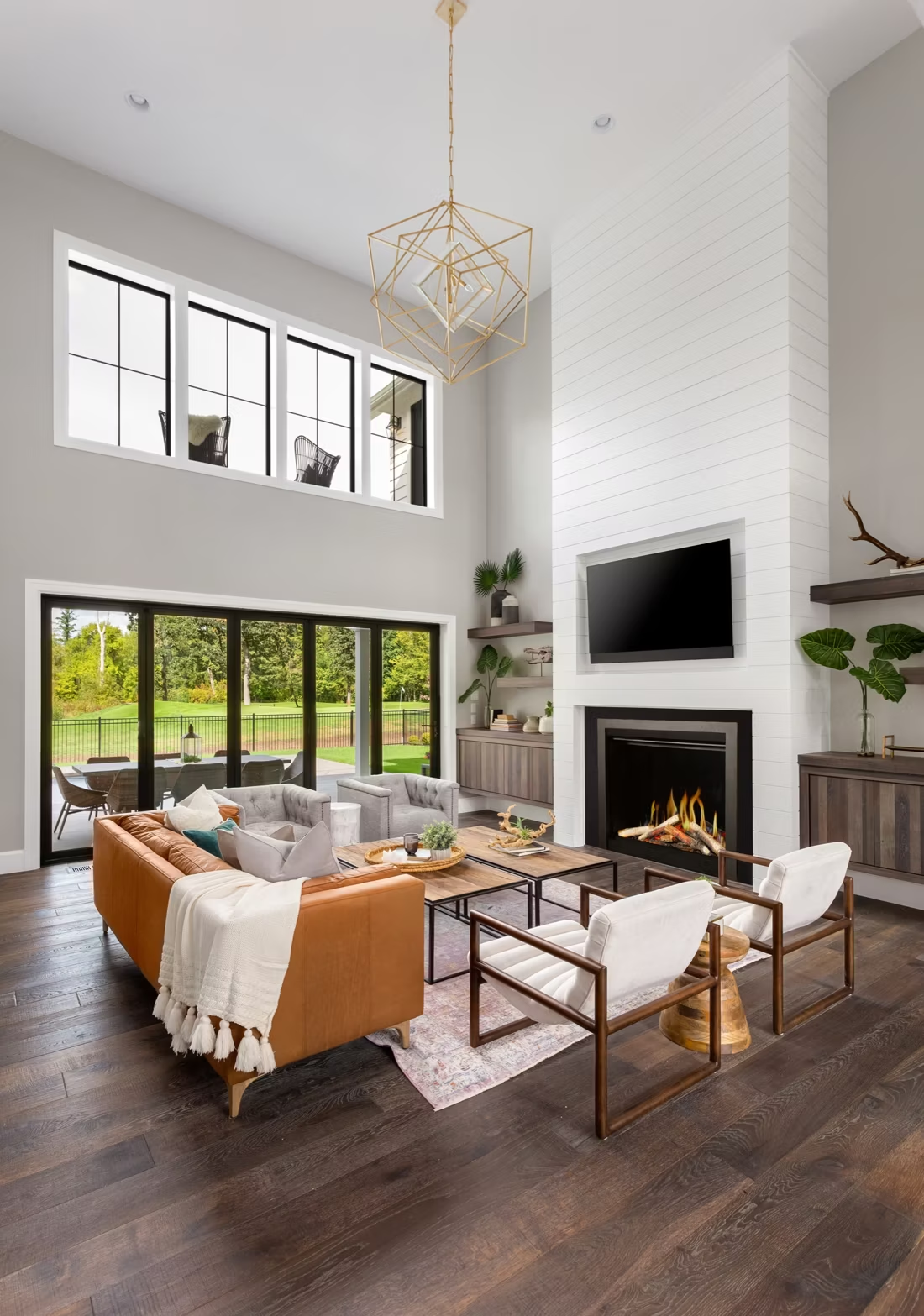
Yes—with an asterisk. Fireplaces are hot and TVs don't like heat. Either put a mantel between them to deflect rising warmth, or choose a fireplace with heat-management technology that creates a cool zone on the wall above—the wall stays around 125 degrees, barely warm, while the room still gets full heat. If you like clean lines and don't want a mantel, heat management is the answer.
Do electric fireplaces actually produce heat?
Yes—most put out around 4,800–5,000 BTUs from a standard outlet, which comfortably warms a bedroom, office, or den as a comfort-zone heater. What they won't do is carry a whole house the way wood, gas, or pellet can. Think of electric as ambiance-first with honest supplemental heat: flames on with no heat in July, flames plus warmth in January.
Can I install a fireplace myself?
If you're putting a fire in your house on purpose, it's best to work with an expert. Unless you're genuinely experienced in framing, gas line, vent pipe, and the national code on clearances to combustibles, have a professional do it—and ideally the same company that sells you the fireplace, so warranty, service, and liability all live under one roof.
How much should I budget for a fireplace?
For an average home—covering the fireplace, the vent pipe, and basic installation—a budget between $3,900 and $5,500 gives you a lot of options across wood, gas, and pellet. By the time you add finish work, gas line, and electrical, the average complete installation lands between $5,000 and $12,000 all-in. In a remodel or new build, a good rule is to put about 2.5% of the total project cost toward the fireplace.
Stove and Fireplace Dealers in Yuma County
Find your electric fireplace in Yuma County.
Tell us a bit about your home and we'll match you with the right electric fireplace or insert, plus a free Project Guide & Parts List—the exact parts and a trusted local Yuma County dealer to install them.
Find Your Fireplace →