
Keep Your Family Warm and Safe—No Matter What
Douglas County's air-quality rules make new wood-burning installs uncommon here. If you already have a wood fireplace or stove, or want to know your real options, we'll connect you with a local pro who knows the code.
Every Project Starts From One of These Five Situations
A newer community built under stricter air-quality rules.
Sierra Ridge sits in Douglas County at nearly 6,000 feet, inside the Denver-Julesburg ozone and particulate nonattainment area. With winters comparable to a town like Helena, MT and winter lows averaging 19°F, the heating demand here is real—comparable to a town like Helena, MT—but Colorado's Regulation 4 prohibits new open-hearth, wood-burning fireplaces in new residential construction across the Denver metro nonattainment zone. Because Sierra Ridge has been built out largely over the last two decades, most homes here were framed and permitted after that rule took effect, so builders defaulted to gas or electric hearths instead of masonry chimneys and wood-ready flues.
That doesn't mean wood heat is entirely off the table—it means it's uncommon and often limited to specific circumstances: older or custom-built homes with legacy masonry fireplaces, EPA-certified stove retrofits in existing chimneys, or homeowners who want a wood-burning setup for a mountain cabin or second property outside the nonattainment boundary. For those situations, the Arapaho-Roosevelt National Forest still issues cutting permits for ponderosa pine, aspen, pinyon, and juniper, and wildfire smoke remains the area's main air-quality concern during dry summer and fall months. If you're one of the exceptions, we can still match you with a local pro who understands both the code and the terrain.
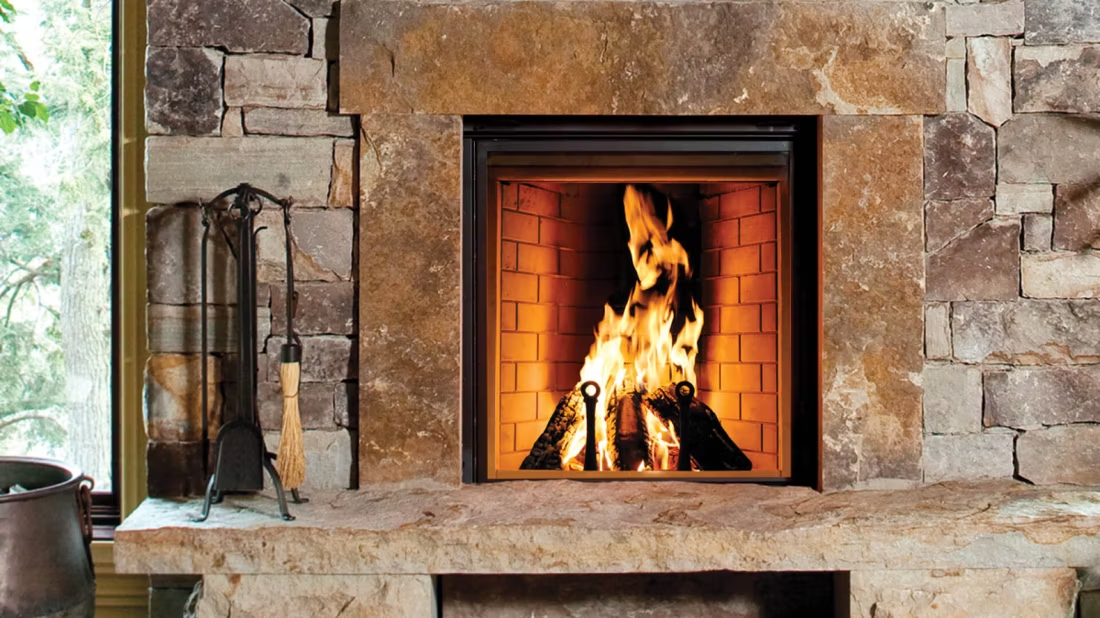
Firewood Cutting Permits Near Sierra Ridge
Three steps. No salesperson until you're ready.
Tell us about your project
Your zip code, your situation, and the fuel you're leaning toward—or let the answers point you to one.
See what's actually available
The brands dealers within 100 miles genuinely carry—real options, never a catalog mirage.
Get your dealer & Project Guide
A trusted local dealer, plus the free Project Guide & Parts List that names every component of the job.
Frequently Asked Questions
Can I install a new wood-burning fireplace in Sierra Ridge?
In most cases, no—not a traditional open-hearth unit. Douglas County falls inside the Denver metro nonattainment area, and Colorado's Regulation 4 bars new wood-burning fireplaces in new residential construction across that zone. There's a narrow path for EPA 2020 NSPS-certified wood stoves in some jurisdictions, but you'll need to confirm current rules with the Douglas County Building Division before assuming a wood stove is an option for a new build in Sierra Ridge. Most homeowners here end up looking at gas instead, which faces none of these restrictions.
Why don't more homes in Sierra Ridge have wood fireplaces?
Timing and geography. Sierra Ridge is a relatively new planned community, and it was built out after the Denver-Julesburg nonattainment restrictions on new wood-burning fireplaces were already in place. Builders in this part of Douglas County default to direct-vent gas fireplaces because they don't trigger the same air-quality review, don't need a masonry chimney, and are cheaper to frame into a production home. It's a regulatory and construction-timeline issue more than a lack of local interest in wood heat.
I have an existing wood-burning fireplace in an older home—can I keep using it or upgrade it?
Yes, existing wood-burning fireplaces are generally grandfathered and can keep operating, and you can typically retrofit an EPA-certified wood-burning insert into that same masonry chimney without triggering the new-construction restrictions. Across the Front Range, insert retrofits like this typically run $4,000 to $8,000 depending on the liner work and hearth clearance needed. A local certified installer can confirm whether your specific chimney and jurisdiction allow the upgrade—Douglas County still requires a building permit for the insert work itself, even though you're not building a new fireplace from scratch.
What wood species are actually available locally if I have a working wood stove?
Ponderosa pine, aspen, pinyon, and juniper are the common species around Douglas County and the nearby Front Range foothills. Ponderosa pine and pinyon burn hot with decent BTU output once properly seasoned; aspen burns fast and clean but produces less heat per cord, so it's often mixed with denser wood; juniper is aromatic and burns well but is usually harvested in smaller diameters. If you're sourcing your own, plan on at least a full season of drying—the low humidity at this elevation helps, but green wood cut in spring won't be ready to burn by the following winter.
Are there wildfire smoke or air quality restrictions on burning wood in Sierra Ridge?
Yes. Wildfire smoke is the primary air-quality concern for this part of Douglas County, and during red flag warnings or periods of heavy regional smoke, voluntary or mandatory burn advisories can apply to any open burning, including wood-burning fireplaces and stoves. This is separate from the new-construction restriction—it affects anyone with an existing legal wood-burning appliance too. Check current advisories through the Colorado Department of Public Health and Environment before burning during dry, windy stretches.
Where can I get a firewood cutting permit near Sierra Ridge?
The Arapaho-Roosevelt National Forest issues personal-use firewood cutting permits, typically running $5 to $20 per cord depending on the ranger district, with a cutting season that runs May through October. It's a drive from Sierra Ridge up into the foothills, so most homeowners who go this route are already committed wood burners with a legacy stove or a second property where wood heat makes more sense. Bring a truck rated for the terrain—permit areas are often on forest roads that aren't maintained in winter.
If wood isn't a realistic option, what should I install instead?
Gas is the practical answer for most Sierra Ridge homes. It's standard here, faces no nonattainment restrictions, and most new-construction homes already have gas service or propane in place. A direct-vent gas fireplace or insert delivers instant, controllable heat without the chimney and permitting complications wood carries in this zone. Electric fireplaces are also a straightforward, no-permit option through Core Electric Cooperative service, though they're better suited to ambiance and zone heating than as a primary heat source at this elevation and heavy winter heating load.
Do I need a permit just to operate an existing wood-burning fireplace?
No—if the fireplace was legally installed before the current restrictions, you generally don't need a permit simply to burn in it. You will need a Douglas County Building Division permit if you modify the appliance, add a liner, or install a new insert. It's worth having the chimney inspected before you assume it's still in good working order, especially in older Sierra Ridge-area homes where a fireplace may have sat unused for years.
Wood vs. gas—which makes sense for a Sierra Ridge home?
For nearly all Sierra Ridge homeowners, gas is the more realistic choice—it's unrestricted, works with existing new-construction infrastructure, and delivers the heat output this climate actually needs given its heavy, Helena-like winter heating load. Wood makes sense mainly if you already have a legacy masonry fireplace to retrofit, or if you're weighing a wood stove for a cabin or second property outside the Denver metro nonattainment boundary. If self-sufficient backup heat during outages is your goal, an EPA-certified insert in an existing chimney is worth exploring with a local pro before ruling wood out entirely.
Why is a fireplace insert so efficient?
An insert does two things: it seals the chimney completely, so you stop losing air you already paid to heat, and it radiates warmth into the room through the firebox and glass. Most add a heat-exchange fan that pulls cool room air underneath, wraps it around the hot firebox, and pushes it back out warm. Your home is more efficient before you've even lit the first fire.
What's the difference between an insert and a zero-clearance fireplace?
An insert is a fireplace that slides into a pre-existing wood-burning fireplace—if you don't have one, there's nothing to insert it into. A zero-clearance fireplace is built into a framed wall, which makes it the answer for remodels and new construction. Simple test: existing masonry fireplace means insert; blank or framed wall means zero-clearance.
How much should I budget for a fireplace?
For an average home—covering the fireplace, the vent pipe, and basic installation—a budget between $3,900 and $5,500 gives you a lot of options across wood, gas, and pellet. By the time you add finish work, gas line, and electrical, the average complete installation lands between $5,000 and $12,000 all-in. In a remodel or new build, a good rule is to put about 2.5% of the total project cost toward the fireplace.
Does a fireplace add value to my home?
On average, a fireplace adds back to the home about the same amount you spent installing it. Add the monthly savings from heating the rooms you actually use instead of the whole house—often hundreds of dollars a year—and the value case is strong before you even count what a fire does for how your family uses the room.
Nearby Dealers
Hearth shops serving Sierra Ridge and the surrounding area. Every listing shows whether it is a WhyFire partner, a dealer we have verified as authorized for the brands we recommend, or a local business carrying hearth products. No manufacturer pays for placement. How we verify dealers →
Midtown Chimney Fireplace Store
Thoshini LLC
Spa Brokers Iii
Spa Brokers
Spa Brokers
Western Fireplace Supply
Spa Brokers V
Proud Souls Barbecue & Provisions
Outdoor Kitchen Dist. Inc
Fireplace And Grill Experts - Service Only
Spa Brokers (Corporate)
Aria Custom Design
Rio Grande Co.
Distinctive Mantel Designs
Spa Brokers
Find out what's possible for wood heat in Sierra Ridge.
Whether you've got a legacy fireplace to retrofit or just want a straight answer on the local rules, we'll match you with a trusted local dealer and send over a free Project Guide & Parts List—the exact parts, vent kit, and realistic next steps for your Sierra Ridge property.
Find Your Fireplace →